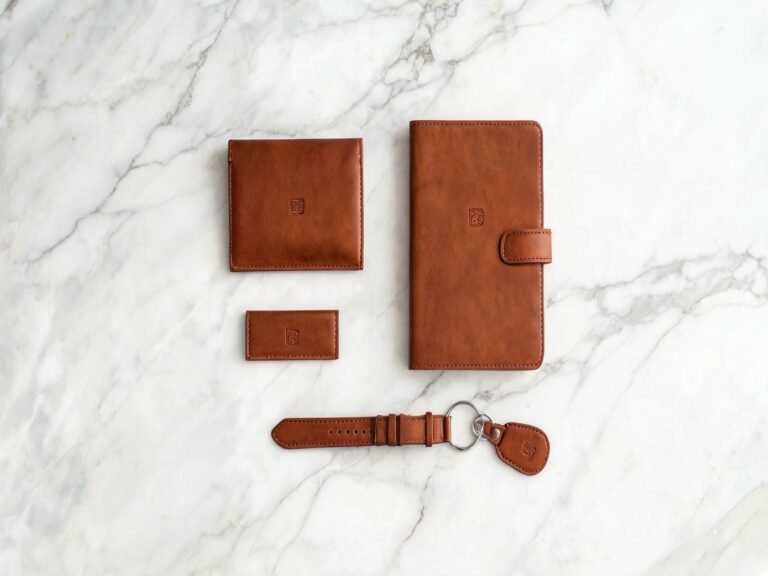
A leather goods company lives or dies by the quality of its material. A handbag that peels at 18 months. A wallet whose color rubs off on cards. A phone case that cracks at the fold line. These failures trace back to one decision: who supplied the leather, and was it the right material for the application?
For leather goods companies — whether you make bags, wallets, phone cases, watch straps, or fashion accessories — your material supplier is your silent partner. They determine your product’s lifespan, your warranty exposure, and your brand’s position in the market. This guide covers how to evaluate a material partner for a leather goods company, and why silicone leather is increasingly the material of choice for brands that need performance without compromising on aesthetics.
The 7-Criteria Supplier Evaluation Framework
When you’re a leather goods company evaluating material suppliers, these are the criteria that predict long-term partnership success:
| Criterion | Why It Matters for Leather Goods | What to Ask | Red Flag |
|---|---|---|---|
| 1. Material range | Need 0.23mm for phone cases, 1.2mm for bags, 2.0mm for belts | “What thickness range can you produce?” | Only offers 1 standard gauge |
| 2. Custom color/texture | Brand identity requires specific Pantone colors and unique textures | “Can you match Pantone XXX with Delta E ≤ 1.0?” | “We have these 12 stock colors” |
| 3. MOQ & scalability | Launch with 500m, scale to 50,000m without re-tooling | “What’s your MOQ and monthly capacity?” | MOQ above 3,000m or no capacity data |
| 4. Lead time | Product launch windows and reorders need predictable timing | “What’s your production lead time for reorders?” | “It depends on our supplier’s schedule” |
| 5. Compliance docs | REACH, FDA, ISO 10993 for EU/US market access | “Can you provide current REACH and FDA reports?” | “Our certificates are expired but we can renew” |
| 6. Cut/sew compatibility | Leather goods require die-cutting, stitching, and edge finishing | “Can I get die-cut test samples?” | No processability data provided |
| 7. R&D support | New product development needs engineering collaboration | “Do you have in-house engineers for product development?” | “We just sell what we make” |

Why Leather Goods Companies Are Switching to Silicone Leather
The traditional material choices for leather goods — genuine leather, PU, PVC — each carry problems that affect the end product and the brand behind it:
- Genuine leather: Inconsistent quality, animal welfare concerns, high cost, batch-to-batch color variation, and ethical sourcing complexity. See leather goods manufacturing guide.
- PU leather: Peels at 2-3 years, color rubs off on contact surfaces, hydrolyzes in humid climates, cracks at fold lines. The #1 warranty failure in leather goods.
- PVC leather: Toxic (phthalates), cracks in 1-2 years, cannot meet REACH for EU markets, increasingly regulated. A compliance liability.
Silicone leather solves all three failure modes while matching or exceeding genuine leather’s hand-feel and aesthetic quality:
- 10+ year lifespan — no peeling, no cracking, no color rub-off. See quality leather goods B2B guide.
- Ultra-thin gauges — 0.23mm for phone cases and wearables, something genuine leather cannot achieve. See Ultra Thin Collection.
- Die-cut clean — no fraying at edges, clean cut tolerances for precision manufacturing. See die-cut leather tolerance guide.
- Vegan and cruelty-free — no animal products, meets growing consumer demand for ethical materials. See vegan handbag material guide.
- Custom OEM/ODM — Pantone matching, custom embossing, metallic finishes, and exclusive patterns for brand differentiation.

Product Categories Where Silicone Leather Excels
- Handbags and totes: 1.0-1.5mm thickness, 200,000+ Martindale for daily wear, custom textures and colors for brand identity. See handbag material types.
- Wallets and cardholders: 0.5-0.8mm, ISO 105-X12 Grade 4-5 rubbing fastness — no color transfer on cards. See wallet material comparison.
- Phone cases: 0.23-0.5mm ultra-thin, baby-safe, non-toxic — EN 71 compliant for children’s products. See premium phone case material.
- Watch straps: Hypoallergenic, sweat-resistant, ISO 10993-5 biocompatible for direct skin contact. See smartwatch band material comparison.
- Sports bags: Water-resistant, abrasion-resistant, lightweight for gym and travel bags. See sports bag material guide.
- Packaging and gift boxes: FDA food-contact compliant, luxury aesthetic for premium product packaging. See leather packaging material.
About TOPSUN
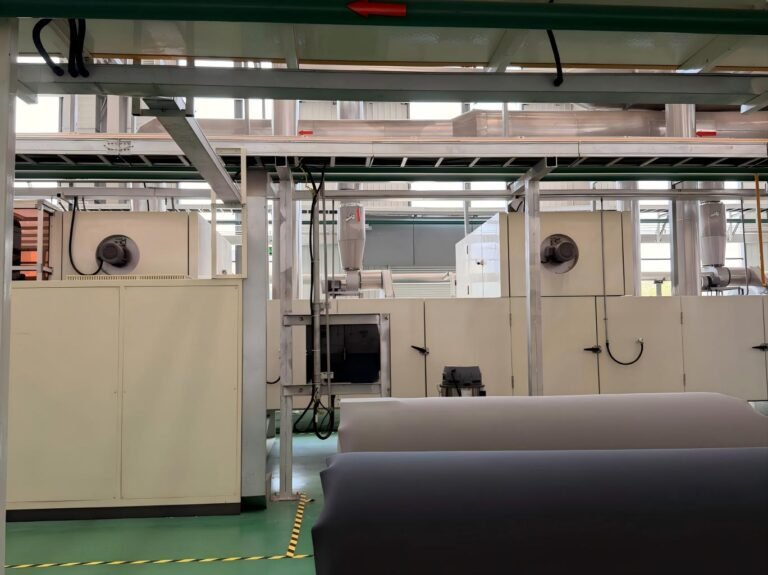
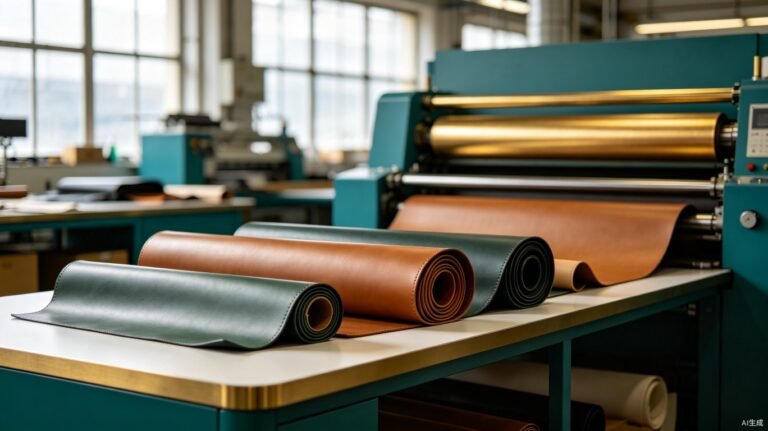
TOPSUN partners with leather goods companies worldwide as their silicone leather material supplier. Manufacturing from three bases in Dongguan, Yichang, and Xiangyang, China, TOPSUN offers full OEM/ODM capabilities: custom Pantone/RAL color matching at Delta E ≤ 1.0, 100+ texture options, custom embossing in 7-10 days, metallic and pearlescent finishes, and thickness from 0.23mm to 2.0mm. With 500,000+ meters monthly capacity and 500-meter MOQ, TOPSUN scales from product launch to volume production without re-tooling. 10+ engineers support product development, and all materials carry REACH, FDA, ISO 10993-5, EN 71, and EN 13773 Class 4 certifications. TOPSUN serves 100+ B2B brands across fashion, 3C electronics, accessories, and packaging sectors.
Watch TOPSUN’s OEM/ODM process — from custom color matching to finished leather goods production
Leather Goods Company: FAQ
What MOQ do I need to start a custom leather goods project with silicone leather?
TOPSUN’s MOQ is 500 meters — accessible for product launches and small-batch premium goods. Custom colors and textures require the 500m minimum but can be ordered in multiple thicknesses or textures within the same run. For reference, 500 meters of 1.2mm silicone leather at 1400mm width yields approximately 700 m² of material — enough for 300-500 handbags depending on pattern efficiency. Reorders have no minimum beyond the 500m MOQ, and lead time is 7-15 days. See leather good manufacturer proofs and leather MOQ and pricing.
Can silicone leather be die-cut, stitched, and finished like genuine leather?
Yes. Silicone leather cuts cleanly with steel rule dies, laser cutting, and CNC knife cutting — no fraying at edges because the silicone coating bonds to the textile substrate throughout. It stitches on standard industrial sewing machines (Schmetz needles, size 90-110, bonded polyester or nylon thread). Edge finishing can be done with paint, fold-and-stitch, or ultrasonic welding. The material’s flex resistance (≥ 50,000-100,000 cycles) ensures fold lines on wallets and bags don’t crack. TOPSUN provides die-cut test samples so your production team can verify processability before committing. See leather stitched thread spec guide and custom manufacturing page.
Partner With a Material Supplier That Scales With Your Brand
Get OEM/ODM samples, review custom capabilities, or start your leather goods project with TOPSUN.
Related: Handbag leather material | Leather as a service model | Luxury leather quality custom options