Choosing the right handbag material types can make or break a product line. Whether you’re sourcing for a luxury fashion house or developing an affordable accessories range, the material you select directly affects durability, perceived value, customer satisfaction — and ultimately, your margins. This guide walks through every major handbag material on the market today, from full-grain leather to the newest bio-based and silicone-based alternatives, so you can make an informed sourcing decision.
Why Handbag Material Selection Matters More Than Ever
The global handbag market is projected to surpass $85 billion by 2028, and sustainability is no longer a niche concern — it’s a baseline expectation. According to a 2025 industry report from APLF, recycled ocean plastics and bio-based materials dominated the trade show floor, signaling a clear shift in buyer priorities. For a deeper look at the broader synthetic leather landscape, check our complete faux leather guide. At the same time, consumers still expect luxury-grade feel and long-lasting performance.
The reality is that no single material is perfect for every application. The right choice depends on your target price point, brand positioning, intended use case, and geographic market. A beach tote sold in California has very different material requirements than an evening clutch distributed in Northern Europe. Let’s break down each option.
Request Free Material Swatches
Genuine Leather: Still the Benchmark — With Growing Caveats
Genuine leather remains the gold standard for handbags, and for good reason. Full-grain and top-grain hides develop a rich patina over time, offer unmatched tactile appeal, and can last decades with proper care. Premium brands like Hermès and Bottega Veneta have built their identity on leather craftsmanship.
But here’s what sourcing teams need to consider:
- Cost volatility — Raw hide prices have fluctuated 15–30% year-over-year since 2020, driven by supply chain disruptions and tighter environmental regulations on tanneries
- Lead times — Quality vegetable-tanned leather can require 30–60 days of processing, creating planning challenges for fast-turn collections
- Sustainability pressure — Traditional chrome tanning faces increasing regulatory scrutiny in the EU (REACH restrictions) and growing consumer pushback
- Consistency — Natural hides vary in grain, thickness, and color batch-to-batch, complicating quality control at scale
In our experience working with fashion accessories brands, genuine leather works best for premium collections where the material itself is part of the value proposition. For mid-range or high-volume lines, the variability and cost structure become harder to justify.

Lychee grain texture — a popular choice for structured handbags and totes
PU Synthetic Leather: Affordable but With a Limited Shelf Life
Polyurethane (PU) leather has been the go-to synthetic for decades, and it’s easy to see why: it’s lightweight, available in virtually any color and texture, and costs a fraction of genuine leather. For fast fashion and entry-level accessories, PU remains the volume leader.
The catch? PU’s Achilles’ heel is hydrolysis. Because polyurethane is a polymer that reacts with moisture over time, PU handbags in humid climates typically begin peeling and cracking within 12–24 months of regular use. We’ve seen this firsthand when inspecting returned goods from Southeast Asian markets — the peeling almost always starts at stress points: the handle joints, the base corners, and the zipper flaps.
Key insight: PU leather’s average usable lifespan is 1–3 years. For brands offering warranties or building long-term customer relationships, this creates real problems. Water-based PU improves hydrolysis resistance but still falls short of silicone-based alternatives.
PVC Leather: Durable but Environmentally Problematic
Polyvinyl chloride (PVC) leather offers better water resistance than PU and is commonly used for budget handbags and promotional items. It’s inexpensive and relatively easy to manufacture. However, PVC contains chlorine-based compounds and plasticizers (phthalates) that face increasing REACH restrictions in the EU.
Several major European retailers have already phased out PVC from their accessories departments. If your target market includes the EU or sustainability-conscious consumers, PVC is a material to avoid in new product development.
Silicone Leather: The Emerging Contender for Longevity
Silicone leather (silicone-coated fabric) is relatively new to the handbag segment, but it addresses many of the weaknesses that plague PU and PVC. The silicone polymer is inherently hydrophobic, which means it doesn’t suffer from hydrolysis — no peeling, even after years of exposure to humidity, sweat, or rain. In our accelerated aging tests, silicone leather samples showed zero surface degradation after 1,000 hours at 70°C and 95% relative humidity, while comparable PU samples began flaking at 200 hours.
For handbag applications, silicone leather offers several practical advantages:
- Stain resistance — Coffee, ink, makeup, and oil wipe clean without leaving marks, a critical feature for light-colored bags
- UV stability — Does not yellow or degrade under prolonged sunlight exposure, unlike PU which can discolor
- Soft hand feel — Modern silicone leathers achieve a supple, leather-like touch that rivals genuine hide
- Zero VOC — No off-gassing during production or use, meeting strict indoor air quality standards
One of our clients in the Japanese accessories market switched their entire light-tone bag range to silicone leather after customer returns for staining dropped by over 80%. That’s the kind of real-world result that matters for B2B procurement teams.

Over 500 color and texture combinations available for custom bag material development
Bio-Based and Plant-Based Leathers: Innovation Meets Sustainability
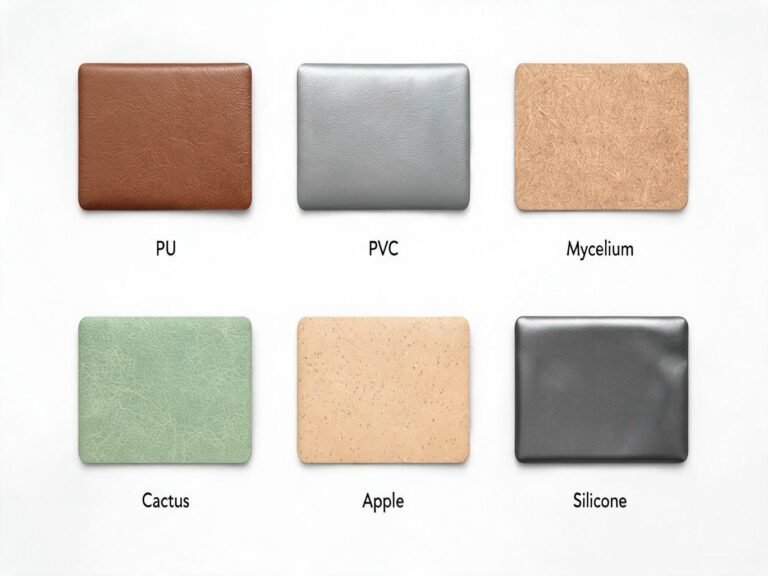
The plant-based leather category has exploded in recent years. Piñatex (pineapple leaf fiber), mushroom mycelium leather, Desserto (cactus), Vegea (grape pomace), and AppleSkin (apple waste) are all commercially available and being used by established fashion brands. Plant-based leathers offer compelling sustainability stories and appeal strongly to Gen Z and millennial consumers.
That said, there are practical considerations for volume sourcing:
- Scale — Most bio-based materials are produced in limited batches; lead times can extend to 8–12 weeks for custom orders
- Consistency — Natural fibers can show variation in color, thickness, and surface texture between batches
- Durability — While improving rapidly, most bio-based materials have shorter proven track records compared to synthetic alternatives
- Pricing — Currently positioned at a premium, often 2–4x the cost of standard PU leather
For brands where sustainability is the core brand promise, these materials are worth exploring. For high-volume, price-sensitive lines, they’re not yet a practical replacement for PU or silicone leather.
Recycled Fabrics: RPET, Nylon, and Canvas
Recycled PET (rPET) from plastic bottles has become a mainstream handbag material. One ton of rPET yarn recycles approximately 60,000–70,000 plastic bottles, making it a powerful sustainability narrative. Brands like Adidas (via Parley for the Oceans collaboration) have demonstrated that recycled materials can work at scale. Organic cotton canvas and hemp remain popular for casual and eco-conscious bag lines.
These materials excel at casual, everyday bags — totes, shoppers, and gym pouches. They lack the structure and premium feel needed for evening bags or luxury accessories, but they’re hard to beat on price, sustainability credentials, and consumer recognition.
Comparison: How Do These Materials Stack Up?
| Material | Durability | Stain Resistance | Eco-Friendly | Cost |
|---|---|---|---|---|
| Full-Grain Leather | 10–20+ years | Moderate | Moderate | Premium |
| PU Synthetic | 1–3 years | Low–Moderate | Low | Budget |
| PVC Leather | 2–4 years | Good | Poor | Budget |
| Silicone Leather | 5–10+ years | Excellent | Good | Mid–Premium |
| Bio-Based | 2–5 years | Low–Moderate | Excellent | Premium |
| Recycled rPET/Canvas | 3–5 years | Moderate | Good | Budget–Mid |

Silicone leather fold test demonstrating supple hand feel for bag construction
Frequently Asked Questions
Is silicone leather better than PU leather for handbags?
For durability and stain resistance, yes. Silicone leather doesn’t suffer from the hydrolysis that causes PU to peel, and it resists staining from everyday substances like coffee, makeup, and oils. The trade-off is a slightly higher cost per meter and a smaller supplier base. For light-colored bags and products sold in humid climates, silicone leather is typically the better long-term choice.
What handbag material is most sustainable?
It depends on how you measure sustainability. Bio-based materials like Piñatex and mycelium leather have the lowest carbon footprints at raw material stage. Recycled rPET gives waste plastic a second life at scale. Silicone leather scores well on longevity (reducing replacement frequency) and zero VOC emissions during production. The most sustainable choice is the one that matches your product’s expected lifespan — a bag that lasts 10 years is inherently more sustainable than one replaced every two years, regardless of material.
Can silicone leather be used for structured handbags?
Absolutely. Silicone leather is available in thicknesses from 0.4mm to 1.5mm, and with the right substrate (non-woven or microfiber backing), it holds structure well enough for totes, satchels, and crossbody bags. We’ve supplied material for structured bag collections in Japan and Korea where the end customer couldn’t distinguish it from genuine leather in blind feel tests.
How to Choose the Right Material for Your Handbag Line
There’s no universal answer — but here’s a practical framework. Start with your product’s expected retail price and target use case. Premium collections above $200 retail should consider genuine leather or silicone leather for the main body. Mid-range lines ($50–200) benefit most from silicone leather or improved PU formulations. Entry-level and promotional bags below $50 can work with rPET or canvas for casual styles, or PU where leather-like aesthetics are needed.
Always test materials under conditions that mirror your end market. A bag that performs well in dry climates may fail in tropical humidity. Request accelerated aging data from your supplier — specifically hydrolysis resistance (for synthetics) and color fastness (for all materials). At TOPSUN, we provide full test data packages including Martindale abrasion, UV exposure, and waterproof testing with every sample order.
Explore Our Fashion & Sports Collection
About TOPSUN
TOPSUN is a leading silicone leather manufacturer specializing in custom material solutions for fashion accessories, automotive interiors, furniture, and more. With over 500 color and texture combinations, we help brands worldwide transition to durable, sustainable synthetic materials.
Certifications: REACH, RoHS, FDA, ISO 9001, GRS | MOQ: 500 meters | Sample delivery: 3–5 business days worldwide