A hotel procurement director signs a contract for 400 upholstered armchairs at $185 each — a “great price” according to the supplier. Thirty-two months later, 127 of those chairs show cracked armrests, peeling seat cushions, and seams splitting under daily use. The reupholstery quote comes in at $95 per chair. The replacement quote is $210 per chair — higher than the original purchase price because material costs have risen. This scenario plays out across hospitality, corporate, and healthcare furniture programs when upholstery furniture procurement optimizes for unit price instead of total cost of ownership. The material specified on day one determines the cost curve for the next decade.
Request Commercial Furniture Samples
The Lifecycle Economics of Upholstery Furniture Materials
Total cost of ownership (TCO) for upholstery furniture extends far beyond the purchase order. It encompasses the material’s service life, reupholstery frequency, maintenance labor, cleaning supply consumption, warranty claim processing, and eventual disposal costs. A chair that costs $185 to buy but requires $95 reupholstery every 3 years costs more over a 10-year period than a $280 chair that needs reupholstery once at year 7 for $60. The leather for furniture TCO guide provides the framework for this calculation, but the principle applies across all upholstery materials.
The key variables in the TCO equation are service life (how many years before the upholstery degrades below acceptable appearance), reupholstery cost (labor + material, typically 50-70% of original unit cost), and maintenance burden (cleaning frequency and chemical cost). Material chemistry drives all three. PVC leather cracks at stress points within 2-3 years in high-traffic commercial environments. PU leather delaminates in 3-5 years depending on humidity exposure. Genuine leather develops patina but requires conditioning every 6-12 months. Silicone leather maintains appearance for 7-10 years with simple wipe-down cleaning — no conditioners, no special treatments.

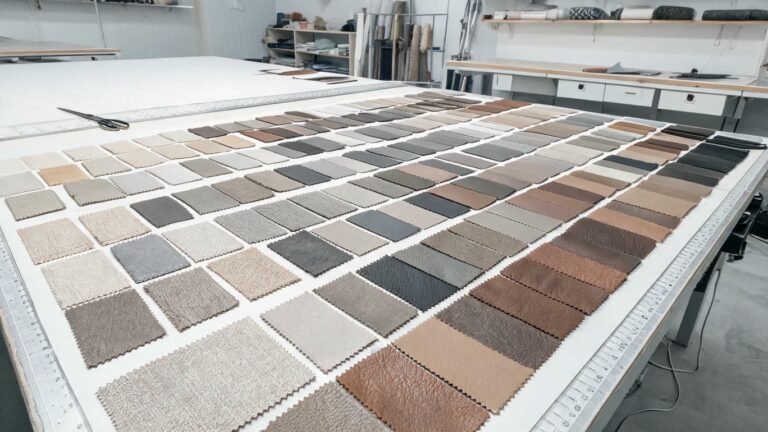
Surface texture and fold behavior indicate how upholstery materials will perform at stress points like seat edges and armrest curves over years of commercial use.
Commercial Grade Standards: BIFMA and Beyond
Commercial furniture isn’t just residential furniture built stronger — it’s held to entirely different testing standards. The ANSI/BIFMA e3 Furniture Sustainability Standard and its associated test protocols (X5.1 for office chairs, X5.4 for lounge seating, X5.11 for large occupancy seating) define the performance thresholds that separate commercial-grade from consumer-grade upholstery. For any sofa fabric leather hospitality specification, BIFMA compliance is the baseline — not the ceiling.
| Performance Metric | BIFMA Threshold | PVC Leather | PU Leather | Silicone Leather |
|---|---|---|---|---|
| Abrasion (Martindale) | ≥ 25,000 cycles | 10,000–25,000 | 25,000–50,000 | 50,000–100,000+ |
| Seam strength (lbf/inch) | ≥ 25 | 20–28 | 28–35 | 35–45 |
| Colorfastness (UV, 100 hrs) | Grade 4 minimum | Grade 2–3 | Grade 3–4 | Grade 5 |
| Flammability (CAL 117) | Pass | Pass (with additives) | Pass (with additives) | Pass (inherent) |
| Cleanability (12 chemicals) | No visible damage | 6/12 pass | 8/12 pass | 12/12 pass |
| Typical service life (commercial) | — | 2–3 years | 3–5 years | 7–10 years |
The service life row tells the TCO story most directly. PVC leather that passes BIFMA abrasion at 25,000 cycles still fails in commercial use within 2-3 years because the test doesn’t account for combined stress — UV exposure, chemical cleaning, and humidity cycling that accelerate material degradation in real-world conditions. The BIFMA LEVEL certification program evaluates sustainability across multiple attributes but doesn’t differentiate between materials that barely pass and those that exceed thresholds by wide margins.

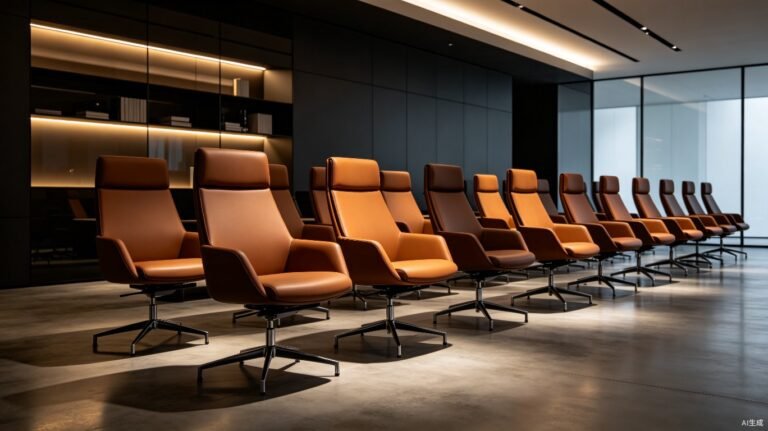
Commercial furniture upholstered in silicone leather maintains appearance and structural integrity far beyond the 2-3 year replacement cycle typical of conventional synthetic materials.
Material Chemistry and Replacement Cycle Math
The replacement cycle is where unit-price procurement decisions compound into lifecycle cost disasters. Consider a 200-unit hotel lobby seating project evaluated over a 10-year horizon. The math is straightforward but rarely performed before purchase orders are signed.
- PVC leather at $4.50/m²: Replace at year 2, 4, 6, 8, 10. Five upholstery cycles. Material cost: $4.50 × 5 = $22.50/m². Labor: $15/m² × 5 = $75/m². Total 10-year cost: $97.50/m².
- PU leather at $7.00/m²: Replace at year 3, 6, 9. Three upholstery cycles. Material cost: $7.00 × 3 = $21.00/m². Labor: $15/m² × 3 = $45/m². Total 10-year cost: $66.00/m².
- Silicone leather at $12.00/m²: Replace at year 7. One upholstery cycle. Material cost: $12.00 × 1.5 = $18.00/m² (initial + partial replacement). Labor: $15/m² × 1.5 = $22.50/m². Total 10-year cost: $40.50/m².
The cheapest material at the point of purchase becomes the most expensive over the service life. This calculation doesn’t even account for the indirect costs of replacement cycles: room downtime, guest experience degradation during refurbishment, and the administrative burden of processing warranty claims. When procurement teams present this upholstery materials selection framework to finance departments, the conversation shifts from “can we afford silicone leather?” to “can we afford not to specify it?”
Procurement insight: The labor component of reupholstery (typically $12-18/m²) often exceeds the material cost difference between PVC and silicone leather. Since labor costs rise with inflation while material costs benefit from production scale economies, the TCO advantage of durable materials widens over time. Locking in a 10-year material solution today is effectively a hedge against rising service costs.
Explore silicone leather applications in luxury commercial furniture, including stain resistance, cleanability, and design flexibility demonstrations.
Design Flexibility Across Commercial Segments
Different commercial segments demand different aesthetic and performance profiles from upholstery furniture. A boutique hotel lobby, a corporate co-working space, a restaurant dining room, and a senior living common area all have distinct material requirements that extend beyond durability. The restaurant silicone leather case study demonstrates how material selection aligns with sector-specific operational demands.
- Hospitality (hotels, resorts): Premium tactile quality, wide color range for brand alignment, and resistance to sunscreen, lotions, and beverages. Silicone leather’s 500+ color options and food-safe surface chemistry make it ideal for poolside, spa, and dining applications.
- Corporate and co-working: Cleanability between users, professional appearance retention, and acoustic comfort. Materials that show wear after months of daily use signal poor facility management to tenants and visitors.
- Food service: Grease resistance, sanitizability with commercial disinfectants, and compliance with food safety regulations. Silicone leather’s FDA-compliant formulations pass direct food contact standards that PU and PVC cannot meet.
- Healthcare and senior living: Infection control, ease of cleaning between occupants, and pressure-relief compatibility. The non-porous surface eliminates the bacterial harbors that fabric and porous PU create in clinical settings.
- Hospitality bars and lounges: Bar stool leather for hospitality design requires resistance to alcohol spills, bar condensation, and the abrasive contact of denim and metal hardware on clothing — demands that eliminate budget PU within months.

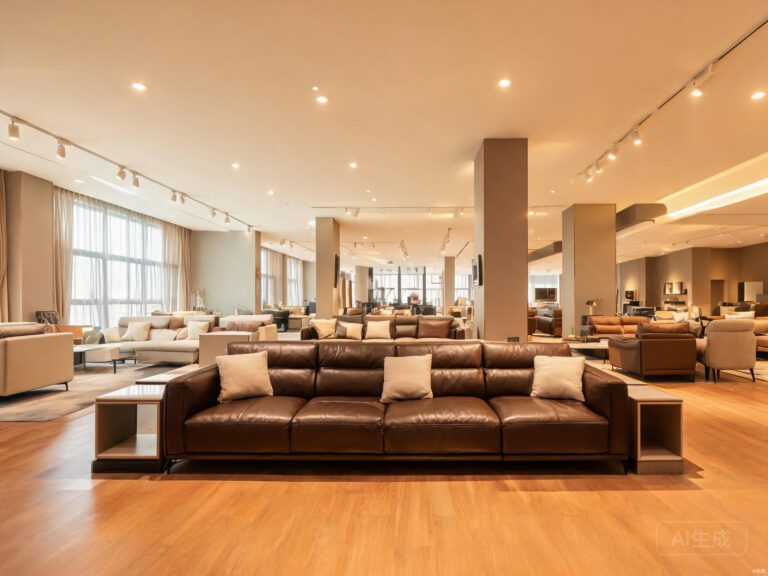
Commercial co-working spaces require upholstery furniture that maintains professional appearance under continuous daily use while supporting brand identity through color and texture.
The Hidden Costs of Cheap Upholstery
Beyond the direct costs of replacement and reupholstery, budget upholstery materials generate indirect costs that rarely appear in procurement spreadsheets but accumulate in operational budgets. These hidden costs include:
- Cleaning chemical escalation: PVC and PU require specialized leather cleaners ($8-12 per bottle) that must be stocked and inventoried. Silicone leather cleans with standard soap and water or isopropyl alcohol — supplies already available in any facility.
- Warranty claim processing: Each warranty claim requires inspection, documentation, supplier negotiation, and replacement logistics. A hotel chain processing 50+ upholstery warranty claims per quarter typically dedicates 0.5 FTE to this task — a labor cost never attributed to the original material decision.
- Guest satisfaction impact: In hospitality, visible furniture wear directly correlates with online review scores. A 0.3-point drop in average review rating on major platforms can reduce booking conversion by 5-8% for properties in competitive markets. The leather and upholstery sofa material choice ripples into revenue performance.
- Disposal and sustainability reporting: PVC contains chlorine and plasticizers that complicate end-of-life disposal. Many corporate sustainability programs now require documentation of material recyclability — a box that silicone leather checks more easily than halogenated polymers.

Bold color options in upholstery leather allow commercial spaces to create distinctive brand environments — but only if the color fastness specification ensures the vibrancy lasts beyond the first year.
Building a TCO Model for Furniture Procurement
Transforming upholstery furniture procurement from a price-based to a value-based decision requires a structured TCO model. Here’s what procurement teams should include when evaluating material options for commercial furniture programs:
- Initial material cost per square meter — the only number most procurement processes currently capture
- Expected service life in the target environment — request supplier data for similar installations, not generic lab test results
- Reupholstery frequency over the program horizon — typically 7, 10, or 15 years depending on the capital plan
- Labor cost per reupholstery cycle — including removal, disposal, installation, and facility downtime
- Annual cleaning supply and labor cost — compare specialized leather cleaners versus standard disinfectants
- Warranty claim rate and processing cost — ask suppliers for historical claim data from comparable installations
- End-of-life disposal cost and sustainability reporting burden — increasingly relevant as ESG reporting mandates expand
When this model is applied consistently across material options, the ranking almost always inverts from the unit-price ranking. Materials that appear expensive on the purchase order deliver the lowest lifecycle cost because they reduce the frequency and magnitude of every downstream expense category. The BIFMA LEVEL program provides a useful framework for evaluating the sustainability dimension, but TCO modeling must extend beyond sustainability scoring to capture the full economic picture.
Frequently Asked Questions
How much more does silicone leather upholstery furniture cost compared to PU?
On a material-only basis, silicone leather costs approximately 1.5-2x more than mid-range PU leather for equivalent thickness and backing specifications. However, when calculated over a 10-year commercial service life including reupholstery labor, cleaning supplies, and warranty processing, silicone leather delivers 40-60% lower total cost of ownership. The initial price premium is recovered within the first replacement cycle — typically by year 3-4 of the program.
Can silicone leather pass BIFMA X5.4 for commercial lounge seating?
Yes. Silicone leather exceeds BIFMA X5.4 requirements across all relevant test categories — abrasion (50,000+ Martindale cycles vs. 25,000 minimum), seam strength (35-45 lbf/inch vs. 25 minimum), colorfastness (Grade 5 vs. Grade 4 minimum), and flammability (inherent CAL 117 compliance without additive treatment). The material’s performance margins above BIFMA thresholds are what translate into extended service life — passing a test by 10% and exceeding it by 200% produce very different real-world outcomes.
Specifying for the Decade, Not the Purchase Order
Upholstery furniture procurement decisions made on unit price alone guarantee higher costs over the furniture’s service life. The material chemistry specified today determines replacement frequency, maintenance burden, warranty exposure, and guest experience for the next decade. By building a TCO model that captures lifecycle economics — not just invoice pricing — procurement teams can justify material investments that deliver measurable savings across the capital plan horizon. Silicone leather’s position on the cost-durability curve makes it the rational choice for commercial programs where furniture must perform for years, not months. The question isn’t whether you can afford the better material. It’s whether you can afford the cheaper one.
Build Your TCO Comparison Model
About TOPSUN
TOPSUN manufactures silicone leather for commercial upholstery furniture across hospitality, corporate, healthcare, and food service segments, with BIFMA-compliant performance data and lifecycle cost modeling support for procurement teams evaluating total cost of ownership across multi-year capital programs.
BIFMA X5.4 compliant · 50,000+ Martindale cycles · CAL 117 inherent flame retardancy · 500+ custom color options · FDA-compliant formulations for food service · 7-10 year commercial service life documented