Procurement managers sourcing commercial furniture face a stubborn problem. The wrong office chair upholstery material cracks after two years, fades under fluorescent lighting, and triggers employee complaints about discomfort. These failures cost money in replacements and quietly erode workplace productivity.
Here’s the thing: silicone leather has emerged as a solution that addresses breathability, durability, and professional appearance simultaneously—a combination that traditional materials struggle to match. This guide breaks down what B2B buyers should evaluate when specifying upholstery for executive and task seating, backed by laboratory test data from our own production lines.
Why Your Office Chair Upholstery Material Matters
The average office worker spends over 1,500 hours per year seated. That level of exposure punishes inferior materials relentlessly. Vinyl peels at the edges. Low-grade PU delaminates. Cheap fabric pills into an eyesore within months.
For procurement teams sourcing office chair leather at scale, the stakes go well beyond aesthetics. A material failure across a 500-unit deployment means a wave of warranty claims, reupholstery logistics, and frustrated facility managers. The desk chair material you specify today essentially determines your maintenance budget for the next decade.
We’ve seen firsthand how switching to silicone-based upholstery reduced one corporate client’s chair replacement cycle from 4 years to 10. The upfront cost per meter was higher, but the total cost of ownership dropped by roughly 40% once replacement labor and downtime were factored in.
Whether you’re outfitting a single floor or sourcing office furniture upholstery for a multi-building campus, the material decision deserves the same rigor you’d apply to any capital expenditure.

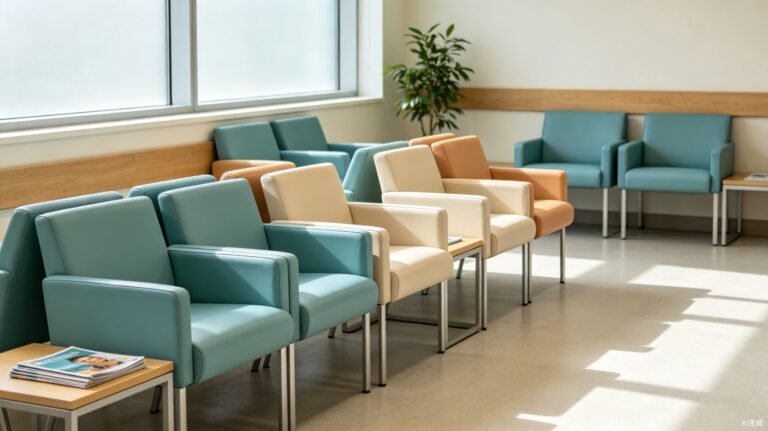
Silicone leather office chairs in a commercial workspace
Breathability: The Hidden Factor in Ergonomic Chair Material
Breathability isn’t glamorous, but it directly affects employee comfort and output. When a chair traps heat and moisture, the sitter shifts constantly, loses focus, and eventually files a complaint with facilities.
Traditional PVC and low-grade PU create a barrier that blocks airflow entirely. The result is a clammy, uncomfortable surface that gets worse in summer. Silicone leather, by contrast, offers a micro-porous structure that permits air circulation while maintaining a smooth, non-sticky feel.
The material also remains pliable across an exceptional temperature range: -40°C to 250°C. In practice, this means the ergonomic chair material won’t become brittle in cold storage or degrade in sunlit atriums. It performs consistently regardless of climate control settings.
According to BIFMA’s commercial furniture standards, workplace seating must meet rigorous durability and safety benchmarks. A material that contributes to thermal discomfort undermines even the best-engineered chair frame. That’s why surface breathability deserves as much scrutiny as lumbar support geometry.

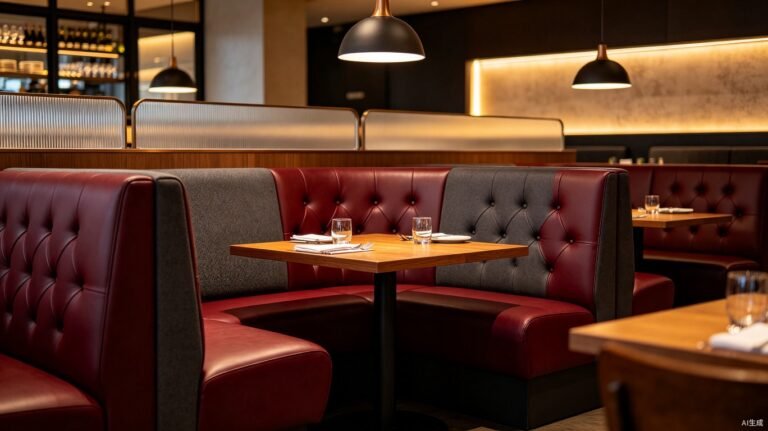
Ergonomic executive chairs upholstered in silicone leather
Durability: How Silicone Leather Outperforms Commercial Office Fabric
Durability is where procurement decisions live or die. A chair that looks stunning on day one but falls apart in 18 months is a sourcing failure—period.
Let’s look at the numbers. We test every batch of office furniture upholstery material against international ISO standards before it leaves our factory. Here’s what those tests reveal about silicone leather:
| Property | Specification | Test Standard |
|---|---|---|
| Thickness | 0.8–2.0 mm | ISO 2286-2 |
| Martindale Abrasion | ≥200,000 cycles | ISO 12947-2 |
| Flex Resistance | ≥100,000 cycles | ISO 5402 |
| Tensile Strength | ≥15 N/mm | ISO 3376 |
| Tear Strength | ≥20 N | ISO 34-1 |
| Temperature Range | -40°C ~ 250°C | — |
| UV Resistance | No cracking/fading | ASTM G154 |
| VOC Emission | Zero | ISO 16000-6 |

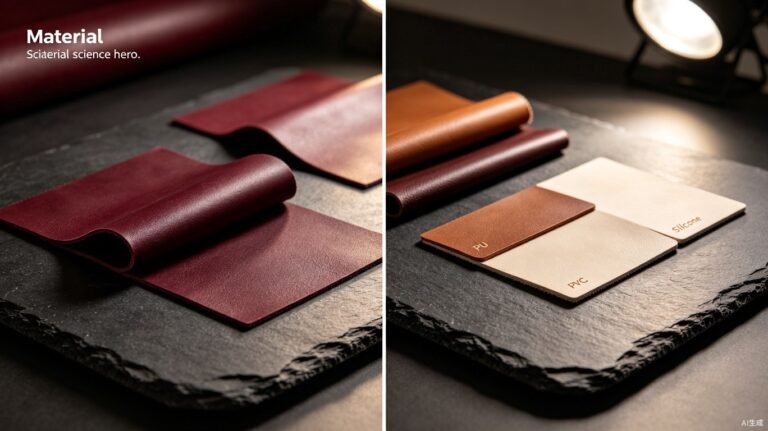
Martindale abrasion resistance testing in our factory laboratory
In our experience testing silicone leather against conventional upholstery materials, the Martindale result is the most telling number. At ≥200,000 abrasion cycles, the surface withstands years of daily rubbing, sliding, and friction. Even accounting for real-world abuse—zipper contact, ring scratches, aggressive cleaning chemicals—the material holds up far beyond what standard commercial office fabric delivers.
Key takeaway: A Martindale rating of ≥200,000 cycles translates to a projected service life of 10+ years under typical commercial office conditions. That’s roughly 2.5 times longer than standard PU leather in the same application.

Flex resistance testing simulates years of repeated seating movement
Flex resistance matters just as much. Office chairs flex constantly at the seat edge and backrest junction. A material that stiffens or cracks after repeated bending will fail prematurely. Our silicone leather withstands ≥100,000 flex cycles with no visible damage—roughly double what typical PU leather achieves.
Choosing the Right Office Chair Upholstery Material for Executive Spaces
Executive seating carries a different mandate. These chairs need to project authority, quality, and brand alignment. The executive chair fabric you select signals to visitors and employees what your company values.

Close-up of silicone leather surface texture and stitching detail
Silicone leather offers a rich, consistent grain that mirrors premium full-grain leather without the ethical sourcing concerns or maintenance burden. It’s available in a broad color palette, holds its color under prolonged UV exposure, and accepts custom embossing for brand-specific textures.
For B2B buyers managing large furniture rollouts, consistency is critical. Silicone leather produces uniform rolls with no natural hide variations—every chair in a 500-unit order looks identical. Genuine leather simply cannot make that guarantee.
It’s also worth noting that selecting the right upholstery manufacturer early in the design process prevents costly specification changes down the line. The best results come from involving material suppliers during the prototyping phase, not after.
Frequently Asked Questions
How does silicone leather compare to genuine leather for office chairs?
Silicone leather matches genuine leather in appearance and tactile feel while offering superior UV resistance, easier cleaning, and zero VOC emissions. It’s also more cost-effective at scale and eliminates the color variation issues inherent in natural hides.
What is the MOQ and lead time for custom orders?
The minimum order quantity is 500 meters, with lead times of 7–15 days depending on color and embossing specifications. Custom color matching is available for larger commitments.
Is silicone leather suitable for high-traffic commercial environments?
Absolutely. With a Martindale abrasion rating of ≥200,000 cycles and a service life exceeding 10 years, this material is engineered for exactly these conditions. It resists cracking, fading, and staining under heavy daily use.
What certifications does the material carry?
TOPSUN’s silicone leather holds REACH, FDA, PAHs, ISO 10993, and EN 13773 certifications, ensuring compliance for commercial furniture applications across EU and US markets.
Making the Right Choice for Your Next Furniture Rollout
Selecting the right office chair upholstery material is a decision that compounds over time. Choose poorly, and you’ll absorb replacement costs, warranty claims, and employee dissatisfaction for years. Choose well, and you secure a decade of reliable performance that actually lowers your total cost of ownership.
The data speaks clearly. Silicone leather delivers the breathability, durability, and professional finish that commercial furniture demands. With zero VOC emissions, 10+ years of service life, and full regulatory compliance, it’s a material procurement teams can specify with complete confidence.
About TOPSUN
TOPSUN is a specialized manufacturer of silicone leather for commercial furniture, automotive interiors, and medical applications. With in-house testing laboratories and ISO-certified production lines, we supply B2B clients across the EU and US with custom upholstery solutions engineered for long-term performance.
Certifications: REACH | FDA | PAHs | ISO 10993 | EN 13773 | MOQ: 500 meters | Lead Time: 7–15 days