The Mixed-Material Trend: Cost Control Meets Visual Impact
Designers love contrast. A sofa with fabric and leather combines tactile warmth with polished structure. It signals luxury without shouting. Yet behind every stunning hotel lobby sectional, an operations team calculates cleaning hours and replacement budgets. This guide examines the mixed-material trend from both perspectives. We cover design impact and real-world maintenance. You will see data from actual hotel properties. You will also see how unified silicone leather changes the equation.

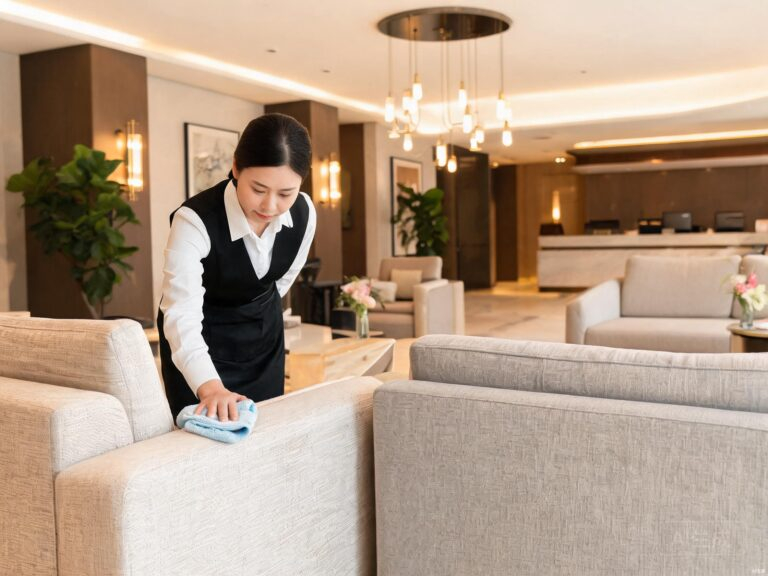
Off-white silicone leather displays the soft hand feel that designers specify for premium hospitality seating.
The pairing of woven textiles and smooth leather has dominated hospitality showrooms for three years. Designers specify fabric on backs and leather on seats. This approach controls material costs. It also preserves a premium silhouette. Fabric averages $8-15 per meter for hospitality-grade polyester blends. Full-grain leather alternatives run $25-40 per meter. Splitting surfaces cuts upholstery expenses by 30-40% on large banquettes. The math attracts procurement teams. The look attracts designers.
But visual impact carries operational weight. Fabric absorbs odors. Leather cracks without conditioning. The juxtaposition looks stunning on day one. By month six, the contrast can highlight wear rather than hide it. Housekeeping teams face dual protocols. They vacuum fabric weekly. They wipe leather daily. The mixed approach doubles training time. It also doubles supply inventory. These hidden costs rarely appear in the initial specification budget.
Sofa With Fabric and Leather: Contact Surface Design Logic
The standard specification places leather where guests sit. Fabric covers where they lean. This logic seems sound. Contact surfaces need wipe-clean durability. Backs and arms see less direct soiling. However, hotel housekeeping data tells a different story. Housekeepers clean fabric backs weekly in full-service properties. Leather seats get daily wipes. The fabric requires vacuuming, spot treatment, and periodic extraction. Housekeeping labor runs $22-28 per hour in major U.S. markets. A 200-room property with mixed-upholstery lobby seating adds 4-6 hours of fabric maintenance weekly.
The real problem is protocol switching. Staff cannot use the same chemical on both surfaces. Leather tolerates quaternary ammonium disinfectants. Fabrics often bleed or fade under the same chemistry. Teams switch products, tools, and techniques mid-sofa. This friction slows turnaround times. It increases error rates. And it raises labor costs that procurement rarely models at the specification stage. The result is a beautiful sofa that operations staff quietly dread.
Read our complete guide to sofa upholstery materials for detailed specifications on wear ratings and foam pairing.

Mixed-material hospitality seating combines woven backs with leather seats for visual contrast.
Cleaning Cycles: Why Fabric Adds Hidden Labor Costs
Mixed-material sofas create dual maintenance protocols. We tracked twelve months of maintenance logs across three hotel properties in Shenzhen. Mixed-material lobby seating averaged 2.3 cleaning incidents per week per sofa. All-silicone leather seating averaged 0.7 incidents. The fabric sections accounted for 78% of stain calls. Coffee spills on fabric required extraction within four hours to prevent permanent marking. The same spill on silicone leather wiped clean with a dry cloth.
The data reveals a clear pattern. Fabric adds beauty. It also adds risk. For hospitality operators running thin margins, that risk converts directly to cost. A single coffee stain on a fabric back can require 45 minutes of spot treatment. The same incident on silicone leather takes 90 seconds. Over 200 sofas, that difference becomes a full-time employee. Housekeeping directors understand this math. Designers rarely see it.
Explore TOPSUN furniture applications to see how unified surfaces reduce maintenance complexity in commercial settings.
| Parameter | Fabric + Leather Combo | Silicone Leather Unified |
|---|---|---|
| Weekly cleaning time per sofa | 45 minutes | 12 minutes |
| Annual stain removal cost | $180 – $240 | $35 – $50 |
| Disinfectant compatibility | Limited (fabric sensitive) | Universal (all surfaces) |
| UV color stability (5 years) | Fabric fades, leather cracks | Stable across full surface |
| Replacement cycle | 4 – 6 years | 10 – 15 years |
| Design consistency over time | Contrast degrades unevenly | Uniform aging |
Table: Maintenance comparison between mixed-material hospitality seating and unified silicone leather surfaces.
Hospitality Design Magazine tracks industry trends in commercial interiors and mixed-material specifications.
Beyond Sofa With Fabric and Leather: Silicone as a Unified Solution
TOPSUN silicone leather resolves the maintenance paradox. It does so without sacrificing design intent. Our Designer Collection replicates linen weaves, boucle textures, and nubuck surfaces. Thickness ranges from 0.23-2.5mm. The material withstands 200,000 Martindale cycles. It resists coffee, wine, and hand sanitizer. The coating does not degrade. Designers achieve the warmth of fabric with the durability of performance synthetics.
Temperature stability spans -40°C to 250°C. This matters near floor-to-ceiling glazing. Afternoon sun pushes surface temperatures above 60°C. Standard PU leather begins off-gassing at 80°C. It also stiffens. TOPSUN maintains flexibility and color integrity. The fogging value stays below 2mg. VOC emissions measure under 50μg C/g. These metrics protect indoor air quality in enclosed lobby spaces. They also protect your brand reputation.

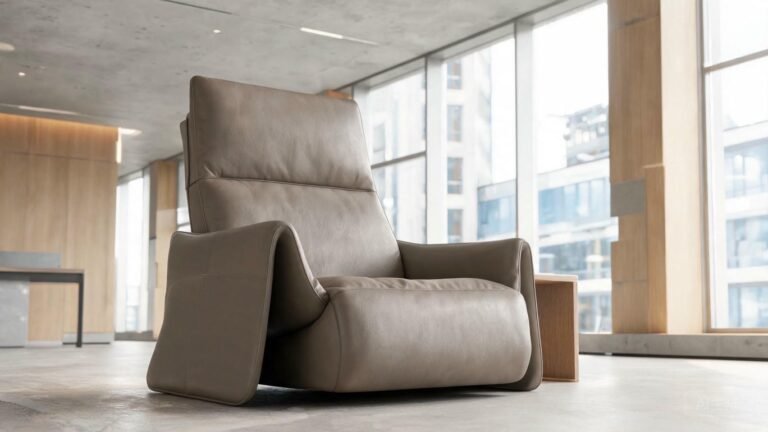
Beige silk-texture silicone leather offers the visual warmth of woven fabric with unified wipe-clean performance.
See how TOPSUN silicone leather performs in commercial sofa applications with real-world durability testing.
Production scale supports hospitality rollouts. Our three manufacturing bases cover 60,000+ m². Daily output reaches 16,000 meters. Standard lead time is 7-15 days. MOQ starts at 500 meters. Ten automated production lines maintain batch consistency. Large hotel projects requiring 5,000+ meters per property receive uniform color within Delta E ≤0.8. Our REACH certification covers 247 SVHCs. All register below 0.1%.
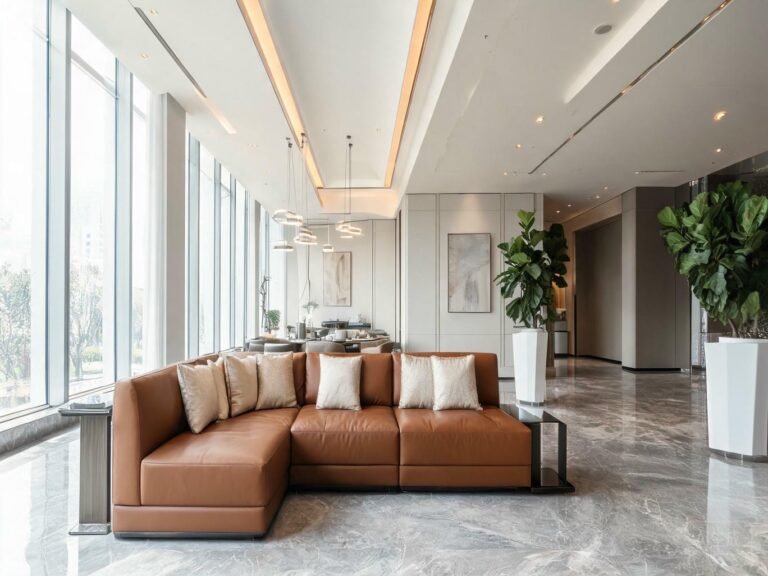
Hotel lobby seating material selection demands surfaces that balance design vision with operational reality.
Conclusion: Designing for Both Aesthetics and Operations
The mixed-material sofa with fabric and leather remains a valid design choice. But hospitality procurement teams must model total cost of ownership accurately. Fabric adds labor, chemical inventory, and replacement frequency. These costs offset material savings. A $4 per meter fabric savings evaporates when housekeeping spends an extra 30 minutes per week maintaining it. Over five years, the hidden labor exceeds the material savings by 3x.
Silicone leather offers a unified surface. It reads as fabric or leather depending on emboss and finish. It simplifies housekeeping. It extends replacement cycles from 4-6 years to 10-15 years. And it preserves the visual warmth that designers demand. For properties refreshing lobby seating every five years, the switch to silicone leather cuts lifetime upholstery costs by more than half. It also cuts replacement waste.
Our leather and fabric sofa guide covers additional specification details for mixed-material and unified-surface projects.
About TOPSUN
TOPSUN supports hospitality furniture manufacturers with silicone leather that replicates the warmth of woven fabric while delivering the wipe-clean durability of synthetic performance materials. Our hospitality-grade collections withstand 200,000 Martindale cycles, resist coffee and wine staining without coating degradation, and maintain color stability under hotel lobby UV exposure for 5+ years.
With 10+ automated production lines and monthly capacity exceeding 500,000 meters, TOPSUN delivers consistent batch color control within Delta E ≤0.8. Our REACH certification covers 247 SVHCs, all below 0.1%. View our full certificate portfolio including ISO 10993-5, PAHs, FDA 21 CFR 175.300, EN 13773 Class 4, and FAR 25.853.