American designers and specifiers are asking the same question more frequently: where do I find a silicone leather supplier USA buyers can actually trust? The answer is more nuanced than a Google search suggests. Most silicone leather production happens in Asia, and navigating the gap between an overseas factory and a US compliance requirement takes more than a purchase order — it takes a supplier who understands both sides of the Pacific.
Why Finding a Silicone Leather Supplier USA Buyers Trust Matters
The silicone leather supplier USA market is evolving fast. As brands across medical, automotive, and consumer goods shift away from PU and PVC, demand for silicone-based alternatives has outpaced domestic manufacturing capacity. The global flame-retardant silicone leather market alone is projected to grow from $618 million in 2024 to $759 million by 2031 — and US buyers account for a significant share of that demand.
Here’s the challenge: not every overseas supplier understands what “US compliance” actually means. A factory might produce excellent silicone leather but have no idea what California Proposition 65 requires, or why an FDA food-grade letter matters for a baby product application. That knowledge gap turns into delayed shipments, rejected customs entries, and reformulation costs that eat your project timeline alive.

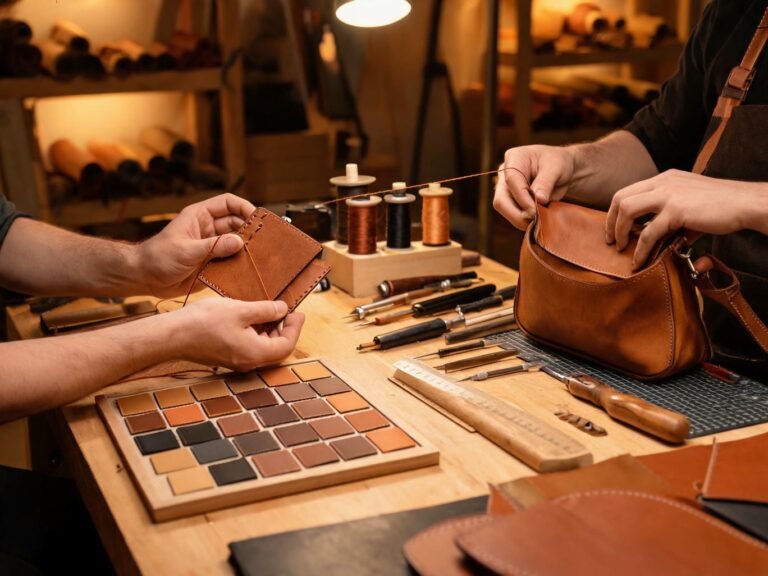
A diverse color range signals production capability — but compliance documentation matters more than swatch variety for US import.
Working with a supplier who has dedicated export experience and US-market knowledge eliminates this risk. They know which test reports US customs and OEM auditors look for, and they maintain documentation that aligns with American regulatory expectations rather than just domestic Chinese standards.
Domestic Manufacturing vs. Import: The Real Trade-Offs
Let’s be honest about the silicone leather manufacturer vs distributor USA landscape: true silicone leather manufacturing in the United States is virtually non-existent. The coating technology, raw material supply chain, and production scale all sit in Asia. What exists in the US are distributors and trading companies that import finished rolls — which means you’re paying a markup and losing direct access to the factory’s engineering team.
| Sourcing Channel | Pros | Cons | Best For |
|---|---|---|---|
| US Distributor | Fast delivery; local stock; no import paperwork | Higher price; limited customization; no factory access | Small-batch projects; urgent sampling |
| Direct from Manufacturer (China) | Lower cost; full customization; engineering support | Longer lead time; import logistics; MOQ commitment | Production orders; custom colors/textures |
| Hybrid (Manufacturer + US Warehouse) | Factory pricing with local stock; faster reorders | Requires established volume; limited to stock colors | Repeat orders; ongoing production programs |
For most US brands, the direct-from-manufacturer route delivers the best long-term value — provided the supplier has proven silicone leather expertise and export infrastructure. The key is finding a manufacturer who treats US compliance as a standard part of their workflow, not a special request.
US Compliance Checklist: FDA, Prop 65, and FTC Labeling
Three regulatory frameworks determine whether silicone leather can legally enter US supply chains. If you’re looking for an FDA compliant silicone leather supplier USA brands can rely on, here’s what to verify:
FDA compliance applies when silicone leather contacts food or skin for extended periods. The supplier should provide an FDA food-grade test report (typically 21 CFR 177.2600 for rubber articles intended for repeated food contact). This matters for baby products, kitchen accessories, and food packaging applications — not just medical devices.

In-line quality inspection during production — US compliance starts at the coating line, not at customs.
California Proposition 65 requires warning labels on products containing listed chemicals above safe harbor levels. Silicone leather’s advantage here is significant: because it contains no plasticizers, no phthalates, and no heavy-metal pigments (when properly formulated), it typically passes Prop 65 screening without triggering any warning requirements. Verify this with a Prop 65 substance test report from an accredited lab — don’t accept a supplier’s verbal assurance.
FTC labeling governs how you describe the material to consumers. Silicone leather isn’t “genuine leather” or “PU leather” — it’s a distinct category, and mislabeling triggers FTC enforcement. Work with your supplier to confirm the correct material designation for your product labels and marketing materials. The eco-friendly properties of silicone leather can be a legitimate marketing claim, but only with proper documentation backing it.
How to Evaluate a Silicone Leather Supplier USA Importers Rely On
Learning how to source silicone leather from China to USA means looking beyond product quality to evaluate the supplier’s export infrastructure. Five factors separate a reliable import partner from a risky one:
- Export documentation: Can they provide a complete documentation package — Certificate of Origin, material safety data sheets, and compliance test reports — formatted for US customs entry?
- Communication responsiveness: Do they respond to technical questions in English within 24-48 hours? A supplier that takes five days to answer a formulation question will be a nightmare during production.
- Logistics capability: Do they have experience shipping to US ports? Can they handle LCL (less-than-container-load) shipments for smaller orders, or only FCL?
- Sample consistency: Does the production sample match the initial sample within acceptable tolerances? Request a production-run sample, not just a showroom swatch.
- Reference projects: Can they share (anonymized) examples of US brands they’ve supplied? A supplier with existing US clients has already navigated the compliance learning curve.

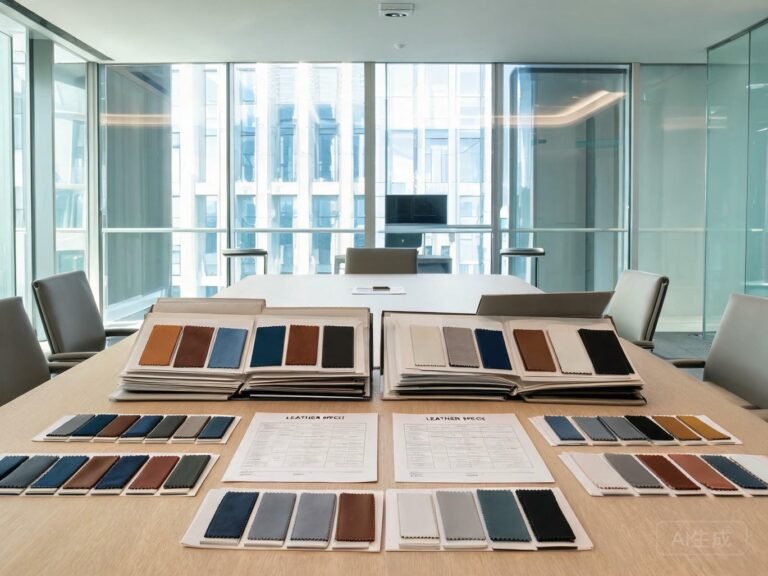
A structured buyer evaluation process ensures the supplier meets both material and regulatory requirements.
We’ve built our silicone leather supplier selection process around these five pillars. For US buyers, we also maintain English-language technical documentation, provide 48-hour response SLAs, and offer complete export compliance packages with every shipment — because a delayed customs entry costs more than the material itself.
Silicone Leather Applications Growing Fastest in the US
Understanding where US demand is concentrated helps you find the best silicone leather supplier for your specific application area. Three sectors are driving the strongest growth:
Medical and healthcare: Examination tables, wheelchair cushions, and dental chair upholstery demand materials with ISO 10993 biocompatibility and antimicrobial properties. US medical device manufacturers increasingly specify silicone leather over PU because it withstands hospital-grade disinfectants without degrading.

Quality inspection at a manufacturing facility — consistent standards matter when exporting to regulated US markets.
Automotive interiors: EV and luxury vehicle programs are adopting silicone leather for seats, door panels, and steering wheel wraps. The material’s low-VOC profile aligns with OEM cabin air quality targets, and its UV stability suits vehicles with panoramic glass roofs.
Baby and children’s products: Stroller fabrics, high chair covers, and play mats require materials free of phthalates, BPA, and heavy metals. Silicone leather’s inherently non-toxic formulation makes it a natural fit for this segment, where US regulatory scrutiny is highest. For broader sourcing context, our 2026 leather supplier sourcing guide covers additional sectors.
Learn about TOPSUN’s export standards and compliance documentation for US-bound shipments.
Frequently Asked Questions
Are there silicone leather manufacturers in the USA?
True silicone leather manufacturing — coating silicone elastomer onto fabric substrates — is not currently done at scale in the United States. Production is concentrated in China, where the coating technology and raw material supply chain are established. US-based companies typically function as distributors or importers. For custom formulations and production-scale orders, working directly with an experienced manufacturer like TOPSUN offers better pricing and engineering access.
What certifications should a silicone leather supplier have for the US market?
At minimum: FDA food-grade compliance (21 CFR 177.2600) for food-contact or baby product applications, California Prop 65 test report showing no listed substances, and REACH compliance for brands also selling in the EU. For automotive applications, add VDA 277/278 VOC test reports. For medical applications, ISO 10993 biocompatibility testing is essential. Always request current reports — certifications older than 12 months may not reflect the current formulation.
Building a US-Ready Sourcing Strategy
Finding a silicone leather supplier USA brands can trust isn’t about proximity — it’s about compliance knowledge, communication reliability, and documentation discipline. The right supplier treats US regulatory requirements as standard operating procedure, not a special favor. They provide complete test reports before you ask, respond to technical questions in English within a day, and have shipped to US ports enough times to navigate customs without surprises.
For a broader view of the synthetic leather supplier landscape, our supplier comparison resource covers additional options. But if your priority is a partner who already speaks fluent “US compliance,” start the conversation with documentation — not swatches.
Request US-Market Compliance Report
About TOPSUN
TOPSUN supplies silicone leather to US-based brands across medical, automotive, and consumer goods sectors, with dedicated export compliance support for American import regulations.
FDA food-grade compliance testing, California Prop 65 substance screening, REACH certification for dual US-EU market access, and English-language technical documentation with 48-hour response SLA.