If you’re building or scaling a leather goods brand, the manufacturing partner you choose is one of the most important decisions you’ll make. A great partner — let’s call them your “leather & co.” partner — brings craftsmanship, reliability, and problem-solving to the table. A bad one brings missed deadlines, quality defects, and the kind of headaches that sink product launches.
The challenge is that finding a good partner is harder than it looks. There are thousands of leather goods manufacturers out there, ranging from tiny family workshops to massive factory operations. They all have websites saying they produce “high-quality” leather goods. But the reality on the ground varies enormously.
In this guide, we’ll walk you through the different types of leather goods manufacturing partners, how to find them, what to look for when vetting, and the red flags that should make you walk away. Whether you’re a startup looking for your first manufacturer or an established brand wanting to add a new production line, this guide will help you make better partner decisions.
Use Our Supplier Audit Checklist
The 4 Types of Leather Goods Manufacturing Partners
Not all leather goods manufacturers are the same. They fall into four main categories, each with different capabilities, pricing, and ideal customers. Understanding which type you need is the first step in finding the right partner.
| Partner Type | What They Do | MOQ | Best For |
|---|---|---|---|
| OEM Manufacturers | Produce goods to your exact design and specifications | 100–500 pcs | Brands with established designs |
| ODM Manufacturers | Offer existing designs you can modify and brand as your own | 300–1,000 pcs | Brands wanting fast time-to-market |
| Craft Workshops | Small-batch, handcrafted production, often specialty techniques | 10–50 pcs | Premium / luxury startup brands |
| Private Label Suppliers | Stock products that you brand with your logo and packaging | 50–200 pcs | Retailers, gift companies, promotions |
Most new brands start with either private label or ODM because the MOQs are lower and you don’t need to invest in product development. As you grow, you’ll likely move toward OEM where you have more control over design and materials. The best partners can support you across this journey — they’ll start you on ODM and help you develop your own OEM line as your volume increases.
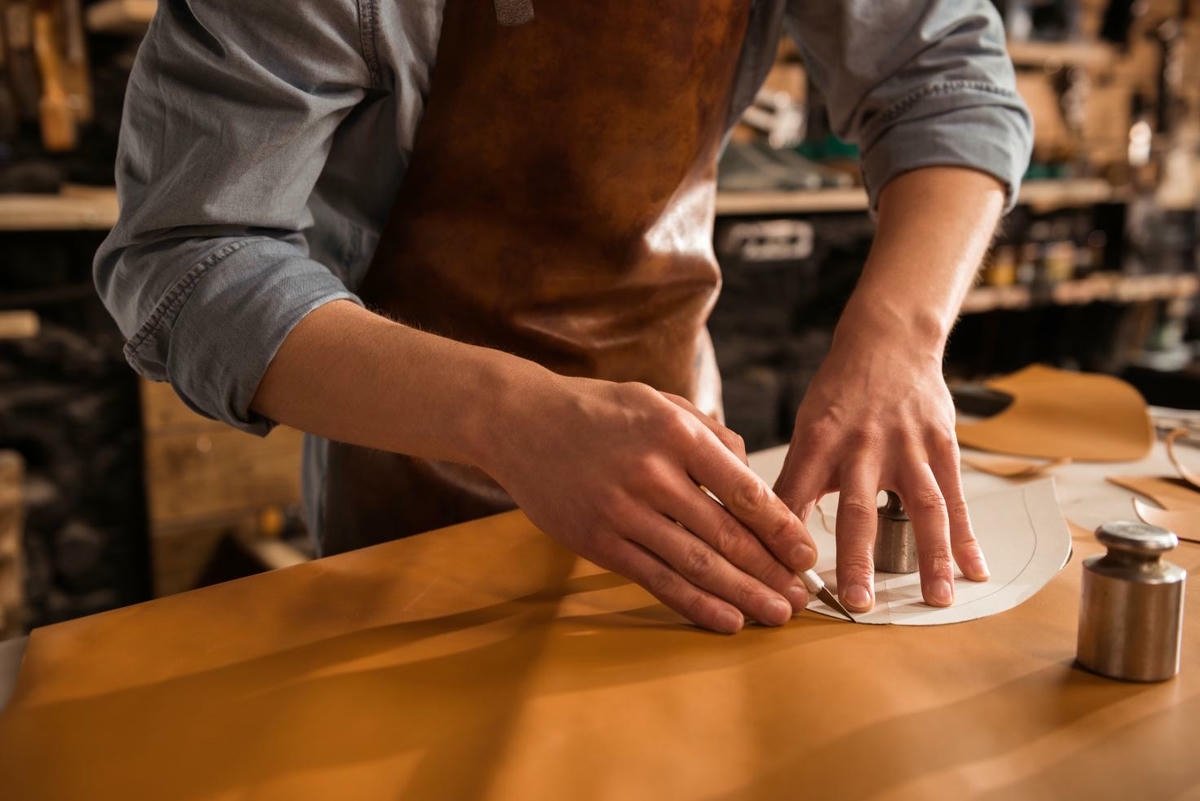
Leather goods cutting and pattern department — OEM production requires precise pattern making and sample development before full production.
Partner tip: Look for manufacturers who work at slightly larger scale than your current volume. You want a partner that can grow with you, not one you’ll outgrow in 12 months.
Where to Find Leather Goods Manufacturing Partners
There are more ways to find leather goods manufacturers than ever before — but more options doesn’t always mean better options. Here are the most reliable channels, ranked by quality of leads.
Trade fairs (best for premium and OEM)
Trade fairs are still the gold standard for finding quality leather goods manufacturers. You can see and touch their work, meet the people behind the company, and get an immediate sense of their craftsmanship and professionalism. The key events are Lineapelle (Milan, twice a year — the most important leather goods fair in the world), APLF (Hong Kong, twice a year — Asia’s largest), and Premiere Classe / Tranoï (Paris, during fashion week). If you’re serious about finding a premium partner, attending at least one major trade fair per year is worth the investment.
B2B directories (best for initial research)
Alibaba, Global Sources, and IndiaMART are the most common starting points for finding manufacturers online. The advantage is scale — you can find hundreds of manufacturers in minutes. The disadvantage is quality varies enormously, and it’s hard to tell who’s actually a factory and who’s just a trading company. Look for verified suppliers, gold suppliers, and suppliers with trade assurance. But don’t stop there — every supplier you find through a directory needs thorough vetting before you place any significant order.
Industry networks and referrals (best for trusted leads)
Referrals from other brands, designers, or industry contacts are often the highest-quality leads you can get. If someone you trust has already worked with a manufacturer and had a good experience, that saves you an enormous amount of vetting work. Industry associations (like the Leather Industries Association, or regional craft guilds), leather sourcing groups on LinkedIn and Facebook, and design schools with leather goods programs are all good places to build your network and get referrals.
Sourcing agents (best if you need hands-on help)
If you’re new to manufacturing or you don’t have the bandwidth to manage the sourcing process yourself, a good sourcing agent can be worth their weight in gold. They’ll find manufacturers, negotiate pricing, conduct quality inspections, and handle communication — for a fee (usually 5–15% of the order value). The key is finding an agent who specializes in leather goods, not a generalist. Leather manufacturing has its own quality standards and techniques, and you want someone who knows the difference between a good stitch and a bad one. For more on supplier evaluation, see our supplier audit checklist.
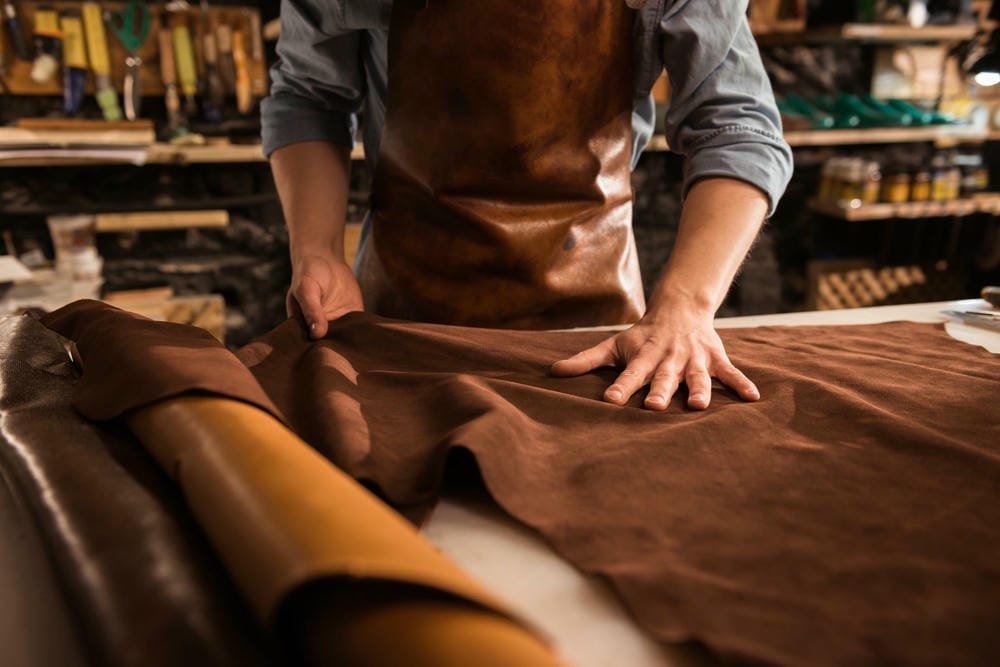
Factory partnership meeting — the best manufacturing relationships are built on clear communication, shared quality standards, and mutual respect.
Leather goods production overview — understanding the manufacturing process helps you ask better questions when evaluating partners.
How to Vet a Leather Goods Manufacturer: The 10-Point Checklist
Once you’ve found a manufacturer that looks promising, you need to vet them thoroughly. Here’s the 10-point checklist we recommend for every potential partner.
- Certifications — Do they have ISO 9001 (quality management)? BSCI or SMETA (ethical audit)? REACH compliance (for European markets)? These certifications don’t guarantee quality, but they show a baseline level of professionalism.
- Specialization — What do they actually make? A factory that specializes in wallets might not be good at backpacks, and vice versa. Look for manufacturers whose core product matches yours.
- Client references — Ask for 2–3 references from similar-sized brands in similar markets. Call them. Ask about quality, communication, on-time delivery, and how problems were handled.
- Sample quality — Order a sample before you order production. Pay attention to stitching, edge finishing, hardware quality, leather selection, and overall construction. This is your best indicator of production quality.
- Communication — How fast do they respond? Do they answer your questions directly? Good communication during the sales process usually means good communication during production.
- MOQ flexibility — Can they start with a smaller order and scale up? What’s their maximum capacity? You want a partner that can handle both your current volume and your future growth.
- Material sourcing — Where do they get their leather? Can they source specific materials? Do they have relationships with reputable tanneries? A manufacturer’s material options are a big part of your product’s quality and price point.
- Quality control process — How do they ensure quality? Do they have in-line inspections? Final inspections? What’s their defect rate? Ask for photos of their QC process.
- Factory visit (or virtual tour) — If possible, visit the factory in person. If that’s not feasible, ask for a video tour. You want to see the actual production floor, not just a showroom.
- Financial stability — How long have they been in business? Do they have the capital to buy materials and float production? A factory that goes out of business mid-order is your worst nightmare.
For a deeper dive into supplier evaluation, check out our leather supplier evaluation scorecard with a downloadable template.
Red flag: If a manufacturer says “yes” to everything without asking questions, that’s a bad sign. Good manufacturers push back on designs when they know something won’t work or can be improved.
Material Partners: Beyond Just the Manufacturer
Your “leather & co.” ecosystem includes more than just the company that sews your products. It also includes your material suppliers — the tanneries, synthetic leather manufacturers, and hardware suppliers that provide the raw materials your manufacturer uses.
Many brands let their manufacturer handle all material sourcing, and that’s fine for many situations. But as you grow, you may want to develop direct relationships with material suppliers for several reasons:
- Cost control — Cutting out the middleman can save 10–30% on material costs.
- Quality consistency — When you specify the exact material and supplier, you don’t get surprises from batch to batch.
- Innovation — Direct material partners can help you develop custom materials, colors, and finishes that your competitors don’t have access to.
- Risk mitigation — If your manufacturer has supply issues, you can redirect your materials to a different factory.
- Diversification — Adding alternative materials (like silicone leather for vegan or performance lines) gives you more product options and hedges against supply chain disruptions.
This is an area where many brands leave money on the table. They focus all their attention on the manufacturing partner and treat materials as an afterthought. But material cost is typically 40–60% of the total product cost, so even small improvements in material pricing or yield can have a big impact on your margins.
Request Material Samples for Your Product Line
Frequently Asked Questions
What’s the difference between OEM and ODM in leather goods?
OEM (Original Equipment Manufacturer) means the manufacturer produces goods to your exact design and specifications — you provide the design, patterns, and material specs, and they make the product. ODM (Original Design Manufacturer) means the manufacturer has existing designs that you can modify (change color, add your logo, adjust details) and sell under your own brand. OEM gives you full control but requires more upfront investment in design and development. ODM is faster and cheaper to get started but you’re limited to the manufacturer’s existing designs. Most brands start with ODM and move toward OEM as they grow and develop their own design language.
How do I protect my designs when working with a manufacturer?
This is one of the most common concerns for new brands working with manufacturers, especially in markets where IP enforcement is weaker. There are several things you can do. First, have a signed NDA (non-disclosure agreement) before you share any designs. Second, register your designs (copyright, design patents, or trademarks depending on your country) before you share them. Third, start with a small order — don’t give a new manufacturer your most valuable designs right away. Fourth, consider using different manufacturers for different product lines so no single factory has your full collection. Fifth, build the relationship — the best IP protection is a long-term partnership where both sides benefit from working together and have no incentive to copy your designs.
Building Your “Leather & Co.” Ecosystem
Finding the right leather goods manufacturing partner isn’t about finding the cheapest one or the one with the fanciest website. It’s about finding a partner that matches your brand’s quality standards, production volume, growth trajectory, and values.
The best partnerships are built over time. Start small. Test with a sample order, then a pilot production run, then a full order. Pay attention to how problems are handled — every manufacturer makes mistakes; what matters is how they fix them. And don’t forget to look beyond the sewing factory — your material suppliers are an equally important part of your “leather & co.” ecosystem, and the right material partner can give you a real competitive advantage.
Talk to Our Material Partnership Team
About TOPSUN
TOPSUN is a silicone leather material partner for leather goods brands and manufacturers — supplying premium vegan leather materials with stable pricing, consistent quality, and performance advantages over both genuine leather and PU synthetic.
We work with OEM/ODM manufacturers and brands directly, providing custom color matching, texture development, and technical support for new product development. Sample kits available with no minimum.