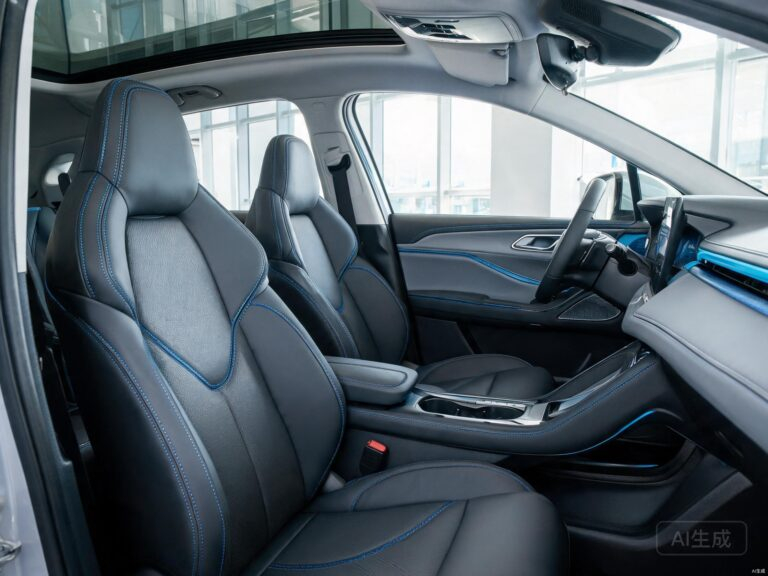
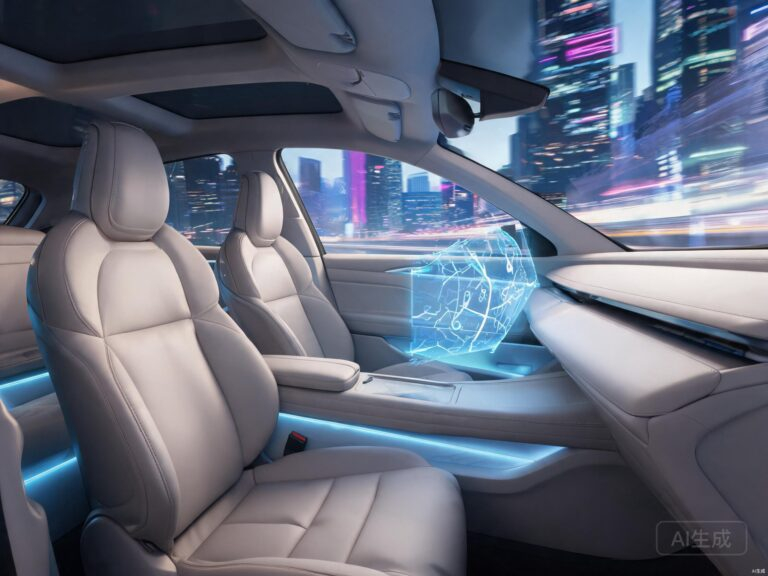
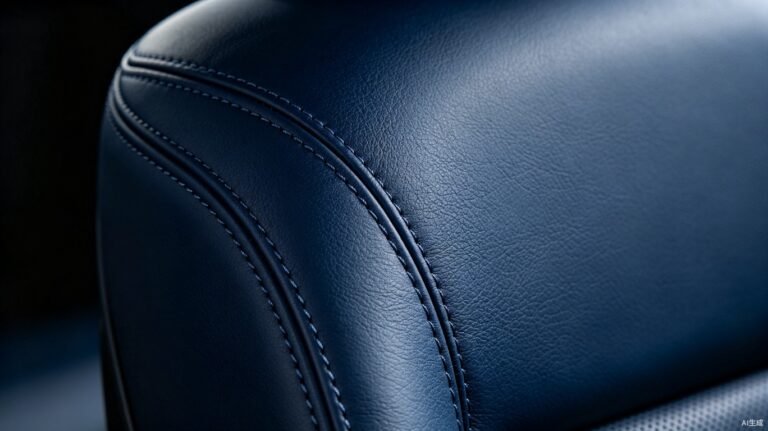
Sit in a new vehicle today and the seat beneath you is almost certainly not animal hide — it is a synthetic leather, and increasingly, that synthetic is silicone-based. Silicone leather car seats are moving from a premium niche into mainstream OEM specifications, and the reasons have less to do with marketing and more to do with hard performance: low fogging, abrasion resistance that outlasts PU, and a surface that stays soft through years of thermal cycling.
For sourcing teams specifying automotive interiors, this guide covers what makes silicone-coated leather a defensible choice for seating — and where the trade-offs actually sit compared to the PU and microfiber grades you may be evaluating today.
The OEM Case for Silicone-Coated Seating
Cabin air quality has become a genuine purchase consideration, not a footnote. New-car smell — once sold as a positive — is now understood as volatile organic compounds off-gassing from plastics, adhesives, and upholstery coatings. PU leather relies on solvent-based processes and plasticizers that continue to emit VOCs long after the vehicle leaves the line. Silicone leather contains no plasticizers and cures through an addition reaction that leaves virtually no residual volatiles.
That chemistry translates directly into a lower fogging value — the measurement of condensable emissions that fog a windshield’s interior. For OEMs targeting interior air-quality standards and five-star cabin ratings, this is a measurable advantage, not a cosmetic one. You can read more about where the broader market is heading in our 2026 OEM automotive leather trends analysis.

Durability That Survives Real-World Seat Abuse
Car seats take more punishment than almost any other interior surface. Think child seats grinding into the lower back, keys snagging the bolster on entry, and the repeated flexing of the seat base every time someone sits down. A seating material that looks good at delivery but cracks at 30,000 km is a warranty liability.
Silicone leather’s abrasion performance is where it pulls ahead most clearly. In Martindale wear testing, automotive-grade silicone leather regularly exceeds 100,000 cycles before any surface breakdown appears — comfortably above the thresholds typical PU grades meet before they begin to pill and crack. The flexing test below shows how the material behaves under the repeated bending a seat cushion experiences.
Watch the flexing endurance test — silicone leather withstands repeated bending without surface cracking.

In a side-by-side bench test we ran, an automotive PU grade showed visible surface cracks at 60,000 Martindale cycles, while the equivalent silicone leather grade reached 120,000 cycles with no cracking — effectively doubling the wear envelope.
How Silicone Compares to PU and Microfiber for Seats
The three materials most commonly shortlisted for automotive interior seating each have a distinct profile. The question is not which is universally “best” — it is which trade-off your program can live with.
| Property | Silicone Leather | PU Leather | Microfiber |
|---|---|---|---|
| Fogging value | Very low | Moderate | Low |
| Abrasion (Martindale) | 100k+ cycles | 40–60k cycles | 50–80k cycles |
| Thermal aging | Stable | Hardens / cracks | Stable |
| Cleanability | Wipe-clean | Absorbs oils | Traps dirt in fiber |
| Relative cost | Higher | Lower | Medium |
Microfiber wins on breathability and a suede-like hand, but it traps particulate soil deep in the fiber structure and is harder to restore once soiled — a real issue for light-colored seats. For a deeper material-by-material breakdown, see our silicone vs. PU vs. PVC comparison.
What to Verify Before Specifying Silicone Seat Leather
Switching a seating program to a new material is not a decision you finalize from a swatch alone. These are the checkpoints our automotive clients work through before sign-off:
- Fogging and VOC data: Request the actual DIN 75201 fogging value and VDA 278 emission report — not a generic “low-VOC” claim.
- Flame resistance: Confirm the grade meets the relevant vertical or horizontal burn standard for your market (FMVSS 302, GB 8410, or FAR 25.853 for seating in transport applications).
- UV and thermal cycling: Ask for xenon-arc aging results that mirror cabin conditions — interior surfaces see sustained heat and UV through glass.
- Color and grain consistency: Validate that the supplier can hold a tight Delta E tolerance across production batches for a multi-vehicle program. Our automotive OEM sourcing guide covers this in detail.
Frequently Asked Questions
Do silicone leather car seats feel as soft as genuine leather?
Yes — modern silicone leather grades are engineered for a soft, supple hand that closely mimics the tactile feel of premium hide. The surface can be embossed with natural grain patterns, and the backing construction controls the overall firmness to match OEM seating comfort targets.
Are silicone leather seats more expensive than PU seats?
The per-meter material cost is higher than standard PU, yes. But the gap narrows considerably when you account for lower warranty claims, longer refit cycles, and the avoidance of fogging-related cabin complaints. For premium and electric vehicle programs where interior air quality is a selling point, the value equation favors silicone.
Can silicone leather meet automotive fire standards?
It can. Flame-retardant grades are available that meet FMVSS 302, GB 8410, and FAR 25.853. Always specify the exact standard your vehicle program requires and request the corresponding test certificate rather than assuming a generic grade will pass.
The Seat Material That Earns Its Place
Silicone leather car seats are not a gimmick — they are a measured response to the demands modern vehicles place on interior surfaces: cleaner cabin air, longer wear life, and a surface that looks as good at 100,000 km as it did at delivery. The premium over PU is real, but so is the cost of field failures, warranty claims, and the cabin-odor complaints that drive customer dissatisfaction. For programs where interior quality is a brand pillar, silicone-coated seating has become a serious default, not an experiment.
The quickest way to evaluate it is tactile. Get samples, subject them to your own abrasion and heat tests, and put them head-to-head with your current grade.
About TOPSUN
TOPSUN is an organic silicone leather manufacturer supplying automotive-grade materials for seating, door panels, and steering-wheel wraps. Our coating line produces low-fogging, flame-retardant grades validated against OEM interior standards, with full production traceability.
Relevant certifications: FMVSS 302 / GB 8410 · FAR 25.853 vertical burn · DIN 75201 fogging · REACH SVHC-free · ISO 9001