When refitting a superyacht, procurement managers face a familiar dilemma. Traditional marine upholstery cracks under UV exposure, absorbs salt moisture, and develops mildew within a few seasons. The result is costly reupholstering cycles that frustrate owners and erode service margins.
Yacht interior silicone leather has emerged as a serious alternative to conventional PVC and PU materials. It pairs luxury aesthetics with genuine marine-grade durability. In this guide, we examine why leading shipyards and B2B sourcing teams are shifting toward this material — and what performance data you should demand before placing a bulk order.
The Hidden Cost of Traditional Yacht Upholstery
Most boat interior leather starts degrading long before its warranty expires. PVC-based vinyls lose plasticizers under UV light, turning brittle and cracked within 18 to 36 months of sun exposure. PU leather peels at the seams when salt water penetrates the backing fabric. Even premium options struggle with the combined effects of UV, salt, and humidity.
These failures are not cosmetic annoyances — they are operational costs. A single cabin reupholster on a 40-meter vessel can run $15,000 to $40,000 in materials and labor. Multiply that across helm seats, dinettes, sun pads, and lounge areas, and the total cost of ownership climbs quickly.
Traditional yacht upholstery was never engineered for the sustained assault of UV radiation, salt spray, and cabin humidity that rarely drops below 60%. That is why procurement teams are now evaluating weather-resistant materials more carefully. Many are moving away from short-lived options toward materials engineered to last a decade or more in genuine marine conditions.

Traditional marine upholstery often requires replacement within 3 to 5 years
Why Yacht Interior Silicone Leather Outperforms at Sea
Silicone-based materials behave fundamentally differently at the molecular level. The silicone polymer backbone is inherently stable under UV radiation — it does not break down the way carbon-based polymers do. This is not a surface coating or a chemical treatment. The UV resistance is built into the material itself.
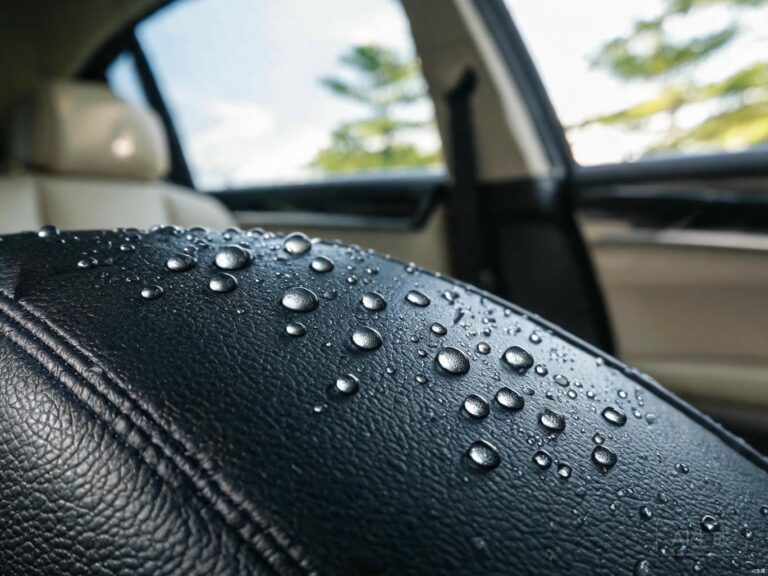
For yacht upholstery applications, this translates into measurable field performance. In our accelerated weathering tests, TOPSUN silicone leather samples showed no cracking, fading, or surface degradation after extended UV exposure cycles conducted per the ASTM G154 protocol. Water beads off the surface rather than soaking in, which prevents the moisture penetration that fuels mold and mildew growth behind upholstery layers.
Mold and mildew prevention is a critical consideration that procurement teams often underestimate. Once microbial growth takes hold beneath upholstery, it spreads through foam and backing materials, creating odor and health concerns that require complete replacement. Marine silicone leather features a non-porous surface that resists salt accumulation and microbial adhesion, making it far easier to clean and maintain than traditional options that trap contaminants in their grain structure.

Water beads off silicone leather’s non-porous surface, preventing moisture penetration
Marine Grade Leather Performance: Technical Benchmarks
When evaluating marine grade leather for B2B procurement, standardized test data matters more than marketing claims. The table below summarizes the key performance benchmarks our silicone leather achieves under internationally recognized testing protocols.
| Property | Specification | Test Standard |
|---|---|---|
| Martindale Abrasion | ≥200,000 cycles | ISO 12947-2 |
| Flex Resistance | ≥100,000 cycles | ISO 5402 |
| Color Fastness (Light) | Grade 4-5 | ISO 105-B02 |
| Temperature Range | -40°C ~ 250°C | — |
| UV Resistance | No cracking/fading | ASTM G154 |
| Hydrolysis Resistance | Excellent | ISO 11507 |
| Salt Spray Resistance | Excellent | — |
| Water Resistance | Excellent | AATCC 127 |
| VOC Emission | Zero | ISO 16000-6 |
| Service Life | 10+ years | — |
The temperature range tells its own story. From -40°C to 250°C, the material remains stable and flexible. It will not crack in winter storage and will not degrade near engine rooms or HVAC ducting. Zero VOC emissions (ISO 16000-6) also make it suitable for enclosed cabin environments where air quality matters — an increasingly important specification criterion for yacht builders targeting health-conscious clients.
Hydrolysis resistance deserves particular attention. In marine environments where humidity is constant, hydrolytic degradation is a primary failure mode for PU-based materials. Our silicone leather maintains flexibility and tensile strength even after prolonged moisture exposure — a critical factor for any superyacht upholstery specification.
Watch silicone leather withstand water and scratch testing — see why it’s ideal for marine environments
Yacht Interior Silicone Leather in Luxury Superyacht Upholstery
Luxury yacht interior design demands materials that deliver both performance and sensory appeal. Owners and designers expect a premium hand-feel, consistent color rendering, and stitching that holds tension over years of use.
Superyacht upholstery fabricated from silicone leather meets these expectations. The material offers a soft, supple touch comparable to top-grain leather, without the maintenance burden or ethical concerns of animal hides. Designers can specify custom colors, embossed grain patterns, and perforation styles to match interior schemes ranging from classic navy-and-white to contemporary minimalist palettes. See how it performs across different marine and outdoor applications.
Cleaning is refreshingly straightforward. A simple wipe with mild soap and water removes sunscreen residue, salt crystals, and food stains — no specialized cleaners required. This low-maintenance profile is particularly valuable for charter operations where turnaround time between guest groups is tight.
For B2B buyers comparing material options, our technical data sheet provides full specification details. Our silicone leather vs PU vs PVC comparison also breaks down the structural differences that matter most for marine applications. If you are new to synthetic marine materials, our faux leather for marine guide offers a practical starting point.

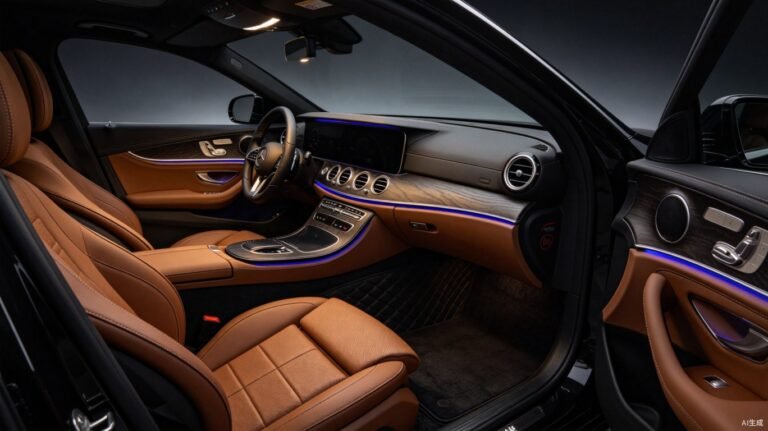
Silicone leather delivers luxury aesthetics with marine-grade durability

Helm seats demand materials that withstand direct sun, salt, and constant friction
Frequently Asked Questions
How long does yacht interior silicone leather last in marine conditions?
With proper fabrication and installation, TOPSUN silicone leather delivers a service life of 10+ years in typical marine environments. Its UV stability, hydrolysis resistance, and salt spray performance all contribute to this longevity — significantly outperforming conventional PU or PVC alternatives that typically require replacement every 3 to 5 years.
Is silicone leather suitable for outdoor marine seating?
Yes. The material’s UV resistance (ASTM G154), water resistance (AATCC 127), and temperature tolerance (-40°C to 250°C) make it suitable for both interior and exterior marine applications, including flybridge seating, helm chairs, and cockpit cushions.
What is the minimum order quantity for custom marine orders?
Our MOQ is 500 meters per color, with a lead time of 7 to 15 days for standard specifications. Custom colors, embossed patterns, and specialized backing options may affect production timelines. Contact our team for project-specific quotations and sample requests.
Making the Right Material Choice for Your Next Project
The evidence is clear. For procurement teams sourcing materials that must withstand UV radiation, salt spray, high humidity, and constant use — all while maintaining a luxury aesthetic — yacht interior silicone leather represents the most cost-effective long-term choice available today.
With zero VOC emissions, certifications including REACH, FDA, and EN 13773, and performance data backed by international testing standards, it delivers the durability that marine applications demand. For shipyards and refit specialists serving discerning clients, specifying the right material at the outset prevents costly callbacks and warranty disputes down the line. Request samples today and experience the difference firsthand.
About TOPSUN
TOPSUN is a specialized manufacturer of high-performance silicone leather for automotive, marine, furniture, and medical applications. With OEM/ODM capabilities and full REACH, FDA, PAHs, and EN 13773 certifications, we supply B2B clients worldwide with materials engineered for durability, safety, and premium aesthetics.
Certifications: REACH | FDA | PAHs | EN 13773 | ISO 12947-2 | ISO 105-B02 | ASTM G154