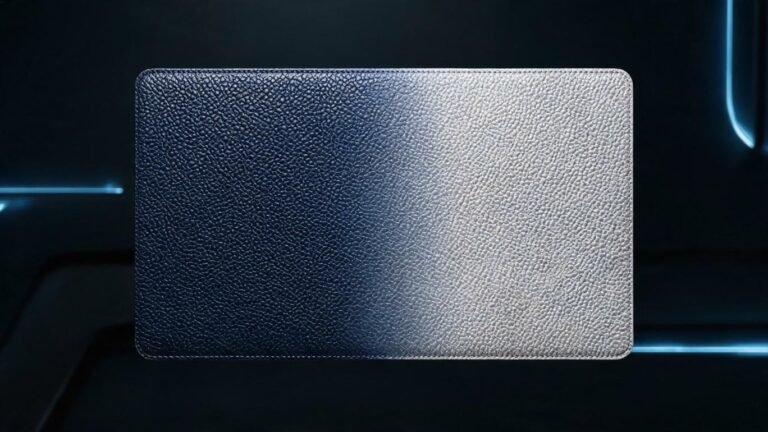
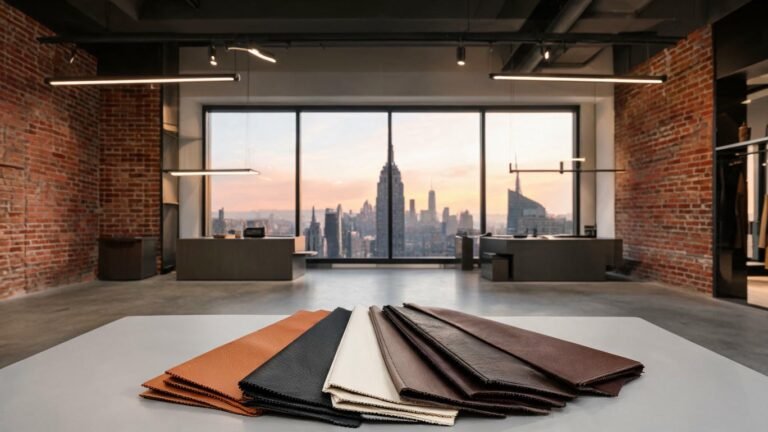
Electric vehicles changed what an interior needs to be. Without an engine masking chemical odors, every VOC emitted by cabin trim becomes immediately noticeable to the driver. Every gram of mass shaved from a door panel extends range. And every material choice is now scrutinized through a sustainability lens that did not exist a decade ago. These converging pressures are reshaping EV car interior materials — and silicone leather has emerged as one of the few coating technologies that answers all three demands at once.
This article looks at why electric-vehicle programs are leading the shift away from solvent-based PU and what that means for sourcing teams evaluating next-generation cabin materials.
Why EVs Rewrote the Interior Material Brief
In a combustion vehicle, the engine and exhaust provide a constant background of smell and vibration that masks subtle cabin off-gassing. An electric cabin is silent and sealed — there is nowhere for material emissions to hide. Cabin air quality has therefore moved from an afterthought to a headline specification, as the EPA notes that indoor VOC exposure can measurably affect occupant health and comfort, with several EV brands now publishing interior VOC limits as a marketing point.
Weight is the second driver. Every kilogram saved in interior trim translates into measurable range, and automakers are aggressively thinning seat covers, door skins, and dash wraps to hit efficiency targets. Silicone leather can be engineered to sub-millimeter thicknesses while retaining the tear strength PU loses at similar gauges — a combination that matters when you are trimming a vehicle where every gram is accounted for.
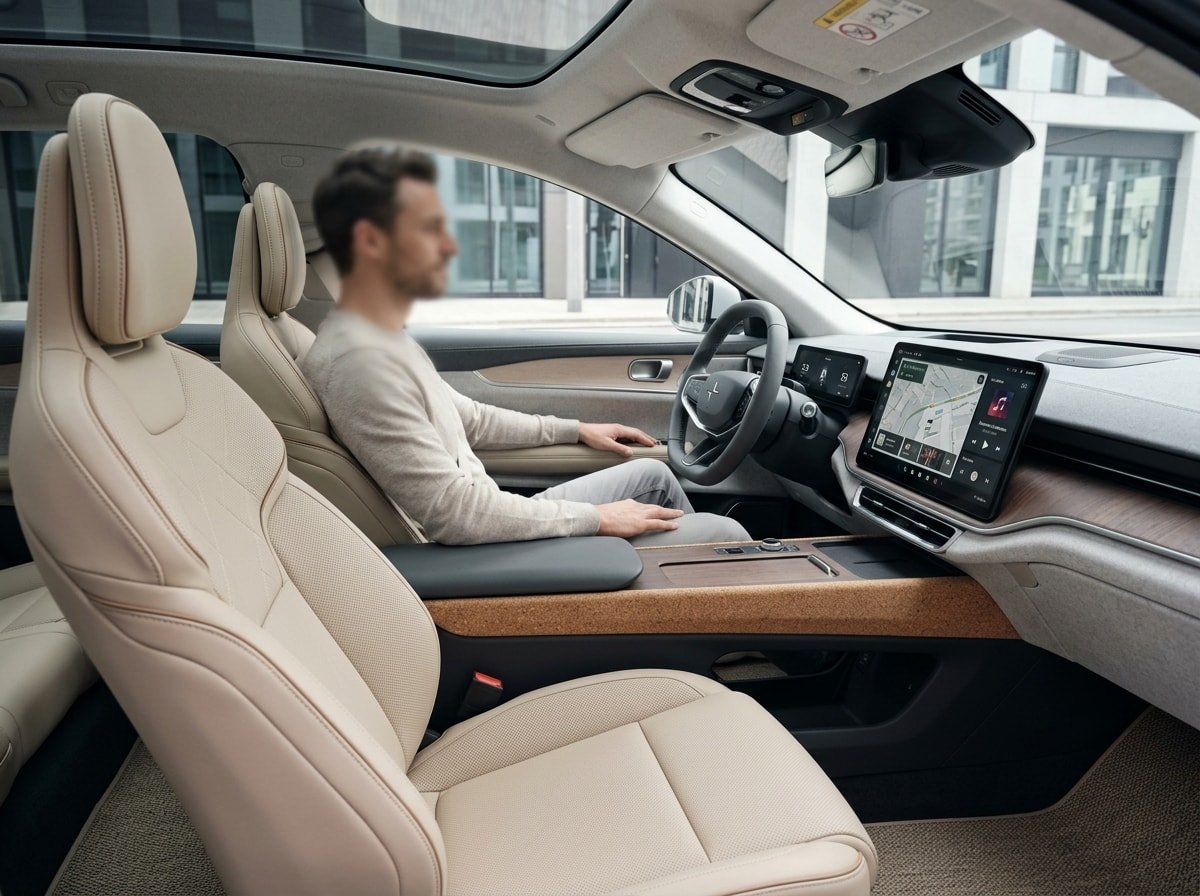
The Market Push Behind Sustainable Cabin Materials
The shift is not happening in a vacuum — it reflects where the broader market is heading. The global automotive interior market is on a steady growth trajectory, and the premium segment is expanding its share disproportionately. High-end interior products are projected to rise from roughly 23.8% of the market in 2023 to about 28.1% by 2026, as buyers increasingly associate cabin material quality with overall vehicle value. Within that premium tier, low-VOC and sustainable upholstery is becoming a baseline expectation rather than a luxury differentiator.
For EV brands in particular, the material story has to align with the brand story. A vehicle marketed as clean, future-facing, and environmentally responsible cannot credibly ship seats coated in a material that off-gases plasticizers — the disconnect is too obvious to a well-informed buyer. This is why the conversation around automotive leather trends in 2026 increasingly centers on silicone and bio-based coatings rather than conventional synthetics.
The global automotive interior market is projected to grow at roughly 6.2% CAGR, with premium interior share climbing to ~28% by 2026 — and EV programs account for a disproportionate share of that premium growth, driving demand for low-emission, lightweight materials like silicone leather.
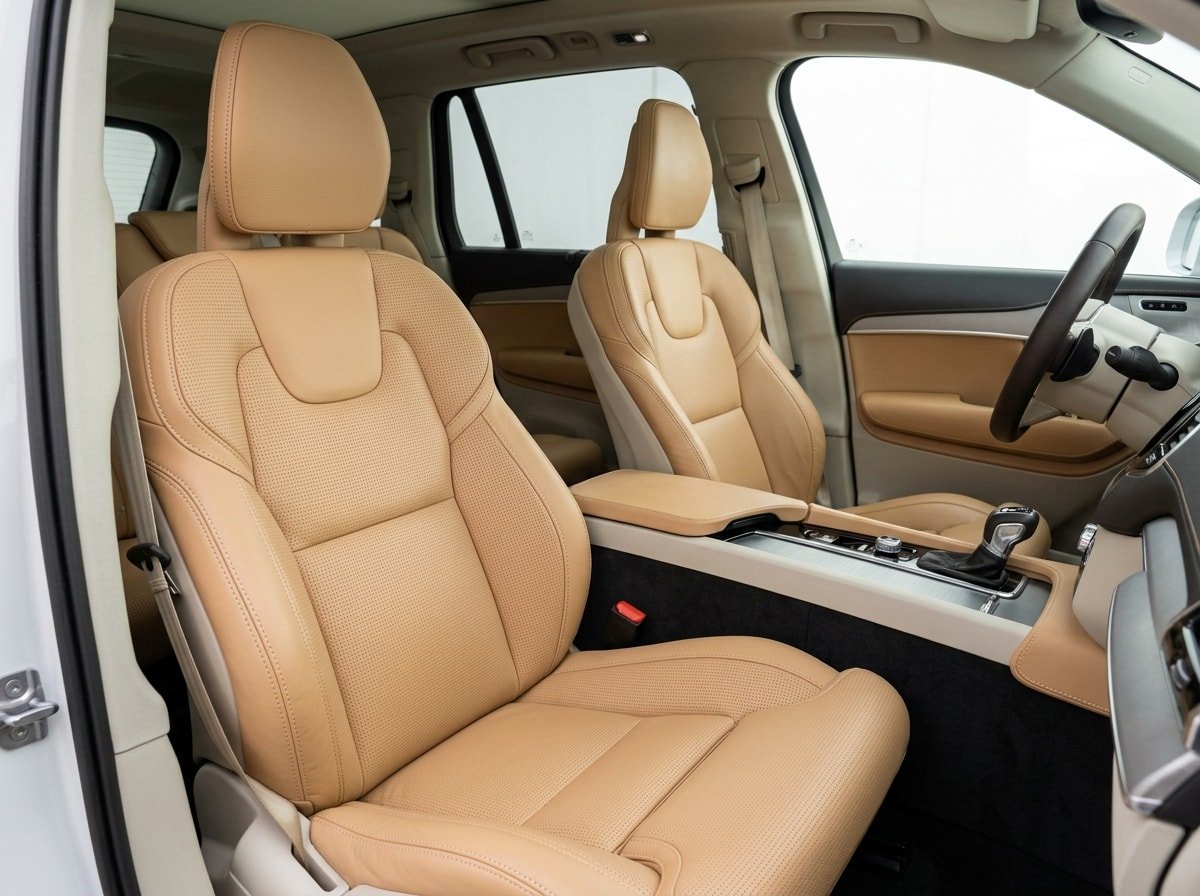
Silicone Leather vs. Conventional PU for EV Cabins
When the brief is “lightweight, low-emission, durable,” the comparison between silicone and PU tightens considerably. PU still wins on raw cost, but on the metrics that matter to an EV program, silicone pulls ahead.
| Requirement | Silicone Leather | Conventional PU |
|---|---|---|
| Cabin VOC emission | Near-zero | Moderate (solvent residual) |
| Min practical thickness | ~0.6 mm | ~0.8 mm |
| Plasticizer-free | Yes | No |
| Thermal stability (hot cabin) | High | Degrades over time |
| Sustainability narrative | Strong (plasticizer-free) | Weak |
The thermal point deserves emphasis. A parked EV cabin in summer can exceed 70°C, and PU coatings are prone to hardening and micro-cracking under repeated heat exposure. Silicone’s thermal stability means the surface stays supple through years of solar loading — a durability advantage that directly reduces warranty exposure. For more on how this fits the broader sustainable-materials movement, our sustainable leather overview covers the alignment between silicone chemistry and green-material sourcing.

What EV Sourcing Teams Should Ask a Supplier
If you are specifying materials for an EV program, the questions below separate a genuine silicone leather supplier from a reseller repackaging coated PU:
- Emission testing: Request the VDA 278 or equivalent report. A real silicone leather will show near-zero VOC and fogging values; vague “eco-friendly” claims are not a substitute for data.
- Thin-gauge capability: Ask whether the supplier can hold consistent thickness at 0.7 mm or below across a full production roll — critical for weight-sensitive EV programs.
- Heat-aging data: Request results from prolonged thermal aging at 80–100°C to confirm the material will not embrittle in a sun-soaked cabin.
- Traceability and certifications: Confirm the material is REACH SVHC-free and that the production line offers batch traceability. The silicone leather introduction page outlines the compliance framework we work to.
Frequently Asked Questions
Why are EV interiors held to stricter VOC standards than conventional cars?
Because EV cabins are sealed and silent, occupants notice chemical odors far more acutely than in a combustion vehicle where engine and exhaust noise mask them. This has pushed EV brands to impose tighter interior VOC limits and favor plasticizer-free, low-emission materials like silicone leather.
Does silicone leather help reduce vehicle weight?
It can contribute. Because silicone leather retains adequate tear strength at thinner gauges than PU, interior components can be specified with less material overall. The per-component saving is modest, but across a full cabin — seats, door panels, dash, steering wheel — it adds up for a weight-sensitive EV program.
Is silicone leather recyclable at end of life?
Silicone is a thermoset elastomer, so it does not melt-reprocess like a thermoplastic, but it can be ground and repurposed in downcycled applications, and it does not release hazardous halogens when incinerated. Its main sustainability advantage is durability and the absence of plasticizers, not unlimited recyclability — a nuance worth being honest about in material disclosures.
The Direction EV Interiors Are Headed
EV car interior materials are converging on a clear set of requirements: low emissions, light weight, thermal resilience, and a credible sustainability story. Silicone leather meets all four, which is why it is showing up in an expanding share of EV programs — from seats and door panels to steering-wheel wraps. As cabin air quality and lifecycle carbon disclosure become procurement requirements rather than aspirations, expect the migration away from solvent-based PU to accelerate.
The best way to assess whether silicone leather fits your program is to run it against your current spec in your own lab. Request samples, subject them to your thermal and abrasion protocols, and compare the emission data side by side.
About TOPSUN
TOPSUN manufactures organic silicone leather for electric-vehicle interiors, supplying low-VOC, plasticizer-free materials for seating, door panels, and cockpit trim. Our dedicated coating line produces thin-gauge automotive grades with full batch traceability from raw silicone to finished roll.
Relevant certifications: REACH SVHC-free · RoHS · DIN 75201 fogging · FMVSS 302 · ISO 9001 quality system