The global leather market sits at $93.33 billion in 2024, projected to reach $169.77 billion by 2035. Roughly 99% of that material comes from animal hides — by-products of the food industry — and 75% is chrome-tanned. For procurement teams, leather sourcing has never been more complex: 2,200 LWG-certified tanneries across 60+ countries compete for contracts, but new regulations on traceability, deforestation, and chromium are rewriting the risk map. Here is a five-year outlook on what is changing — and why silicone leather sourcing sidesteps most of it.
Leather Sourcing Landscape: What Changed in 2026
Three forces are reshaping ethical leather sourcing in 2026. First, the EU Deforestation Regulation (EUDR) requires proof that cattle hides do not come from deforested land — a traceability demand that most tanneries cannot yet meet. Second, chromium VI restrictions under REACH are tightening, with enforcement actions increasing against non-compliant suppliers. Third, the Leather Working Group has expanded its audit scope to include deforestation due diligence and lifecycle assessment, raising the bar for certification.
For buyers who have spent years sourcing from the same tanneries, the question is no longer “who is cheapest?” but “who can still ship to my markets in 2027?” The answer is narrowing. A leather supply chain audit that passed in 2024 may not pass in 2026 — not because the tannery changed, but because the rules did.

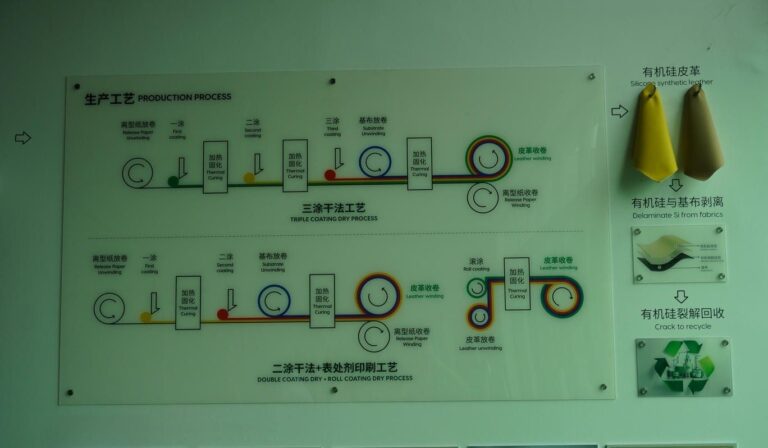
Quality and safety signage in a TOPSUN silicone leather facility — no chrome, no tannery effluent, no deforestation risk in the supply chain.
4 Supply Chain Risks Hiding in Your PO
When we review supplier documentation for clients, four risk categories surface consistently. Each one carries financial exposure that procurement teams underestimate:
- Chromium VI exposure — Trivalent chromium used in tanning can oxidize to hexavalent chromium (CrVI), a regulated carcinogen. EU REACH limits CrVI to 3 mg/kg. Non-compliant shipments face border rejection, product recalls, and potential litigation. Leather supply chain traceability gaps make this risk hard to detect before delivery.
- Deforestation compliance (EUDR) — From 2026, hides sold into the EU must carry geolocation data proving the source cattle did not graze on deforested land. Most tanneries outside Brazil and the EU cannot provide this data. Shipments without it will be turned back at the border.
- Traceability fraud — “Italian leather” labels are frequently applied to hides tanned in South Asia and finished in Italy. Batch-level traceability from farm to tannery remains rare. Brands that cannot prove origin face reputational and legal exposure.
- VOC and chemical residues — Solvent residues in PU-coated leather, phthalates in PVC, and DMF in synthetic finishes all carry regulatory limits. Without ISO 16000-6 or VDA 277 test data, buyers cannot verify compliance — and assume the liability.
One non-compliant shipment can cost more than a year of material savings. The risk is not in the price — it is in what the price does not include.

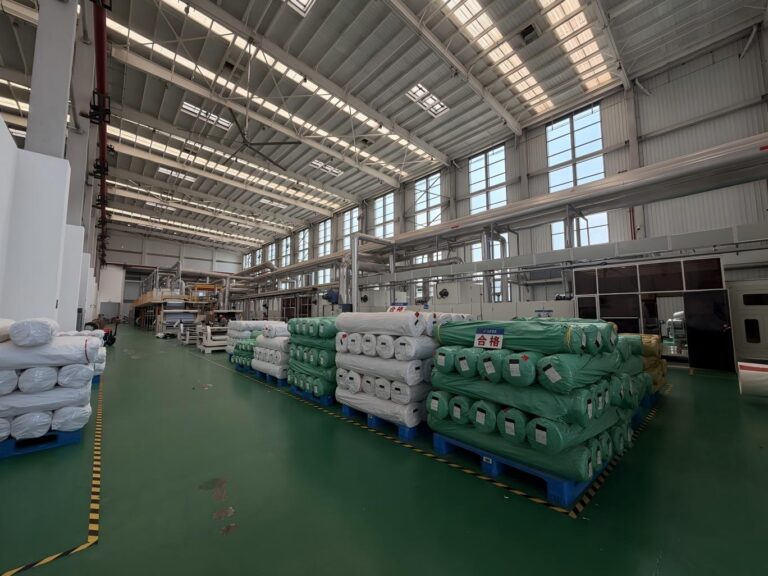
In-line quality inspection — every meter of silicone leather is traceable to its production batch, with no animal-hide supply chain to audit.
Silicone Leather: A Compliance Shortcut
Silicone leather sourcing eliminates four risk categories by removing animal hides from the supply chain entirely. No cattle means no deforestation risk. No chrome tanning means no CrVI. No solvent-based coating means no VOC residue. And because silicone leather is manufactured from silicone polymer and fabric substrate — both industrial materials with established supply chains — batch-level traceability is straightforward.
For buyers evaluating bulk leather sourcing key specs, the comparison is direct:
| Risk Category | Traditional Leather | Silicone Leather | Impact |
|---|---|---|---|
| Chromium VI | 3 mg/kg limit (REACH) | Zero chrome used | Risk eliminated |
| Deforestation (EUDR) | Geolocation proof required | No animal hides | Risk eliminated |
| Traceability | Farm-to-tannery (rare) | Batch-level (standard) | Risk minimized |
| VOC compliance | Solvent residues common | Zero / near-zero | Risk eliminated |
| End-of-life (EPR) | Non-recyclable | 100% recyclable | Cost avoided |
At TOPSUN’s facility, every production batch carries traceable documentation: material composition, coating chemistry, test results, and compliance certificates. The supply chain is industrial and transparent — no farm-to-tannery gap to bridge.

Finished goods warehouse — each roll is traceable to its production batch, with full compliance documentation attached.
How to Build a Risk-Resilient Leather Sourcing Process
Whether you are learning how to source leather for a small business or managing procurement for a Fortune 500, the framework is the same. The difference is scale, not principle:
- Require current test reports — Not brochures. SGS or Intertek certificates dated within 12 months for REACH, chromium VI, and VOC. No report, no PO.
- Map the supply chain to the hide origin — If the supplier cannot provide country-of-origin and tannery name, the risk is unquantifiable. For EU-bound products, geolocation data is now mandatory under EUDR.
- Evaluate alternative materials — If your application does not require genuine animal hide (most automotive, furniture, and medical applications do not), silicone leather eliminates the compliance burden entirely. Request samples and compare specs head-to-head.
- Build a dual-source strategy — Maintain one traditional supplier and one silicone leather supplier. When regulations tighten or a tannery loses certification, you have a fallback that does not require re-specifying.
For a broader view of material options across industrial applications, the same risk framework applies — the question is always what your supplier can prove, not what they claim.

Quality inspection station — compliance documentation is verified at the batch level before shipment, not after delivery.
Frequently Asked Questions
What is LWG certification and do I need it?
LWG (Leather Working Group) certification audits tanneries on environmental performance, water usage, energy consumption, and waste management. Over 2,200 suppliers across 60+ countries hold certification. If you source genuine leather, LWG is increasingly a baseline requirement — major brands will not accept non-certified tanneries. If you source silicone leather, LWG does not apply because the manufacturing process does not involve tanning. The compliance framework is different (REACH, PAHs, FDA), but the regulatory burden is lower.
Can silicone leather eliminate chromium compliance risk entirely?
Yes. Silicone leather contains no chromium in any form — not trivalent, not hexavalent. The manufacturing process uses silicone polymer and fabric substrate, with no tanning step. REACH chromium VI restrictions, Oeko-Tex chromium limits, and California Prop 65 chromium requirements are all irrelevant to silicone leather. This is a structural advantage, not a test-passing advantage — the substance is simply not present. LWG and FAO both acknowledge chrome-free alternatives as a growing segment.
Sourcing Decisions Are Risk Decisions
Leather sourcing is no longer a procurement exercise — it is a risk management exercise. The $93 billion market is growing, but so are the regulations that govern it. EUDR, chromium VI limits, traceability demands, and EPR costs are reshaping the supplier landscape in real time. For B2B buyers, the strategic question is whether to navigate those risks with traditional hide supply chains — or to sidestep them entirely with silicone leather. One path requires constant compliance auditing. The other starts compliant by design.
About TOPSUN
TOPSUN supplies silicone leather to B2B procurement teams seeking a chrome-free, solvent-free, and traceable alternative to traditional hide sourcing across automotive, furniture, medical, and marine supply chains.
REACH compliant · PAHs certified · FDA 21 CFR 177.2600 approved · 500,000+ meters monthly capacity · Free A4 swatches shipped globally via DHL