Ordering leather online has never been easier. A quick search turns up dozens of suppliers, marketplaces, and directories, all promising high quality at low prices. But as any procurement manager who has been burned by a bad online order knows, convenience does not equal reliability. The material that arrives might be the wrong grade, the wrong color, the wrong thickness — or it might fail basic performance tests, leaving you scrambling for a replacement and blowing your budget.
After years of working with B2B buyers who order leather online — and hearing their horror stories — I have put together a practical checklist for evaluating suppliers before you place an order. These are the seven questions I would ask any supplier before sending a purchase order, based on the issues that most commonly cause delays, cost overruns, and quality problems in online leather sourcing.

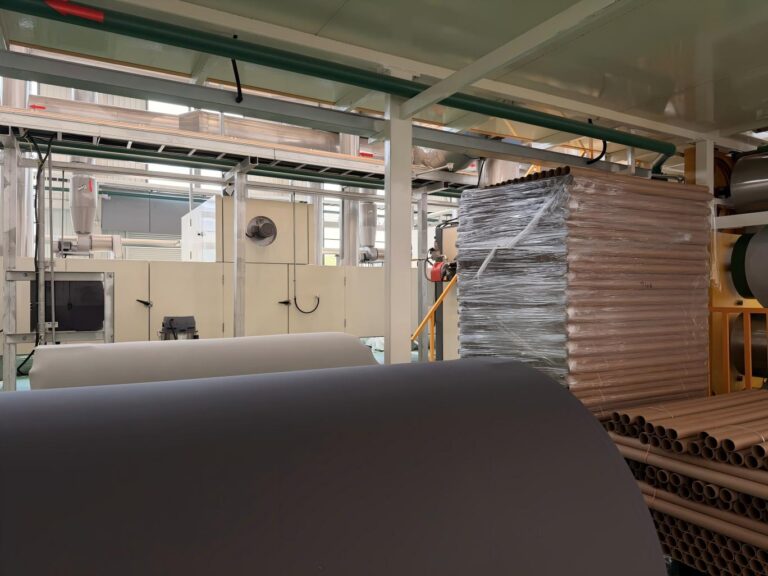
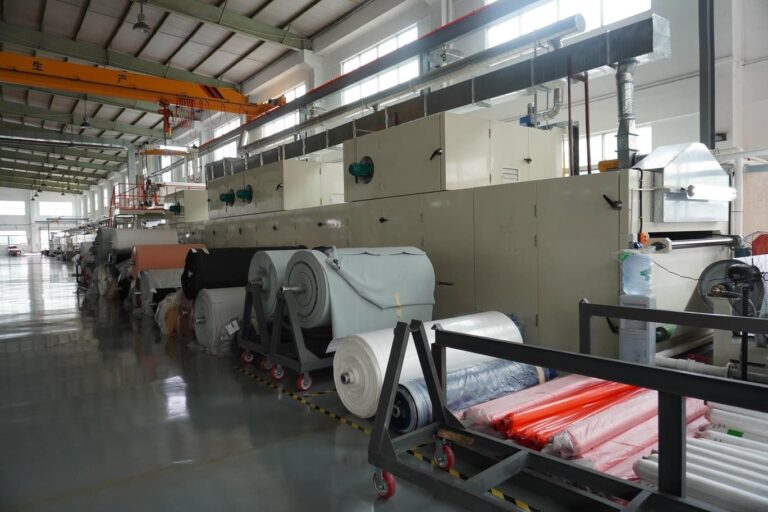
Finished leather goods warehouse — what you see online should match what actually ships
1. Can They Provide Verifiable Test Data and Certifications?
The first thing I check when evaluating an online leather supplier is whether they back up their product claims with actual test data — not just marketing descriptions. Any supplier can say their material is “durable” or “eco-friendly” or “high quality.” A serious supplier can show you the test reports that prove it, from accredited third-party laboratories like SGS or Intertek.
What specific tests should you look for? That depends on your application, but at minimum I recommend verifying abrasion resistance (Martindale or Wyzenbeek), tensile and tear strength, color fastness to light and rubbing, and flammability if you are sourcing for furniture or transportation. For regulated industries — healthcare, automotive, food contact — you also need relevant compliance certifications like ISO 10993 for biocompatibility, FDA for food contact, or FMVSS 302 for automotive. If a supplier cannot provide test reports, or if the reports are from an unknown lab, move on. There are plenty of suppliers who can.
Procurement Red Flag: A supplier whose website lists certifications but cannot produce the actual certificates on request. Always ask for the full certification document — not just a logo on a product page.
2. Do They Publish Clear, Detailed Product Specifications?
When you order leather online, you are buying based on a product page. If that product page is vague — “premium quality,” “soft feel,” “thick and durable” — you are essentially buying blind. Professional B2B suppliers publish complete, detailed technical specifications for every product, so you know exactly what you are getting before you order.
| Spec Category | What to Look For | Red Flag If Missing |
|---|---|---|
| Physical Specs | Thickness, width, weight per m², tolerance ranges | No thickness tolerance stated |
| Mechanical Specs | Tensile strength, tear strength, abrasion resistance, flex cycles | “Durable” with no test numbers |
| Environmental Specs | Temperature range, UV resistance, hydrolysis resistance | No temperature range given |
| Compliance | REACH, RoHS, VOC emissions, specific certifications | “Eco-friendly” with no cert details |
| Order Info | MOQ, lead time, roll lengths, packaging | No MOQ or lead time published |

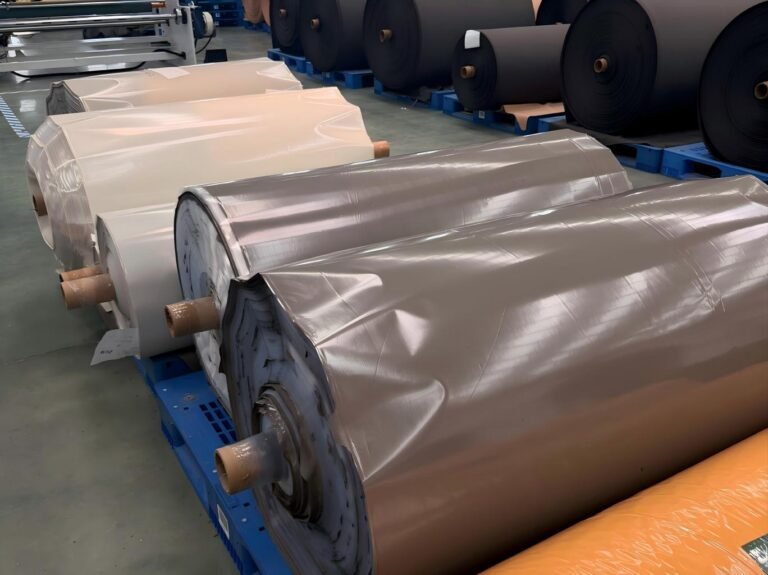
Palletized leather rolls in the warehouse — clear packaging and roll specifications prevent receiving errors
3. How Transparent Are They About Pricing and MOQ?
Nothing slows down a sourcing project faster than hidden costs and unclear minimum order quantities. When you order leather online, the price you see should be the price you pay — or at least close to it. Watch out for suppliers who advertise low per-yard prices but add on setup fees, tooling charges, color matching fees, and shipping surcharges that were not mentioned on the product page.
MOQ is another critical point. Some suppliers list low MOQs on their website but then hit you with “small order surcharges” or tell you the MOQ is higher for custom colors. Always confirm the total landed cost — including all fees, shipping, and any customization charges — before placing an order. And make sure you understand the pricing structure for repeat orders; some suppliers offer first-order discounts but then raise prices on reorders. For more on MOQ and pricing structure, see our guide to leather MOQ and pricing.
4. Can You Get Samples Before Committing to an Order?
Never place a bulk leather order based on website photos alone. Computer screens display colors differently, digital images cannot show texture accurately, and product descriptions are always flattering. You need to see and feel a physical sample before you can make a real sourcing decision. Any reputable supplier who sells leather online will offer sample swatches — usually for a small fee or for free, just covering shipping.
When evaluating a sample, check more than just the color and texture. Test it against your actual use case. Bend it repeatedly to see how it flexes. Apply a drop of water and a drop of oil to check stain resistance. Rub it against a rough surface to test abrasion. Compare it side by side with samples from other suppliers. And keep a reference sample so you can compare it against the bulk shipment when it arrives — this is your quality baseline. At TOPSUN, we send free A4 swatches worldwide via DHL/FedEx so you can evaluate the material in your actual environment before making a commitment.

Always request physical samples before ordering leather online — photos are not enough
5. What Is Their Production Capacity and Lead Time Reliability?
A supplier might have great products and great prices, but if they cannot deliver on time, none of that matters. When you are ordering leather online — especially from overseas suppliers — you need to understand their production capacity, their standard lead times, and their track record for on-time delivery.
Questions to ask: What is your monthly production capacity? What is the standard lead time for stock colors versus custom orders? What percentage of orders ship on time? Do you have multiple production lines or backup capacity if a line goes down? Can you scale up for larger orders, and if so, how much lead time do you need? The answers to these questions will tell you whether a supplier can handle your current order volume and grow with you as your needs change.
Also pay attention to communication speed and quality during the sales process. If a supplier is slow to respond or gives vague answers before you have placed an order, they will probably be even worse after they have your money. Responsive communication before the order is a leading indicator of customer service and delivery reliability after the order.
6. Do They Offer Customization — and at What Cost?
Stock colors and standard textures work for some projects, but most B2B buyers need at least some level of customization — a specific brand color, a unique texture, a particular thickness or backing material. When evaluating online leather suppliers, find out what customization options they offer and how those options affect price and lead time.
Common customization options to ask about include custom color matching (Pantone or RAL), custom texture embossing (with custom roller tooling if needed), custom thickness, different substrate or backing materials, and special finishes (matte, semi-gloss, metallic). For each option, find out the setup cost, the MOQ, and how much extra lead time is required. Some suppliers offer extensive color customization with very reasonable MOQs; others charge exorbitant fees for any deviation from stock products.

Full color swatch rack — verify custom color capabilities and matching accuracy before ordering
7. What Are Their Payment Terms, Warranties, and After-Sales Support?
Finally, look at the business side of the relationship. Payment terms tell you something about a supplier’s financial stability and confidence in their own product. A supplier that demands 100% payment upfront before production — especially for a first order — may be a higher risk than one that offers standard 30/70 or 40/60 terms (deposit upfront, balance before shipment). For larger orders, some suppliers may offer L/C (letter of credit) terms, which provide additional security for both parties.
Warranty coverage is another important factor. What does the supplier guarantee — and for how long? A 12-month warranty against manufacturing defects is standard, but some suppliers offer longer coverage or performance guarantees. Read the fine print: what exactly is covered, what is excluded, and what is the remedy if there is a problem? And equally important: what is the process for resolving quality issues? Will they send replacement material? Refund your money? How long does it take?
Frequently Asked Questions
Is it safe to order leather from online marketplaces like Alibaba?
Online marketplaces can be a good way to find potential suppliers, but you should always vet each supplier thoroughly before placing an order — the same way you would vet any other supplier. Marketplaces do not verify quality or certifications; they just provide a platform. Use them to discover options, then do your own due diligence: request samples, ask for test reports and certifications, check references, and start with a small trial order before committing to a large volume. The lowest price on a marketplace is rarely the best value overall.
How do I verify the quality of leather I ordered online when it arrives?
Always inspect incoming shipments against the approved sample and specification sheet. Check the color under consistent lighting (natural daylight is best), measure the thickness and width, verify the roll length, and look for visible defects like scratches, stains, or uneven texture. Run quick on-site tests if you can — a water drop test for absorbency, a bend test for flexibility, a rub test for color transfer. For critical applications, send a sample to a third-party lab for full performance testing. And keep the approved reference sample on file so you have a baseline for comparison.
Smart Online Sourcing Takes Work — but It Pays Off
Ordering leather online is convenient, but convenience should not come at the cost of quality or reliability. The best online suppliers are not just e-commerce stores — they are real manufacturers with real facilities, real test data, and real customer support. The seven checks on this list will help you separate them from the ones that look good on a website but fail to deliver when it counts.
My best advice: start small. Order samples first. Place a trial order. Build the relationship before you commit to a large volume. A good supplier relationship — one where you trust the quality, the pricing, and the delivery — is worth its weight in gold, and finding one online is absolutely possible if you do your homework.
Start with Free Samples — Order Online Now
About TOPSUN
TOPSUN is a silicone leather manufacturer making online ordering simple and reliable — with transparent pricing, published technical specs, free worldwide samples, and 500,000+ meters of monthly production capacity.
500m standard MOQ • 7–15 day lead time • 12-month warranty • Complete TDS available online • SGS and Intertek certified • DHL/FedEx sample shipping