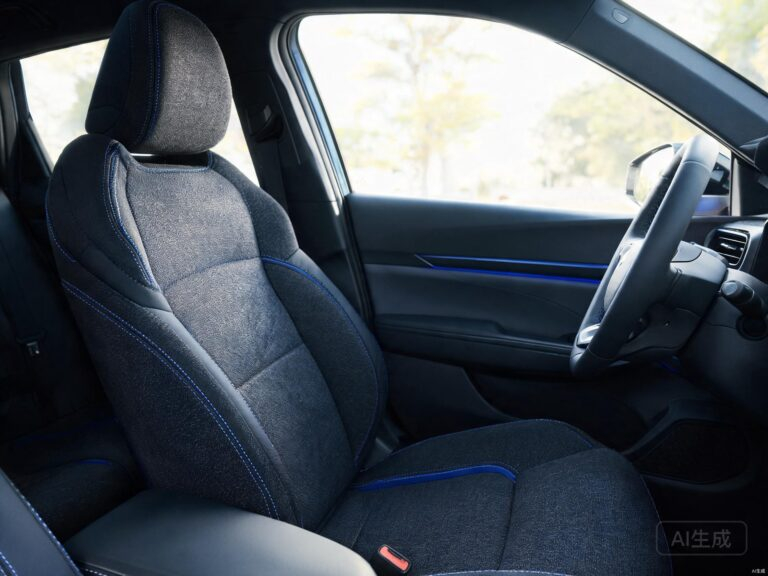
Choosing a fabric supplier feels straightforward until your first production batch arrives with inconsistent color matching, abraded edges, or certifications that don’t match the spec sheet. In our experience auditing synthetic leather supply chains for furniture and automotive OEMs, roughly 60% of procurement teams focus on unit price and delivery time while skipping the technical checkpoints that actually determine long-term cost. The fabric supplier you select today defines your warranty exposure, compliance posture, and product lifespan for the next decade — so getting it right matters more than shaving a few cents off the meter price.
Why Fabric Supplier Selection Determines Your Product’s Fate
Here’s the thing most sourcing guides won’t tell you: the gap between a mediocre fabric supplier and an excellent one isn’t measured in price — it’s measured in the number of production halts, warranty claims, and compliance failures you’ll face over a five-year horizon. We’ve seen furniture manufacturers switch suppliers to save $0.20 per meter, only to absorb $40,000 in warranty replacements when the cheaper material cracked after 18 months of UV exposure.
The root cause is almost always the same: the procurement team evaluated the supplier on commercial terms but never verified the material’s actual performance data. A silicone leather fabric supplier worth its salt will hand you Martindale test results, UV aging data, and third-party certification reports before you ask. If you have to chase them for documentation, that’s already a red flag.

Physical testing lab where fabric suppliers should verify Martindale, tensile, and tear strength data before shipment
Key Insight: A fabric supplier’s testing infrastructure tells you more about reliability than their price quote. Suppliers without in-house testing labs typically rely on batch sampling — meaning defective material can slip through undetected for weeks.
The 7-Point Fabric Supplier Audit Checklist
Before you sign a purchase order with any fabric supplier, run through these seven checkpoints. Each one addresses a specific failure mode we’ve encountered in real-world supply chain audits.
1. Martindale Abrasion Verification — Don’t accept a brochure number. Ask for the actual test report with cycle count, load weight, and the testing lab’s accreditation. Silicone leather should deliver 200,000+ cycles; PU typically caps at 10,000-30,000.
2. UV Aging Test Data — Request QUV test results showing color change (Delta E) after 1,000+ hours. A fabric supplier who can’t produce this data is selling you material that will fade — and you’ll be the one replacing it under warranty.
3. VOC Emission Certificates — Especially critical for automotive and furniture applications. Verify REACH SVHC compliance and, where applicable, zero-VOC emission claims with lab-issued certificates, not supplier self-declarations.
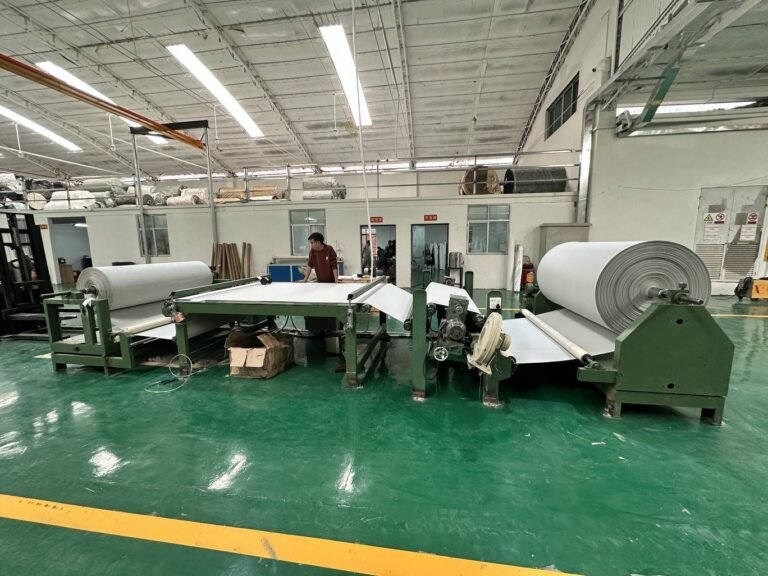
4. Production Capacity vs. Your Demand — A fabric supplier claiming 6 million meters annual capacity should prove it with production line count, daily output records, and lead-time commitments. Daily output of 16,000+ meters with 18 automated lines is the benchmark for serious manufacturers.
5. Color Consistency (Delta E < 1.0) — Inconsistent color between batches destroys product uniformity. Ask how the supplier controls Pantone/RAL matching and what tolerance they guarantee. Delta E below 1.0 is the industry standard for premium applications.
6. Full Material Traceability — Does the fabric supplier track every roll from raw material to finished goods? If a defect surfaces in the field, traceability determines whether you can isolate the problem batch or must recall everything.
7. Sample-to-Production Consistency — The golden sample that won you the contract must match mass production output. Insist on a pre-shipment sample from the production run, not the showroom sample.
See how a verified fabric supplier’s production capacity translates to reliable delivery — 18 automated lines, 16,000m daily output
Hidden Cost Traps: Where Fabric Suppliers Quietly Cut Corners
Let’s be honest about what drives hidden costs. When a fabric supplier offers a price 15% below market average, they’re not absorbing the difference — they’re cutting corners somewhere you won’t notice until it’s too late. The most common cost traps include: substituting thinner backing fabric (reducing tear strength by 30-40%), skipping the hydrolysis resistance treatment, using plasticizer-based softening instead of genuine silicone formulation, and reducing the silicone coating thickness below the specified tolerance.
One furniture client came to us after their previous fabric supplier delivered material that looked identical to the approved sample — same color, same texture, same thickness on the spec sheet. But six months into production, the sofa covers started cracking at stress points. Lab analysis revealed the supplier had quietly switched from a silicone-based coating to a cheaper PU blend. The total cost of field replacements exceeded $60,000, dwarfing the $8,000 they’d “saved” on material cost.

Cleanroom-standard workshop — a reliable fabric supplier maintains controlled environments to ensure batch-to-batch consistency
| Evaluation Criterion | Trading Company | Verified Manufacturer |
|---|---|---|
| In-house testing lab | Rarely available | Mandatory (Martindale, tensile, UV) |
| Certification ownership | Borrowed/copied | Original third-party issued |
| Production capacity proof | Verbal claims only | Line count + daily output records |
| Material traceability | Not available | Full batch-to-roll tracking |
| Sample-to-production gap | Frequent substitutions | ±0.05mm thickness tolerance |
Certifications That Separate Real Manufacturers from Trading Companies
This matters because the certification landscape is where trading companies and real manufacturers diverge most visibly. A genuine fabric supplier with manufacturing capabilities will hold certifications issued in their own legal name, with test reports from IAF/ILAC-accredited labs like SGS, Intertek, or TUV Rheinland. Trading companies, by contrast, often present certificates belonging to a third-party factory — and when you need a compliance audit for your own customers, the paperwork trail breaks down.
The certifications you should verify depend on your application. For medical and food-contact products, ISO 10993 biocompatibility and FDA 21 CFR Part 175.300 are non-negotiable. For automotive interiors, check for low-fogging test results and flame retardancy ratings like automotive-grade leather standards. For furniture, EN 13773 Class 4 flame retardancy and REACH compliance are the baseline. The key question: can the fabric supplier produce the original certificate with their company name, issue date, and the accrediting lab’s stamp — not a photocopy with redacted details?
Red Flags in Sample Evaluation Most Buyers Overlook
Not so fast — the sample you receive is the supplier’s best foot forward. It’s hand-picked, perfectly conditioned, and often produced under closer supervision than standard production runs. The real test is whether you can detect material substitution or quality degradation in subsequent batches. Here are three red flags that should trigger immediate concern:
Smell test: Silicone leather is odorless. If your sample smells of chemicals, solvents, or plastic, the fabric supplier is likely blending in cheaper PU or PVC components. This isn’t a minor deviation — it changes the material’s safety profile and warranty eligibility entirely.
Edge inspection: Look at the cut edge under magnification. Premium silicone leather shows a uniform coating layer bonded to the backing fabric. If you see delamination, air pockets, or inconsistent coating thickness at the edge, expect accelerated wear in the field.
Water contact angle: Place a drop of water on the surface. Authentic silicone leather maintains a high contact angle (water beads up and rolls off). If the water spreads or absorbs, the silicone content is lower than claimed — and you’re paying for performance you won’t get.

Custom color matching — a qualified fabric supplier guarantees Delta E below 1.0 across production batches
Frequently Asked Questions
What MOQ should I expect from a silicone leather fabric supplier?
For silicone leather, a reasonable MOQ from a genuine manufacturer is 500 meters. This reflects the minimum batch size needed for consistent color and texture in a production run. Suppliers offering MOQs below 100 meters are typically trading companies reselling stock material — meaning you have no control over batch consistency and no recourse if the next order differs from the first.
How do I verify a fabric supplier’s production capacity claims?
Ask for three pieces of evidence: the number of automated production lines (18+ is a serious manufacturer), daily output records (16,000+ meters indicates real capacity), and factory floor area (60,000+ sqm). Cross-check by requesting a live video call of the production floor or scheduling a factory tour. A fabric supplier who refuses a virtual factory tour is hiding something.
Can a fabric supplier guarantee color consistency across multiple orders?
Yes — but only if they use Pantone/RAL-based color matching with Delta E below 1.0 and maintain raw material lot records. Without lot traceability, the same color code can shift visibly between batches. Always insist on a pre-shipment sample from each production run, not a reference sample from the showroom.
Making the Right Fabric Supplier Decision
The fabric supplier you choose today will shape your product quality, warranty costs, and compliance posture for years to come. The procurement teams that avoid costly surprises are the ones who treat supplier evaluation as a technical audit — not a price negotiation. Run the 7-point checklist, verify certifications with original documents, and never accept a sample without testing it against your performance requirements. A reliable fabric supplier welcomes this scrutiny; a compromised one will find reasons to avoid it.
About TOPSUN
TOPSUN manufactures silicone leather fabric for B2B clients across furniture, automotive, medical, and marine applications, operating 18 automated production lines with 6 million meters annual capacity from three production bases in China.
ISO 10993 biocompatible · REACH & PAHs certified · FDA food-contact approved · EN 13773 Class 4 flame retardant · FAR 25.853 aviation-grade · 233 patents · MOQ 500m · Free A4 samples