Procurement managers face a recurring dilemma: leather and PU dominate the market, yet regulatory pressure is tightening faster than either material can adapt. REACH candidate lists now exceed 240 substances. California Proposition 65 enforcement targets DMF residues with six-figure penalties. Major OEMs demand material disclosure to parts-per-billion levels. This article maps where polyurethane remains viable and where silicone leather has become the safer, compliance-ready alternative.

Where PU Leather Still Makes Sense
Polyurethane leather is not disappearing. Fast fashion, promotional items, and short-lifecycle goods continue to rely on PU because it offers excellent printability, soft hand feel, and unit economics that silicone leather cannot yet match at mass-market price points. When lifespan is under 24 months and skin contact is minimal, PU remains rational.
PU also dominates in applications requiring extreme softness and drape. Certain garment and handbag specifications demand folding endurance that early-generation silicone leather struggled to achieve. TOPSUN’s latest semi-silicone formulations now match PU on softness while exceeding it on chemical resistance. Buyers evaluating silicone versus PU should request current specification sheets.
Another PU stronghold is color saturation and surface pattern detail. Waterborne PU coatings accept pigments with high fidelity, enabling intricate grain reproduction at low cost. For decorative panels where touch and longevity are secondary, PU still wins on aesthetic versatility per dollar.
The Compliance Landscape: What Buyers Must Verify
The regulatory environment for synthetic leather has shifted from voluntary certification to mandatory compliance. Three frameworks now govern most export markets. Understanding their overlap prevents costly shipment rejections and brand liability.
REACH (EU): Regulation EC 1907/2006 restricts SVHC in articles on the European market. The candidate list exceeds 240 substances. PU formulations frequently contain residual isocyanates, organotin catalysts, and phthalates that trigger SCIP obligations. Suppliers without full disclosure documentation expose importers to penalties and market withdrawal.
OEKO-TEX Standard 100: This market-critical certification tests for harmful substances in textile and leather articles. OEKO-TEX has progressively tightened PFAS restrictions and now screens for solvent residues that affect PU more severely than silicone alternatives.
California Proposition 65: Products sold in California containing listed chemicals must carry warning labels. DMF, common in dry-process PU, is listed. Recent enforcement has targeted footwear, furniture, and automotive accessories. Non-compliant inventory faces recall costs that dwarf per-yard savings.
The common thread is that compliance now requires batch-level traceability. Buyers must ask which specific substances exceed 0.1% w/w and how consistency is verified across production lots.

Chemical Migration Risks in Standard PU Formulations
Polyurethane leather is manufactured through either wet process or dry process coating. Both introduce residual chemicals that can migrate under normal use conditions. Understanding these risks helps buyers assess whether their application scenario falls within the safety envelope of PU or crosses into silicone leather territory.
Dimethylformamide (DMF): Used as a solvent in wet-process PU, DMF is classified as a reproductive toxicant. In closed automotive interiors or warm environments, outgassing accelerates. This is why automotive OEMs have shifted away from PU for seating and steering wheel applications.
Organotin Compounds: Catalysts used in PU polymerization accumulate in finished material. These compounds disrupt endocrine function and are restricted in toys and food-contact applications under EU regulation 2018/2005. Even trace contamination can render a batch unsuitable.
Phthalate Plasticizers: Certain phthalates are REACH-restricted and Prop 65-listed. Migration increases with temperature, meaning automotive seating faces higher exposure risk than static display products.
Waterborne PU reduces solvent content significantly. DMF-free lines exist but command a premium that narrows the gap with silicone leather entry grades. Demand solvent residue test reports specific to the production lot, not generic MSDS documents.
Silicone Leather: The Compliance-First Alternative
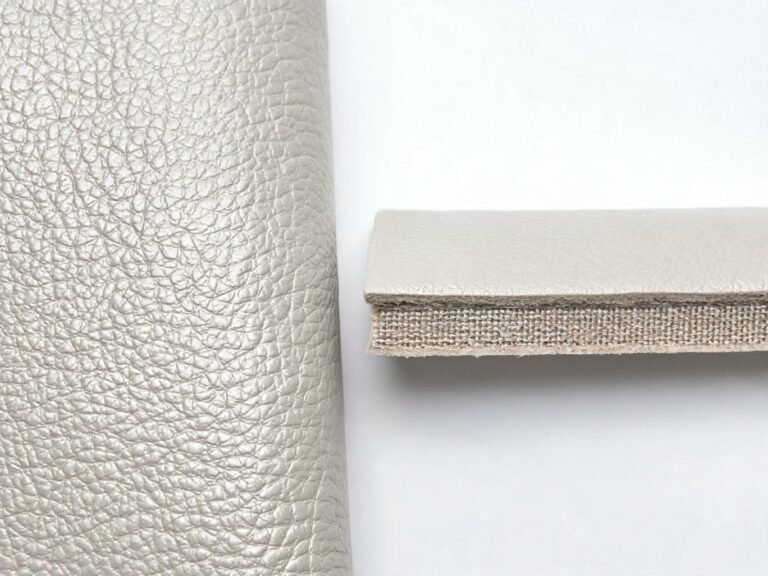
Silicone leather replaces the petrochemical polymer matrix with cross-linked polydimethylsiloxane (PDMS). This fundamental chemistry change eliminates the risk profile associated with PU solvents and catalysts. The material contains no isocyanates, no DMF, no organotin compounds, and no phthalate plasticizers. For buyers navigating multi-market regulatory requirements, this molecular simplicity translates to streamlined compliance documentation.
Certification alignment: TOPSUN silicone leather routinely passes OEKO-TEX Standard 100 Class I (baby-safe) testing, REACH SVHC screening, and CA Prop 65 evaluation without warning label obligations. The material also meets FDA 21 CFR 177.2600 for repeated food contact and USP Class VI for healthcare applications. These certifications are not theoretical. They are batch-tested with certificate numbers traceable to independent laboratory reports.
Temperature stability: PU leather begins thermal degradation at approximately 120°C, releasing isocyanate vapors. Silicone leather remains stable beyond 200°C. In automotive interiors, this difference determines whether a dashboard or seat surface emits volatile organic compounds on a summer afternoon. VOC emission testing per VDA 278 consistently shows silicone leather at one-tenth the TVOC level of comparable PU grades.
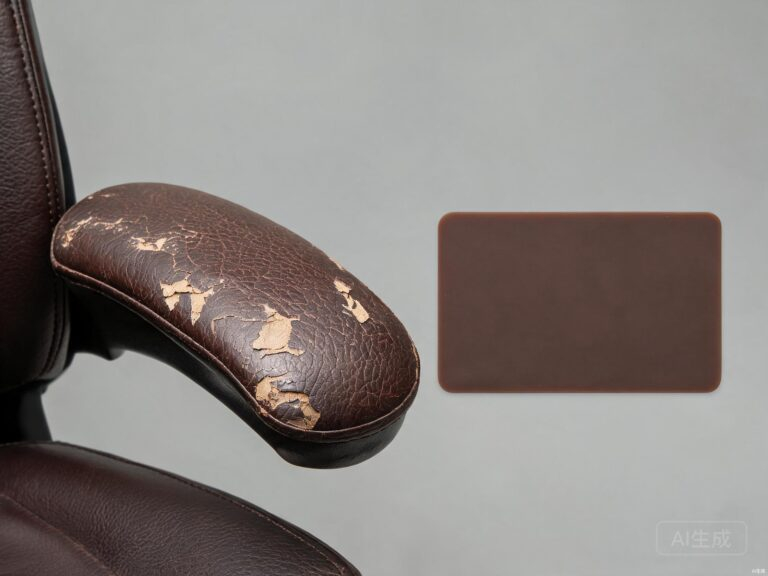
Hydrolysis resistance: In humid climates, PU leather is susceptible to hydrolysis, a chemical breakdown that creates sticky surfaces and foul odors. This is the “PU rot” phenomenon familiar to yacht and outdoor furniture manufacturers. Hydrolysis-resistant silicone leather does not share this vulnerability. The Si-O backbone is inherently stable in water vapor, making it the default choice for marine, tropical, and spa environments.

Factory Test Data: In a head-to-head comparison conducted at TOPSUN’s laboratory, we tested 1.2mm PU leather and 1.2mm full silicone leather to identical protocols. Tensile strength per ASTM D2209: PU 18.4 MPa, silicone 22.1 MPa. Tear strength per ASTM D470: PU 32 N/mm, silicone 48 N/mm. After 1,000 hours of 85°C/85% RH accelerated aging, PU showed 23% tensile loss and surface stickiness. Silicone retained 99% of original tensile strength with no surface change. These figures are available in full test report PDFs on request.
Watch side-by-side material comparison tests between silicone leather and standard polyurethane coatings.
Procurement Decision Matrix
| Application Factor | PU Leather Fit | Silicone Leather Fit |
|---|---|---|
| Skin contact duration | Brief, intermittent | Prolonged, daily |
| Regulatory market | Unregulated domestic | EU, US, healthcare |
| Humidity exposure | Controlled indoor | Tropical, marine, outdoor |
| Chemical cleaning | Mild detergents | Disinfectants, alcohol, bleach |
| Product lifecycle | 1-3 years | 5-15 years |
| Budget priority | Lowest unit cost | Lowest total cost of ownership |
Use this matrix as a preliminary filter, not a final verdict. Hybrid scenarios exist. A luxury handbag destined for the European market may justify PU if it uses waterborne coating and carries full certification. A hospital waiting room chair in Miami has no such flexibility. The key is matching material chemistry to real-world stressors, not just matching price to purchase order.
Buyers should also consider the evolving regulatory trajectory. REACH restrictions expand every six months. The US EPA is evaluating PFAS rules that will affect fluorinated treatments sometimes applied to PU. Investing in PU today for a five-year product lifecycle carries the risk that mid-life regulatory changes render existing inventory non-compliant. Silicone leather’s simpler chemistry offers forward compatibility that reduces this regulatory cliff risk.
Frequently Asked Questions
Is waterborne PU as safe as silicone leather?
Waterborne PU eliminates most DMF risk and reduces VOC emissions significantly. It is a meaningful improvement over solvent-based PU. However, it still relies on isocyanate chemistry and cannot achieve the same breadth of certifications as silicone leather. For applications requiring OEKO-TEX Class I or FDA food contact, silicone leather remains the safer choice.
Can silicone leather match PU on print detail and color range?
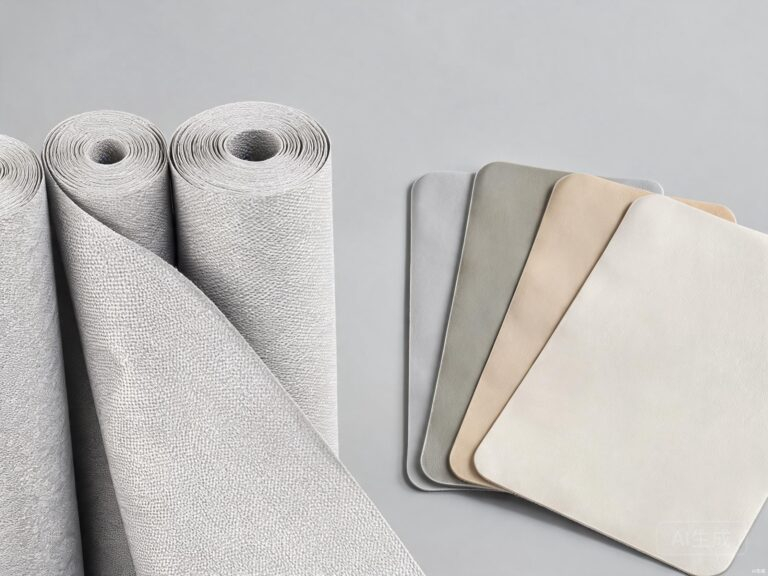
Silicone leather accepts embossing, printing, and color matching at commercial quality levels. Ultra-fine grain reproduction below 0.1mm depth may still favor PU. For 95% of furniture, automotive, and consumer goods applications, silicone leather aesthetics meet or exceed buyer expectations. Request a sample swatch book to evaluate surface finishes for your specific design language.
How do I verify supplier claims about DMF-free production?
Demand third-party test reports using GC-MS analysis with detection limits below 10 ppm. Generic MSDS documents are insufficient because they cover raw materials, not finished article composition. Reputable suppliers will provide lot-specific reports from accredited laboratories such as SGS, Intertek, or TUV. Compare material categories systematically before finalizing your specification.
View Eco-Certified Silicone Leather
About TOPSUN
TOPSUN is a B2B manufacturer of silicone-coated fabrics serving compliance-driven industries across North America, Europe, and Asia-Pacific. Our Dongguan campus includes three coating lines, a climate-controlled curing facility, and an on-site laboratory certified for physical and chemical testing. We supply roll stock, cut components, and technical support to brands and OEMs who need defensible documentation for every production lot.
Our regulatory team tracks REACH updates, Prop 65 litigation, and emerging US state-level chemical restrictions. We translate these into material specifications so customers do not have to become chemists. Whether you need full or semi-silicone leather formulations, we provide formulation disclosure, migration test reports, and customs clearance documentation. For buyers comparing leather versus silicone leather costs, our engineers prepare total cost of ownership models including certification and regulatory maintenance.
We invite procurement teams to schedule a technical review before issuing their next RFP. Understanding compliance implications at the specification stage prevents expensive corrections at the container stage.