The maintenance manager at a 24-hour gym does the monthly equipment walkthrough and adds three more weight benches to the reupholstery list. That’s five this quarter. Each one costs $50 to recover and takes a technician two hours of downtime on the floor. The steel frames are fine — they’ll last another decade. It’s the weight bench leather that keeps failing. Sweat eats through it, disinfectants erode it, and members complain about the smell even though the cleaning crew wipes everything down twice a day. For anyone who actually runs a gym, this isn’t a material spec problem on paper. It’s a recurring line item and a member-retention issue.
See Fitness Equipment Materials
4 Reasons Weight Bench Leather Fails Prematurely
The average commercial weight bench sees 80-120 users per week — some doing 30-minute bench press sessions, others using it for quick sets of tricep dips or step-ups. By month 18, even “premium” PU leather padding shows visible degradation. The failure isn’t random. It follows four predictable patterns, all driven by the unique chemistry of the gym environment:
- Sweat absorption and hydrolysis: Human sweat isn’t just water — it contains salts, urea, and fatty acids that penetrate porous PU leather surfaces and break down the polymer bonds from the inside. This is called hydrolysis, and it’s the #1 cause of gym upholstery failure. The material becomes brittle, cracks along the edges, and eventually flakes down to the fabric backing.
- Cleaning chemical attack: Gyms wipe down equipment multiple times per day with disinfectants — quaternary ammonium compounds, hydrogen peroxide, and bleach-based cleaners. These chemicals accelerate PU leather degradation by dissolving the plasticizers and topcoat additives that keep the material flexible.
- Odor and bacterial buildup: Sweat that seeps into porous upholstery creates a breeding ground for bacteria and fungi. The padding develops a persistent odor that no amount of surface cleaning can eliminate because the source is deep inside the material.
- Compression set and edge wear: Heavy users (200+ lbs / 90+ kg) performing hundreds of bench presses per week compress the padding and abrade the upholstery edges. The constant impact of plates and dumbbells adds surface damage that accelerates degradation.

Stain resistance testing — gym bench upholstery needs to handle sweat, cleaning chemicals, and body oils without degrading or absorbing odors.
3 Weight Bench Leather Materials: Side by Side
Three material categories dominate the weight bench upholstery market, each with different performance and cost profiles. For gym operators and equipment manufacturers, the choice comes down to upfront cost versus long-term replacement expense — and the math heavily favors more durable materials in commercial settings:
| Property | PU Leather | PVC Leather | Silicone Leather |
|---|---|---|---|
| Sweat Resistance | Poor (absorbs, hydrolyzes) | Moderate (resists but stiffens) | Excellent (non-porous) |
| Chemical Resistance | Poor (topcoat erodes) | Good | Excellent (bleach-safe) |
| Abrasion (Martindale) | 50,000–80,000 | 100,000–150,000 | 200,000+ |
| Commercial Life | 12–18 months | 18–24 months | 8–10+ years |
| Odor Buildup | High | Moderate | None |
The lifespan difference is dramatic. A silicone leather weight bench pad costs 2-3x more upfront than PU, but it lasts 6-8x longer in a commercial gym environment. For a 20-bench gym that replaces PU padding every 18 months at $50/bench, the annual upholstery cost is $667. Silicone leather at $120/bench that lasts 8 years costs $300/year — less than half. And that’s before accounting for the labor cost of reupholstery and the member satisfaction hit of sitting on cracked, smelly pads.
Gym operator math: 20 benches × $50 PU reupholstery every 18 months = $667/year. 20 benches × $120 silicone every 8 years = $300/year. Year 5 cumulative savings: $1,835. Plus zero odor complaints, zero cracked-padding member churn, and less maintenance staff time spent on equipment issues.
Hygiene: The Hidden Cost of Porous Upholstery
In a post-pandemic fitness landscape, gym hygiene isn’t just a nice-to-have — it’s a competitive differentiator. Members choose gyms based on cleanliness, and nothing undermines a clean reputation faster than upholstery that smells like old sweat no matter how often you wipe it down. PU and PVC leather’s porous surface allows sweat, oils, and bacteria to penetrate below the topcoat, where they multiply and create persistent odors that surface cleaning can’t reach.
Silicone leather solves this at the material level. Its non-porous silicone surface means nothing absorbs — sweat, cleaning chemicals, body oils, and even blood or other biohazards sit on top and wipe away completely with standard disinfectants. This isn’t just about smell. It’s about infection control in shared fitness environments where bacteria and fungi can spread through skin contact with contaminated equipment surfaces. A 2022 study of gym equipment found that porous upholstery surfaces harbored 3-5x more bacteria than non-porous surfaces after standard cleaning protocols.

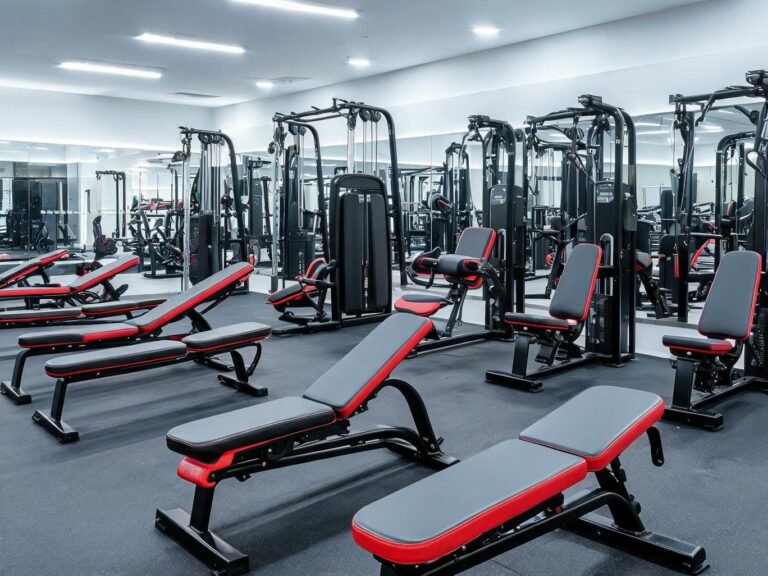
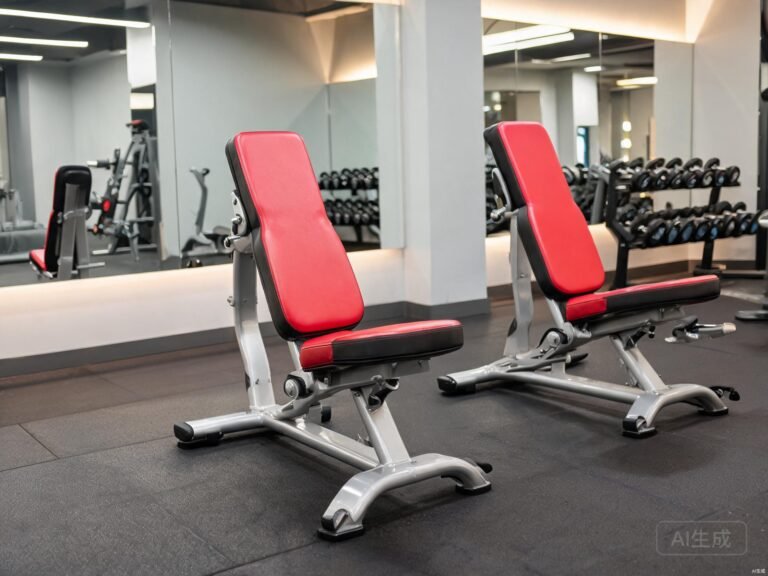
Commercial gym equipment with silicone leather upholstery — non-porous surface prevents sweat absorption and odor buildup in high-traffic fitness facilities.
For gym chains with multiple locations, hygiene consistency across sites is another benefit. Because silicone leather’s performance doesn’t degrade with cleaning frequency, you get the same clean, odor-free result at every location — regardless of how diligent each location’s cleaning staff is. This makes it easier to maintain brand standards and pass health inspections consistently, which is why the material is increasingly specified for hotel fitness centers and corporate gyms where brand reputation is on the line.

Scratch resistance testing — weight bench upholstery takes constant abuse from dumbbells, plates, and equipment movement; silicone leather handles it without surface damage.
Fitness equipment durability overview — see how silicone leather performs under the constant sweat, abrasion, and cleaning of commercial gym use.
Specifying Weight Bench Leather for Commercial Gyms
If you’re specifying weight bench upholstery for a commercial gym, hotel fitness center, or corporate wellness facility, these are the five test results to require before approving a material. They’re the metrics that best predict real-world gym performance — not marketing language like “sweat-proof” or “commercial grade”:
- Hydrolysis resistance (ISO 1419): The single most important test for gym upholstery. Test at 70°C / 95% RH for 200+ hours. If the material cracks, peels, or loses more than 20% of its tensile strength, it will fail in a gym environment within 2 years.
- Abrasion resistance (ISO 12947-2): 100,000+ Martindale cycles minimum for commercial gym use; 200,000+ for high-traffic facilities. This directly predicts how long the surface will hold up under constant user movement and equipment contact.
- Stain/chemical resistance: Tested with the specific disinfectants your gym uses — bleach, quaternary ammonium compounds, hydrogen peroxide. “Chemical resistant” without specifying which chemicals is meaningless.
- Color fastness to perspiration (ISO 105-E04): Grade 4+ minimum. Sweat can fade dyes over time, and you don’t want bench pads changing color unevenly across a facility.
- Tear strength (ISO 34-1): 15N minimum. Dumbbells, plates, and equipment parts catch on upholstery edges. Higher tear strength means small snags don’t become big tears.
Frequently Asked Questions
How long does silicone leather last on gym weight benches?
In commercial gym settings with 80-120 users per week, silicone leather weight bench upholstery typically lasts 8-10+ years without needing replacement — compared to 12-18 months for standard PU leather and 18-24 months for PVC. The non-porous surface prevents sweat absorption and hydrolysis (the #1 cause of gym upholstery failure), and the 200,000+ Martindale abrasion rating handles constant user movement and equipment contact without surface wear. In lower-traffic settings like apartment gyms or corporate fitness centers, the lifespan can extend to 10-15 years.
Can you disinfect silicone leather with gym-grade cleaners?
Yes. Silicone leather is compatible with virtually all gym disinfectants, including bleach solutions, quaternary ammonium compounds, hydrogen peroxide-based cleaners, and alcohol-based sanitizers. Unlike PU leather, where repeated disinfectant use erodes the topcoat and accelerates degradation, silicone leather’s inert surface doesn’t react with these chemicals. This means you can clean as frequently as needed — even between every user — without damaging the material or shortening its lifespan. The non-porous surface also ensures that cleaning agents actually remove contaminants rather than just treating the surface while bacteria survive underneath.
The Bench Frame Outlasts the Padding
A commercial weight bench with a 1,000-lb rated steel frame can easily last 15+ years in a gym. The upholstery fails 6-10 times faster because it’s made from a material that can’t handle the sweat, chemicals, and traffic of a fitness environment. For gym operators, this means repeated reupholstery costs, ongoing maintenance, and the constant challenge of keeping benches looking and smelling clean for members. For equipment manufacturers, it means warranty claims and product returns driven by a component — the upholstery — that shouldn’t be the weakest link. Specifying silicone leather for weight bench upholstery aligns the padding lifespan with the frame lifespan, eliminating the cycle of reupholstery and giving members a clean, durable surface that still looks new at year five.
About TOPSUN
TOPSUN supplies silicone leather for fitness equipment manufacturers and commercial gym operators — a non-porous, sweat-proof material that outlasts PU by 6-8x in high-traffic weight bench and gym equipment applications.
200,000+ Martindale cycles · Non-porous (no sweat absorption) · Bleach and disinfectant safe · Zero odor buildup · 8–10+ year commercial lifespan