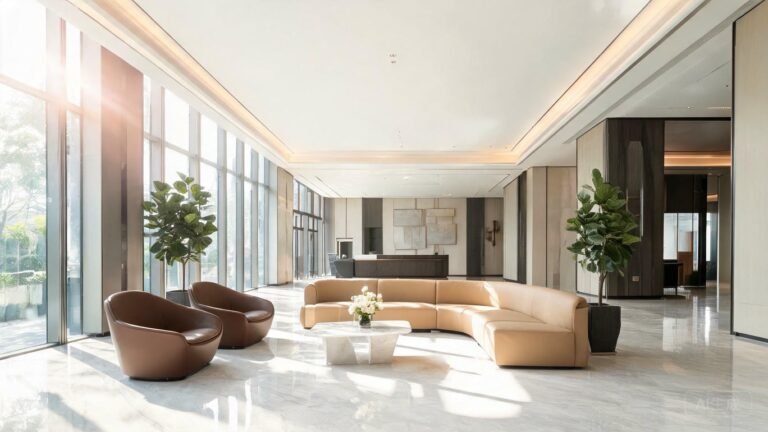
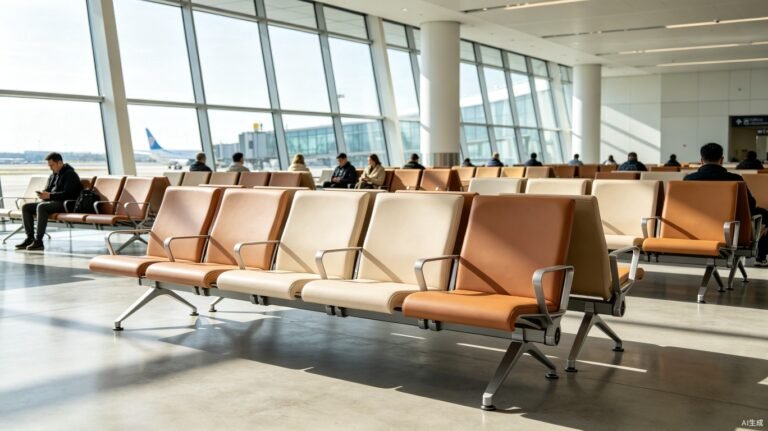
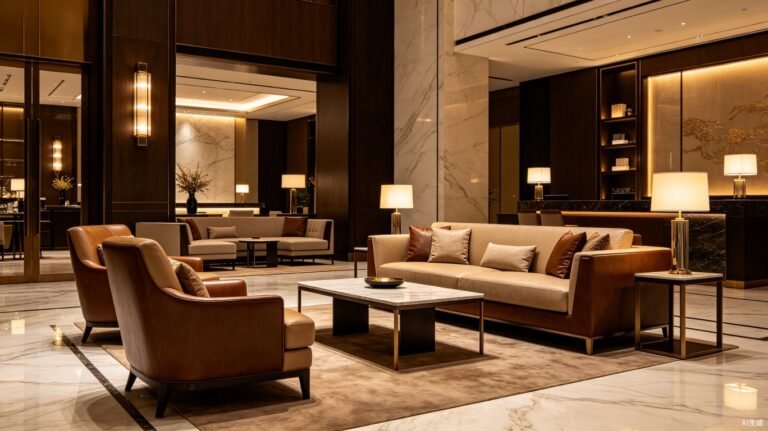
The lobby is the first thing guests see — and the last thing they remember. But behind that polished first impression, hotel lobby seating material is quietly taking a beating. Unlike residential furniture, lobby chairs and sofas endure non-stop use: business travelers working through the afternoon, families waiting for check-in, late-night arrivals dropping luggage on the nearest ottoman. The material covering those seats either holds up gracefully or starts looking tired within months.
What Makes Lobby Seating Different from Residential
A hotel lobby seat might see 50–200 different users per day in a mid-scale property. In a convention hotel or airport transit hotel, that number can multiply. This creates a very different wear profile than any home environment.
- Continuous compression — seats rarely get time to “rest” and recover between guests
- Spill frequency — coffee, wine, and food are constant companions in lobby lounges and bar areas
- Cleaning intensity — housekeeping wipes down surfaces multiple times daily, which degrades many materials over time
- Fire code compliance — commercial hospitality spaces face stricter flammability requirements than residential settings

We’ve supplied materials to hospitality projects across Southeast Asia and the Middle East. The common thread? Projects that cut corners on hotel upholstery fabric quality end up spending far more on mid-cycle replacements than they saved upfront.
Request Free Material Swatches
Fire Safety: The Non-Negotiable Requirement
In hospitality, fire safety isn’t optional — it’s a permitting requirement. Depending on the market, hotel furniture typically needs to meet one or more of the following standards:
| Standard | Region | Key Requirement |
|---|---|---|
| California TB117-2013 | North America | Smolder resistance (cigarette test) |
| EN 13773 | Europe | Flame spread Class 1/2/3 for textile covers |
| BS 5852 | UK | Cigarette and match ignition resistance |
| IMO FTPC Part 8 | Marine/Cruise | Strict flame spread for vessels |
What this means for material selection: The material’s fire performance depends on its chemical composition. Silicone leather has inherent flame resistance due to its inorganic silicone polymer backbone — it doesn’t need heavy chemical flame retardant additives that can off-gas or degrade over time. According to the National Fire Protection Association (NFPA), selecting inherently fire-resistant materials is always preferable to relying on surface treatments that can wear off.
Stain Resistance and Daily Maintenance

Hotel housekeeping teams clean lobby furniture daily — sometimes multiple times per day. This repeated wiping is a hidden stress test for upholstery. Materials with surface coatings that dissolve under cleaning chemicals will fade, crack, or peel over time.
Genuine leather requires specific pH-balanced cleaners and periodic conditioning. Using standard hotel cleaning products on it accelerates surface drying and cracking. Woven fabrics stain easily and may require professional steam cleaning that takes furniture out of service.
Silicone leather stands up to repeated cleaning with standard hospitality-grade disinfectants. Its closed-cell silicone surface doesn’t absorb liquids or chemicals, so a quick wipe removes coffee, wine, or food residue without leaving marks. For hotel operators, this translates directly into lower maintenance labor costs and higher furniture uptime.
Material Comparison for Hospitality Buyers
| Factor | Silicone Leather | Genuine Leather | Vinyl / PVC |
|---|---|---|---|
| Daily Cleaning Tolerance | Excellent | Moderate | Good |
| Inherent Flame Resistance | Yes | Moderate (burns) | Requires additives |
| UV / Fading Resistance | Excellent | Moderate (fades) | Poor (yellowing) |
| VOC / Odor | Zero VOC | Leather smell (fades) | Plasticizer odor |
| Est. Service Life (Lobby) | 7–10 years | 5–8 years | 3–5 years |
How silicone leather performs in hotel decoration projects — from lobby lounges to guest room headboards.
Sourcing Tips for Hotel Furniture Projects
If you’re sourcing furniture upholstery for a hotel project, here are the evaluation criteria we recommend:
- Always request fire test certificates — ask for third-party lab reports (SGS, Intertek, or equivalent) matching your target market’s standard. Don’t accept verbal assurances
- Test color fastness under UV exposure — hotel lobbies often have large windows. Ask for ISO 105-B02 (xenon arc) test data to confirm the color won’t fade in sunlit areas
- Request cleaning chemical compatibility data — the material should withstand exposure to common hospitality disinfectants without surface degradation
- Order production samples before bulk — color and texture can vary between lab samples and full production runs. A proper sample ordering process catches issues before they become costly mistakes


One more thing: for large hotel chains with multiple properties, consider establishing a material specification sheet that all franchisees follow. This ensures visual consistency across locations and simplifies reordering when individual properties need replacement cushions or furniture pieces.
Talk to Our Hospitality Material Specialists
Frequently Asked Questions
Does silicone leather meet California TB117 for hotel furniture?
Yes. Silicone leather’s inherent flame resistance typically meets or exceeds TB117-2013 smolder resistance requirements without additional chemical treatments. For specific project compliance, always verify with your supplier’s third-party test certificates.
Can silicone leather be used on outdoor hotel terrace furniture?
Absolutely. Silicone leather resists UV degradation, salt spray, and temperature extremes — making it well-suited for poolside lounges and rooftop bars. Our outdoor furniture leather guide covers performance data for exposed environments.
What thickness is recommended for hotel lobby sofas?
For lobby sofas and lounge chairs, 1.0–1.2mm provides the best balance of durability and workability. For high-traffic reception seating or bar stools where abrasion is more intense, 1.4mm offers added protection. The flame retardant leather for public spaces article provides more detailed thickness guidance by application.
The Bottom Line for Hospitality Procurement
Selecting a hotel lobby seating material comes down to balancing three things: guest experience (look and feel), operational efficiency (cleaning and maintenance), and compliance (fire safety and environmental regulations). Silicone leather performs well across all three — which is why it’s increasingly specified by hospitality designers and hotel FF&E (Furniture, Fixtures & Equipment) procurement teams.
The upfront cost may be higher than vinyl or standard PU, but when you factor in a 7–10 year service life, zero conditioning maintenance, and built-in fire resistance, the total cost of ownership tells a different story.
Download Our Hospitality Material TDS
About TOPSUN
TOPSUN manufactures silicone leather for commercial and hospitality applications, offering OEM/ODM customization including color, texture, thickness, and flame-retardant grades. Our factory handles coating, calendering, and finishing under one roof with full quality control.
Relevant certifications: REACH, RoHS, ISO 9001. Flame retardant testing per EN 13773, California TB117-2013, and BS 5852 standards available upon request.