The synthetic leather market is experiencing unprecedented growth. B2B buyers worldwide face new sourcing opportunities. Understanding market dynamics is now essential. Strategic decisions depend on accurate data. This report delivers key insights for 2026. We cover market size, regional trends, and segments. You will also find leading player profiles. Our goal is simple. We want to help buyers source smarter. Read on for actionable intelligence. Every data point supports better procurement.
Global Leather Market Size and Forecast
The global leather market shows remarkable expansion. Valuation reached USD 41.05 billion in 2024. Industry experts project USD 115.39 billion by 2033. The compound annual growth rate is 12.33%. This trajectory reflects strong global demand.
Multiple factors fuel this growth. Automotive applications are expanding rapidly. Footwear consumption continues to rise. Furniture and marine sectors add demand.
B2B buyers should secure supply early. Long-term contracts provide cost stability. Early movers gain competitive advantages. Now is the time to act.
- 2024 market value: USD 41.05 billion
- 2033 projected value: USD 115.39 billion
- CAGR: 12.33%
- Key drivers: automotive, footwear, furniture

Regional Breakdown of the Artificial Leather Market
Asia Pacific dominates the artificial leather market. The region held 46.78% revenue share in 2024. China serves as the primary production hub. Manufacturing capacity there is massive. India emerges as the fastest-growing market. Its CAGR reaches 21.93% from 2025 to 2033.
Local demand and exports both surge. Europe shows significant growth patterns. Germany leads European demand. Automotive OEMs drive this growth. They require high-performance synthetic materials. European buyers value sustainability certifications.
North America experiences slower overall growth. Fashion brand saturation limits expansion. However, automotive demand remains strong. Footwear buyers also stay active.
- Asia Pacific: 46.78% revenue share
- China: major production and sales hub
- India: fastest growing at 21.93% CAGR
- Europe: strong growth, led by Germany
- North America: slower growth, strong automotive demand

Key Segments Driving the Leather Market
The leather market splits into material types. PU synthetic leather leads globally. It captured 57.07% of global revenue in 2024. This segment is mature and reliable.
TPO synthetic leather is the fastest-growing type. Its CAGR reaches an impressive 21.70%. Buyers seek its performance benefits. PVC synthetic leather also shows strong growth. It records a 19.86% CAGR.
Application-wise, footwear leads all sectors. It generated 29.11% of global revenue. Automotive is the fastest-growing application. Its CAGR stands at 20.15%. Interior demand from OEMs is massive. Learn more about artificial leather types.
- PU synthetic leather: 57.07% revenue share
- TPO synthetic leather: 21.70% CAGR
- PVC synthetic leather: 19.86% CAGR
- Footwear: 29.11% of global revenue
- Automotive: 20.15% CAGR

The Vegan Leather Market: A High-Growth Subsegment
The vegan leather market is a high-growth subsegment. Mycelium leather leads innovation. The market reached USD 21.91 million in 2025. It may hit USD 312 million by 2032. The CAGR is an exceptional 47.0%.
Silicone synthetic leather also shows strong promise. It was valued at USD 2.17 billion in 2023. Experts expect USD 5.36 billion by 2030. The CAGR is 14.0%.
Plant-based materials attract eco-conscious B2B buyers. Bio-based polyester fibers reduce GHG emissions by 80%. Sustainability is no longer optional. It is a core purchasing criterion. Buyers now request detailed material specifications.
- Mycelium leather: USD 21.91M (2025) to USD 312M (2032)
- Mycelium CAGR: 47.0%
- Silicone synthetic leather: USD 2.17B (2023) to USD 5.36B (2030)
- Silicone CAGR: 14.0%
- Bio-based fibers: 80% less GHG emissions
Buyers exploring faux leather types will find diverse options. Eco-friendly variants are expanding rapidly. Suppliers now offer certified vegan materials. This shift supports corporate sustainability goals.

Major Players in the Synthetic Leather Industry
The synthetic leather industry features established global players. Kuraray is a leading Japanese manufacturer. Teijin offers advanced material solutions. Mayur Uniquoters serves diverse global markets. Nan Ya Plastics operates at massive scale.
San Fang Chemical focuses on innovation. Alfatex Italia targets premium European segments. H.R. Polycoats delivers consistent product quality. Filwel continues to expand its range. Yantai Wanhua strengthens its global footprint.
Competition among these players benefits buyers. Innovation cycles are shortening. Pricing is becoming more competitive.
- Kuraray: global leader
- Teijin: advanced solutions
- Mayur Uniquoters: diverse markets
- Nan Ya Plastics: large scale
- San Fang Chemical: innovation focus
- Alfatex Italia: European premium
- H.R. Polycoats: quality focus
- Filwel: expanding range
- Yantai Wanhua: growing footprint
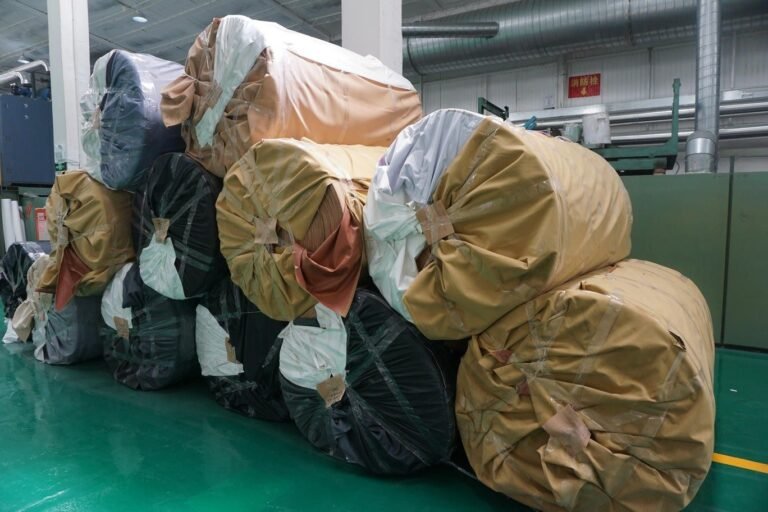
See our factory production capabilities for more details. We maintain strict quality controls. Our facilities support large-scale orders. Lead times remain competitive.
Trends Shaping the Leather Industry Beyond 2026
The leather industry is evolving beyond 2026. Sustainability dominates strategic discussions. Bio-based materials are gaining serious traction. Automotive OEMs are shifting to synthetics.
In 2022, 71% of new vehicles used synthetic interiors. This marks 156% growth from 2020 to 2023. Regulations in Europe are tightening. Buyers now demand eco-certifications.
American buyers prioritize durability and value. Custom material solutions are rising. Suppliers must adapt quickly. Technology is improving texture and performance. New finishing techniques enhance durability. These advances benefit B2B procurement teams.
- Sustainability is the top trend
- Bio-based materials gain share
- Automotive synthetic leather: 71% of new vehicles (2022)
- Automotive growth: 156% from 2020 to 2023
- European regulations drive eco-friendly demand
- Custom solutions are in high demand
Automotive buyers should explore automotive interiors solutions. The shift to synthetic materials is clear. OEMs need reliable partners. Quality standards continue to rise. Learn about vegan leather in cars for more trends.
Data sourced from Grand View Research synthetic leather market report.
Conclusion
The synthetic leather market offers massive growth potential. B2B buyers must understand these dynamics. Regional trends vary significantly. Segment performance differs by material type. Vegan options are disrupting traditional markets.
Leading players are investing heavily. Sustainability will shape all future decisions. Partner with trusted suppliers now. TOPSUN provides custom silicone leather solutions.
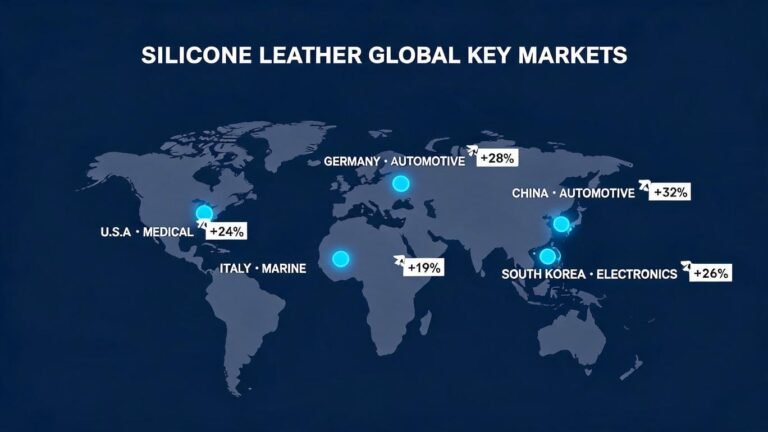
We serve automotive, furniture, marine, and medical sectors. Our production is ISO-certified. Quality is guaranteed on every order. Contact us today for quotes.
About TOPSUN
TOPSUN is a China-based silicone leather manufacturer. We serve the global synthetic leather market. Our custom materials meet strict standards. We specialize in automotive, furniture, marine, and medical applications. Our factory holds ISO certification. We deliver quality and consistency. Reach out to our sales team today.