The synthetic leather market reached USD 41.05 billion in 2024. It will reach USD 115.39 billion by 2033. CAGR stands at 12.33%. Choosing the right artificial leather types matters. This guide covers PVC through silicone options.
B2B buyers need clarity. Each material performs differently. Cost varies widely. Sustainability profiles differ. This article breaks down every option.
We cover budget PVC. We cover mainstream PU. We cover premium microfiber. We cover advanced silicone. We cover bio-based alternatives.
Understanding the Artificial Leather Meaning
Faux leather is a broad term. It covers all man-made alternatives. These replace genuine animal hides. The artificial leather meaning is simple. It means engineered materials. They mimic natural leather. They use polymers and fabrics. No animals are harmed.
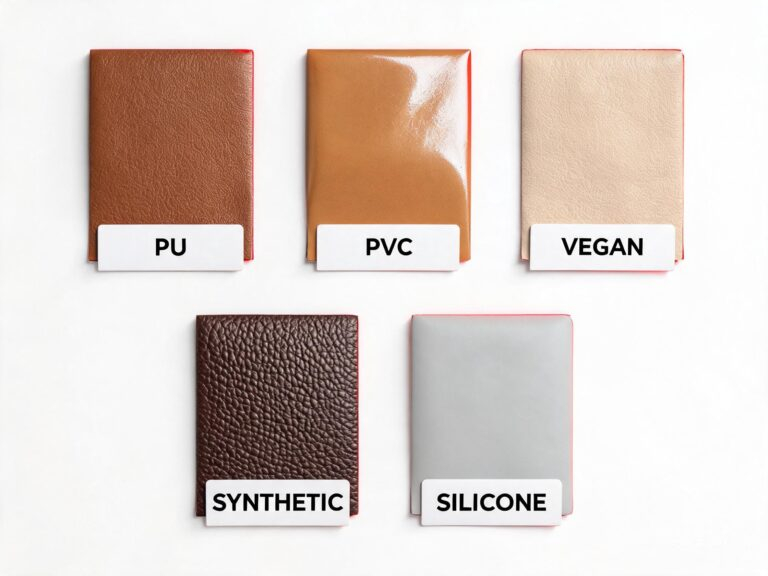
The term covers PVC. It covers PU. It covers microfiber. It covers silicone. It covers bio-based materials. Each serves different markets. Each has unique chemistry. Each offers different performance.
Understanding this umbrella term helps buyers. It prevents confusion. It enables smarter sourcing. It supports better product design. It ensures cost efficiency.
Types of Fake Leather: The Complete Breakdown
Several types of fake leather dominate global manufacturing. Each type uses different chemistry. Each offers different benefits. Here is the full breakdown:
- PVC leather – the original synthetic option
- PU leather – the market leader with 57.07% share
- Microfiber leather – premium performance alternative
- TPO leather – fastest growing at 21.70% CAGR
- Silicone leather – zero-VOC advanced material
- Bio-based leather – sustainable renewable option

Footwear leads applications. It holds 29.11% of global revenue. Automotive is the fastest-growing sector. It grows at 20.15% CAGR. Furniture remains a strong segment. Fashion and medical use these materials too.
Data comes from Grand View Research. Their report covers global trends. It covers regional data. It covers type segmentation. It covers application forecasts.
PVC and Poly Leather: The Budget Options
PVC was the first synthetic leather. It debuted in the 1920s. It uses PVC resin. It adds plasticizers. It adds stabilizers. The result is affordable. It is widely available. It serves basic applications.
However, PVC has drawbacks. It feels sticky. It retains heat poorly. It can emit concerns. It lacks breathability. It works for low-cost bags. It works for budget upholstery. It works for basic wallets.
The PVC segment still grows. CAGR reaches 19.86%. Poly leather remains popular. Price-sensitive buyers choose it. Volume manufacturers rely on it. It fills entry-level needs.
Pros of PVC:
- Lowest cost option
- Easy to clean
- Water resistant
- Wide color range
Cons of PVC:
- Sticky surface feel
- Poor heat retention
- Environmental concerns
- Less durable than PU
PU Leather: The Most Popular Fake Leather Type
PU leather dominates the market. It holds 57.07% of global revenue. It applies polymer coating to fabric. The result is waterproof. It is softer than PVC. It is lighter too.
PU offers key advantages. It does not emit dioxins. It resists sunlight damage. It allows dry cleaning. It tears more easily than hides. It works across industries. It serves footwear. It serves furniture. It serves automotive. It serves fashion.

Key PU leather facts:
- Polymer coating on woven fabric base
- Waterproof and soft touch
- No harmful dioxin emissions
- Sunlight resistant
- Lower cost than genuine leather
Most B2B buyers choose PU. It balances cost and quality. It scales efficiently. It offers consistent supply. It meets mid-tier product needs.
Microfiber and Pho Leather: Premium Performance
Microfiber leather represents high-end synthetics. It uses ultra-fine fibers. It adds PU impregnation. The structure mimics natural collagen. The result is exceptional.
This material is extremely abrasion-resistant. It breathes better than standard PU. It feels closest to genuine leather. It works for luxury automotive. It works for premium furniture. It works for high-end footwear.
Microfiber advantages:
- Ultra-fine fiber structure
- Superior abrasion resistance
- Enhanced breathability
- Closest feel to real leather
- Long service life
Pho leather is a related category. It uses similar technology. It targets premium markets. It commands higher prices. It delivers measurable value.
Silicone and Bio-Based: Advanced Artificial Leather Types
Silicone leather is the next generation. It offers zero VOC emissions. It is skin-friendly. It has antibacterial properties. It resists extreme weather. It rapidly replaces PU and PVC. This is especially true in premium automotive.
Silicone leather handles temperature extremes. It resists UV degradation. It cleans easily. It maintains color fastness. It suits medical applications. It suits marine environments. It suits luxury automotive interiors.

Bio-based leather offers another path. It contains 70-75% renewable content. It uses polyester polyol. It feels softer than standard PU. It offers better scratch resistance. Key producers partner with polyol suppliers. R&D drives continuous improvement.
Advanced material benefits:
- Zero VOC emissions
- Antibacterial surface
- Extreme weather resistance
- 70-75% renewable content in bio-based types
- Better scratch resistance
Fake Leather Material Names: A Quick Reference Guide
Buyers need quick comparisons. This table summarizes all major fake leather material names. It covers composition. It covers properties. It covers cost level. It covers best applications.

| Material | Composition | Key Properties | Cost | Best For |
|---|---|---|---|---|
| PVC | PVC resin, plasticizers, stabilizers | Waterproof, sticky feel, poor heat retention | Low | Bags, basic upholstery, wallets |
| PU | Polymer coating on fabric | Soft, light, waterproof, no dioxins | Medium | Footwear, furniture, automotive, fashion |
| Microfiber | Ultra-fine fibers with PU | Abrasion-resistant, breathable, leather-like | High | Luxury automotive, premium furniture |
| TPO | Thermoplastic polyolefin blend | Fastest growing, flexible, durable | Medium-High | Automotive, industrial |
| Silicone | Silicone polymer coating | Zero VOC, antibacterial, weatherproof | Premium | Medical, marine, premium automotive |
| Bio-based | 70-75% renewable polyester polyol | Soft, scratch-resistant, sustainable | High | Eco-friendly products, luxury goods |
Use this table to compare options. Match material to application. Match properties to requirements. Match cost to budget. This ensures smart procurement.
Conclusion
Artificial leather types continue to evolve. The market grows rapidly. New materials emerge yearly. Buyers must stay informed. The right choice reduces costs. It improves product quality. It meets sustainability goals.
PVC serves budget needs. PU dominates mainstream markets. Microfiber delivers premium feel. Silicone offers advanced performance. Bio-based supports sustainability. Each has its place.
Evaluate your application needs. Consider durability requirements. Assess environmental standards. Factor in total cost. Then select the optimal material.
About TOPSUN
TOPSUN manufactures custom silicone leather. We serve automotive, furniture, marine, medical, and fashion industries. Our production is ISO-certified. Our materials feature zero-VOC formulations. We deliver consistent quality at scale. Contact us for samples and specifications.