BMW Group’s decision to adopt fully vegan leather car interiors across its product line — starting with Sensatec in the 3 Series and expanding to Sensafin in the X5 and X6 — represents the most significant material strategy shift by a premium automaker in recent years. The company reports that replacing Nappa leather steering wheels alone reduces CO2 emissions by approximately 85%. But here is what the press releases do not tell you: BMW’s current vegan materials are predominantly polyurethane-based, and PU carries structural limitations that surface within 3–5 years of real-world use. This silicone leather BMW case study examines four performance gaps where PU-based interiors fall short — and where silicone leather delivers measurable advantages backed by test data.
For Tier-1 suppliers and OEM procurement teams evaluating interior material strategies, the question is not whether BMW will adopt silicone leather — it is when. The automotive interior trends point toward materials that combine zero-VOC profiles, inherent flame retardancy, and weight savings without compromising tactile quality. Let us examine where PU hits walls and how silicone leather clears each one.
Request Automotive Sample Roll
BMW’s Interior Material Evolution: Nappa → Sensatec → Sensafin → What’s Missing
BMW’s material progression follows a clear arc. Genuine Nappa leather defined premium interiors for decades. Sensatec — a PU-based synthetic — entered the 3 Series and X3 as a cost-effective, animal-free alternative. Sensafin upgraded the X5 and X6 with a softer hand-feel and improved durability. BMW’s 2024 Sustainability Report confirmed that all 2026 model-year iX and i4 variants sold in the EU will ship exclusively with Sensatec 2.0, a GRS-certified vegan leather. The most recent development, Veganza, uses BASF Elastollan thermoplastic polyurethane backing with ≥30% bio-based content from castor oil derivatives.
Each iteration improves on the previous one — but all share a fundamental limitation: they remain solvent-processed polyurethane systems. PU leather manufacturing relies on DMF (dimethylformamide) solvents, and even with advanced recovery systems, trace residual VOCs persist in the finished material. This matters more in EVs than in ICE vehicles because electric vehicles eliminate engine-related emission sources, making interior material VOCs a proportionally larger share of total cabin emissions. German automakers measure this against VDA 277 emission standards, and the compliance margin for PU is narrowing as regulations tighten.
The gap BMW’s material team is watching: silicone leather achieves near-zero VOC emissions through a fundamentally different manufacturing process — solvent-free dry coating — without any of the chemical trade-offs PU requires. This silicone leather BMW case study identifies four specific areas where that difference translates into measurable field performance.

Gap 1: VOC Compliance — When PU’s Solvent Legacy Catches Up
Internal combustion engine vehicles have higher baseline VOC sources — exhaust, fuel evaporation, under-hood chemicals — that partially mask interior material emissions. EVs eliminate these dominant sources, which means interior material VOCs represent a proportionally larger share of cabin air. BMW’s own data shows that interior materials contribute significantly to cabin air quality in EVs, pushing the company toward stricter material emission standards.
PU leather manufacturing uses DMF solvents during the coagulation process. Even with recovery rates above 99%, residual DMF and other volatile compounds remain in the material matrix and off-gas slowly under cabin temperatures — particularly when the vehicle is parked in direct sunlight and interior temperatures exceed 60°C. Silicone leather eliminates this problem at the source. The solvent-free dry coating process produces zero VOCs during manufacturing and near-zero emissions in the finished product, meeting VDA 277 requirements with a substantial compliance margin.
From our own testing facility: TOPSUN’s automotive-grade silicone leather undergoes VDA 277 emission testing, and the results consistently show total VOC values well below the thresholds German automakers require. The material also meets low fogging requirements — essential for windshield visibility and ADAS sensor optics in modern vehicles with large glass panels. PU leather requires chemical treatments and post-processing to approach these same thresholds, adding cost and complexity to the supply chain.

Gap 2: UV & Thermal Stability — Glass Roofs Change the Game
Modern BMW vehicles feature expansive glass roof panels — the iX’s panoramic Sky Lounge roof, for example, exposes interior surfaces to significantly more UV radiation than traditional solid-roof vehicles. PU leather relies on UV stabilizers and chemical additives that degrade over time, leading to yellowing, surface cracking, and color shift within 3–5 years of sun exposure. Silicone leather’s UV resistance is inherent to the polymer structure, not additive.
In xenon arc weathering tests — the industry standard for simulating accelerated UV exposure — silicone leather maintains a Delta E color shift below 1.5 after 1,000 hours of testing. PU leather under identical conditions typically shows Delta E values of 3.0–5.0, depending on formulation and stabilizer package. The practical consequence: a BMW interior with silicone leather seats retains its original color and surface finish through the vehicle’s ownership lifecycle, while PU-based seats show visible fading on sun-exposed surfaces within 3 years.
Thermal stability tells a similar story. Silicone leather withstands continuous temperatures from -40°C to 250°C without structural degradation. PU leather softens and begins to delaminate at sustained temperatures above 80°C — a threshold easily reached on dark-colored seat surfaces parked in direct sunlight in summer conditions. For EV seat materials where cabin preconditioning (heating or cooling the interior before driving) is a standard feature, the repeated thermal cycling stresses PU materials in ways silicone leather handles without compromise.

Gap 3: Flame Retardancy — Battery Safety Without Chemical Additives
EV battery thermal runaway events create fire risks fundamentally different from ICE vehicle fires — higher temperatures, longer burn duration, and toxic gas concerns. BMW’s iX battery pack is designed with multi-layer thermal management, but interior materials still must meet stringent flame retardancy standards. FMVSS 302 governs horizontal burn rate for US/Canada automotive interiors; EN 13773 sets European flame retardancy requirements.
PU leather achieves flame retardancy through chemical additives — typically phosphorus or halogenated compounds — that are mixed into the polymer during manufacturing. These additives can off-gas under normal cabin temperatures, contributing to VOC emissions and creating a compliance tension: better flame retardancy often means higher VOC emissions. Silicone leather is inherently flame resistant. The flame retardancy comes from the polymer structure itself — silicone polymers produce water vapor, carbon dioxide, and silica when exposed to combustion conditions, with relatively low smoke density. No chemical additives are needed.
From our testing data: TOPSUN’s silicone leather passes FMVSS 302 for horizontal burn rate, meets EN 13773 requirements, and achieves FAR 25.853 aviation flame retardancy standards — all from the base material without additive packages. The silicone leather car seats becoming an OEM standard reflects this safety advantage. For BMW’s procurement team, this means silicone leather eliminates the compliance tension between flame safety and cabin air quality that PU inherently carries.
Gap 4: Supply Chain & Certification Alignment — The Procurement Reality
Beyond technical performance, procurement teams evaluate materials against a certification matrix that gates supplier qualification. BMW’s material specifications require REACH compliance, PAHs testing, California Prop 65 conformity, and increasingly, full lifecycle sustainability documentation including recyclability and carbon footprint data.
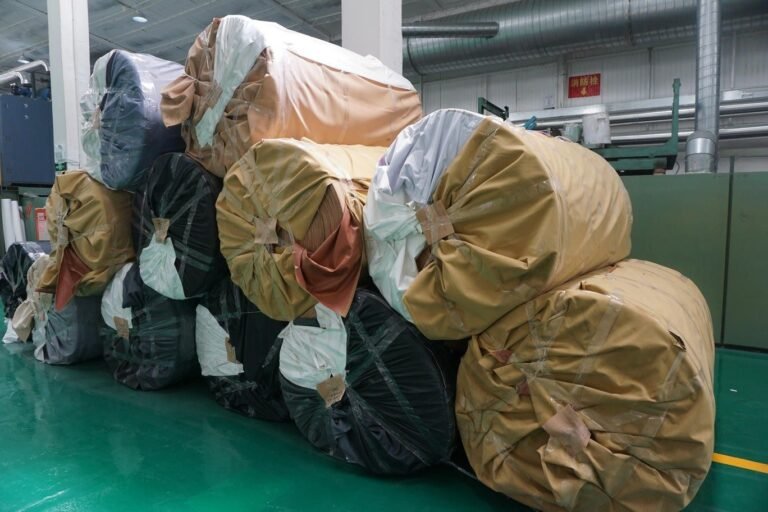
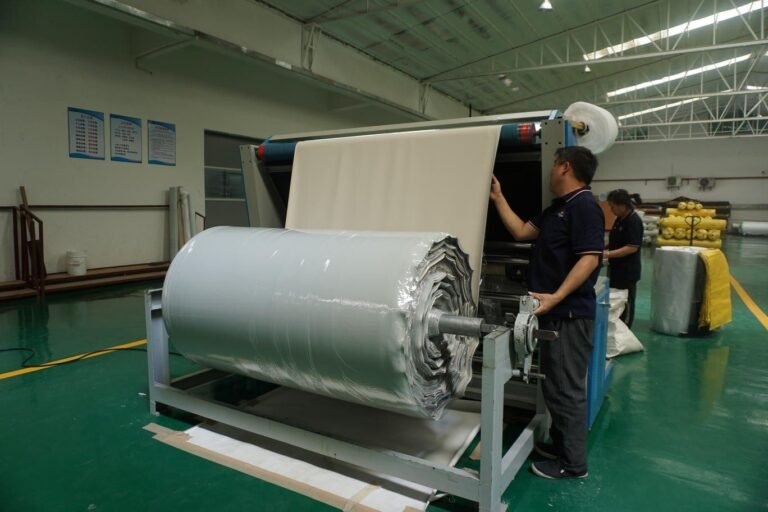
Silicone leather aligns with this matrix more cleanly than PU. The material is 100% recyclable, contains no PVC or phthalates, and the solvent-free production process generates no hazardous chemical waste streams. TOPSUN’s manufacturing facility operates with a monthly capacity of 500,000 meters, with full automotive testing certifications covering the standards premium automakers require: FMVSS 302, EN 13773, FAR 25.853, VDA 277, REACH, PAHs, and California Prop 65.
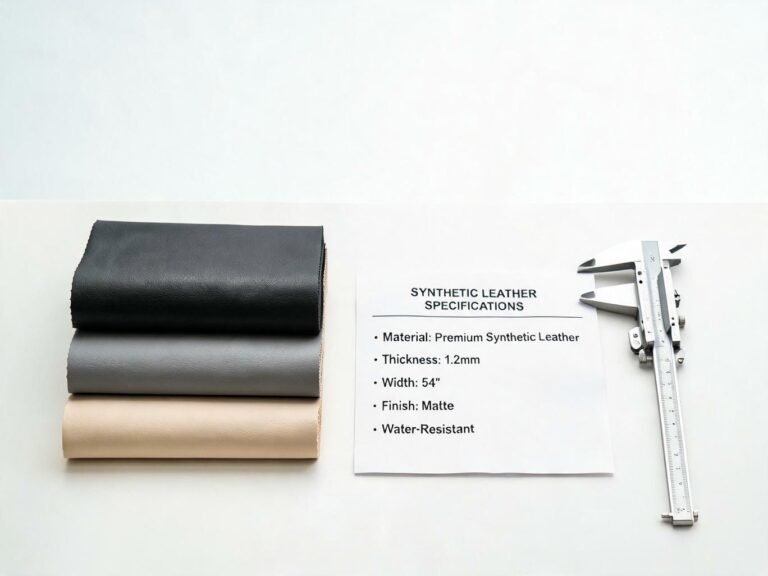
The weight advantage matters for BMW’s EV range optimization. Every kilogram of vehicle weight reduces EV range by approximately 4–6 kilometers. Traditional leather seating adds 3–5 kg per seat compared to synthetic alternatives. Silicone leather can be produced at thicknesses as low as 0.23mm while maintaining structural integrity — approximately 40% lighter than PU leather and 50–60% lighter than genuine leather. For a BMW iX with five seats, switching from PU to silicone leather could save 3–4 kg total — translating to 12–24 kilometers of additional range per charge.

The procurement case extends beyond individual material performance. BMW’s Dingolfing plant operates a closed-loop recycling process for interior materials — a system designed for thermoplastic materials like Veganza. Silicone leather’s thermoplastic base fabric and silicone coating are compatible with existing recycling infrastructure, meaning BMW can integrate silicone leather into its current closed-loop system without retooling. PU leather, by contrast, requires separation of the polyurethane coating from the base fabric — a process that adds cost and reduces recovery yield.
topsun-silicone-leather-automotive-interior-intro
Conclusion: The Next Material Iteration Is Silicone
BMW’s material evolution — Nappa to Sensatec to Sensafin to Veganza — each iteration improved sustainability and performance, but each remained within the PU material family. The four gaps identified in this silicone leather BMW case study — VOC compliance under tightening regulations, UV and thermal stability for glass-roof EVs, inherent flame retardancy without chemical additives, and supply chain alignment with closed-loop recycling — represent the structural limits of PU chemistry in automotive interiors.
Silicone leather addresses each gap through fundamental material properties rather than additive packages. Near-zero VOC emissions from solvent-free manufacturing. 1,500+ hours of UV resistance with Delta E below 1.5. Inherent flame retardancy meeting FMVSS 302, EN 13773, and FAR 25.853. Weight savings of 40% versus PU. Compatibility with existing closed-loop recycling systems. These are not marginal improvements — they are category-level advantages that procurement teams at luxury car seat leather manufacturers are already evaluating against current material specifications.
The global automotive vegan leather market reached $3.07 billion in 2024 and is projected to grow at 4.0% CAGR to $4.07 billion by 2031. The silicone synthetic leather segment — with automotive interiors representing 42% of total demand — grew at 14.0% CAGR. BMW’s next material iteration is a question of timing, not direction. For Tier-1 suppliers positioning for that transition, the question to answer now is whether your silicone leather supply chain is ready when BMW’s material specification calls for it.
Download BMW-Grade Material TDS
About TOPSUN
TOPSUN is an automotive-grade silicone leather manufacturer serving EV and traditional vehicle OEMs worldwide. With 500,000 meters monthly capacity, near-zero VOC production, and full automotive testing certifications, we supply interior materials for seats, door panels, and instrument cluster coverings to leading automotive brands. Our silicone leather passes FMVSS 302, EN 13773, FAR 25.853, VDA 277 compliance, REACH, PAHs, and California Prop 65 — the certification matrix that premium automakers require for interior material qualification. Every roll undergoes xenon arc UV testing, Martindale abrasion cycling (100,000+ cycles), and VDA 277 emission screening before shipment. Request sample rolls, technical data sheets, or a procurement-level call to discuss BMW-aligned material specifications.