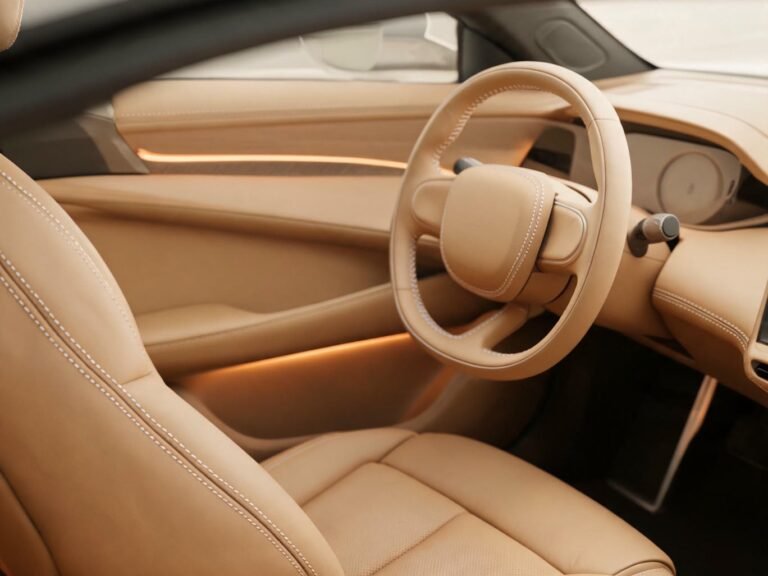
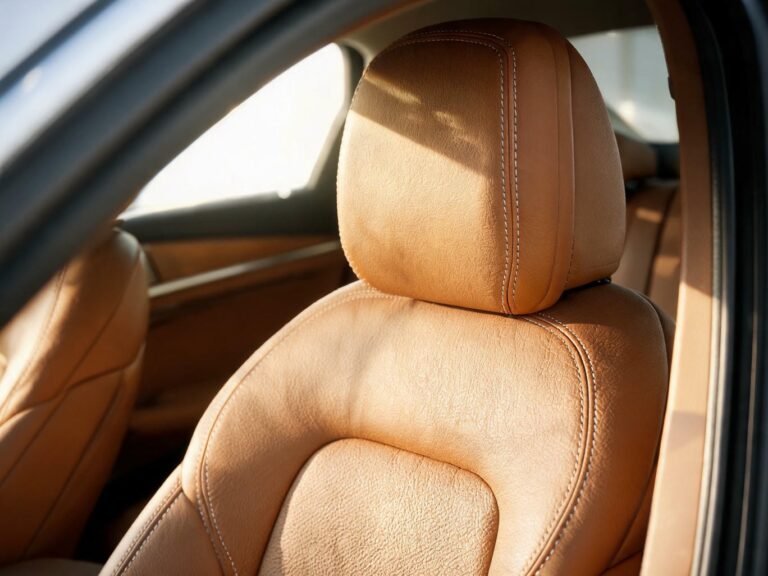
The electric vehicle revolution isn’t just transforming powertrains—it’s fundamentally reshaping interior material specifications. EV seat materials face a unique set of requirements that traditional automotive leather and PU upholstery were never designed to address. Zero-emission cabins demand low-VOC materials, battery range anxiety drives lightweight material selection, and the sustainability narrative that sells EVs to eco-conscious buyers extends to every surface inside the vehicle—including the seats. Automotive OEMs and Tier-1 suppliers are now sourcing interior materials through an entirely different evaluation lens than they did five years ago.
Request Automotive-Grade Material TDS
Why EV Interiors Need Different Material Thinking
Internal combustion engine (ICE) vehicles inherently have higher VOC emission sources—engine exhaust, fuel evaporative emissions, and under-hood chemical exposure—that partly mask the contribution of interior materials to cabin air quality. EVs eliminate these dominant sources, which means interior material VOCs represent a proportionally larger share of total cabin emissions. This shift is pushing OEMs to adopt zero-VOC and near-zero-emission materials for seats, dashboards, and door panels to meet increasingly strict cabin air quality standards like VDA 277 used by German automakers.
Battery range optimization adds another dimension. Every kilogram of vehicle weight reduces EV range by approximately 4-6 kilometers, making lightweight interior materials a direct contributor to range performance. Traditional leather seating adds 3-5 kg per seat compared to synthetic alternatives—material weight that could instead extend driving range. The tension between premium interior feel and weight reduction makes material selection one of the most consequential decisions in EV interior engineering.
Market Data: The global automotive vegan leather market reached $3.07 billion in 2024 and is projected to grow at 4.0% CAGR to $4.07 billion by 2031. Electric vehicle manufacturers are the fastest-growing segment, with brands like BMW, Tesla, and Polestar eliminating animal leather entirely from new models. The silicone synthetic leather market—dominated by automotive interior applications at 42% of total demand—grew at 14.0% CAGR, reaching $2.17 billion in 2023.
BMW’s Vegan Interior Shift Signals Industry Direction
BMW Group’s announcement to adopt fully vegan interiors across its product line represents the most significant material strategy shift by a major premium automaker in recent years. Beginning with Sensatec synthetic leather in the 3 Series and X3, BMW has progressively expanded its vegan material portfolio to include Sensafin for the X5 and X6—and critically, even replacing Nappa leather steering wheels with sustainable alternatives that reduce CO2 emissions by approximately 85%.
This isn’t a niche sustainability initiative—it’s a fundamental reengineering of BMW’s interior material supply chain. The company reports that American, Chinese, and European buyers increasingly request animal-free interiors, and the vegan material strategy supports BMW’s overall CO2 reduction targets. For the EV seat material supply chain, BMW’s move validates what material scientists have argued for years: modern synthetic materials can match or exceed genuine leather in automotive performance while delivering measurable environmental advantages.
Silicone Leather: Purpose-Built for EV Interiors
Silicone leather addresses the specific material challenges that EV interiors present in ways that traditional PU and PVC simply cannot. Manufactured through a solvent-free dry coating process, silicone leather produces zero VOCs during production and near-zero emissions in the finished product—exactly the cabin air quality profile that EV manufacturers need as dominant emission sources are eliminated. Unlike PU leather that relies on DMF solvents and PVC that contains plasticizers and heavy metals, silicone leather contains none of these problematic substances.
The weight advantage is equally significant. Silicone leather can be produced at thicknesses as low as 0.23mm while maintaining structural integrity and durability—a critical capability for EV manufacturers who need premium-looking, lightweight seat materials. At this thickness, silicone leather contributes minimal weight while providing the tactile quality that EV buyers in the premium segment expect. The material’s UV resistance (1,500+ hours xenon testing with no yellowing) is essential for EVs with large glass roof panels that expose interiors to significantly more UV radiation than traditional vehicles.
Automotive-grade silicone leather for EV and traditional vehicle interiors

EV-Specific Performance Requirements
| EV Requirement | Why It Matters | Silicone Leather Performance |
|---|---|---|
| Zero/Low VOC | VDA 277 compliance, cabin air quality | Near-zero emissions, solvent-free production |
| Lightweight | Range optimization (4-6 km per kg) | Available from 0.23mm, 40% lighter than PU |
| High UV Resistance | Glass roofs, solar exposure | 1,500+ hrs xenon, no yellowing |
| Flame Retardancy | Battery fire safety standards | FMVSS 302, EN 13773, low smoke |
| Sustainability | Brand ESG narrative | 100% recyclable, no PVC/phthalates |
| Low Fogging | Windshield visibility, sensor optics | Ultra-low fogging value |
Flame retardancy deserves particular attention in the EV context. Battery thermal runaway events create fire risks that differ fundamentally from ICE vehicle fires—higher temperatures, longer burn duration, and toxic gas concerns. EV seat materials must meet stringent flame retardancy standards (FMVSS 302 in the US, EN 13773 in Europe) with low smoke and low toxic gas emission properties. Silicone leather achieves inherent flame retardancy without chemical additives, producing minimal smoke when exposed to flame—a significant safety advantage over PU leather that requires chemical flame retardant treatments that can off-gas under normal cabin temperatures.

Sustainability as a Selling Point
EV buyers skew heavily toward sustainability-conscious consumers. Research consistently shows that EV purchasers rank environmental impact among their top three purchase decision factors—alongside range and price. Interior materials contribute to this narrative in measurable ways. Silicone leather’s solvent-free manufacturing process, zero PVC and phthalate content, and 100% recyclability provide OEMs with concrete sustainability data points for marketing materials and ESG reporting.
The vegan leather car interior trend has accelerated this material shift. OEMs are finding that premium buyers who choose EVs are often the same buyers who prefer animal-free interior materials—even when they can afford genuine leather. Tesla’s decision to offer only vegan leather in the Model 3 and Model Y proved that mainstream EV buyers accept—and often prefer—synthetic interiors when quality and performance meet expectations. For EV interior material sourcing, silicone leather delivers the sustainability credentials without compromising the tactile premium feel that luxury vehicle buyers demand.

Frequently Asked Questions
How does silicone leather’s weight compare to traditional automotive leather?
Silicone leather can be produced at thicknesses as low as 0.23mm while maintaining durability and structural integrity—significantly thinner and lighter than traditional automotive leather (typically 1.0-1.2mm). At equivalent durability ratings, silicone leather is approximately 30-40% lighter than PU leather and 50-60% lighter than genuine leather. For EV applications where every kilogram affects range, this weight advantage directly translates to extended driving distance.
Does silicone leather pass automotive emission testing standards?
Yes. Silicone leather produces near-zero VOC emissions, comfortably meeting VDA 277 standards used by German automakers. Its solvent-free manufacturing process eliminates the DMF, formaldehyde, and other volatile organic compounds common in PU leather production. The material also meets low fogging requirements essential for windshield visibility and ADAS sensor performance in modern vehicles.
Can silicone leather replace Nappa leather in premium EV interiors?
Silicone leather closely replicates the soft, luxurious hand-feel of Nappa leather while offering superior durability and environmental credentials. Premium silicone leather lines feature embossed textures and surface finishes that are virtually indistinguishable from genuine Nappa in blind touch tests. BMW’s decision to replace even Nappa leather steering wheels with sustainable alternatives demonstrates that OEM confidence in synthetic material quality has reached mainstream acceptance.
The Future of EV Interior Materials
The EV seat material market is evolving rapidly as OEMs realize that interior material selection must align with the fundamental value proposition of electric vehicles—sustainability, innovation, and superior performance. Silicone leather’s combination of zero VOC emissions, lightweight construction, inherent flame retardancy, and premium tactile quality positions it as the material system purpose-built for the EV era. As automotive interior trends continue to favor sustainable and lightweight solutions, silicone leather adoption is expected to accelerate across both EV-first brands and legacy automakers transitioning their lineups.
For Tier-1 suppliers and OEM procurement teams evaluating EV interior material strategies, silicone leather offers a proven alternative that eliminates the trade-offs between sustainability, performance, and luxury feel. Request technical data sheets, sample rolls, and automotive testing certifications to evaluate fitment for your next EV interior program.
About TOPSUN
TOPSUN is an automotive-grade silicone leather manufacturer serving EV and traditional vehicle OEMs worldwide. With 500,000 meters monthly capacity, near-zero VOC production, and full automotive testing certifications, we supply interior materials for seats, door panels, and instrument cluster coverings to leading automotive brands.
Automotive Certifications: FMVSS 302, EN 13773, FAR 25.853, VDA 277 compliant, REACH, PAHs, California Prop 65.