PU microfiber leather has become one of the most widely specified synthetic leather materials in B2B procurement, particularly for automotive interiors, furniture upholstery, and consumer goods. It sits between standard PU leather and high-end silicone leather in both performance and price — offering better durability than coated fabrics but falling short on hydrolysis resistance and longevity compared to newer silicone-based alternatives. For procurement teams evaluating material specifications, understanding exactly what microfiber leather delivers — and where it falls short — is critical for making sourcing decisions that balance cost, performance, and regulatory compliance.
Request Microfiber vs Silicone Samples
What Is PU Microfiber Leather? Composition & Manufacturing
PU microfiber leather is a synthetic material made by impregnating an ultra-fine polyamide (nylon) microfiber non-woven base with polyurethane (PU) resin. The manufacturing process involves two key stages: impregnation, where waterborne polyurethane is pressed into the microfiber substrate through pressing and rolling, and alkali reduction, which thins the fibers to a diameter similar to natural leather fibrils — typically 0.01 to 0.1 denier. This creates an organic, integrated structure that has a texture similar to genuine leather.
This three-dimensional fiber structure is what differentiates microfiber leather from standard PU leather. Standard PU leather consists of a fabric backing with a surface PU coating — essentially a painted fabric. Microfiber leather, by contrast, has PU integrated throughout the fiber matrix, creating a material that more closely mimics the cross-sectional structure of genuine hide. The result is enhanced tear resistance, breathability, and surface uniformity. For a broader comparison of synthetic leather types, including PVC, standard PU, and microfiber options, refer to our faux leather guide.

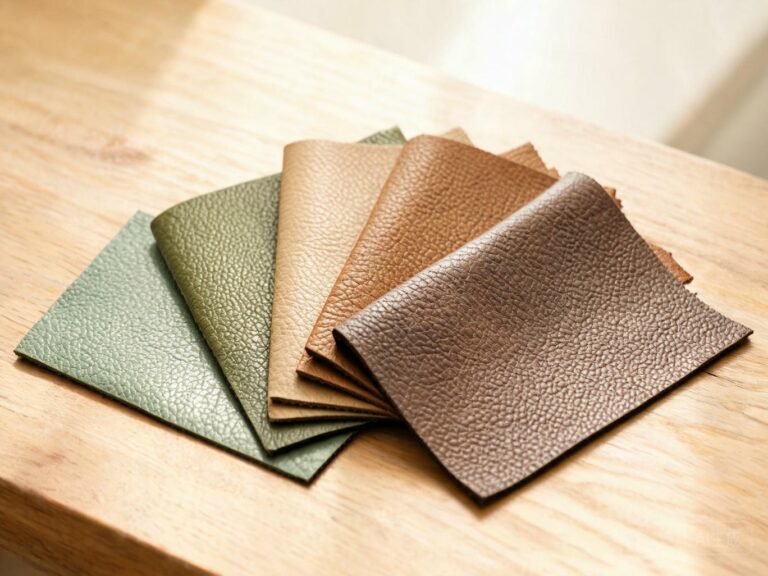
Color swatch display — microfiber leather is available in extensive color and texture options for OEM customization.
Key Performance Properties of Microfiber Leather
When evaluating microfiber leather for OEM specifications, procurement teams should verify these core performance metrics against recognized test standards rather than accepting supplier declarations at face value.
| Property | Microfiber Leather | Genuine Leather | Test Standard |
|---|---|---|---|
| Tensile Strength | 25–45 MPa | 15–30 MPa | ISO 3382 |
| Tear Strength | 25–35 N | 20–30 N | ISO 3377 |
| Martindale Abrasion | 50,000–100,000 cycles | 10,000–50,000 cycles | ISO 12947-2 |
| Hydrolysis Resistance | 3–5 years (tropical) | Variable | EN 14115 |
| UV Stability (Delta E) | 3–5 after 500h | 2–4 after 500h | ISO 105-B02 |
The Martindale abrasion resistance is where microfiber leather most clearly outperforms standard PU leather, which typically achieves only 15,000–30,000 cycles. However, this number varies significantly between suppliers — some report as low as 30,000 cycles, while premium grades reach 100,000+. Buyers should always request lab test reports rather than relying on spec sheet claims.

Martindale abrasion tester — the primary benchmark for evaluating microfiber leather wear resistance in B2B specifications.
Hydrolysis resistance remains a known limitation. In tropical or high-humidity environments, microfiber leather’s PU component degrades over 3–5 years, leading to surface cracking and delamination. This is a fundamental chemistry constraint of polyurethane, not a manufacturing defect. For applications requiring extended outdoor or humid-condition exposure, our certified testing data provides comparative benchmarks across material types.
PU Microfiber Leather vs Genuine Leather: A Practical Comparison

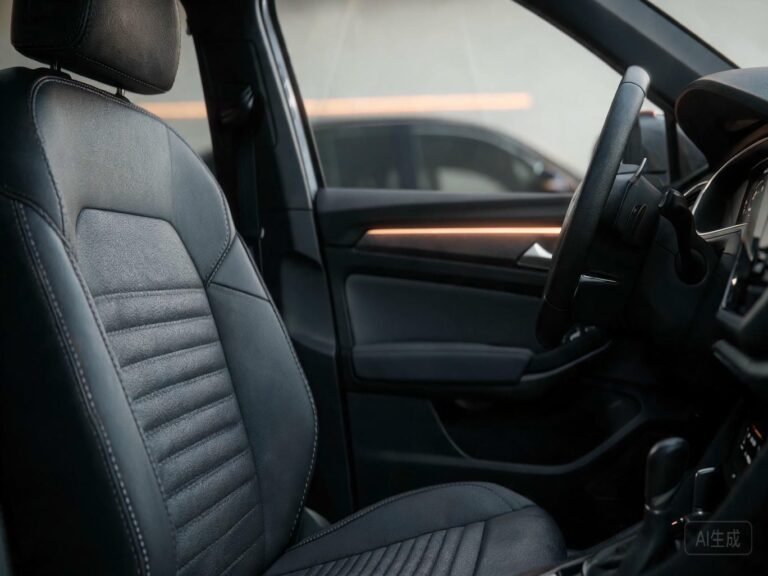
Automotive interior trimmed with microfiber leather — a common OEM choice for mid-range vehicle production.
The comparison between microfiber leather and genuine leather comes down to three factors: consistency, cost, and longevity. Microfiber leather offers consistent roll-to-roll quality, uniform color, and predictable mechanical properties — attributes that matter in high-volume manufacturing. It eliminates the hide-to-hide variation, scarring, and thickness inconsistencies inherent in natural leather. Cost-wise, microfiber leather runs 40–60% below genuine leather for equivalent applications.
However, genuine leather’s lifespan of 10–50+ years with proper care dramatically exceeds microfiber leather’s typical 3–5 year service life. Genuine leather also develops a patina that many consumers associate with quality, while microfiber leather’s surface remains static or degrades. For automotive interiors specifically, microfiber leather is a common OEM choice for mid-range vehicles, where its consistency and cost advantages outweigh longevity concerns. Premium vehicles increasingly specify silicone leather for car seats for its superior hydrolysis and UV resistance.
Microfiber vs Silicone Leather: Which Is Better for OEM?

Physical testing laboratory — where material specifications are validated against international standards before OEM approval.
| Property | Microfiber Leather | Silicone Leather |
|---|---|---|
| Martindale Abrasion | 50,000–100,000 cycles | 200,000+ cycles |
| Hydrolysis Resistance | 3–5 years | 10+ years |
| UV Resistance (Delta E) | 3–5 after 500h | 0.5–1.5 after 1,500h |
| Temperature Range | -20°C to 80°C | -40°C to 250°C |
| Chemical Resistance | Moderate | Excellent |
| VOC Emissions | Contains PU residuals | Zero VOC |
The comparison reveals a clear pattern: silicone leather outperforms microfiber leather across every durability metric. The trade-off is cost — silicone leather commands a premium over microfiber. For applications where lifecycle cost matters more than unit price (medical, marine, outdoor furniture, premium automotive trims), silicone leather delivers lower total cost of ownership.
Durability comparison — see how silicone leather outperforms PU-based materials in abrasion, hydrolysis, and weathering tests.
Learn more about silicone leather’s material properties and manufacturing process.
Primary Applications and Industry Use Cases

Furniture upholstery — one of the primary B2B application areas for microfiber leather.
Microfiber leather’s primary B2B applications span multiple industries, each with distinct specification requirements:
- Automotive interiors: Seat covers, door panels, headrests for mid-range vehicles where cost-to-performance ratio is prioritized
- Furniture: Sofa upholstery, office chairs, restaurant booth seating — environments with moderate wear exposure
- Footwear: Safety shoe uppers (requiring 51,200 Martindale cycles per ISO 20344), sneakers, dress shoe alternatives
- Accessories: Handbags, gloves, wallets — where surface aesthetics and moderate durability suffice
- Electronics: Device cases, laptop sleeves — low-wear applications prioritizing tactile feel
For each application, buyers should verify that the specific microfiber grade meets the relevant industry standard. Automotive interior applications require ECE R118 fire safety compliance, while vegan car interior leather specifications demand additional chemical compliance documentation for European markets.
The Bottom Line on Microfiber Leather Specification
PU microfiber leather occupies a useful middle ground in synthetic leather — more durable than standard PU, more consistent than genuine leather, and more affordable than premium alternatives. But its polyurethane chemistry imposes hard limits on hydrolysis resistance, UV stability, and service life. For applications where those limits matter — outdoor, marine, medical, or premium automotive — silicone leather eliminates them entirely. The procurement decision ultimately comes down to matching material chemistry to the intended service environment and expected lifecycle.
Get Microfiber vs Silicone Samples
About TOPSUN
TOPSUN manufactures silicone leather that directly addresses the durability gaps inherent in PU-based materials like microfiber leather. While microfiber leather’s polyurethane component limits hydrolysis resistance to 3–5 years, TOPSUN’s silicone leather achieves 200,000+ Martindale abrasion cycles, 10+ year hydrolysis resistance, and zero VOC emissions. We work directly with OEM buyers to develop custom specifications for automotive, furniture, medical, and marine applications.
ISO 10993 biocompatibility certified | REACH 247 SVHC compliant | FDA food-contact safe | ISO 12947-2 abrasion tested | EN 14115 hydrolysis verified