Most sustainability spec sheets we review list “recycled content” as if the word alone closes the deal. It doesn’t. Recycled polyester leather diverts plastic waste from landfills—that’s real. But when a B2B buyer asks about microplastic shedding, end-of-life recyclability, and 5-year degradation data, the conversation shifts quickly. The recycled leather market in China alone reached 18.7 billion RMB with 28.7% annual growth, yet performance data tells a more nuanced story than the marketing headlines suggest.
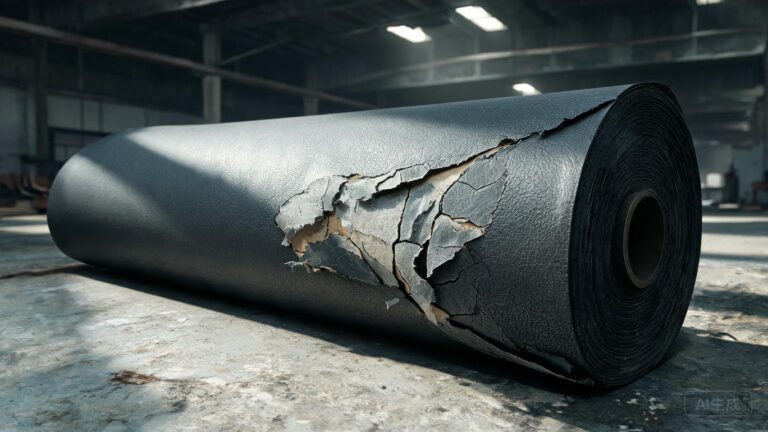
Here’s the tension: recycled polyester leather performs identically to virgin synthetic equivalents in lab tests. But “identical to PU” also means it inherits PU’s fundamental weaknesses—hydrolysis, cracking, and a 3–5 year service ceiling. Let’s unpack what that means for procurement teams chasing verified sustainability metrics rather than marketing claims.
Request Material Comparison Samples
What Is Recycled Polyester Leather and Who’s Buying It
Recycled polyester leather combines an rPET (recycled polyethylene terephthalate) base fabric—sourced from post-consumer plastic bottles or ocean-bound waste—with a polyurethane or PVC coating applied on top. The rPET base replaces virgin polyester, which reduces fossil fuel dependency and diverts plastic waste. The coating, however, remains conventional PU or PVC.
The buyer profile is specific. Automotive OEMs like Volvo and Polestar use rPET leather for non-visible interior components where circularity messaging matters more than tactile luxury. Footwear brands adopt it for uppers where recycled content supports ESG reporting. Furniture manufacturers specify it for hospitality contracts where green certifications win tenders. All three segments share one requirement: Global Recycled Standard (GRS) certification verifying the recycled content chain.

Eco-conscious leather rolls ready for B2B shipment to sustainability-focused brands
Recycled Polyester Leather Performance: The Data Behind the Label
The performance numbers for recycled polyester leather genuinely improve on virgin PU—on paper. Bally flex testing shows 100,000 cycles for rPET-based microfiber leather versus 50,000–80,000 for conventional virgin PU. That’s a meaningful upgrade. The catch: the coating is still polyurethane, which means hydrolysis, UV degradation, and microplastic shedding continue unabated.
| Metric | rPET Leather | Virgin PU | Silicone Leather |
|---|---|---|---|
| Recycled Content | 25% (base fabric) | 0% | 100% recyclable |
| Microplastic Risk | Yes (PU coating) | Yes | None |
| Service Life | 3–5 years | 2–3 years | 10+ years |
| End-of-Life | Limited recycling | Landfill | 100% recyclable |
In our material evaluation work, we’ve seen rPET leather samples that pass 100K Bally flex cycles but develop surface microcracking within 18 months of real-world UV exposure. The recycled base fabric improves the substrate, but the PU coating’s failure modes remain unchanged. For a deeper comparison across material families, see our silicone leather introduction.

Material lifecycle display showing raw material sourcing transparency for B2B evaluation
3 Hidden Costs B2B Buyers Miss
The per-square-meter price of recycled polyester leather runs $14–22, compared to $8–15 for virgin PU. That premium buys recycled content certification—but three costs remain hidden until well after the purchase order closes.
- Microplastic shedding liability. The PU coating on rPET leather sheds microplastics throughout its service life. As EU microplastic restrictions tighten, brands face reputational and regulatory exposure that recycled content certification doesn’t cover.
- Premature replacement cycles. A 3–5 year service life means two replacement cycles within a decade. The circular economy principle breaks down when the material itself degrades faster than the product it covers.
- End-of-life recycling gap. Separating the PU coating from the rPET base fabric for recycling is technically possible but economically unviable at scale. Most rPET leather ends up in landfill or incineration—just like virgin PU.
One footwear client switched from rPET leather to silicone leather and cut their 5-year material replacement budget by 60%. The initial unit cost was higher, but eliminating two full replacement cycles delivered net savings within 4 years.
Silicone Leather: True Circularity Without Petroleum
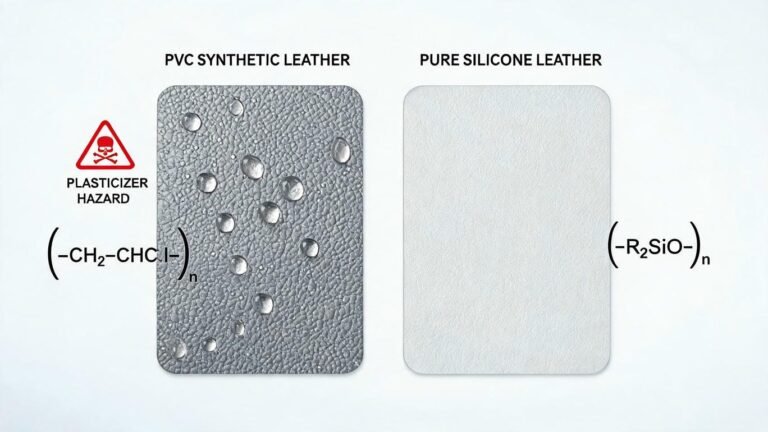
Silicone leather achieves what recycled polyester leather aims for but structurally cannot deliver: a fully circular material lifecycle without petroleum inputs. The silicone coating is derived from silica (sand), not crude oil. It bonds molecularly to the base fabric—no delamination, no microplastic shedding, no hydrolysis degradation. After 10+ years of service, the material is 100% recyclable into new silicone products.
For brands targeting the circular economy framework, the difference is structural, not incremental:
- Zero VOC emissions throughout the service life—no solvent off-gassing
- 200,000+ Martindale cycles—double the rPET leather threshold
- UV-stable for 1,000+ hours with zero fading or cracking
- Hydrolysis-proof—no coating degradation in humid or wet environments
- FDA 21 CFR 177.2600 compliant for food-contact safety
The upcycled leather material guide covers how brands are transitioning from petroleum-based synthetics to verified circular alternatives without compromising on performance.
Eco-certification overview: how silicone leather meets circular economy standards that rPET leather cannot

Sustainable leather alternative applied to furniture—comparing rPET and silicone performance
Frequently Asked Questions
Does recycled polyester leather meet REACH compliance?
The rPET base fabric is REACH-compliant, but the PU coating may contain restricted substances depending on the formulation. B2B buyers should request a full SVHC (Substances of Very High Concern) report from the supplier, not just the GRS certificate. Silicone leather, by contrast, is inherently REACH-compliant with zero restricted substances.
Can recycled polyester leather be recycled again at end of life?
Technically possible but rarely practiced. Separating the PU coating from the rPET base fabric requires chemical processing that costs more than virgin material. Most rPET leather is downcycled at best or landfilled. Silicone leather is 100% recyclable into new silicone products without coating separation.
Beyond the Recycled Label
Recycled polyester leather represents progress over virgin PU—but it’s a transitional solution, not a destination. The petroleum-based coating, microplastic shedding, and 3–5 year service life remain structural limitations that no amount of recycled content can resolve. For procurement teams building products for the next decade, the question isn’t “how much recycled content?” but “what happens at year 5?” Explore our application portfolio to see where silicone leather outperforms across automotive, furniture, and consumer goods.
About TOPSUN
TOPSUN supplies silicone-coated leather alternatives to recycled polyester leather for automotive, furniture, and fashion brands pursuing verified circular material strategies. Our silicone leather eliminates petroleum-based coatings while matching the performance demands of high-volume B2B manufacturing.
Zero VOC emissions · 100% recyclable material · 200K+ Martindale cycles · FDA 21 CFR 177.2600 food-contact compliant · REACH compliant · Free A4 swatches shipped worldwide via DHL/FedEx