A quality director at a European furniture brand pulled 200 warranty claims for their black pleather sofa line last quarter. Forty-three percent traced back to the same failure mode: surface cracking within 18 months of installation in sun-exposed hotel lobbies. The root cause wasn’t defective manufacturing — it was a spec sheet that listed “black PU leather” without a single performance requirement. The supplier delivered exactly what was specified: a low-cost black pleather with no UV stabilizers, no hydrolysis rating, and a Martindale score that barely cleared 15,000 cycles. Here are the four specifications that separate pleather black that lasts from pleather that cracks.
Request Black Silicone Swatches
Why Black Pleather Fails First
Black pleather absorbs more UV radiation than lighter colors — a physical reality that accelerates every degradation mode in polyurethane. The dark surface converts UV energy into heat, raising the material temperature 15–25°F above ambient. That heat drives plasticizer migration, which stiffens the coating and creates micro-cracks at stress points within months. Once cracking begins, moisture penetrates the base fabric, hydrolysis accelerates, and the failure cascade moves from invisible to irreversible in 6–12 months.
Industry testing confirms that standard PU leather begins visible degradation after 200–300 hours of QUV accelerated weathering. In real-world terms, that translates to roughly 18 months of typical indoor exposure near windows. For automotive interiors, the timeline shortens further: dashboard surfaces in black pleather can show cracking within 12 months in hot-climate markets. The synthetic leather durability data across multiple material types shows why performance specs matter more than color matching on paper.

Accelerated weathering equipment simulates years of UV exposure in days — the test that exposes black pleather’s weakness.
Spec 1: Hydrolysis Resistance Rating
Polyurethane contains ester linkages in its polymer chain. These bonds react with water molecules through a chemical process called hydrolysis. In humid environments, during sweat contact, or when exposed to cleaning agents, these bonds gradually break down. The PU coating loses adhesion, becomes brittle, and eventually peels off the base fabric. This is not a quality control issue — it is a fundamental chemistry limitation of the material itself.
A meaningful spec sheet should state the material’s hydrolysis resistance in hours under controlled testing (typically 70°C / 95% RH). Standard PU pleather survives 7–14 days before visible degradation. Silicone leather, by contrast, has no ester linkages — its siloxane bonds are chemically inert to water. Our silicone leather shows zero hydrolysis degradation after 42 days of accelerated testing. The difference between 14 days and 42 days is the difference between replacing upholstery every two years and replacing it every decade.

Black silicone leather retains its surface texture integrity after UV testing that cracks standard PU pleather.
Spec 2: UV Stability and Color Retention
Black is the most demanding color for UV stability because it absorbs the full light spectrum. A spec sheet that simply says “UV resistant” without test data provides no protection. You need the QUV test results — specifically, color retention percentage after a defined number of hours under ASTM D4329 or equivalent.
Our weathering data shows silicone leather maintains above 95% color retention after 1,000 hours of QUV testing. Standard PU begins to show visible degradation after 200–300 hours. That five-fold difference translates to years of additional service life. For a black sofa in a sun-exposed hotel lobby, this is the gap between replacing upholstery every 18 months and replacing it every 8–10 years. The color fastness test methodology we use provides the documentation buyers need to verify these claims.

Color swatch comparison reveals visible fading in PU pleather samples after UV exposure versus silicone leather stability.
Spec 3: Abrasion Resistance After UV Aging
Cracking often starts at abrasion points — armrests, seat edges, and high-contact zones. The Martindale abrasion test measures how many cycles a material withstands before showing visible wear. A spec sheet should state the test method, cycle count, and evaluation criteria. But here is the catch most buyers miss: abrasion resistance drops dramatically after UV aging.
Durability comparison testing shows how silicone leather outperforms PU pleather in combined abrasion and weathering conditions.
Standard black pleather typically rates 15,000–25,000 Martindale cycles when fresh from the factory. That sounds adequate until you account for UV degradation that has already weakened the surface. A material that rates 25,000 cycles new may perform at 12,000 cycles after six months of sun exposure. Silicone leather maintains its abrasion resistance after UV aging because the polymer does not degrade — it consistently passes 50,000+ Martindale cycles both before and after accelerated weathering. The faux leather furniture durability benchmarks provide reference data across material types.

Scratch resistance testing quantifies the real-world abrasion performance that determines product warranty exposure.
Spec 4: Plasticizer Content and Migration Data
Plasticizers are the additives that make PU pleather soft and flexible. Over time, they migrate to the surface and evaporate — a process accelerated by heat and UV exposure. As plasticizer content drops, the material stiffens, and the first cracks appear at stress points. This is why pleather feels supple when new and brittle after 1–2 years of use. The stiffening is not wear and tear — it is chemical depletion that no amount of conditioning can reverse.
A proper spec sheet should disclose the plasticizer type and migration test results. Phthalate-based plasticizers migrate fastest and face increasing regulatory restrictions under REACH and California Proposition 65. TOPSUN’s silicone leather uses no plasticizers at all — flexibility is an inherent property of the silicone polymer, not an additive that can leach out. This is why the material’s hand-feel remains consistent year after year, with no stiffening or embrittlement. The PU and PVC material testing guide outlines the specific test methods for verifying plasticizer stability.
Black-to-Black: PU vs PVC vs Silicone Leather
When all three materials are specified in black, the performance gap widens dramatically. Black surfaces absorb maximum heat and UV, pushing each material to its chemical limit. Here is how they compare on the four specs that determine field performance:
| Performance Spec | Black PU Pleather | Black PVC Pleather | Black Silicone Leather |
|---|---|---|---|
| UV Stability (QUV hours to visible degradation) | 200–300 hrs | 100–200 hrs | 1,000+ hrs |
| Hydrolysis Resistance | 7–14 days | Inherent (no ester bonds) | 42+ days, zero degradation |
| Martindale Abrasion (post-UV aging) | 12,000–25,000 cycles | 8,000–15,000 cycles | 50,000+ cycles |
| Plasticizer Migration | High (phthalate-based) | Severe (chlorinated) | None (no plasticizers) |
| Expected Service Life | 2–5 years | 1–4 years | 8–10+ years |
| VOC Emissions | Moderate to high | High (chlorine off-gas) | Zero VOC |
The data tells a clear story: black PVC pleather performs worst across every metric, black PU pleather delivers adequate initial performance that degrades rapidly, and black silicone leather maintains its performance characteristics throughout its service life. For B2B buyers specifying black upholstery, the black leather upholstery fabric guide provides application-specific recommendations.

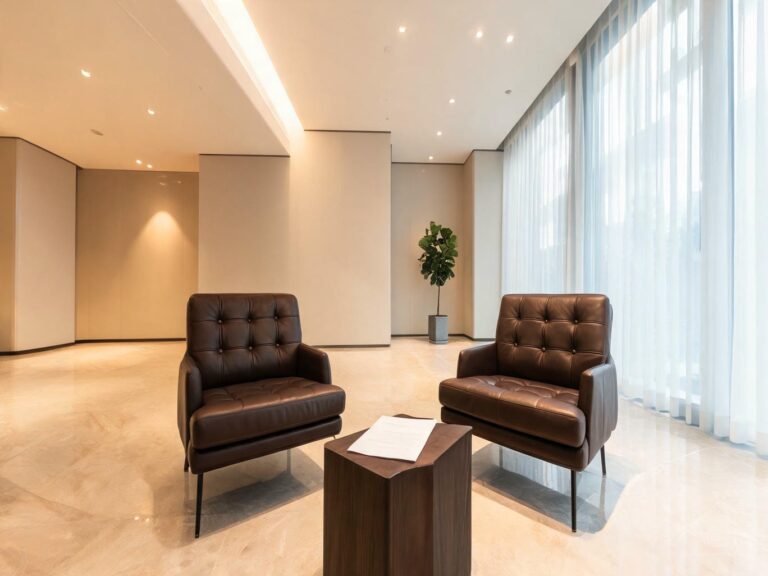
PU leather sofa upholstery in black — the most common application where cracking failures appear within 18 months.
About TOPSUN
TOPSUN manufactures silicone leather for brands and specifiers who need black upholstery material that maintains its color, texture, and flexibility over a 10-year service life — not 18 months. Our black silicone leather passes 1,000+ hours of QUV testing with above 95% color retention, 50,000+ Martindale abrasion cycles, and 42+ days of hydrolysis testing with zero degradation. Every batch ships with full test documentation: UV stability reports, hydrolysis test data, abrasion certification, and plasticizer-free verification. We supply black silicone leather rolls for furniture manufacturers, automotive interior suppliers, and hospitality furnishing brands who are tired of writing warranty claims for cracked pleather.
Request Black Silicone Swatches
Frequently Asked Questions
Why does black pleather crack faster than lighter colors?
Black surfaces absorb the full UV spectrum and convert it into heat, raising the material temperature 15–25°F above ambient. This accelerated heat drives plasticizer migration faster in dark-colored PU pleather than in light-colored equivalents. The combined UV and thermal stress means black pleather typically shows cracking 30–40% sooner than white or beige pleather under identical conditions. Silicone leather avoids this problem entirely because it contains no plasticizers and its siloxane polymer is inherently UV-stable.
How long does black silicone leather last outdoors?
In continuous outdoor exposure testing, black silicone leather maintains above 95% color retention after 1,000 hours of QUV accelerated weathering, which corresponds to approximately 5–7 years of real-world outdoor service depending on climate zone. In indoor applications with indirect sun exposure, the expected service life extends to 10+ years. By comparison, black PU pleather in outdoor applications typically shows visible cracking within 6–12 months.
Ready to specify black leather that lasts? Request our black silicone leather sample swatches with full UV, hydrolysis, and abrasion test documentation. Get samples →