Synthetic leather durability is the single most misunderstood metric in B2B material sourcing. Suppliers quote impressive numbers on data sheets, but those numbers mean nothing without knowing which test standard was used, what conditions were simulated, and — critically — what failure mode eventually ends the material’s life. This technical guide examines synthetic leather durability through the lens of standardized testing, real-world failure analysis, and lifespan data across PU, PVC, and silicone-based materials.
Synthetic Leather Durability: What the Test Data Shows
Synthetic leather durability test methods follow internationally recognized standards — primarily from ISO and ASTM. The problem is that suppliers often cite test results without specifying the exact protocol, making cross-material comparison misleading. Here are the four tests that actually matter:
- ISO 12947 (Martindale abrasion): Measures how many cycles of abrasive friction the surface withstands before visible wear. The most common durability benchmark, but only tells part of the story.
- ISO 2419 (Hydrolysis resistance): Accelerated aging in high-humidity, high-temperature conditions. This test predicts how the material will perform in tropical or marine environments over years of exposure.
- ISO 7854 (Flex cracking): Repeated folding cycles to simulate the stress patterns on seating surfaces. Materials that pass abrasion tests can still fail here if they lack flexibility.
- ISO 105-B02 (Color fastness to light): UV exposure testing that predicts fading and embrittlement. Critical for automotive and outdoor applications.
When we evaluate materials at TOPSUN, we run all four tests as a minimum baseline. A material that passes Martindale but fails hydrolysis is not durable — it is simply abrasion-resistant. True durability means surviving all four stressors simultaneously over the product’s expected lifespan.

Flex cracking endurance testing simulates years of repeated folding stress on synthetic leather surfaces
Understanding Failure Modes: Why Synthetic Leather Cracks and Peels
Synthetic leather cracking and peeling causes are well-documented in materials science, yet many B2B buyers remain unaware of why their materials fail. Every synthetic leather has a primary failure mode — the specific mechanism that ultimately ends its useful life. Understanding these mechanisms is essential for predicting real-world performance.
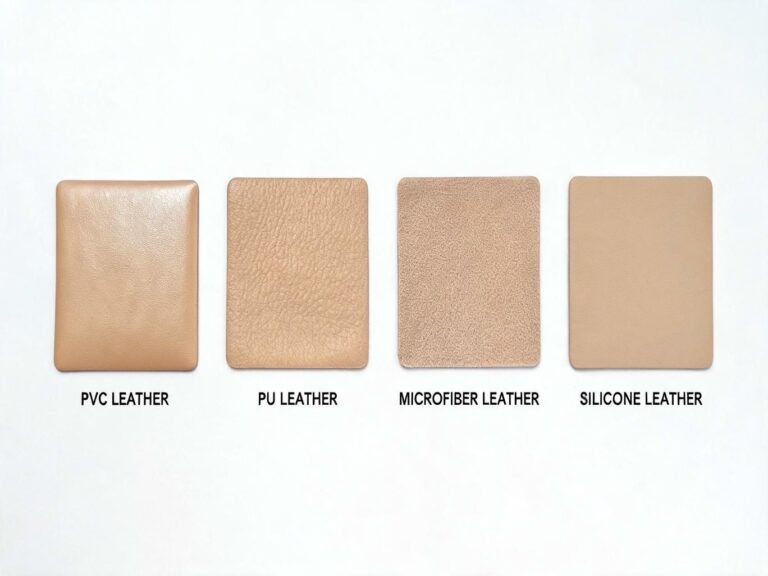
PU leather fails through hydrolysis. The polyurethane polymer chain contains ester or ether bonds that water molecules can attack over time. In humid environments, moisture slowly breaks these bonds, causing the topcoat to lose adhesion, bubble, and eventually peel away from the base fabric. This process is irreversible and accelerates with temperature. A PU leather that lasts 8 years in a dry climate may fail in 3 years in a tropical one.
PVC leather fails through plasticizer migration. The flexible feel of PVC comes from chemical plasticizers mixed into the polymer. Over time — especially in heat — these plasticizers migrate to the surface and evaporate. The material progressively stiffens, becomes brittle, and cracks under flexing stress. This is why old PVC car seats develop a characteristic network of cracks and a sticky residue on the surface.
Silicone leather has no comparable failure mode. The Si-O backbone is thermodynamically stable against hydrolysis, and silicone does not rely on plasticizers for flexibility. Its molecular structure remains unchanged whether the material is submerged in water, exposed to UV, or subjected to temperature cycling. This is why silicone leather’s service life dramatically outlasts conventional synthetics.
Compliance note: REACH regulations increasingly restrict the use of certain plasticizers in PVC. B2B buyers sourcing for European markets should verify that synthetic leather materials meet current REACH SVHC requirements — silicone leather inherently complies because it contains no restricted substances.

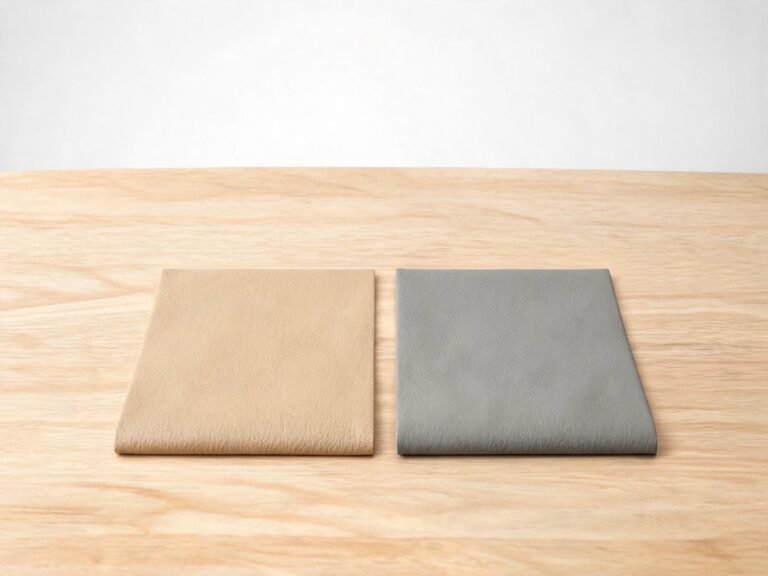
Water droplet testing verifies the hydrolysis resistance of synthetic leather materials — a critical durability indicator
How Long Does Synthetic Leather Last in Real Applications?
The question of how long does synthetic leather last depends entirely on the material type and the application environment. Laboratory test data provides a baseline, but real-world performance varies based on usage intensity, climate, and maintenance practices. Here is a lifespan comparison based on our testing data and field observations:
| Material | Primary Failure Mode | Commercial Lifespan | Hydrolysis | UV Stability | Recyclability |
|---|---|---|---|---|---|
| PVC leather | Plasticizer migration | 3–7 years | Poor | Moderate | Low (chlorine content) |
| PU leather | Hydrolysis degradation | 5–8 years | Moderate | Good | Moderate |
| Microfiber leather | Fiber breakdown | 6–10 years | Moderate | Good | Moderate |
| Silicone leather | No primary failure mode | 10–15+ years | Immune | Excellent | High (silicone recyclable) |
The most striking data point in this table is silicone leather’s “no primary failure mode” entry. Unlike every other synthetic leather, silicone does not have a predictable degradation pathway. It does not hydrolyze, it does not lose plasticizers, and its UV resistance is inherent rather than additive-dependent. In practice, silicone leather typically outlasts the product it is installed on.

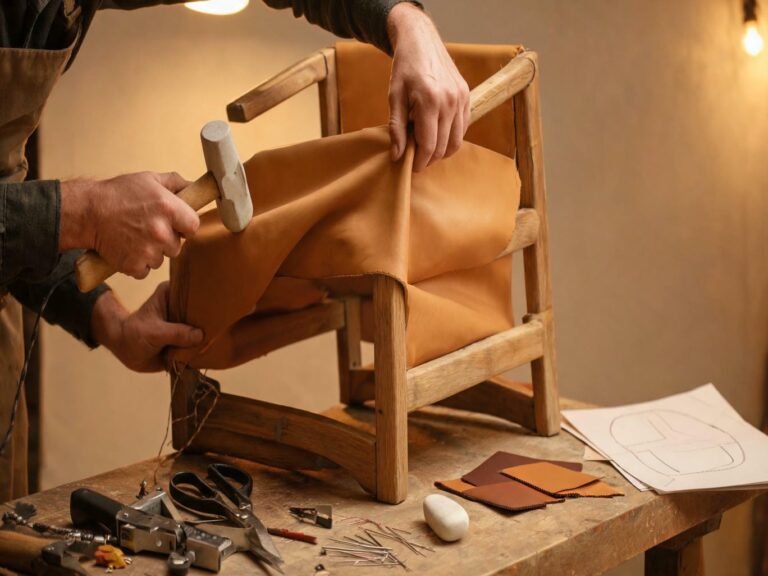
Commercial furniture applications demonstrate the real-world lifespan advantage of silicone-based synthetic leather
Synthetic Leather Durability vs Genuine Leather: The Data Gap
The synthetic leather durability vs genuine leather comparison reveals a surprising reality. Many buyers assume genuine leather is inherently more durable than any synthetic. The data does not support that assumption — at least not uniformly. Genuine leather excels in specific scenarios (breathability, patina development, repairability) but underperforms synthetics in others.
In Martindale abrasion testing, genuine leather typically scores 25,000–40,000 cycles. Premium PU reaches 50,000–100,000. Silicone leather exceeds 200,000. By the most common durability metric, synthetics outperform genuine leather — sometimes dramatically. The same pattern holds for UV resistance (genuine leather fades without treatment) and water resistance (genuine leather absorbs moisture).
However, genuine leather wins on repairability. A scratched genuine leather surface can be refinished, re-dyed, and restored to near-original condition. Synthetic leather, once the surface coating is damaged, cannot be effectively repaired — the damage is permanent. For applications where maintenance and restoration are part of the lifecycle plan (luxury furniture, high-end automotive), this repairability advantage keeps genuine leather relevant.
For medical and healthcare applications, where hygiene and cleanability override all other concerns, synthetic leather — particularly silicone — is the only appropriate choice. Its non-porous surface can be disinfected with hospital-grade cleaners without degradation, something genuine leather cannot tolerate.

The production process flow chart illustrates the quality control stages that ensure consistent synthetic leather durability
Improving Hydrolysis Resistance in Synthetic Leather Materials
Synthetic leather hydrolysis resistance is the single most important factor for applications in humid climates, marine environments, or any setting where moisture exposure is sustained. PU leather manufacturers have attempted to improve hydrolysis resistance through formulation changes — switching from ester-based to ether-based polyurethanes, adding hydrolysis inhibitors, and increasing topcoat density. These measures extend PU’s hydrolysis life from 2–3 years to 4–5 years, but they cannot eliminate the fundamental vulnerability.
The only synthetic leather material that achieves true hydrolysis immunity is silicone leather. Because the Si-O bond is thermodynamically stable against water, the material does not degrade regardless of exposure duration. In our factory production process, we verify this through extended hydrolysis testing — submerging samples in 70°C water for 14 days and measuring tensile strength retention. Silicone leather shows zero degradation; PU samples typically lose 30–50% of their tensile strength under the same conditions.
Side-by-side service life comparison shows how different synthetic leather materials age over time
For B2B buyers, the practical implication is clear. If your product will be used in environments with sustained moisture exposure, the hydrolysis resistance of your material choice will determine whether it lasts 3 years or 15 years. The faux leather furniture durability data consistently confirms that hydrolysis — not abrasion — is the leading cause of premature synthetic leather failure in commercial applications.
When sourcing across the full range of applications, we recommend requesting hydrolysis test reports as a mandatory document — not an optional one. The flex cracking test results should accompany this data, as the two failure modes often interact: hydrolysis weakens the material, and flexing stress then causes it to crack at the weakened points.
Frequently Asked Questions
What causes synthetic leather to crack and peel?
The primary causes vary by material type. PU leather cracks and peels due to hydrolysis — moisture breaks down the polyurethane polymer bonds over time, causing the topcoat to lose adhesion. PVC leather fails through plasticizer migration — heat causes the chemicals that make PVC flexible to evaporate, leaving the material brittle and prone to cracking. In both cases, the degradation is progressive and irreversible. Silicone leather avoids both failure modes because its molecular structure is inherently stable against water and does not rely on plasticizers.
Which synthetic leather lasts the longest?
Silicone leather lasts the longest among all synthetic leather materials, with a commercial service life of 10–15+ years. This is 2–3 times longer than premium PU leather (5–8 years) and 3–5 times longer than PVC leather (3–7 years). The longevity advantage comes from silicone’s molecular stability — it does not hydrolyze, does not lose plasticizers, and resists UV degradation without additives. For applications where material replacement is costly or difficult, silicone leather’s extended lifespan delivers the lowest total cost of ownership despite a higher upfront material cost.
About TOPSUN
TOPSUN develops synthetic leather materials with verified durability data, providing B2B buyers with transparent testing reports and compliance documentation for automotive, medical, and furniture applications.
Our zero-VOC silicone leather formulations undergo ISO 12947 abrasion testing, ISO 2419 hydrolysis testing, and full REACH compliance verification — backed by 8+ years of manufacturing experience.