Two quotes for the same sofa leather can differ by 40 percent, and both sales reps will call their material premium. The gap is rarely the leather itself. It is what the upholstery leather supplier left out of the quote. Eight years of factory audits taught us one lesson. Judge suppliers by the specs they put in writing. This checklist covers the seven numbers that predict whether your furniture survives five years or fails in eighteen months.
What an Upholstery Leather Supplier Actually Sells
Buyers often think they are purchasing hides or rolls. In practice, a supplier sells finish chemistry and consistency. Industry testing shows which number decides whether a lobby sofa survives its first year. It is finish adhesion, not the grade label on the swatch. One hotel group ordered $50,000 of bar seating, and the production run wore out faster than the approved sample. The investigation traced the failure to adhesion below 2.0 N/cm, a spec that never appeared on the quote.
This is why leather grades for commercial furniture deserve more scrutiny than a brochure. C-grade cuts from the belly stretch and wear early, and unspecified orders often get padded with them. Ask what percentage of your order is C-grade, and demand it stays under 5 percent on non-wear surfaces.
7 Specs Every Upholstery Leather Supplier Should Quote
If a supplier hesitates on any of these seven, treat it as a red flag. Each one has a test method behind it, so “durable” and “premium” are not acceptable answers.
- Martindale abrasion (ISO 12947): 20,000 cycles minimum for residential sofas, 40,000 for commercial seating, and 100,000+ for hospitality and contract use.
- Finish adhesion: at least 2.0 N/cm, tested on the production batch, not just the approved sample.
- Hydrolysis resistance: 85°C / 85% RH climate chamber for 14 weeks with no delamination. PU typically fails in 3 to 5 years; quality silicone lasts 10 to 15.
- Color fastness to light (ISO 105-B06): Grade 4-5, or window-facing furniture will fade unevenly within a year.
- Flex fatigue cycles: relevant for recliners and any seat with moving panels.
- VOC emissions (ISO 16000-6): non-detect results and 100 percent solvent-free production for enclosed spaces.
- Flame retardant certification: FMVSS 302 for transport seating or EN 13773 Class 4 for public buildings.

Martindale testing predicts surface wear long before a showroom sample can.
Where Synthetic Beats Genuine on Cost
Genuine top-grain leather still wins on prestige and patina. For heavy-use commercial seating, though, the math often favors synthetics. Tanneries sell in full hide packs of 10 to 20 hides, while synthetic upholstery leather usually carries MOQs of 300 to 500 meters per color. For a mid-volume furniture line, that difference alone can free up months of working capital.
Not all synthetics age the same, either. In our own comparison testing, full-silicone leather reached 200,000+ Martindale cycles and showed zero hydrolysis damage after 14 weeks in an 85°C chamber. Conventional PU started cracking far earlier. We broke down the chemistry gap in detail on our silicone vs PU comparison page, including the FTIR markers that separate the two.
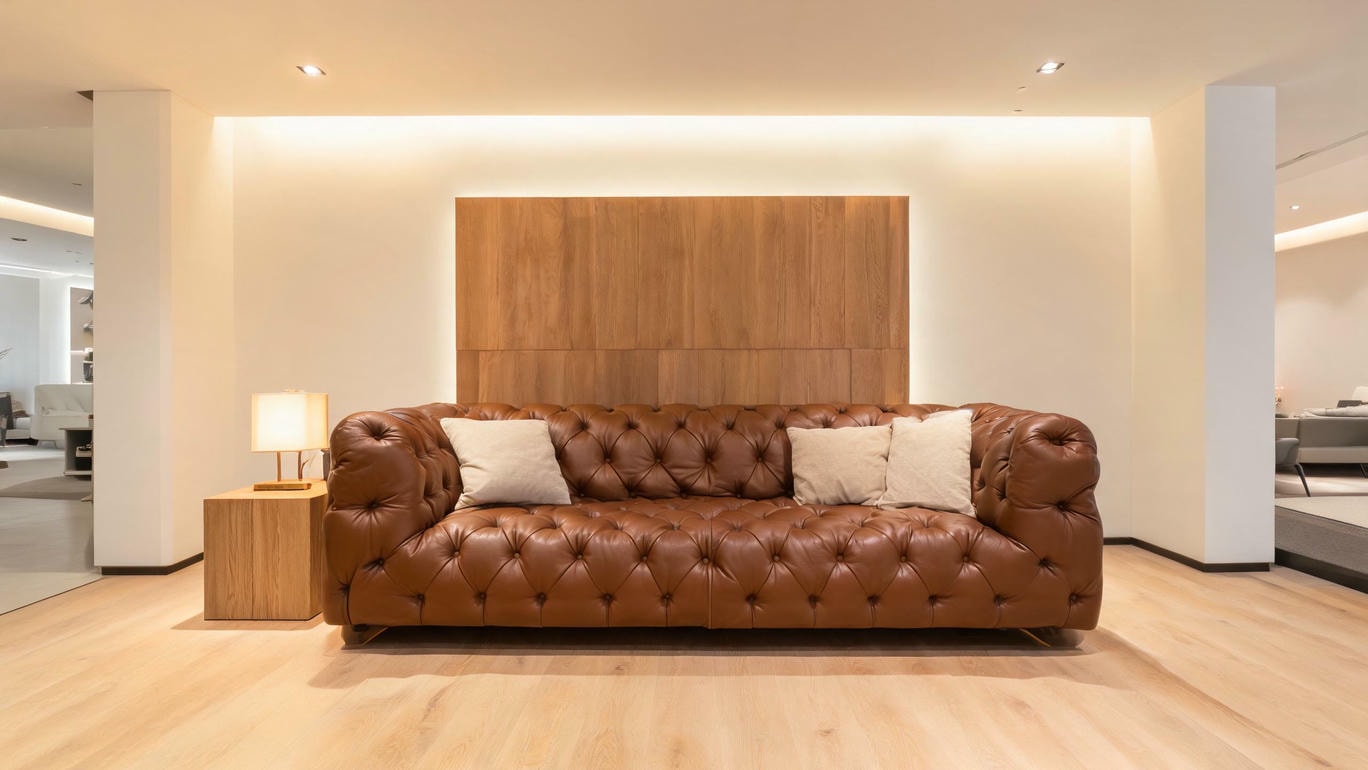
Synthetic rolls cut cleaner and ship lighter than hide packs, with consistent grain across every panel.
The TCO Math Most Quotes Skip
Purchase price is the smallest part of leather cost. Reupholstery labor, shipping, downtime, and warranty claims dominate the real total. We have seen chains spend $250 per seat on bonded leather that had to be replaced within three years, which erased the entire upfront saving. A material tested to 100,000+ cycles may cost 20 percent more per meter and still cut lifetime cost by half.
Ask each upholstery leather supplier for their reupholstery rate on similar projects. A confident manufacturer will answer with numbers, and many will point you to third-party inspection. We welcome SGS, BV, and TÜV auditors into our facility, and our factory production page shows the multi-stage QC line every roll passes before shipment.

Finished rolls staged for final inspection: batch traceability matters more than sample quality.
Inside our QC line: the same tests in this checklist run on every production batch, not just approved samples.
Your Pre-Signing Checklist
Before you sign with any upholstery leather supplier, complete these five steps. They take one email and save months of warranty disputes.
- Request test certificates for all seven specs above, tied to your production batch.
- Set C-grade limits at 5 percent or less, restricted to non-wear surfaces.
- Match the Martindale rating to your real end use: 40,000+ for commercial, 100,000+ for hospitality.
- Confirm hydrolysis test data when orders ship to hot or humid climates.
- Book third-party inspection before the goods leave the factory floor.
Request Furniture-Grade Samples
About TOPSUN
TOPSUN manufactures full-silicone upholstery leather for furniture, hospitality, and transport seating in 30+ countries, with monthly capacity of 500,000 meters and a 500-meter MOQ.
Every order ships with SGS test reports covering Martindale abrasion, hydrolysis, and color fastness, backed by 8+ years of OEM/ODM experience and third-party inspection on request.
FAQ
How many Martindale cycles do I need for hotel furniture?
Specify 100,000+ cycles for hospitality seating. Hotel lobbies and bars get near-constant use, and 40,000-cycle residential-grade material will show wear within the first year. For a 10-year service target, look for 200,000-cycle tested materials.
Is bonded leather ever worth the lower price?
For short-life products, possibly. For commercial furniture, no. Bonded leather fails through delamination, and the reupholstery labor costs more than the original material saving. Real-world cases show $250-per-seat bonded orders written off within three years.
References
1. https://sinocomfort.com/blog/martindale-test-up… — Martindale rub test thresholds for residential vs commercial upholstery.
2. https://neveitaliafurniture.com/leather-grades-… — Finish adhesion failures, C-grade padding, and bonded leather write-off cases in commercial furniture (2026).