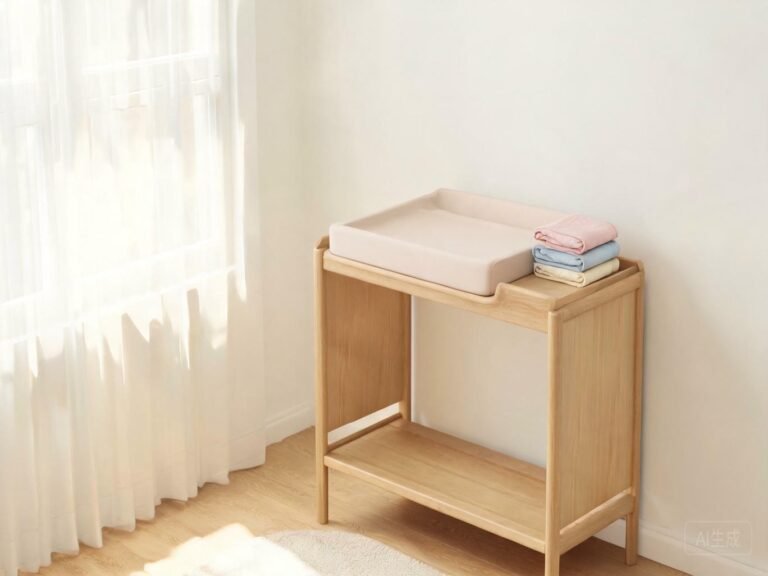
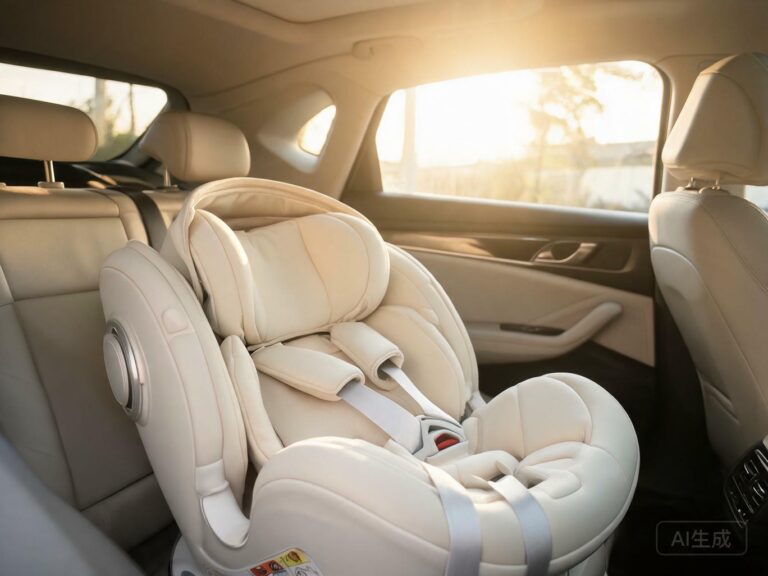
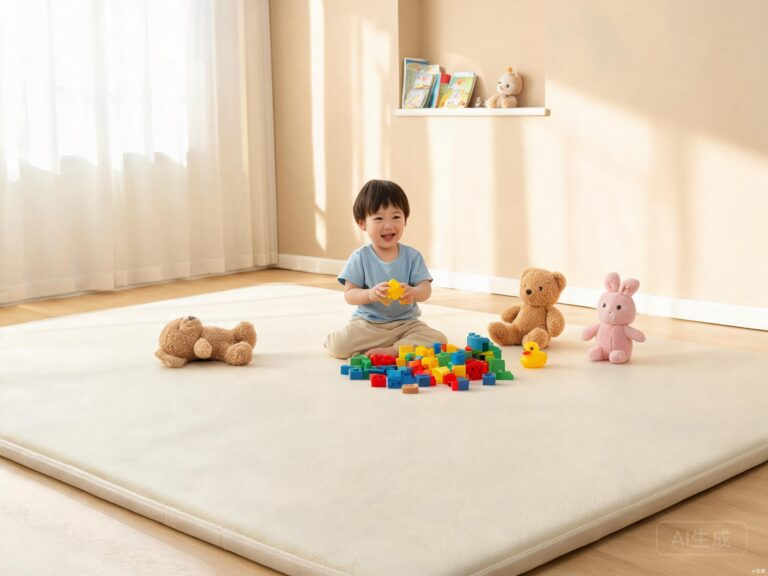
A nursery glider looks like any other upholstered chair — until you realize a baby spends 12+ hours a day in direct skin contact with its surface. That changes every material specification on the spec sheet. VOC emissions, heavy metal content, and flame retardant chemistry that pass for adult furniture can fail catastrophically in a nursery environment. For manufacturers sourcing nursery furniture leather, the compliance bar isn’t “good enough for adults” — it’s “safe enough for a 6-month-old to chew on.”
Why Standard Upholstery Leather Fails in Nursery Settings
Standard PU and PVC leather pass general furniture safety tests — but nursery environments operate under a different regulatory regime. A baby’s skin is thinner than an adult’s, their metabolic systems are still developing, and they explore the world by putting things in their mouth. Material that’s “low-VOC” for a living room sofa can still exceed nursery-grade thresholds for children’s furniture.
The three most common failure points we see when manufacturers bring us their rejected material samples:
- Plasticizer migration. PU and PVC leather use phthalates and other plasticizers to achieve flexibility. These compounds migrate to the surface over time — and onto baby skin. REACH restricts specific phthalates to ≤0.1%, but many suppliers still use non-restricted alternatives with questionable long-term safety profiles.
- Formaldehyde residues. Tanning and finishing processes for conventional leather leave formaldehyde in the material. The EU E1 standard limits emissions to 0.1 ppm for general furniture, but nursery-grade requirements push tighter — and GREENGUARD Gold certification demands even lower thresholds.
- VOC off-gassing. Solvent-based PU leather continues to emit VOCs for months after production. In a closed nursery room where a baby sleeps, those emissions concentrate. EN 717-1 formaldehyde testing and ISO 16000-6 VOC chamber testing reveal the gap between “adult-safe” and “baby-safe.”

Non-porous silicone leather surface repels liquids — critical for nursery spill cleanup without chemical residue.
Nursery Furniture Leather: 6 Safety Specs to Verify
If you’re sourcing leather for nursery furniture — gliders, crib bumpers, high chairs, play mats — these six specifications should appear in your purchase agreement with pass/fail thresholds and third-party test report requirements:
| Safety Spec | Standard | PU Leather | Silicone Leather |
|---|---|---|---|
| VOC emissions | ISO 16000-6 | Contains solvents | Zero / near-zero |
| Heavy metals | RoHS / REACH | Risk of lead, cadmium | Not detected |
| Phthalate content | REACH Annex XVII | Present (flexibility additive) | Phthalate-free |
| Skin contact safety | ISO 10993-5 | Not typically tested | Certified biocompatible |
| Flame retardancy | EN 71-2 / GB 6675 | Flammable (additives needed) | Self-extinguishing |
| Cleaning chemical resistance | Bleach / alcohol test | Surface degrades | Bleach-safe, alcohol-safe |
OEKO-TEX LEATHER STANDARD Product Class I covers articles for babies up to 36 months and applies the strictest limit values in the entire standard. Materials that pass Class II (adult apparel) can fail Class I (baby products) on the same test — the thresholds are that much tighter.
Compliance tip: Request test reports from the actual production batch, not a generic data sheet. A supplier’s marketing PDF isn’t a compliance document — insist on SGS or Intertek reports with batch numbers matching your order.
Silicone Leather’s Baby-Safe Material Profile
Silicone leather achieves its baby-safe profile through material chemistry, not through added treatments that wear off. The silicone elastomer is inherently non-toxic — it’s the same polymer family used in baby bottle nipples, teething rings, and medical-grade tubing. No solvents, no plasticizers, no phthalates, no formaldehyde.
TOPSUN’s silicone leather for nursery applications carries these certifications:
- FDA 21 CFR 177.2600 — food-contact substance compliance. This means the material is safe if a baby puts it in their mouth, which they will.
- ISO 10993-5:2009 — biocompatibility / in vitro cytotoxicity. The material passes the same biological safety test used for medical device surfaces.
- EN 71 — toy safety standard. Covers flammability, heavy metals, and chemical migration limits for children’s products.
- REACH compliant — all 247 SVHC substances verified below threshold, with zero phthalates used in production.
In our experience testing eco-friendly silicone leather against nursery standards, the material passes every Class I threshold without modification — no additional flame retardant treatment, no antimicrobial coating, no surface sealer. What you see is what the baby touches.

Soft-touch off-white silicone leather — gentle against infant skin while maintaining structural integrity for nursery furniture.
Nursery Furniture Leather: Cleaning and Disinfection Survival
Nursery furniture gets dirty. Milk spills, diaper accidents, spit-up, and teething drool are daily events. The material you specify needs to survive repeated cleaning with hospital-grade disinfectants without degrading — because a surface that breaks down after 50 cleaning cycles becomes a porous trap for bacteria.
PU leather’s topcoat breaks down with bleach and alcohol-based disinfectants. The plasticizers migrate faster when exposed to solvents, and the surface develops micro-cracks that harbor bacteria. Within 6–12 months of daily disinfection, a PU nursery chair becomes both visually degraded and hygienically compromised.
Silicone leather’s non-porous surface is bleach-safe and alcohol-disinfectant compatible. The material shows no surface degradation after repeated cleaning — the same property that makes it suitable for medical and healthcare environments translates directly to nursery hygiene protocols. You can wipe it down with a 10% bleach solution 365 days a year and the surface stays intact.

Custom embossed patterns and prints on silicone leather — nursery-safe decorative options without toxic print finishes.

Silicone leather applied to baby and nursery products — from high chairs to play mats to rocking chair upholstery.
Baby-safe certification overview — FDA, ISO 10993-5, and EN 71 test results for silicone leather in nursery applications.
Frequently Asked Questions
Is silicone leather safe for babies to chew on?
Yes. TOPSUN’s silicone leather is FDA 21 CFR 177.2600 food-contact compliant, meaning the material meets migration limits for food-contact substances. It’s the same polymer family used in baby bottle nipples and teething toys. No phthalates, no BPA, no heavy metals — verified by SGS and Intertek third-party testing.
Can nursery furniture leather withstand hospital-grade disinfectants?
Silicone leather is bleach-safe and compatible with alcohol-based disinfectants. The non-porous surface shows no degradation after repeated cleaning cycles — unlike PU leather, whose topcoat breaks down with bleach exposure within months. This makes silicone leather suitable for both home nursery use and commercial childcare settings with strict hygiene protocols.
Material Choice Is Safety Policy
For nursery furniture manufacturers, the leather specification isn’t just a sourcing decision — it’s a safety policy. Material that passes adult-furniture thresholds can still fail baby-product standards on VOC, heavy metal, and skin-contact tests. Silicone leather passes all six critical nursery specs not through added treatments but through inherent material chemistry, and it survives the daily disinfection cycle that nursery environments demand. Specify the standards, request the batch-specific test reports, and choose a material that meets Class I from the molecular level up.
About TOPSUN
TOPSUN produces baby-safe silicone leather for nursery furniture, play mats, and children’s seating that meets the strictest infant-contact safety standards without relying on chemical surface treatments.
OEKO-TEX Standard 100 Class I compatible · FDA 21 CFR 177.2600 food-contact compliant · ISO 10993-5 biocompatibility certified · EN 71 toy-safe · Bleach-safe and alcohol-disinfectant compatible