A baby changing pad surface is one of the most safety-critical material specifications in nursery product manufacturing. Infants spend 2,000+ diaper changes on this surface in their first year alone. Their skin is in direct contact with the material for 5–10 minutes per change. Yet many manufacturers specify baby changing pad leather based on cost and aesthetics, not certification compliance. The result: materials that pass visual inspection but fail CPSIA phthalate limits, leach formaldehyde above EU E1 thresholds, or harbor bacteria in surface micro-fissures that no amount of wiping can reach. For product safety teams, understanding what “baby-safe” actually requires—beyond marketing claims—starts with six specific standards.
Why Baby Changing Pad Leather Faces Stricter Safety Rules Than Furniture
Furniture leather and baby product leather operate under completely different regulatory frameworks. A sofa upholstery material can meet REACH compliance and still contain plasticizers at levels that would trigger a CPSIA violation for infant products. The distinction comes down to exposure route and duration.
Babies have developing immune systems, thinner skin barriers (40% thinner than adult skin through age 3), and a documented habit of mouthing any surface within reach. A changing pad surface that passes adult-contact standards can fail infant-contact standards on three counts: phthalate migration through skin absorption, formaldehyde off-gassing in enclosed nursery environments, and heavy metal leaching from surface coatings during saliva contact.
In our certification testing, we’ve run silicone leather through ISO 10993-5 cytotoxicity assays—the same biocompatibility standard used for medical device skin-contact materials. The results: zero cytotoxic response, meaning the material doesn’t trigger cell death even under prolonged direct contact. This is the safety floor, not the ceiling.
The 6 Safety Standards Every Baby Changing Pad Leather Must Pass
| Safety Standard | Scope | PU Leather | Silicone Leather |
|---|---|---|---|
| ASTM F2388 | Changing product safety | Passes if treated | Passes inherently |
| CPSIA Section 108 | Phthalates in children’s products | DEHP/DBP/BBP risk | None detected |
| EN 71-3 | Heavy metal migration | Pigment-dependent | Not detected |
| ISO 10993-5 | In vitro cytotoxicity | Rarely tested | Certified (SGS) |
| EU E1 | Formaldehyde emission | ≤ 0.1 ppm (compliant grades) | Zero formaldehyde |
| FDA 21 CFR 177.2600 | Food contact substances | Not applicable | Compliant |
Each standard addresses a specific infant safety risk. CPSIA Section 108 bans six phthalates above 0.1% in children’s toys and care articles—DEHP, DBP, BBP, DINP, DIDP, and DnOP. PU leather commonly uses phthalate plasticizers to achieve flexibility; even “phthalate-free” PU grades can contain trace levels above the CPSIA threshold. Silicone leather achieves flexibility through its polymer structure alone, without any plasticizer additives.

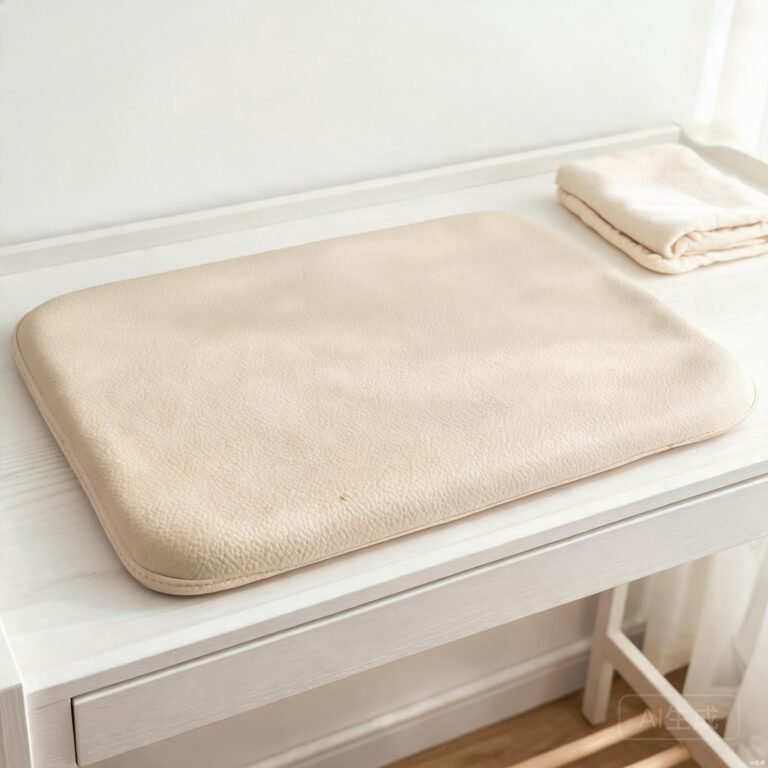
Baby-safe printed silicone leather—non-toxic, hypoallergenic surface for infant product applications
Material Chemistry: What Makes Baby-Safe Leather Actually Safe
The difference between “non-toxic” as a marketing claim and “non-toxic” as a certified property comes down to chemistry. PU leather achieves its surface properties through solvent-based coatings—residual solvents (DMF, MEK, toluene) can off-gas for months after manufacturing. PVC leather relies on phthalate plasticizers that migrate to the surface over time.
Silicone leather uses a solvent-free dry coating process. The silicone polymer is inherently flexible, hypoallergenic, and chemically inert. It doesn’t require plasticizers, doesn’t off-gas, and doesn’t degrade into harmful byproducts. For non-toxic leather for baby products, this means the material’s safety profile is permanent—not dependent on a surface treatment that wears off.
We’ve consulted with baby product manufacturers across 15 countries on material compliance. The most common compliance gap isn’t the surface material itself—it’s the adhesive and backing layers. A “safe” surface layer bonded with a non-compliant adhesive creates a product that passes surface testing but fails whole-product extraction testing. For manufacturers navigating these requirements, our baby and kids applications page outlines the full compliance framework.

Soft pastel silicone leather layers—baby-safe colors with zero VOC emissions and hypoallergenic surface
Silicone Leather vs PU for Baby Changing Pad Applications
For manufacturers comparing silicone leather baby products against PU alternatives, the decision extends beyond safety to functional performance that directly affects product lifespan and warranty exposure.
- Cleanability: Silicone leather’s non-porous surface repels liquids and can be disinfected with alcohol or bleach without surface degradation. PU surfaces degrade with repeated alcohol exposure.
- Antimicrobial: Silicone is intrinsically antimicrobial—bacteria, mold, and mildew cannot colonize the surface without chemical additives. PU requires antimicrobial coatings that wear off over time.
- Durability: Silicone leather withstands 200,000+ Martindale abrasion cycles. PU typically rates 20,000–50,000 cycles before surface breakdown.
- Temperature stability: Silicone remains stable from -40°C to 250°C. PU softens above 60°C and can deform during hot-water sterilization.
These performance differences translate directly to product recall risk. A changing pad surface that cracks after 200 wash cycles exposes the manufacturer to warranty claims and potential CPSIA re-testing obligations. For guidance on material selection for nursery products, see our baby changing mat material guide.

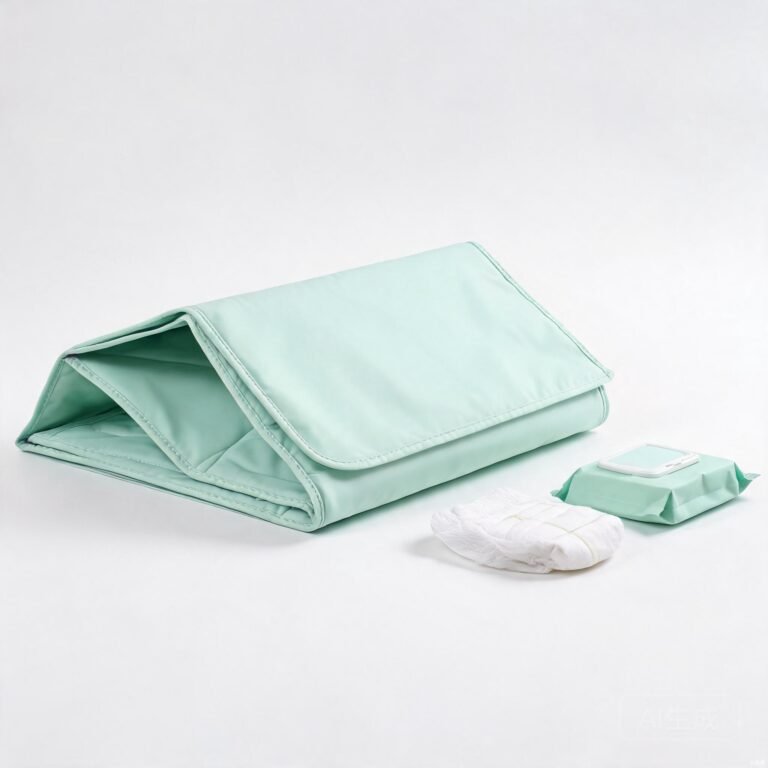
Baby product leather comparison—safety-certified materials for nursery applications
Watch silicone leather pass baby-safe certification testing—ISO 10993-5, EN 71, and CPSIA compliance
Certification Documentation: What to Request From Your Supplier
Specifying baby-safe leather is only half the process. Documenting it is the other half. When evaluating suppliers for baby changing pad leather, request six specific documents: current ISO 10993-5 test report (not older than 24 months), CPSIA phthalate test results from a CPSC-accepted lab, EN 71-3 heavy metal migration certificate, REACH SVHC compliance declaration, FDA food contact compliance letter, and formaldehyde emission test (EU E1 or equivalent).
Any supplier unable to provide these documents is asking you to assume their safety claims. In regulated markets, that assumption becomes your liability. For a complete overview of our certification documentation, see our certification overview.
Our eco-friendly silicone leather compliance profile details the full chemical safety data across all product collections.
For additional context on safety testing for infant product materials, our play mat leather baby safety guide covers adjacent application requirements.
Download Certification Summary
Frequently Asked Questions
Is PU leather safe for baby changing pads?
PU leather can meet basic safety standards if specifically formulated for infant-contact applications. However, standard PU grades may contain residual solvents, phthalate plasticizers, and surface coatings that fail CPSIA or EN 71-3 testing. Silicone leather eliminates these risks entirely because its polymer structure requires no plasticizers, solvents, or chemical additives to achieve flexibility and durability.
What certifications should baby changing pad leather have?
At minimum: ISO 10993-5 (biocompatibility), CPSIA Section 108 (phthalates), EN 71-3 (heavy metals), REACH (chemical compliance), and EU E1 (formaldehyde). For food-contact-adjacent applications, FDA 21 CFR 177.2600 compliance adds an additional safety margin. Request current test reports—not compliance claims—from your supplier.
About TOPSUN
TOPSUN manufactures baby-safe silicone leather for changing pad surfaces, play mats, and nursery upholstery that meets ISO 10993-5 biocompatibility, EN 71 toy safety, and FDA food contact standards for infant product manufacturers.
Zero VOC emissions · Intrinsic antimicrobial · Bleach-safe cleanability · Sterilizable by EtO/Gamma · REACH & PAHs compliant · Free A4 swatches shipped worldwide