A hotel maintenance manager told us they’d applied 340 leather sofa patches across 60 rooms in one year. By month six, 280 of those patches had failed. That’s an 82% failure rate — and the ones that “succeeded” just hadn’t failed yet. The patching cycle isn’t a maintenance strategy. It’s a recurring cost disguised as a fix. Here’s why self-adhesive leather sofa patches fail so predictably, and what commercial furniture operators should specify instead to stop the cycle entirely.
Request Commercial Sofa Samples
The 5 Failure Modes of Self-Adhesive Leather Sofa Patches
Self-adhesive leather sofa patches — the peel-and-stick type sold by the thousands on B2B marketplaces — fail through five predictable mechanisms. Understanding these isn’t academic. Each failure mode maps to a specific cost line item in your maintenance budget.
- 1. Edge lifting. Adhesive patches bond at the center first, where pressure is applied. Edges receive less contact pressure and begin curling within 4-8 weeks. Once an edge lifts, it catches on clothing, accelerates delamination, and the patch peels off entirely within 2-3 months.
- 2. Adhesive breakdown under heat. Sofa surfaces in sunlit rooms reach 45-55°C. Most self-adhesive patches use acrylic-based adhesives rated to 60°C continuous — but thermal cycling (hot day, cool night) causes adhesive creep. The bond weakens progressively with each thermal cycle.
- 3. Texture and color mismatch. Patches come in standard colors and textures. Your sofa’s leather has faded, aged, and developed its own patina. The patch never matches — and the visual contrast becomes more obvious as the surrounding leather continues to age while the patch stays artificially fresh.
- 4. Substrate failure beneath the patch. The reason the leather needed patching — usually coating delamination or backing degradation — hasn’t been addressed. The patch covers the symptom, but the underlying material continues deteriorating. The patch eventually sits on a crumbling substrate and pops off.
- 5. Flex fatigue at the patch boundary. When someone sits on a patched area, the patch edge creates a stress concentration point. The original leather flexes; the rigid patch doesn’t. This differential flexing tears the adhesive bond at the boundary, creating a visible ring of failure around the patch within 3-6 months.

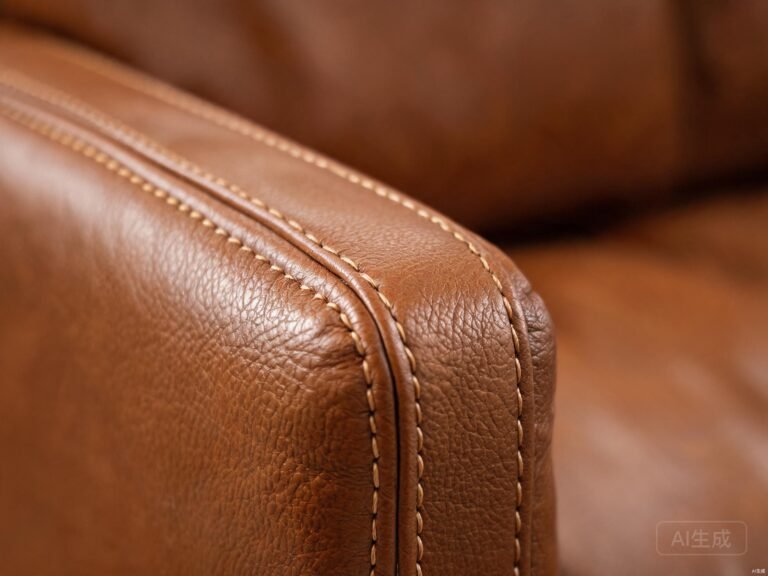
Leather softness and fold quality — indicators of material that won’t need patching
Patch vs Reupholster vs Replace: The Commercial Cost Math
Let’s talk actual numbers. According to leather repair cost data from The Spruce, professional repairs run $500-$1,200 per sofa. DIY patch kits cost $15-$30 but last 3-6 months. Full reupholstery costs $280-$700 per piece for commercial-grade furniture. But what does this look like over a 5-year furniture lifecycle? We tracked the numbers for a 60-room hotel with 120 sofas.
| Strategy | Cost/Sofa/Year | 5-Year Total (120 sofas) | Appearance |
|---|---|---|---|
| DIY patches (quarterly) | $120 | $72,000 | Poor — visible patches |
| Professional repair (annual) | $350 | $210,000 | Fair — mismatched areas |
| Reupholster PU leather (2x in 5yr) | $200 | $120,000 | Good initially, degrades by year 3 |
| Silicone leather (1x in 5yr) | $140 | $84,000 | Excellent — no degradation |
Over 5 years, a 60-room hotel using DIY patches spends $72,000 and ends with visibly damaged furniture. Specifying silicone leather from the start costs $84,000 — $12,000 more — but delivers showroom-quality furniture at year 5 with zero patches applied.

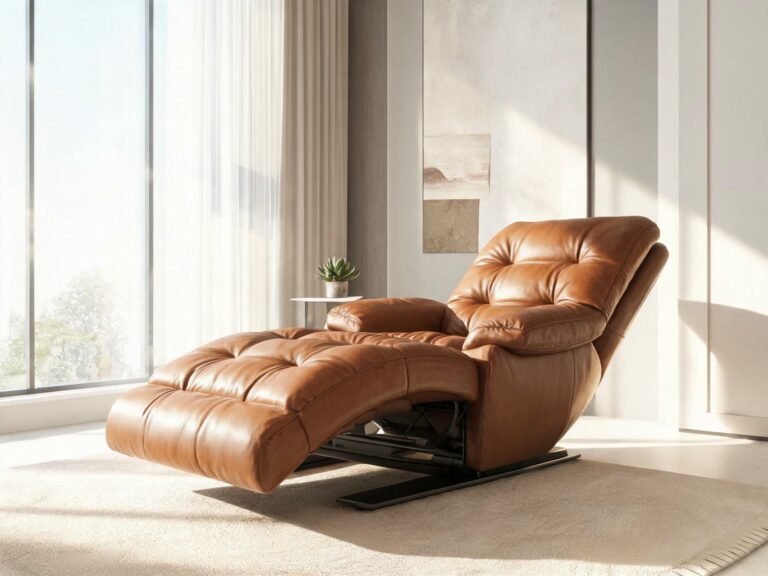
Commercial-grade leather sofa in hospitality environment
Why Patches Can’t Fix Peeling Leather (The Chemistry)
Here’s the problem nobody explains in the product listing: when leather peels, the surface you’re patching isn’t leather. It’s the remnant of a polyurethane coating that has delaminated from its backing fabric. The adhesive on your patch is bonding to a surface that’s already in the process of disintegrating.
Imagine taping a bandage to skin that’s still peeling. The tape sticks — temporarily — but the skin underneath continues shedding. The patch lifts with the delaminating coating, not because the adhesive failed, but because the substrate it bonded to no longer exists. This is why leather furniture patch solutions have such predictable failure rates: they’re treating a symptom of chemical degradation, not addressing the chemistry itself.
The root cause — polyurethane coating hydrolysis, UV-driven plasticizer migration, or flex fatigue — continues beneath the patch. No adhesive can stop molecular degradation of the material it’s stuck to. For more on the underlying failure chemistry and how to prevent it through proper material selection, see our silicone vs PU comparison page.
Commercial-grade silicone leather for sofa and hospitality applications
View Furniture & Sofa Applications
What Smart Commercial Buyers Specify Instead
The hotel manager who told us about the 340-patch disaster? They stopped patching. They stopped reupholstering with PU leather. They specified silicone leather for their next furniture refresh — and three years later, they’ve applied zero patches across 60 rooms. Here’s what changed in their specification.
- Material durability above 100,000 Martindale cycles. Below this threshold, the coating will degrade and peeling will start within 2-3 years in commercial use. Above it, the surface stays intact through 5+ years of daily guest use.
- Inherent stain resistance — not surface treatment. PU and PVC leather receive topical stain-resistant coatings that wear off after 6-12 months of commercial cleaning. Silicone leather’s stain resistance is molecular — it doesn’t wear off because it’s not a coating. See our cleaning and maintenance guide for protocol details.
- Hydrolysis resistance above 10 weeks. In hotel environments with daily humidity cycling from bathroom steam, AC condensation, and cleaning, materials that can’t withstand hydrolysis will peel. Period.
- Color fastness Class 5 across all ISO 105 tests. Faded patches next to unfaded original leather is what triggers the patch-and-repair cycle. Class 5 means no visible color shift — ever.

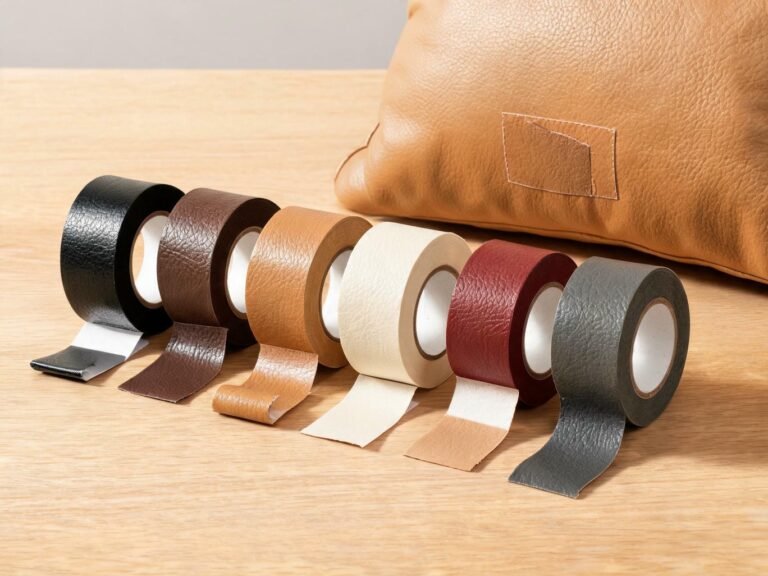
Color and texture options for commercial furniture specifications
Frequently Asked Questions
How long do leather sofa patches actually last?
In commercial settings, self-adhesive patches last 3-6 months on average. Professional repair compounds can extend this to 6-12 months. The limiting factor isn’t the patch material — it’s the degraded substrate beneath it. As the original leather continues to peel, crack, or hydrolyze, the patch loses its bonding surface and detaches. In low-traffic residential settings, patches may last 1-2 years, but in commercial environments with daily use and aggressive cleaning, the failure timeline accelerates significantly.
Is it cheaper to patch or replace commercial sofa leather?
Patching is cheaper per intervention but dramatically more expensive over time. A $20 patch applied quarterly costs $80/year per sofa — and you still have damaged-looking furniture. Reupholstering with silicone leather costs $140-$200/year amortized over 5+ years but eliminates the patching cycle entirely. For any furniture lifecycle beyond 2 years, better material specification wins on total cost. Check the leather sofa quality B2B guide for detailed TCO calculations.
Stop Patching. Start Specifying.
Every leather sofa patch is a temporary fix on a material that’s already failing. The patch doesn’t stop the chemistry — it delays the visible consequence. For commercial furniture operators, the real question isn’t “which patch works best?” but “why are we patching at all?” When you specify a material with Martindale abrasion above 100,000 cycles, hydrolysis resistance above 10 weeks, and inherent stain resistance that doesn’t wear off, the patch-and-repair cycle simply doesn’t start. Silicone leather eliminates the conditions that create patch demand. That’s not a maintenance optimization — it’s a maintenance elimination.
Get Commercial Furniture Material Quote
About TOPSUN
TOPSUN supplies silicone leather upholstery materials for commercial furniture operators who need to eliminate patch-and-repair maintenance cycles across hotel, hospitality, and rental furniture portfolios.
Our silicone leather resists the peeling, cracking, and adhesion failure that drives sofa patch demand — delivering 150,000+ Martindale cycles, ISO 105-X12 Class 5 color fastness, and a 10+ year service life in high-traffic commercial environments.