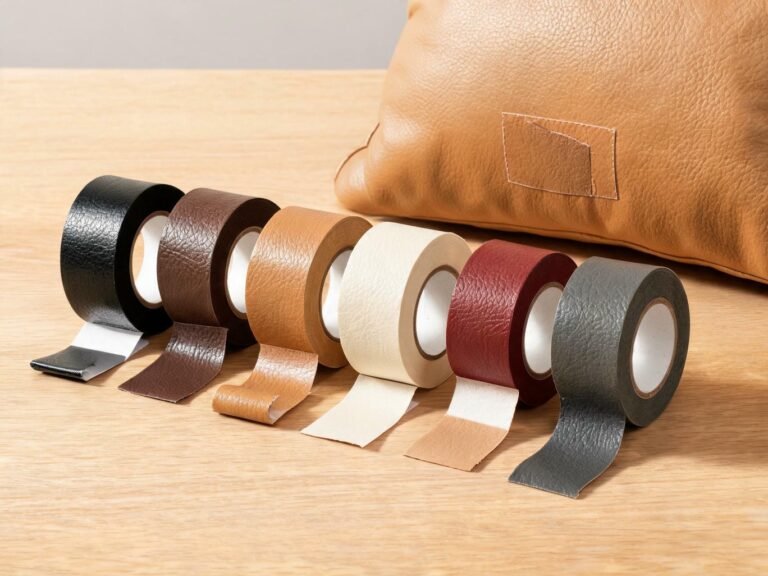
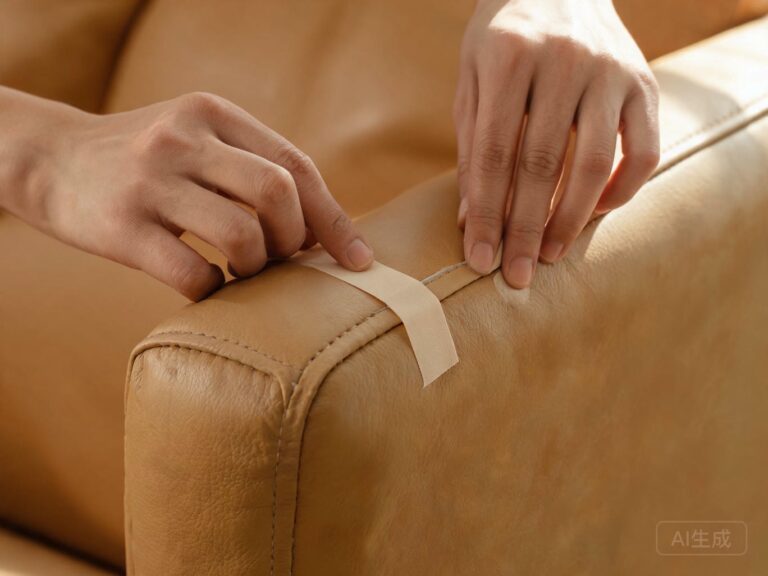
Self-adhesive leather tape is the fastest-growing repair category in the furniture and automotive aftermarket — and the most returned. Browse customer reviews on any major retail platform and the pattern is identical: “peeled off within days,” “won’t stick at the edges,” “the leather itself cracked after a month.” The product category is booming, but the satisfaction rate is abysmal.
The problem isn’t that self-adhesive leather tape is a bad concept — it’s that most products combine the wrong backing material with the wrong adhesive for the wrong application. A 0.6mm PU film laminated to a pressure-sensitive acrylic adhesive might hold for a few weeks on a sofa armrest, but the moment temperature swings, UV exposure, or flexing cycles hit, the system fails. The backing cracks, the adhesive loses bond, and the patch lifts at the edges. The repair looks worse than the original damage.
We analyzed the three failure modes that cause self-adhesive leather tape to fail, tested backing materials against each mode, and identified why silicone leather — in thin-gauge tape format — solves all three. For B2B buyers sourcing repair tape for hospitality maintenance, automotive aftermarket, or facility management contracts, the material science behind the patch determines whether the repair lasts 5 years or 5 weeks.

Waterproof surface test — a leather tape backing must repel liquids and resist cleaning chemicals without adhesive degradation
The 3 Failure Modes of Self-Adhesive Leather Tape
After analyzing customer failure reports and testing commercially available self-adhesive leather patches, we identified three distinct failure modes. Most products fail on at least two of the three — and the root cause is always material selection, not application error.
Failure Mode 1: Adhesive Bond Degradation
The adhesive is the weakest link. Most self-adhesive leather tape uses general-purpose acrylic pressure-sensitive adhesive (PSA) designed for paper and packaging — not for bonding to textured upholstery surfaces under thermal cycling. The adhesive loses bond strength at temperatures above 40°C (think a car interior parked in sun) and becomes brittle below 5°C. Each thermal cycle creates micro-delamination at the adhesive-substrate interface, and within 30–90 days, the edges lift. The tape hasn’t failed mechanically — the adhesive has failed chemically.
The fix: use high-performance modified acrylic or silicone-based adhesives rated for -20°C to 120°C continuous service. These adhesives maintain bond strength across thermal cycles and resist the plasticizer migration that degrades standard acrylics on PVC substrates. The adhesive spec matters as much as the backing material — but most suppliers don’t disclose it.
Failure Mode 2: Backing Material Degradation
The backing is the visible surface — and where most customers first notice failure. PU leather tape backings crack within 3–6 months from UV exposure and hydrolysis. The coating delaminates from the fabric base, creating a powdery surface that looks nothing like the original upholstery. PVC backings yellow and crack at low temperatures, and plasticizer migration makes the surface sticky over time. Genuine leather backings — when used — shrink and curl as they lose moisture, lifting the adhesive at the edges.
The fix: use a backing material with inherent UV stability, hydrolysis resistance, and dimensional stability across temperature ranges. Patch failure analysis shows that backing material selection — not adhesive quality — is the primary driver of visible failure in the first 6 months.
Failure Mode 3: Thermal Expansion Mismatch
This is the most overlooked failure mode — and the hardest to diagnose. Leather, PU, PVC, and adhesive layers all have different coefficients of thermal expansion (CTE). When temperature changes (day-to-night, sun-to-shade, summer-to-winter), each layer expands and contracts at a different rate. The differential movement creates shear stress at the adhesive interface, gradually breaking the bond from the edges inward. This is why tape always fails at the edges first — not in the center.
The fix: minimize the CTE differential between backing and adhesive, or use a conformable backing that accommodates differential movement through elastic deformation rather than adhesion failure. Silicone leather’s high elongation (≥250%) allows it to flex with the substrate, distributing thermal stress instead of concentrating it at the bond line.

Protection failure — when PU leather tape backing degrades, the repair looks worse than the original damage
Tape Backing Materials: 4 Options Compared
The backing material determines 60–70% of the tape’s long-term performance. Here’s how the four common backing materials compare across the three failure modes:
| Property | Genuine Leather | PU Leather | PVC Leather | Silicone Leather |
|---|---|---|---|---|
| UV stability | Moderate (fades) | Poor (cracks 3–6 mo) | Poor (yellows) | Excellent (1,000+ hrs) |
| Hydrolysis resistance | Moderate (shrinks) | Poor (degrades) | Moderate | Excellent |
| Temperature range | -10°C to 60°C | -20°C to 80°C | -10°C to 60°C | -40°C to 250°C |
| Elongation (stress absorption) | 15–20% | 80–150% | 50–100% | ≥ 250–300% |
| Dimensional stability | Poor (shrinks/curls) | Moderate | Moderate | Excellent |
| Cleanability | Limited (stains) | Moderate | Moderate | Excellent (bleach-safe) |
| Expected tape life | 6–12 months | 3–6 months | 2–4 months | 5+ years |
The data is clear: silicone leather solves all three failure modes through material properties rather than adhesive engineering. UV stability prevents backing degradation. The -40°C to 250°C temperature range eliminates thermal expansion mismatch. High elongation allows the backing to flex with the substrate, distributing stress instead of concentrating it at the bond line. And dimensional stability means the tape stays flat — no curling edges, no shrinkage, no progressive delamination.
Adhesive Compatibility: Making the Bond Last
Even the best backing material fails if the adhesive doesn’t hold. The backing surface energy determines how well the adhesive wets and bonds. Silicone leather has a surface energy of approximately 20–24 mN/m — lower than PU (35–40 mN/m) or PVC (39–42 mN/m). This means standard acrylic adhesives don’t wet silicone surfaces as effectively without surface treatment.
TOPSUN addresses this through a surface activation process during manufacturing that raises the surface energy of the tape-grade silicone leather to 38–42 mN/m — making it compatible with high-performance acrylic, silicone, and modified polyurethane adhesives. This isn’t a post-production coating that wears off — it’s integrated into the curing process, so the adhesive compatibility is permanent.
For B2B tape applications, we recommend:
- High-tack acrylic PSA for general furniture and automotive interior repair — rated for -20°C to 120°C
- Silicone-based adhesive for high-temperature applications (automotive engine bay proximity, industrial equipment) — rated for -60°C to 200°C
- Modified polyurethane adhesive for marine and outdoor applications where salt spray and humidity resistance are critical

Scratch resistance testing — tape backings must resist fingernails, keys, and daily contact without surface damage
Where Leather Tape Actually Matters: 4 B2B Applications
Self-adhesive leather tape isn’t just a consumer repair product — it’s a B2B maintenance and specification material with high-volume applications in multiple industries:
1. Hospitality Furniture Maintenance
Hotel chains and restaurant groups use self-adhesive leather tape for rapid in-room repair of upholstery damage — cuts, burns, and abrasion on sofa arms, chair seats, and headboards. The tape needs to match the existing upholstery color, survive daily cleaning with industrial disinfectants, and last between scheduled furniture replacement cycles (typically 5–7 years). Silicone leather tape in custom Pantone-matched colors, with bleach-safe surfaces and chemical cleaning resistance, is the only backing that survives this environment.
2. Automotive Interior Repair
Car dealerships, rental fleets, and detailing services use leather tape for seat edge repair, door panel patching, and steering wheel cover repair. The tape must survive temperature extremes (-20°C winter to 80°C summer interior), UV exposure through windows, and the mechanical stress of daily entry and exit. The cost of professional upholstery repair makes self-adhesive tape an economical alternative — but only if it lasts more than a season.
3. Healthcare Equipment Upholstery
Medical equipment — examination tables, wheelchair cushions, treatment chairs — requires repair materials that are compatible with hospital-grade disinfectants, sterilizable, and hypoallergenic. Silicone leather tape meets ISO 10993-5 biocompatibility standards and withstands EtO and gamma sterilization, making it the only tape backing suitable for clinical environments.
4. Marine and Outdoor Furniture
Marine upholstery faces salt spray, UV, and constant moisture. Outdoor furniture endures rain, temperature cycling, and biological growth. Standard PU and PVC tape backings degrade in weeks in these environments. Silicone leather tape — with 1,000+ hour salt spray resistance, UV stability, and hydrolysis-proof chemistry — provides multi-year repair performance where other materials fail within a season.
Waterproof and stain resistance test — the surface properties that make silicone leather tape survive daily cleaning and exposure
About TOPSUN: Thin-Gauge Silicone Leather for Tape Applications
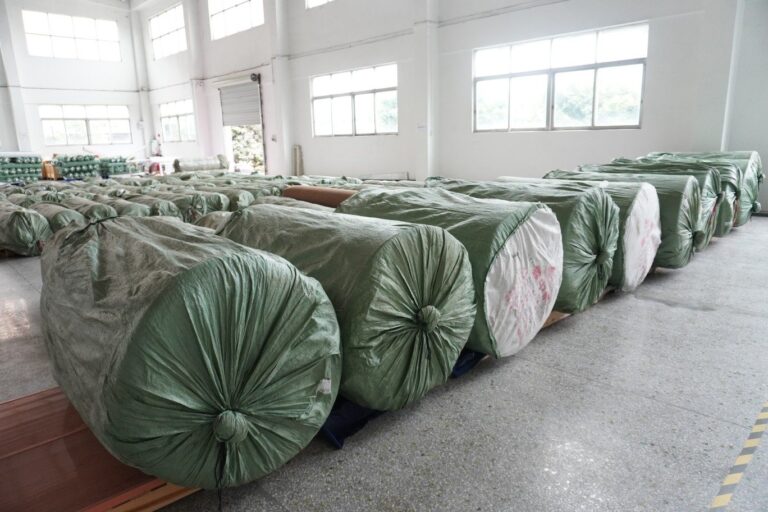
TOPSUN manufactures silicone leather in the Ultra Thin Collection — gauges from 0.23mm to 0.8mm — specifically suited for tape, patch, and overlay applications. The surface activation process during manufacturing ensures compatibility with high-performance pressure-sensitive adhesives, while the inherent UV stability, temperature range (-40°C to 250°C), and hydrolysis resistance of the silicone polymer provide multi-year service life that PU and PVC tape backings cannot match. TOPSUN offers custom color matching (Pantone/RAL/NCS, Delta E ≤ 1.0), custom die-cut shapes, and adhesive lamination services for B2B tape manufacturers. Free A4 samples in thin gauges are available through the samples center — request the Ultra Thin Collection for tape application evaluation.
Request Tape-Grade Material Quote
Leather Tape: Frequently Asked Questions
Why does self-adhesive leather tape peel at the edges?
Edge peeling is caused by thermal expansion mismatch between the tape backing, adhesive, and substrate. Each material expands and contracts at a different rate when temperature changes, creating shear stress at the bond interface. The stress is highest at the edges — where the bond area is smallest — so edges fail first. Silicone leather tape solves this through high elongation (≥250%), which allows the backing to flex with the substrate and absorb differential movement instead of breaking the adhesive bond.
Can silicone leather tape be used on car seats?
Yes. Silicone leather tape is ideal for automotive interior repair because it withstands the extreme temperature range of car interiors (-20°C winter to 80°C summer), resists UV through windows (1,000+ hours), and maintains adhesive bond strength across thermal cycles. The key is pairing the silicone leather backing with a high-performance acrylic or silicone adhesive rated for automotive service temperature range.
How long does silicone leather tape last compared to PU tape?
PU leather tape typically lasts 3–6 months before visible backing degradation (cracking, fading, coating delamination) and adhesive bond failure. Silicone leather tape lasts 5+ years because the backing material is inherently UV-stable, hydrolysis-proof, and dimensionally stable across temperature ranges — the same properties that give silicone leather a 10+ year service life in upholstery applications translate directly to long-term tape performance.
What adhesive should be used with silicone leather tape?
TOPSUN’s surface activation process makes silicone leather compatible with high-performance acrylic PSA (general furniture/automotive), silicone-based adhesive (high-temperature applications), and modified polyurethane adhesive (marine/outdoor). Standard general-purpose acrylic adhesives designed for paper and packaging are not recommended — they lack the temperature resistance and long-term bond strength required for multi-year tape performance.
The Bottom Line on Leather Tape
Self-adhesive leather tape fails for three reasons: adhesive bond degradation, backing material degradation, and thermal expansion mismatch. Most products on the market fail on at least two of the three — which is why customer reviews consistently report peeling, cracking, and short service life.
Silicone leather as a tape backing solves all three failure modes through material chemistry: inherent UV stability (no backing degradation), -40°C to 250°C range (no thermal mismatch), and ≥250% elongation (stress absorption at the bond line). For B2B buyers sourcing tape for hospitality maintenance, automotive repair, healthcare, or marine applications, the backing material — not the adhesive — is the long-term performance variable. Choose the wrong backing, and no adhesive can compensate. Choose silicone leather, and even a standard high-performance adhesive will deliver multi-year service.
Related: Leather Tape for Sofa | Sofa Patch Failure Analysis | Synthetic Leather Protection Fails | Patch Repair Cost | Ultra Thin Collection