A sofa’s Martindale rating tells you how many abrasion cycles the upholstery survived before visible wear appeared. But that single number doesn’t capture what happens when the same material sits in a humidity-controlled office for three years, or when a cleaning crew hits it with industrial detergent every week. In our testing lab, we’ve seen materials with impressive spec sheets fail spectacularly under real-world conditions — and the gap between lab ratings and field performance is where leather sofa quality truly lives. This guide walks through the testing standards, material comparisons, and evaluation framework that furniture procurement teams need to make decisions that hold up beyond the first year.
What Defines Leather Sofa Quality in B2B Procurement
Leather sofa quality grades explained in most consumer guides focus on touch, smell, and visual inspection — useful for a showroom visit but insufficient for procurement teams specifying materials for 500-unit furniture orders. In B2B contexts, quality is a system of interrelated properties: abrasion resistance determines how the surface wears under daily friction, hydrolysis resistance predicts whether the material will peel in humid climates, color fastness measures UV stability over years of window exposure, and cleanability affects long-term maintenance cost. A material can score well on one metric and fail on all others.
The procurement teams we work with — including furniture manufacturers supplying hotel chains and corporate offices — have learned to specify minimum thresholds across all four properties simultaneously. A common specification for commercial-grade sofa upholstery reads: Martindale abrasion ≥ 50,000 cycles, hydrolysis resistance ≥ 7 days at 70°C/95% RH, color fastness grade ≥ 4 (ISO 105-B02), and stain resistance verified per AATCC 130. Materials that meet all four thresholds consistently outperform those that excel in just one category.

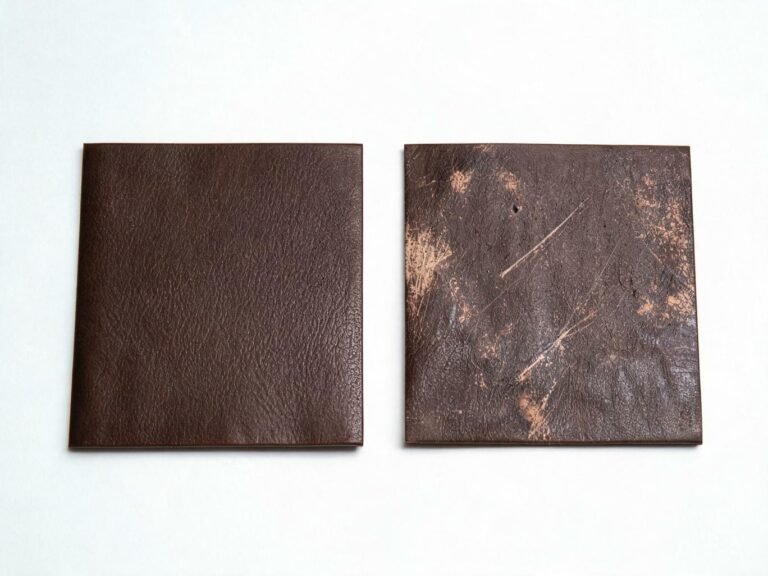
Martindale abrasion testing — the industry standard for evaluating upholstery durability
Field insight: One of our furniture clients specified PU leather for a 200-chair conference room project based on a 25,000-cycle Martindale rating. Within 14 months, armrest surfaces showed visible peeling — not from abrasion, but from hydrolysis triggered by the building’s HVAC humidity cycles. The replacement cost exceeded the original material savings by 3x.
Testing Standards That Predict Real-World Sofa Performance
Knowing how to test leather sofa durability means understanding which test methods actually correlate with field performance. The Martindale test (ISO 12947) measures surface abrasion by rubbing a standard wool pad against the material in a figure-eight pattern. It’s the most widely cited metric, but it only captures one failure mode. A material can survive 100,000 Martindale cycles and still peel apart in six months if its polymer backbone is susceptible to hydrolysis.
The tests that matter most for sofa upholstery are less commonly discussed but far more predictive:
- Hydrolysis testing (accelerated aging at 70°C / 95% RH) — simulates years of humidity exposure in days, revealing whether the material’s bonds will break down in tropical or coastal climates
- Flexing endurance (Bally flexometer, ISO 5402) — measures cracking resistance at stress points like seat edges and cushion seams where repeated sitting creates repeated bending
- Color fastness to light (ISO 105-B02, xenon arc) — predicts whether a sofa placed near windows will fade unevenly within the first year
- Stain resistance (AATCC 130) — determines how the material responds to common spills and whether cleaning will leave permanent marks
In our lab, we run all four tests on every production batch. A material that passes Martindale but fails hydrolysis testing is a liability for any furniture manufacturer shipping to humid markets — which includes most of Southeast Asia, the southern United States, and coastal Europe. You can read more about how we approach leather sofa upholstery material selection in our detailed technical guide.

Flexing endurance testing — critical for predicting crack formation at sofa stress points
Material Comparison: Which Leather Lasts Longest on Sofas
When furniture manufacturers conduct a leather sofa material comparison, they typically evaluate four options: genuine leather, PU (polyurethane), PVC, and silicone leather. Each material degrades through different mechanisms, and understanding those mechanisms is the key to predicting long-term performance. Genuine leather cracks when it loses moisture and requires regular conditioning. PU peels when water molecules break its carbon-bonded polymer chains. PVC becomes brittle and releases plasticizers over time. Silicone leather, by contrast, has a silicon-oxygen backbone that resists all three degradation pathways.
The table below summarizes how these materials compare across properties that directly affect sofa longevity. Data is drawn from our internal testing and cross-referenced with industry standards — including the ISO 12947 Martindale abrasion standard and accelerated hydrolysis protocols.
| Property | Genuine Leather | PU Leather | Silicone Leather |
|---|---|---|---|
| Lifespan | 5-10 years | 2-5 years | 10-15+ years |
| Abrasion (cycles) | Variable | 10,000-30,000 | 200,000+ |
| Hydrolysis risk | Low (absorbs moisture) | High (peels in humidity) | None (Si-O-Si stable) |
| Cleaning | Conditioning required | Moderate | Wipe clean |
| Color stability (UV) | Fades & cracks | Poor | Excellent |

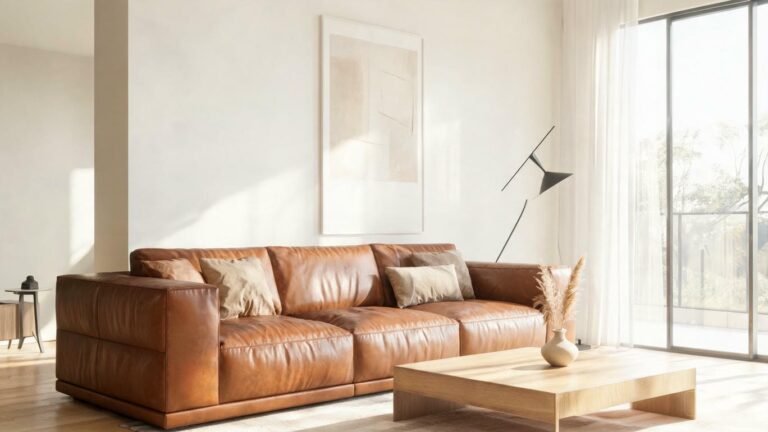
Commercial sofa applications demand materials that withstand heavy daily use
Why Silicone Leather Sofa Quality Outperforms Conventional Options
The silicone leather sofa benefits that matter most to furniture manufacturers stem from one structural fact: the Si-O-Si molecular bond is inherently resistant to hydrolysis, UV radiation, and thermal degradation. Water molecules cannot break silicon-oxygen bonds the way they break carbon-carbon bonds in PU. UV radiation cannot trigger the chain-scission reactions that cause PVC to yellow and crack. This is why silicone leather maintains its surface integrity for 10-15+ years while conventional synthetics begin deteriorating within 2-5 years.
For furniture manufacturers, this translates into three concrete advantages. First, warranty exposure drops dramatically — a sofa upholstered with silicone leather won’t generate the peeling and cracking claims that PU sofas produce in humid markets. Second, maintenance costs disappear — no conditioning, no special cleaners, no periodic refinishing. Just a damp cloth. Third, sustainability targets become achievable because the material’s extended lifespan reduces replacement frequency and associated waste. Our furniture and sofa applications page details specific use cases where these advantages have delivered measurable ROI.

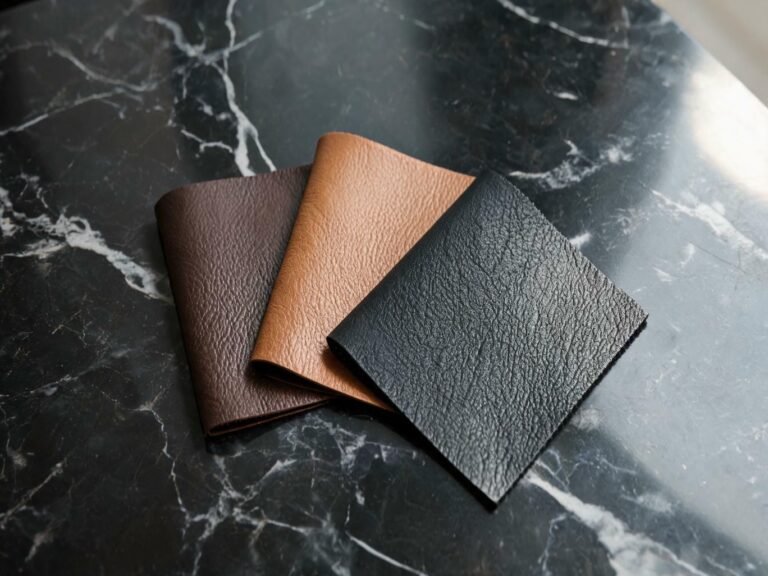
Warm-tone lychee texture options — silicone leather offers unlimited color and texture customization
Silicone leather for commercial sofas — see the material in production and application
Beyond durability, silicone leather solves a problem that has plagued furniture designers for decades: the trade-off between aesthetics and performance. Conventional PU achieves a soft, leather-like hand feel but sacrifices longevity. PVC offers durability but feels plasticky and emits VOCs. Genuine leather delivers luxury but comes with batch-to-batch inconsistency and ethical concerns. Silicone leather combines the hand feel of premium PU, the durability of engineering-grade materials, and the cleanability of glass — with zero VOC emissions during production. For projects requiring hydrolysis-resistant upholstery, it’s the only synthetic that eliminates the failure mode entirely.
Frequently Asked Questions
What Martindale rating should commercial sofa leather have?
For residential sofa upholstery, a Martindale rating of 25,000 cycles is generally considered acceptable. For commercial applications — hotels, offices, waiting rooms — the minimum should be 50,000 cycles, and for high-traffic environments like airports or public seating, 100,000+ cycles is advisable. However, remember that Martindale only measures abrasion. Always pair it with hydrolysis and flexing endurance data to get a complete picture of how the material will perform in your specific environment. Detailed cleaning and maintenance requirements should also factor into your specification.
How does silicone leather compare to genuine leather for sofa upholstery?
Silicone leather outperforms genuine leather in durability (10-15+ years vs 5-10), abrasion resistance (200,000+ vs variable cycles), waterproofing (100% vs absorbs moisture), UV stability (excellent vs fades and cracks), and maintenance (wipe clean vs regular conditioning). Genuine leather offers natural grain variation that some premium brands prefer, but this same variation creates batch inconsistency that complicates large-scale furniture production. For B2B furniture manufacturers, silicone leather delivers the aesthetic without the variability and maintenance burden.
Specifying With Confidence
Evaluating leather sofa quality means looking beyond a single rating and understanding how materials degrade under the specific conditions your furniture will face. Start with the four-property framework — abrasion, hydrolysis, color fastness, and cleanability — and demand test data for each. Compare materials on molecular structure, not just surface feel. And when a supplier can’t provide hydrolysis testing data for their PU leather, treat that absence as a answer. The materials that perform in year one are easy to find. The ones that still look good in year ten are worth sourcing.
About TOPSUN
TOPSUN engineers silicone leather upholstery specifically for furniture manufacturers who need materials that survive daily commercial use without aesthetic degradation or maintenance overhead.
In-house Martindale abrasion testing · Hydrolysis resistance verification per batch · 200,000+ cycle durability data · Custom color matching with 100+ texture patterns