When a supplier tells you their leather sofa is “good quality,” ask them one question: what Martindale cycle count did it reach before the surface showed visible wear? If they can’t answer, “good quality” is a marketing label, not a material specification. In our compliance lab, we’ve found that the gap between claimed quality and tested quality is wider in sofa upholstery than any other application — because sofa buyers have historically relied on grain type and feel rather than verifiable performance data. Defining leather sofa good quality through test data instead of adjectives is the difference between a 3-year sofa and a 15-year sofa.
Request Quality-Verified Samples
What Leather Sofa Good Quality Actually Means
“Good quality” gets thrown around in leather sofa sourcing the way “organic” used to get thrown around in food — everyone claims it, almost no one verifies it. The result is a market where two materials labeled “premium leather” can have a 5x difference in actual service life. That’s not a quality gap; it’s a definition gap. Until you replace adjectives with test data, you’re not comparing materials — you’re comparing marketing.
Here’s the framework we use in our lab. Genuine leather sofa good quality is defined by four measurable parameters:
- Abrasion resistance: How many Martindale cycles before visible surface wear? This is the single best predictor of sofa lifespan under daily use.
- Color fastness: Does the color stay stable under UV exposure (ISO 105-B06) and rubbing friction (ISO 105-X12)? Fading and color transfer are the most visible signs of quality decline.
- Hydrolysis resistance: How does the coating respond to humidity and chemical cleaning over time (ASTM D3980-02)? This predicts whether your sofa peels after two years of cleaning.
- Environmental compliance: Does the material meet REACH SVHC, RoHS 2.0, and Prop 65? Quality includes what the material doesn’t contain — not just what it does.

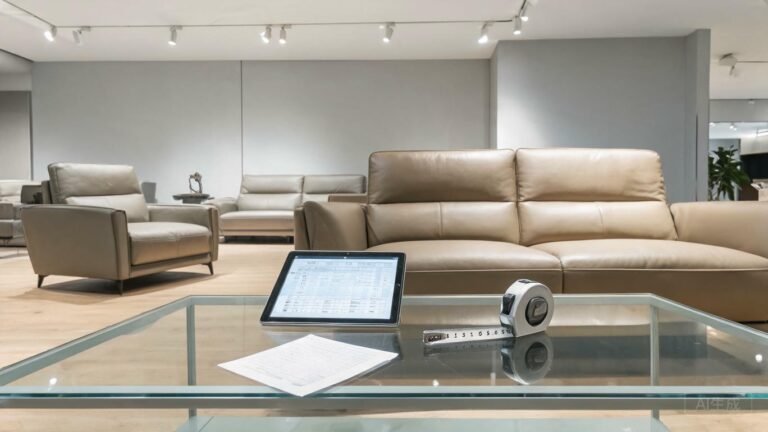
Physical testing laboratory equipment — where “good quality” claims get verified or disproven through standardized testing.
If your supplier can provide batch-level test reports for all four parameters, you have a verifiable quality claim. If they can’t, you have a marketing claim. Our silicone leather introduction explains how these parameters work together to define material quality at the molecular level.
3 Test Data Points That Predict Sofa Lifespan
Of the four quality parameters, three have the strongest correlation with real-world sofa lifespan. If you only verify three things on your next spec sheet, verify these:
| Quality Indicator | What Buyers Check | What Actually Matters | Verified Data Required |
|---|---|---|---|
| Abrasion | “Durable” | Martindale cycle count | ≥100,000 cycles (ISO 9239) |
| Color Stability | Grain appearance | UV + rubbing fastness | ISO 105-B06 Class 4.5+ / X12 Class 5 |
| Coating Lifespan | Thickness (mm) | Hydrolysis resistance | ASTM D3980-02 ≥14 weeks |

Martindale abrasion tester — the machine that separates a 3-year sofa from a 15-year sofa. Always request cycle count data.
Notice what’s not on this list: thickness, grain type, and hand-feel. These are the parameters most buyers obsess over, and they’re the weakest predictors of actual lifespan. A 1.2mm top-grain leather that reaches 25,000 Martindale cycles will fail years before a 0.8mm silicone leather that reaches 150,000 cycles. For more on how to test leather sofa durability at the specification stage, our eco-friendly silicone leather guide covers how environmental compliance intersects with performance testing.
Why Leather Sofa Good Quality Claims Mislead Buyers
Here’s where most B2B sourcing goes wrong. Suppliers know that buyers check three things: appearance, feel, and price. So they optimize for those three — sometimes at the expense of everything else. A leather that looks premium and feels soft can still delaminate at 14 weeks of hydrolysis testing. The question of genuine leather vs synthetic leather sofa quality isn’t about which category is “better” — it’s about which specific product has the test data to back its claims.
Red flags to watch for:
- “Premium feel” without abrasion data: Softness achieved through plasticizers feels great initially — and disappears as plasticizers migrate out within 6-24 months.
- “Genuine leather” as a quality proxy: Genuine leather can mean anything from full-grain to bonded leather. Without a grade specification, the term is meaningless.
- Thickness presented as quality: Thickness affects hand-feel and drape, not durability. A thick PU coating can delaminate faster than a thin silicone coating.
- No hydrolysis data: If a supplier won’t provide ASTM D3980-02 results, assume the material fails early under humidity and cleaning exposure.
The compliance angle: Quality isn’t just performance — it’s what the material doesn’t contain. REACH SVHC 181 compliance, zero plasticizers, and negligible VOCs aren’t optional add-ons. They’re baseline quality indicators that separate materials built for the next decade from materials built for the next trade show.

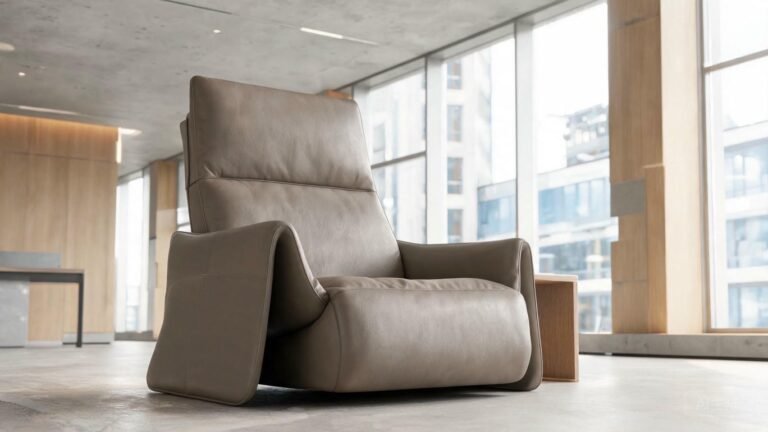
Commercial leather sofa in a hospitality setting — where “good quality” is tested daily by guests, cleaning crews, and time.
Durability comparison video — see how silicone leather performs against PU and genuine leather across abrasion, flexing, and wear testing.
Silicone Leather: Quality Backed by Numbers
Let’s put silicone leather through the same quality framework and see if the numbers hold up. The best leather material for sofa manufacturing is the one that passes all four quality parameters with margin to spare — not the one that claims premium status without data.
- Martindale abrasion: 150,000+ cycles — 50% above the commercial minimum
- Color fastness: ISO 105-X12 rubbing Class 5, ISO 105-B06 light Class 4.5, ISO 105-G02 burnt gas Class 5
- Hydrolysis resistance: ASTM D3980-02, 14 weeks with zero visible degradation
- Environmental compliance: REACH SVHC 181, RoHS 2.0, Prop 65 — zero plasticizers, zero formaldehyde, zero PFAS, zero BPA
The environmental compliance isn’t a bonus feature — it’s part of the quality definition. A material that performs well abrasion-wise but contains restricted substances isn’t good quality; it’s a compliance liability. Per ASTM International standards, material quality is defined by what you can verify — not by what you can claim. For sofa manufacturers seeking verified quality, our existing leather sofa quality B2B guide extends this framework to include sourcing logistics and supplier evaluation. And for broader furniture quality considerations, our quality leather furniture guide covers additional product categories beyond sofas.

Tensile strength testing — verifying that the leather maintains structural integrity under the seating loads a sofa experiences daily.
Frequently Asked Questions
How can I verify leather sofa quality claims from a supplier?
Request three things: batch-level Martindale abrasion test reports (ISO 9239), ISO 105 color fastness certificates (both X12 rubbing and B06 light), and ASTM D3980-02 hydrolysis testing results. A supplier who provides all three with current batch numbers has a verifiable quality claim. A supplier who provides none — or who substitutes marketing language for test data — does not. Always cross-reference the test standard numbers; “meets international standards” is not a test result.
Is full-grain leather always better quality than synthetic alternatives?
Not necessarily. Full-grain leather is the highest quality within the genuine leather category, but “genuine” and “synthetic” measure different things — one describes origin, the other describes chemistry. A full-grain leather reaching 25,000 Martindale cycles will underperform a silicone leather reaching 150,000 cycles in any application where abrasion is the primary failure mode. Quality should be measured by verified test data, not by the material category label.
Redefining Quality with Data, Not Adjectives
The leather sofa good quality conversation has been stuck in the same loop for decades: suppliers claim “premium,” buyers trust their hands, and both sides act surprised when the sofa peels at year three. The fix isn’t more diligence at the showroom — it’s more data at the spec sheet. Replace “good quality” with “150,000 Martindale cycles verified, ISO 105-X12 Class 5, ASTM D3980-02 14 weeks.” That’s a specification your procurement team can audit, your QC team can verify, and your warranty team can defend. For furniture and sofa applications where the material defines the product, quality claims without test data aren’t just incomplete — they’re a liability.
About TOPSUN
TOPSUN manufactures silicone leather for sofa upholstery that delivers verified quality through ISO-standardized testing — not marketing claims.
Our silicone leather achieves 150,000+ Martindale cycles, ISO 105-X12 Class 5 color fastness, ASTM D3980-02 14-week hydrolysis resistance, and REACH SVHC 181 compliance — all backed by batch-level test reports.