Interior designers know the difference between furniture that photographs well and furniture that survives three years of hotel lobby traffic. The gap between the two often comes down to the leather itself — its grade, its cleaning protocol, and its ability to hold color under daily UV exposure through lobby windows. Quality leather furniture is not just about the label on the tag. It is about how the material performs when the design spec meets real-world hospitality operations. This article examines the grading systems, cleaning cycles, and upgrade paths that separate furniture that lasts from furniture that simply looks good at installation.
Request Furniture Material Swatches
Understanding Quality Leather Furniture Grades
The term “genuine leather” tells you almost nothing about quality. The industry uses four primary grades, and the performance gap between the top and bottom is enormous. Full-grain leather — the highest grade — retains the complete natural grain layer with minimal processing. It develops a patina over time and can last 15 to 25 years with proper conditioning. Top-grain leather has the surface sanded to remove imperfections, then coated with a finish. It looks uniform but sacrifices some natural durability.
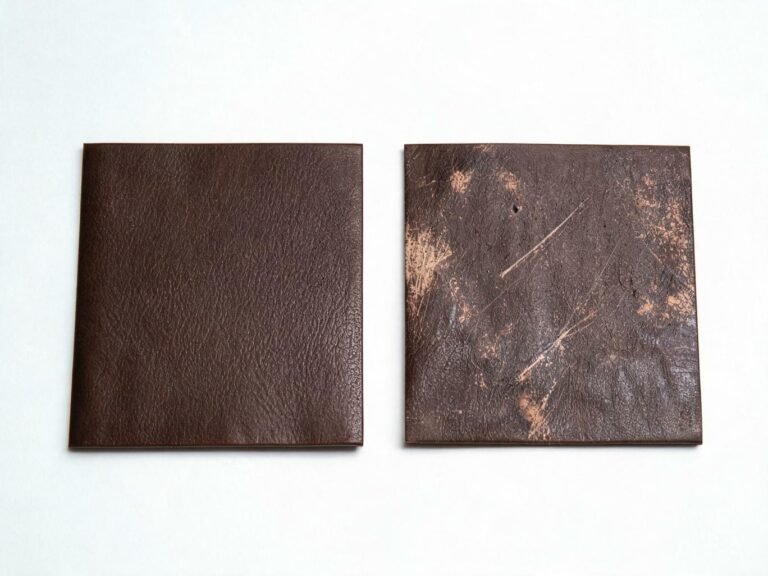
Split leather and bonded leather occupy the bottom of the grade hierarchy. Split leather is the lower layer of the hide, pressed with an artificial grain pattern. Bonded leather is made from shredded leather scraps mixed with polyurethane binder — essentially the particleboard of the leather world. Both grades fail rapidly in commercial settings, typically showing cracking and peeling within 2 to 3 years of hospitality use.

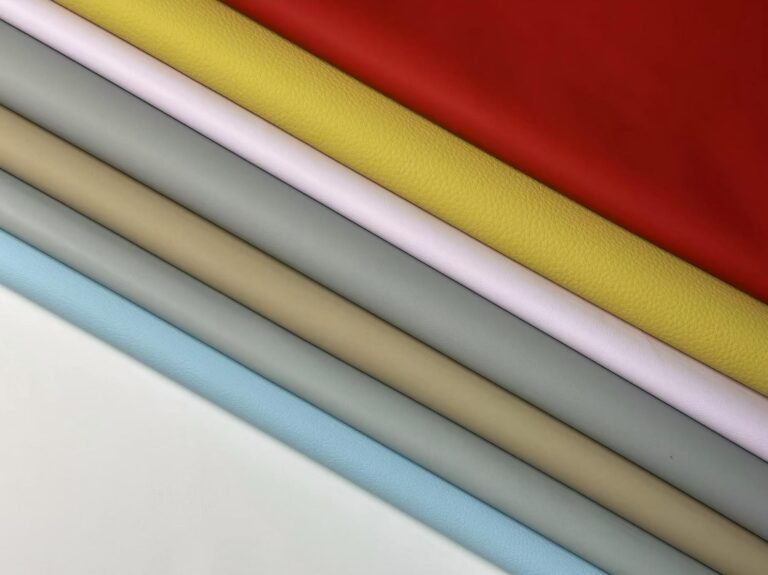
Leather swatch rack displaying multiple grades, textures, and color options for furniture specification
For hospitality projects, specifiers face a dilemma. Full-grain leather delivers the aesthetic and longevity clients expect, but at $40 to $80 per square foot, it pushes furniture budgets beyond what most hotel chains approve. Top-grain offers a compromise at $20 to $45 per square foot, but its protective coating degrades under the aggressive cleaning chemicals that hotels use daily. The result: beautiful furniture that looks worn within 18 months.
The Hospitality Cleaning Cycle Problem
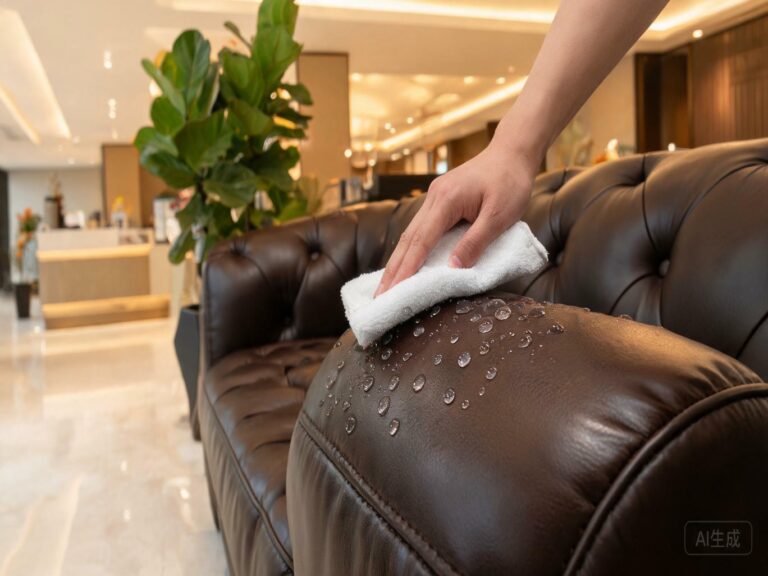
Hotel housekeeping follows strict protocols. Lobby furniture is wiped down daily with commercial-grade cleaners — typically quaternary ammonium compounds or alcohol-based disinfectants. Guest room furniture receives similar treatment on turnover. These chemicals are formulated to kill bacteria, not to preserve leather finishes.

Warm-tone lychee texture leather samples showing color and finish options for furniture upholstery
Genuine leather requires conditioning every 3 to 6 months to replace natural oils stripped by cleaning. Miss a conditioning cycle and the leather dries, cracks, and loses its color depth. In hospitality operations where housekeeping staff change frequently and maintenance logs are inconsistent, conditioning schedules slip. Within 12 to 18 months, the leather surface shows visible cracking along stress points — seat edges, armrests, and backrest folds.
A 150-room hotel replacing lobby furniture every 3 years spends approximately $85,000 per cycle in material, labor, and room downtime — costs that proper material specification could eliminate.
The cleaning cycle problem is not unique to genuine leather. PU synthetic leather degrades even faster under commercial cleaners — the polyurethane coating breaks down, exposing the fabric backing beneath. For specifiers evaluating leather cleaning and maintenance protocols, the question is not which leather requires less cleaning — all furniture needs daily wiping in hospitality. The question is which material survives the cleaning without degradation.
Why Genuine Leather Falls Short in Commercial Settings
Designers love genuine leather for its warmth, its patina development, and its association with craftsmanship. But three factors make it fundamentally unsuitable for high-traffic commercial furniture: moisture sensitivity, color inconsistency, and maintenance dependency.
Genuine leather absorbs moisture — including sweat, spills, and humidity. In tropical and subtropical climates, this leads to mold growth beneath the surface, which cannot be removed without destroying the leather. Color inconsistency across hides means that matching a replacement armchair to existing lobby furniture requires sourcing from the same tannery batch — often impossible years after original installation. And the maintenance dependency means that any lapse in conditioning protocol accelerates failure exponentially.

Commercial leather sofa in hospitality setting requiring daily cleaning and periodic reconditioning
For projects where furniture and sofa applications must balance aesthetics with operational reality, these limitations drive designers toward synthetic alternatives. The challenge has been finding a synthetic that does not sacrifice the tactile and visual qualities that make leather desirable in the first place.
Silicone Leather as a Design-Forward Upgrade
Silicone leather bridges the gap between genuine leather aesthetics and synthetic performance. The material achieves a hand-feel that interior designers describe as comparable to premium top-grain — supple, warm to the touch, and visually rich. But unlike genuine leather, it requires zero conditioning and survives commercial cleaning chemicals without surface degradation.

Silicone leather softness demonstration showing fold drape and tactile quality comparable to premium leather
| Design Metric | Full-Grain Leather | PU Synthetic | Silicone Leather |
|---|---|---|---|
| Tactile Quality | Premium (natural warmth) | Moderate (plastic feel) | Premium (soft, warm touch) |
| Cleaning Protocol | Condition every 3-6 months | Wipe with mild soap | Wipe with water only |
| Color Retention (UV) | Fades (patina effect) | 300-500 hrs | 1500+ hrs |
| Design Customization | Limited to natural tones | Wide color range | Full Pantone matching + textures |
| Commercial Warranty | Voided by missed conditioning | 2-3 year typical | 10+ year lifespan |
The data highlights a critical design insight. Full-grain leather still wins on tactile warmth — but that warmth comes with operational costs that most hospitality projects cannot sustain. Silicone leather matches the tactile experience while eliminating every maintenance dependency. For designers who have specified leather sofa quality for B2B procurement, the comparison is straightforward: same aesthetic, different operational math.
Color, Texture, and Design Freedom
Genuine leather limits designers to the color palette that tanneries can produce through dyeing — typically earth tones, blacks, browns, and deep reds. Creating a precise Pantone match in genuine leather is a months-long process with no guarantee of consistency across hides. For hospitality brands with strict visual identity standards, this constraint forces compromise.
Luxury furniture silicone leather introduction — demonstrating soft touch, color variety, and premium texture options
Silicone leather opens the full Pantone spectrum through pigmented surface coating. A designer can specify an exact brand color — say, a hotel chain’s signature teal — and receive material that matches within Delta E 1.0 across every production batch. Texture options range from smooth nappa to embossed lychee grain to perforated patterns for breathability. The full silicone versus semi-silicone construction choice lets designers balance cost against performance — full silicone for high-touch seating surfaces, semi-silicone for visible but lower-contact areas like chair backs and side panels.
In our work with hospitality furniture manufacturers, the design freedom factor often closes the sale. When a hotel brand can specify its exact signature color, match it across 200 lobby chairs and 500 guest room headboards, and know the color will not fade under lobby window UV exposure — that is a specification advantage no genuine leather supplier can match. Learn more about working with a dedicated furniture leather supplier for your next project.
Get a Hospitality Furniture Quote
Frequently Asked Questions
How do cleaning protocols differ between genuine leather and silicone leather furniture?
Genuine leather requires a multi-step protocol: daily dusting, weekly wiping with pH-balanced leather cleaner, and quarterly conditioning with leather oils or creams to replace stripped natural oils. Commercial disinfectants must be avoided as they accelerate finish degradation. Silicone leather simplifies this to a single step: wipe with water or mild soap. No conditioning, no special cleaners, no pH restrictions. Commercial-grade disinfectants can be used without surface damage — a critical advantage for hospitality environments where sanitization protocols are non-negotiable.
Can silicone leather replicate the look and feel of premium top-grain leather?
Yes, to a degree that surprises most designers who handle it for the first time. Silicone leather achieves a surface warmth and pliability that interior specifiers rate as 85-90% comparable to premium top-grain. The material can be embossed with grain patterns that replicate natural leather texture, and the soft-touch coating provides a similar tactile response. The one difference is patina — genuine leather develops character marks over time, while silicone leather maintains its original appearance. For commercial furniture where consistency is valued over aging, this is an advantage rather than a limitation.
Specifying Furniture That Survives the Real World
Quality leather furniture is defined not by the leather grade label, but by how the material performs when daily cleaning, UV exposure, and guest traffic meet the designer’s aesthetic vision. Genuine leather remains the benchmark for tactile quality — but its maintenance dependency and color limitations make it a liability in commercial hospitality environments. Silicone leather delivers the same designer-approved look and feel while eliminating conditioning requirements, surviving commercial disinfectants, and offering full Pantone color matching that genuine leather cannot achieve. For specifiers planning their next hospitality furniture package, the upgrade path is clear: specify for the cleaning cycle, not just the showroom.
About TOPSUN
TOPSUN crafts silicone leather for hospitality and residential furniture that delivers the tactile warmth of premium leather with Level 5 stain resistance, Pantone-matched color consistency, and anti-mold performance verified for humid commercial environments — all backed by 10+ year lifespan data.
Martindale ≥100,000 cycles · UV resistant 1500+ hrs · -40°C to 200°C · Anti-mold & anti-fungal · Breathable comfort · Full Pantone color matching