The phrase “leather material couch” obscures a critical procurement reality: there is no single material called “leather” that goes on couches. There are at least five fundamentally different material types — genuine animal hide, polyurethane (PU) synthetic, polyvinyl chloride (PVC) synthetic, bonded leather composite, and silicone synthetic — each with different polymer chemistry, manufacturing processes, performance characteristics, and lifespans. A couch upholstered in genuine top-grain leather and a couch upholstered in bonded leather are both “leather material couches” on the product page, but one lasts 15 years and the other starts peeling within 18 months.
For B2B procurement teams specifying couch upholstery for commercial, hospitality, or institutional programs, the material choice drives warranty exposure, maintenance cost, replacement cycle, fire safety compliance, and end-user satisfaction. This guide compares all five leather material types using objective performance data — abrasion resistance, UV stability, hydrolysis resistance, flame retardancy, and cleanability — and provides a decision matrix for matching material type to application requirements.
Request Couch Leather Material Samples
The 5 Leather Material Types for Couches
Each leather material type represents a different approach to creating a leather-like surface for furniture upholstery. The differences are not cosmetic — they determine whether the couch will survive 2 years or 15 in commercial service. Here is the comparison at a glance:
| Material Type | Base Chemistry | Martindale | Lifespan | Flame Retardancy |
|---|---|---|---|---|
| Genuine Leather | Animal hide (collagen) | 25,000-50,000 | 8-15 years | Poor (requires treatment) |
| PU Leather | Polyurethane + fabric | 50,000-100,000 | 2-5 years | Poor (requires additives) |
| PVC Leather | Polyvinyl chloride + fabric | 30,000-80,000 | 3-5 years | Poor (releases HCl) |
| Bonded Leather | Leather scraps + PU binder | 30,000-50,000 | 1-3 years | Poor |
| Silicone Leather | Polysiloxane + fabric | 150,000+ | 8-10+ years | Inherently self-extinguishing |

Five leather material types — hundreds of colors and textures — but radically different performance profiles beneath the surface
Genuine Leather: Premium with Limitations
Genuine leather — animal hide processed through tanning — remains the premium material for couch upholstery in luxury residential and high-end commercial applications. Full-grain and top-grain leathers offer natural breathability, a unique patina that develops over years of use, and an aesthetic that synthetic materials have spent decades trying to replicate.
The limitations, however, are significant for B2B applications. Genuine leather’s Martindale abrasion resistance (25,000-50,000 cycles) is lower than premium synthetic alternatives — meaning it wears through faster in high-traffic environments. It requires regular conditioning to prevent drying and cracking. Its fire performance is poor — untreated genuine leather ignites and sustains combustion, requiring chemical flame retardant treatment for contract furniture compliance. And supply is volatile: hide prices fluctuate with livestock industry dynamics, and quality varies from hide to hide, making consistent large-batch production challenging.
For couch programs where genuine leather is specified — typically luxury hospitality, executive offices, or model home staging — the material delivers unmatched aesthetic value but at the highest maintenance cost of any leather material type. For more on material comparison frameworks, our couch leather material guide provides additional context.
PU Leather: The Budget Standard’s Failures
Polyurethane (PU) leather is the most common synthetic leather material for couches — it accounts for the majority of mid-range residential and budget commercial upholstery. PU leather coats a fabric backing (polyester, cotton, or microfiber) with a polyurethane layer that mimics leather’s appearance and feel. The manufacturing cost is low, the material looks acceptable on day one, and the Martindale rating (50,000-100,000 cycles) seems impressive on a spec sheet.
The failure mode is hydrolysis. PU coatings absorb atmospheric moisture over time, causing the polyurethane polymer chains to break down. In humid environments — coastal regions, tropical climates, or poorly ventilated commercial spaces — this hydrolytic breakdown causes the coating to peel, crack, and flake within 2-3 years. The Martindale rating doesn’t predict this; a PU leather with 100,000 Martindale cycles can still fail from hydrolysis in 24 months.
Additional issues: PU leather manufacturing uses solvents (DMF, MEK) that can remain as residual VOCs in the finished material — off-gassing into indoor air for months after installation. Heat exposure above 60°C accelerates coating degradation, making PU leather unsuitable for sun-exposed positions (near windows, outdoor-adjacent spaces). And PU leather’s flame retardancy is poor — chemical additives are required for contract furniture compliance, and these additives degrade with cleaning. For a detailed technical comparison, see our silicone vs PU analysis.

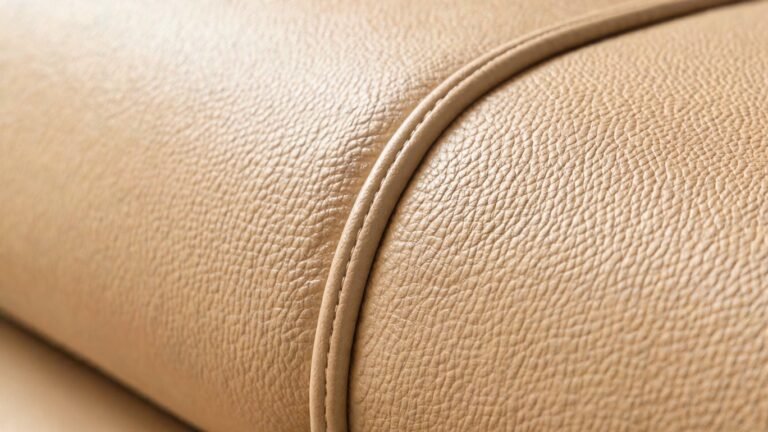
Material softness and flexibility determine how the leather conforms to couch contours — but flexibility alone doesn’t predict lifespan
Bonded & PVC: The Composite Compromises
Bonded leather and PVC leather occupy the bottom of the leather material hierarchy — both are specified primarily on cost, not performance. Understanding their limitations explains why the cheapest “leather material couch” options generate the highest long-term costs.
Bonded leather is manufactured by grinding leather scraps (leftover from genuine leather production) into fibers, mixing them with a polyurethane binder, and extruding the mixture onto a fabric backing. The result contains 10-17% actual leather fiber — enough to legally use the word “leather” in product descriptions. The performance is predictably poor: Martindale ratings of 30,000-50,000 cycles, but with rapid surface degradation as the PU binder breaks down. Bonded leather couches typically begin peeling within 18-24 months of commercial use, exposing the fabric backing underneath. There is no reupholstery value — the material cannot be saved once delamination begins.
PVC leather (polyvinyl chloride) uses a plasticized PVC coating on a fabric backing. It is the cheapest synthetic leather option — and the most environmentally problematic. PVC requires plasticizers (typically phthalates) to achieve flexibility, and these plasticizers migrate out of the material over time — causing the PVC to become brittle and crack. The plasticizer migration also creates indoor air quality concerns, as phthalates are known endocrine disruptors subject to increasing regulatory restriction. When PVC burns, it releases hydrogen chloride gas — making it the most dangerous leather material type in fire scenarios. For commercial furniture, PVC leather is increasingly being phased out in favor of PU or silicone alternatives. For more on synthetic material performance, our synthetic leather durability guide covers the long-term data.
Silicone Leather: The Next-Generation Specification
Silicone leather represents the most significant advancement in couch upholstery material technology since the introduction of PU leather. Instead of organic polymer coatings (PU, PVC) or animal hide (genuine leather), silicone leather uses a polysiloxane (silicone rubber) coating bonded to a fabric substrate through a solvent-free heat transfer process.
The performance advantages are structural, not additive. The inorganic Si-O backbone of silicone is inherently resistant to UV degradation (1,500-hour QUV stability, ISO 105-B02 Grade 5+), hydrolysis (14-week test pass — silicone cannot absorb water), thermal extremes (-30°C to +250°C with no degradation), and microbial growth (non-porous surface). The material is inherently self-extinguishing — achieving BS5852 crib 5, CAL TB 117-2013, DIN EN 1021, and FMVSS 302 without chemical flame retardant additives.
For couch applications, these properties translate to: 8-10 year lifespan in commercial use (vs 2-3 years for PU, 1-3 years for bonded), zero maintenance beyond damp-cloth wiping (no conditioning, no stain treatment, no professional cleaning), no VOC emissions (solvent-free manufacturing), and no fire safety compliance risk (inherent flame retardancy that does not degrade). The Martindale rating of 150,000+ cycles provides 3x the abrasion resistance of premium PU leather — but more importantly, the silicone coating does not degrade through hydrolysis or UV, meaning the Martindale rating actually predicts real-world lifespan.

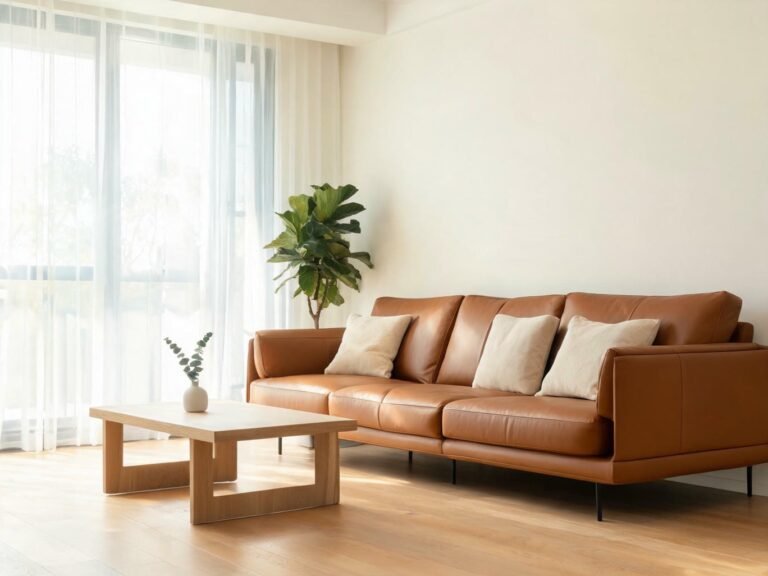
Silicone leather delivers the aesthetic of premium leather upholstery with performance characteristics that exceed all traditional alternatives
Decision Matrix: Which Material for Which Application
Use this decision matrix to match leather material type to application requirements. The matrix considers traffic level, expected lifespan, fire safety requirements, and budget constraints.
| Application | Recommended Material | Why |
|---|---|---|
| Hotel lobby / hospitality | Silicone leather | High traffic + fire safety + low maintenance + 8-10yr lifespan |
| Cinema / theater seating | Silicone leather | Fire safety (BS5852 crib 5) + stain resistance + high-traffic durability |
| Restaurant booths | Silicone leather | Food/stain resistance + wipe-clean + fire safety + no odor absorption |
| Executive office | Genuine leather (top-grain) | Premium aesthetic + low traffic + patina development valued |
| Budget residential | PU leather | Lowest material cost + acceptable 3-5yr lifespan in light use |
| Healthcare / medical waiting | Silicone leather | Biocompatible (ISO 10993) + antimicrobial + chemical disinfectant compatible |
| Model home staging | PU leather | Lowest cost + aesthetic-only requirement + short-term use |
The pattern is clear: for any commercial application with traffic, fire safety requirements, or lifespan expectations exceeding 3 years, silicone leather is the technically correct specification. Genuine leather remains valid for low-traffic premium applications where patina is valued. PU leather is appropriate only for budget-constrained, short-lifespan, or light-use scenarios. Bonded leather and PVC leather should not be specified for any commercial application. For application-specific guidance, see our furniture and sofa applications page.

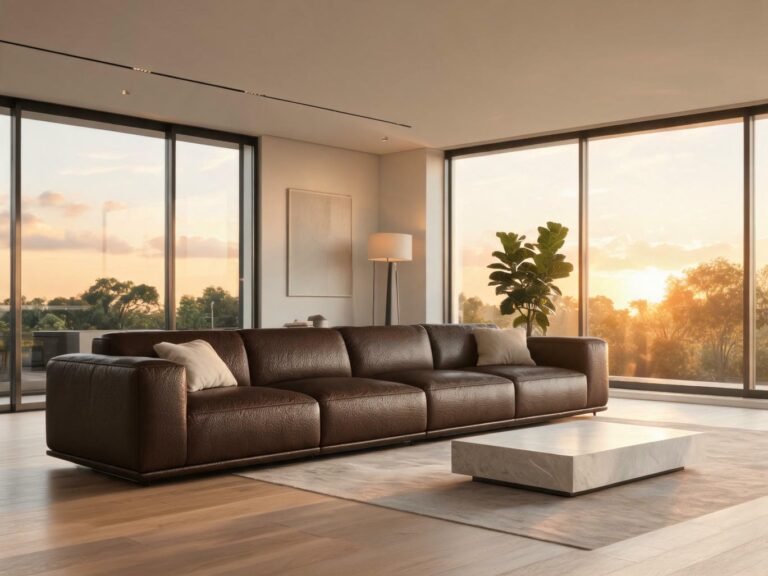
Commercial couch environments demand material that balances initial cost with lifespan, maintenance, and regulatory compliance
About TOPSUN Silicone Leather
TOPSUN manufactures silicone synthetic leather engineered for couch and furniture upholstery applications where durability, cleanability, fire safety, and material longevity are non-negotiable. Our silicone leather is produced through a solvent-free heat transfer process — zero VOC emissions, zero solvent residue, zero plasticizer migration.
Performance verified: 150,000+ Martindale abrasion cycles, 200,000+ Wyzenbeek double rubs, 1,500-hour UV stability (ASTM D329, ISO 105-B02 Grade 5+), 14-week hydrolysis resistance, 200,000 low-temperature flex cycles at -30°C, and inherently self-extinguishing flame retardancy certified to BS5852 (crib 5), DIN EN 1021, CAL TB 117-2013, and 16 CFR 1610. Available in custom colors, textures (lychee, pebble, smooth, custom embossed), and thicknesses from 0.23 mm for weight-sensitive applications. For B2B-specific quality guidance, our leather sofa quality B2B guide provides specification templates.
To learn more about the material technology, visit our silicone leather introduction page.
Request Couch Leather Material Samples
Frequently Asked Questions
What is the best leather material for a couch?
There is no universal best — it depends on the application. For commercial couches in hospitality, cinema, or healthcare settings, silicone leather is the technically correct choice (8-10 year lifespan, fire safety, low maintenance). For luxury executive offices with low traffic, genuine top-grain leather offers premium aesthetics and patina. For budget residential use, PU leather provides acceptable 3-5 year performance at the lowest cost. Bonded leather and PVC leather should not be specified for any application where the couch is expected to last more than 2 years.
How long does silicone leather last on a couch compared to PU leather?
Silicone leather lasts 8-10 years on a commercial couch; PU leather lasts 2-3 years in the same environment. The difference is driven by hydrolysis resistance — silicone’s inorganic backbone cannot absorb water, while PU’s organic polymer chains break down under moisture exposure. A PU leather couch in a humid environment may begin peeling within 24 months; a silicone leather couch in identical conditions shows zero surface degradation after 8 years.
Is bonded leather a good material for couches?
No. Bonded leather contains only 10-17% actual leather fiber bound with polyurethane adhesive. The PU binder degrades through hydrolysis and UV exposure, causing the surface to peel and flake within 18-24 months of commercial use. Once delamination begins, the material cannot be reupholstered or restored — full replacement is the only option. Bonded leather should not be specified for any commercial furniture program or any residential application where the couch is expected to last more than 2 years.
Does silicone leather look like real leather on a couch?
Yes. Silicone leather is available in textures that replicate genuine leather grain patterns — lychee, pebble, smooth, and custom embossed designs — with visual and tactile qualities that are difficult to distinguish from genuine leather at normal viewing distances. The material is available in matte, semi-gloss, and high-gloss finishes, and supports custom color matching to Pantone specifications. Unlike genuine leather, silicone leather maintains consistent appearance across the entire surface and between batches — no natural hide variations or imperfections.