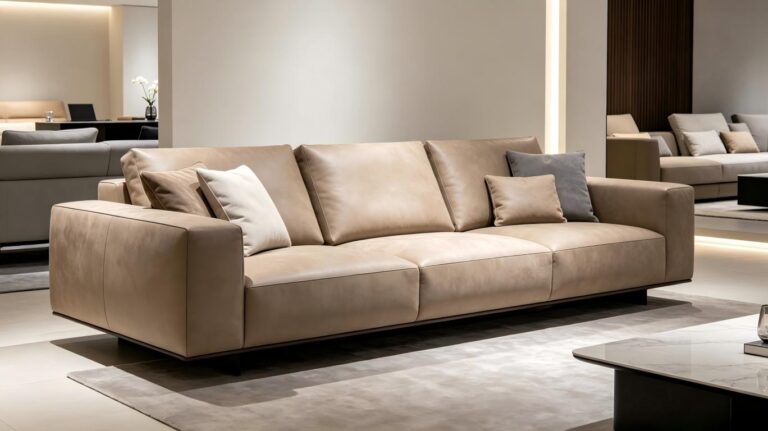
As a furniture designer, I’ve watched procurement teams obsess over the material line item while ignoring the cost drivers hidden in the design itself. The thickness you specify, the texture you choose, the color matching tolerance you accept — each decision ripples through your leather couch cost for the next decade. Here’s what we’ve learned from specifying couch materials across hospitality, corporate, and residential projects.
Request Couch Material Samples
What Actually Drives Leather Couch Cost in B2B Manufacturing
Upholstery material typically accounts for 30–40% of a sofa’s bill of materials. That makes leather selection the single biggest lever a furniture manufacturer can pull. But the cost doesn’t stop at the material invoice — it cascades through cutting yield, labor hours, rework rates, warranty claims, and replacement cycles.
When I specify genuine leather for a commercial couch project, the manufacturing cost breakdown looks fundamentally different than when I specify silicone leather. Sofa manufacturing cost components — frame, foam, labor, and upholstery — interact in ways that a unit-price comparison completely misses.
| Cost Component | Genuine Leather | PU Leather | Silicone Leather | 10-Year Impact |
|---|---|---|---|---|
| Material per m² | $50–$120+ | $4–$8 | $40–$60 | Silicone mid-range |
| Cutting yield | 40–70% | 90%+ | 95%+ | Genuine wastes 30% |
| Service life | 7–12 years | 3–5 years | 10+ years | PU needs 2–3x replacements |
| Maintenance | Conditioning every 6 mo | Wipe clean | Wipe clean, bleach-safe | Silicone zero maintenance |
| Cost per usable year | $8–$17/m²/yr | $1–$3/m²/yr | $4–$6/m²/yr | Silicone wins long-term |

Material options that drive leather couch cost — roll format eliminates hide cutting waste
The cheapest material per meter often produces the most expensive couch over a 10-year horizon. Procurement teams that annualize cost — not just unitize it — consistently choose silicone for commercial applications.
Material Cost Comparison: Genuine vs PU vs Silicone per Square Meter
Let’s break down wholesale leather couch materials cost per square foot across the three primary options. Genuine leather hides range from $3–$8 per square foot depending on grade, animal source, and tanning method. PU leather fabric runs $1–$3 per square foot. Silicone leather sits in the middle at $2–$5 per square foot.
But per-square-foot pricing is only the first filter. When I design a commercial couch for a hotel or office, I calculate usable material — not purchased material. A genuine leather hide with 55% cutting yield means I’m paying for 45% waste. A silicone leather roll at 95% yield means almost every centimeter I buy ends up on the finished product. That’s why silicone leather’s roll-format consistency changes the procurement equation.

Material hand-feel and drape quality — design attributes that affect both cost and customer satisfaction
In one project, we specified silicone leather for a 200-couch hotel installation. The material cost was 15% higher than PU per meter, but the elimination of color-matching labor, reduced cutting waste, and projected 10-year service life brought the total project cost 22% below the PU alternative — which would have required one full reupholstery cycle within that decade.
The 10-Year Total Cost: Why Initial Price Misleads Procurement
Commercial leather sofa cost per year is the metric that matters for hospitality, corporate, and contract furniture buyers. A PU leather couch that costs $800 and lasts 4 years amounts to $200 per year. A silicone leather couch that costs $1,200 and lasts 10+ years amounts to $120 per year. The higher upfront investment produces a lower annualized cost — and that’s before factoring in reupholstery downtime, guest disruption, and labor.
How silicone leather reduces long-term furniture costs through extended service life and minimal maintenance
We’ve tracked couch performance in a co-working space where PU leather seating needed replacement at year 3.5 — peeling surfaces, hydrolysis damage in humid areas, and visible cracking on armrests. The 5-year TCO analysis for upholstery in that project revealed the PU option was 40% more expensive than silicone when replacement costs were included.
For a broader look at how protective treatments affect furniture lifecycle economics, our leather protector furniture TCO guide walks through the same calculation framework across additional material types.

PU leather sofa in commercial use — replacement at year 3-5 is the hidden cost driver
How to Reduce Leather Couch Cost Without Sacrificing Quality
Reducing leather couch cost doesn’t mean cutting corners on quality. It means making smarter design and material decisions that lower the total cost of ownership. Here are the strategies I recommend to furniture manufacturers and procurement teams:
- Switch to roll-format materials: Roll goods like silicone leather deliver 95%+ cutting yield vs 40–70% for natural hides. Less waste means lower effective material cost per couch.
- Standardize color across collections: Use a supplier with Pantone matching at Delta E ≤ 1.0 to eliminate batch-to-batch color disputes and rework. See our furniture sofa applications for examples.
- Specify cleanability requirements: Silicone leather is bleach-safe and alcohol-compatible — no conditioning, no special cleaners. That eliminates maintenance line items from your TCO model.
- Require batch-level test reports: Martindale ≥200,000 cycles, UV ≥1,000 hours, and flex ≥50,000 cycles from ISO-accredited labs. This prevents mid-cycle material failures that trigger warranty claims.

Warehouse-scale production capacity keeps material costs stable and lead times predictable
For manufacturers comparing genuine leather vs PU leather vs silicone leather cost, the decision framework should start with service life requirements. If your couch needs to survive 3 years, PU is adequate. If it needs to survive 10, silicone is the only option that won’t require reupholstery. The factory production process behind silicone leather delivers that longevity through structural chemistry, not surface treatments.
Frequently Asked Questions
How much leather do I need for a standard commercial couch?
A standard 3-seat commercial couch typically requires 14–18 square meters of upholstery material. With genuine leather hides at 40–70% cutting yield, you’ll need to purchase 25–30 square meters to account for waste. With silicone leather rolls at 95%+ yield, 15–19 square meters covers the same couch. This yield difference alone can reduce material cost by 20–30% per unit.
Is silicone leather cheaper than genuine leather for couch manufacturing?
On a per-square-meter basis, silicone leather ($40–$60/m²) is generally cheaper than premium genuine leather ($50–$120+/m²). When you factor in cutting yield, color matching labor, and 10-year replacement cycles, silicone leather’s total cost per usable year is 40–60% lower than genuine leather for commercial couch applications. The upfront cost gap narrows further when you account for the elimination of conditioning products and specialized cleaning.
Design for the Decade, Not the Invoice
Leather couch cost is a design decision before it’s a procurement decision. The material you specify on day one determines the replacement cycle, maintenance schedule, and warranty exposure for the next 10 years. Silicone leather isn’t the cheapest material per meter — but it’s the cheapest material per usable year for most commercial couch applications. When you design for the decade instead of the invoice, the numbers speak for themselves.
Get a Couch Cost Comparison Quote
About TOPSUN
TOPSUN manufactures silicone leather that reduces leather couch cost for furniture brands by extending service life to 10+ years while simplifying procurement.
Our Pantone-matched rolls ship in 7–15 days at 500-meter MOQ, with Martindale ≥200,000 cycles and zero-VOC chemistry that passes EU E1 and REACH without rework.