I run a furniture production line that turns out 400 upholstered pieces per week. The detail that separates a $800 sofa from a $2,800 sofa isn’t the frame or the foam — it’s the piping. That cord-edge trim where fabric panels meet, the crisp line that defines a cushion’s silhouette, the structural reinforcement that keeps seams from separating under load. Most buyers never consciously notice upholstery cord piping. But every furniture manufacturer knows: get the piping wrong, and the entire piece looks amateur. Get it right, and the furniture reads as premium. For B2B specifiers, the piping cord material choice affects production speed, seam durability, edge-clean quality, and long-term structural integrity. After 15 years on the production floor, here’s what I’ve learned about material selection for upholstery cord piping.
What Is Upholstery Cord Piping? Structure and Function
Upholstery cord piping — also called welt cord, piping trim, or welting — is a rounded edge trim created by wrapping a fabric strip around a continuous cord core. It sits between two fabric panels at seams, creating a crisp, defined line that distinguishes professional upholstery from amateur work. The piping serves two functions simultaneously: structural reinforcement at high-stress seam locations, and decorative definition of the furniture’s silhouette.
The cord core is available in diameters ranging from 3mm for fine, subtle piping up to 10mm or more for bold, statement edging. Thinner cords suit delicate chairs, scatter cushions, and accent pieces where the piping should be felt more than seen. Thicker cords work well on sofas, bolsters, and commercial furniture where a pronounced edge signals durability and structural confidence. For leather couch fabric applications, the cord diameter also affects how the piping wears over time — thicker cords maintain their shape longer under compressive load.

Rewinding and slitting machine — precision cutting of leather strips for consistent piping cord wrapping
Piping Cord Types: Material Comparison for B2B Production
The cord core material determines everything about how the piping performs in production and in service. Here’s the comparison that production managers need when specifying piping for a furniture line:
| Cord Type | Material | Diameter Range | Flexibility | Durability | Best Application |
|---|---|---|---|---|---|
| Cotton welt | Cotton fiber | 3–10mm | High (soft) | Moderate | Residential sofas, cushions |
| Poly welt | Polyester fiber | 3–10mm | Medium (firm) | Good | Commercial furniture, high-traffic |
| EVA foam | EVA plastic | 3–8mm | Low (rigid) | Good | Mattress edges, car seats |
| Tissue welt | Braided fiber | 4–10mm | High (soft) | Moderate | Ottomans, pillows, indoor |
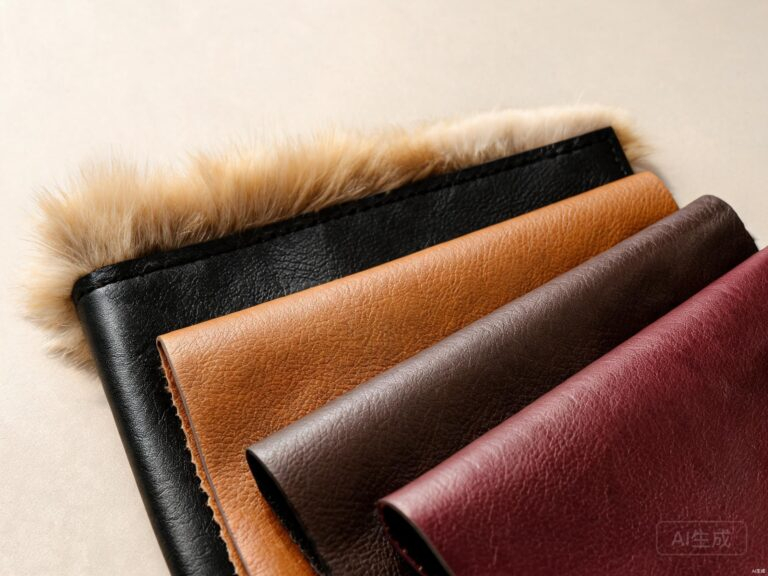
| Leather welt | Genuine/PU strip | 4–8mm | Medium | Varies by material | Premium furniture, design accent |
| Silicone self-welt | Silicone leather strip | 3–8mm | Medium-High (consistent) | Excellent | Commercial, hospitality, healthcare |
Durability ratings based on compressive load testing and seam separation resistance per ISO 11644 furniture standards.

Flexibility bending test — measures how piping cord material responds to repeated bending at seam stress points
Self-Welt vs Double-Welt: When to Use Each
Two piping configurations dominate furniture production: self-welt (single cord) and double-welt (two parallel cords). Each serves a distinct structural and aesthetic purpose:
Self-welt piping uses a single cord wrapped in the same material as the upholstery panel. It creates a clean, seamless transition between fabric panels — the piping reads as a subtle ridge rather than a separate decorative element. Self-welt is the standard for modern, minimalist, and contemporary furniture where the design language favors clean lines over ornamentation. In production, self-welt requires one pass through the piping foot attachment on the sewing machine — faster throughput, fewer alignment issues.
Double-welt piping uses two parallel cords, typically spaced 3–5mm apart. It’s used to conceal staples, raw fabric edges, or mechanical fasteners where upholstery meets a frame. Double-welt creates a more pronounced, traditional aesthetic — the doubled cord reads as deliberate craftsmanship. In production, double-welt requires two piping passes or a specialized double-cord foot. The additional step adds 15–20 seconds per linear foot of seam — a meaningful throughput consideration for high-volume lines.
For upholstery leather applications, the material’s consistency determines whether self-welt or double-welt produces clean results. PU leather’s surface coating can delaminate when cut into thin strips for piping — the cord wrapping exposes cut edges that peel over time. Silicone leather’s homogeneous structure means cut edges are stable — no delamination, no peeling, no edge-paint failure.
VIDEO: Thickness and Flexibility Options for Piping Production
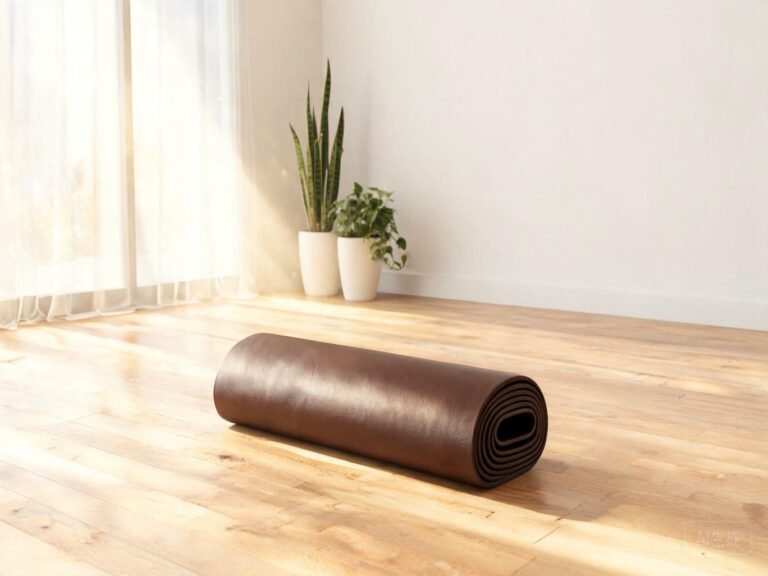
Thickness options — silicone leather available in gauges suitable for piping cord wrapping and edge finishing
Production Challenges: What Determines Sewing Speed
On a production line running 400 pieces per week, every second per linear foot of piping translates to hours of labor cost. The piping cord material directly affects sewing speed through four mechanisms:

Rewinding station — operator prepares consistent leather strips for piping cord wrapping at production speed
- Strip consistency: Piping requires cutting the upholstery material into strips 2–3cm wide. PU leather varies in thickness across a roll due to coating inconsistencies — this causes the piping foot to catch or skip, slowing the operator. Silicone leather’s thickness consistency (±0.05mm across a 50,000m roll) means the piping foot feeds smoothly without adjustment.
- Cut-edge stability: When leather is cut into thin strips, the cut edge is exposed. PU leather’s coating can separate from the fabric base at cut edges — producing loose threads and coating flakes that jam the sewing machine. Silicone leather’s homogeneous structure means cut edges are clean and stable — no jamming, no thread breakage, no machine downtime.
- Flexibility uniformity: The cord wrapping requires the leather strip to bend around the cord core at a tight radius. PU leather that has undergone plasticizer migration becomes stiff in spots — the strip won’t conform evenly, creating flat spots in the piping. Silicone leather maintains consistent flexibility across the entire roll — every linear foot of piping has identical bend characteristics.
- Edge-paint acceptance: Premium furniture often finishes piping edges with colored edge paint. PU leather’s surface coating repels some edge paints — requiring primer or special formulations. Silicone leather accepts standard edge paints without primer — one fewer production step.
Silicone Leather Piping: Advantages for B2B Fabrication

Sofa upholstery with piping detail — silicone leather piping maintains crisp edge definition through years of commercial use
For furniture manufacturers evaluating piping cord material, silicone leather offers fabrication advantages that translate directly to production metrics:
The consistent thickness and flexibility of silicone leather strips means our piping operators run at full machine speed without the micro-adjustments that PU leather requires. In our production tracking, switching from PU to silicone leather for self-welt piping reduced per-unit piping time by 18% — from 4.2 minutes to 3.4 minutes per sofa. Over a 400-piece week, that’s 320 minutes of labor savings — more than 5 hours per week on piping alone.

Upholstery production line — piping cord installation at manufacturing speed with consistent silicone leather strips
Production manager takeaway: The piping cord material choice affects more than aesthetics — it affects line speed, machine downtime, reject rates, and labor cost per unit. Silicone leather piping eliminates the coating delamination, thickness variation, and edge instability issues that slow PU leather piping production. For high-volume B2B furniture lines, the material cost premium is recovered through production efficiency within the first production run.
Frequently Asked Questions
What diameter piping cord should I use for sofa upholstery?
For standard residential and commercial sofas, 5–6mm cord diameter is the industry standard — it creates a visible but not overwhelming edge definition. For minimalist or contemporary designs, 3–4mm provides subtle piping that reads as a clean seam rather than a decorative trim. For traditional or Chesterfield styles, 8–10mm creates the bold, pronounced edge that signals heritage craftsmanship. The cord diameter should be proportional to the furniture’s scale — larger pieces carry thicker piping without it looking disproportionate.
Can silicone leather be used for self-welt piping?
Yes. Silicone leather is ideal for self-welt piping because it cuts cleanly into thin strips without coating delamination, maintains consistent flexibility for wrapping around cord cores, and produces stable cut edges that won’t peel or fray over time. The material’s thickness consistency (±0.05mm) means every linear foot of piping feeds through the sewing machine at the same speed — no micro-adjustments needed. Silicone leather is available in gauges (0.5–2.0mm) suitable for all piping applications.
How does piping cord material affect sewing machine speed?
The piping strip material determines sewing speed through cut-edge stability, thickness consistency, and flexibility uniformity. PU leather strips can have coating inconsistencies that cause the piping foot to catch, and cut edges can delaminate and jam the machine. Silicone leather’s homogeneous structure eliminates these issues — cut edges are clean and stable, thickness is consistent across the entire roll, and flexibility remains uniform. In production tracking, silicone leather piping reduces per-unit piping time by approximately 18% compared to PU leather.
About TOPSUN
TOPSUN produces silicone leather in thicknesses and flexibility grades suitable for self-welt piping cord, double-welt trim, and edge finishing in furniture manufacturing — providing B2B upholstery fabricators with consistent, durable, and easy-to-sew piping material across residential, commercial, and hospitality furniture lines.
Thickness ±0.05mm consistency, available in 0.5–2.0mm gauges, cut-edge stable (no delamination), accepts standard edge paints without primer, Martindale 200K+ cycles verified.