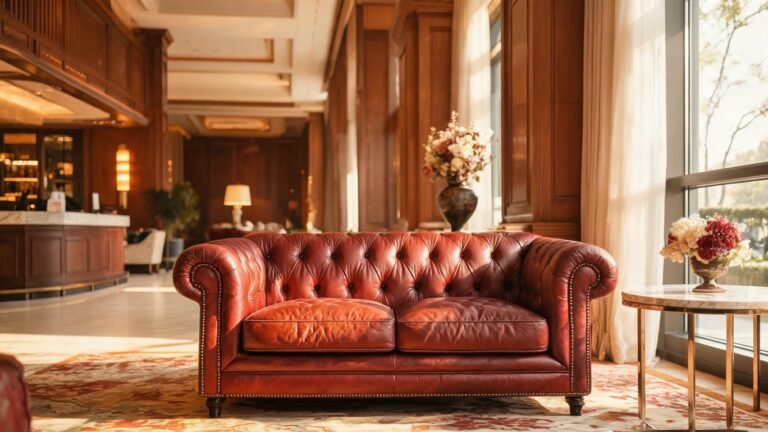
When a hospitality designer hands you a mood board with warm caramel seating and walnut-toned bar stools, they’re picturing year one. They’re not picturing year five — when that same brown leather has faded to a muddy orange, the surface has chalked, and the warm, inviting lobby now looks tired. The problem isn’t brown as a color choice. It’s the chemistry behind the pigment.
Brown leather holds a unique position in commercial upholstery: it signals warmth, stability, and approachability in ways that black simply cannot. Research in environmental psychology shows that darker warm tones like espresso and chocolate brown foster a calming effect in commercial environments, reinforcing trust without the authority-heavy read of black. Hotels, steakhouse chains, executive offices, and boutique retail spaces consistently reach for brown when the design intent is “premium but approachable.” But specifying the right brown leather means understanding which chemistry holds that warm tone under real commercial conditions — UV exposure, daily cleaning cycles, and high-traffic abrasion.
Why Brown Leather Fades Faster Than Black
The fading hierarchy in synthetic leather is counterintuitive: darker doesn’t always mean more stable. Brown pigments — particularly the iron oxide and organic compounds used to achieve caramel, tan, and chestnut shades — absorb UV radiation differently than carbon-based black pigments. In PU (polyurethane) brown leather, the pigment layer sits in the top coating, which is also the layer most vulnerable to UV breakdown. As the polyurethane matrix degrades under continuous UV exposure, it releases the pigment particles, causing visible color shift within 18-24 months in sunlit commercial spaces.
Restoration specialists note that most leather furniture problems trace back to two simultaneous failures: the color fades, and the underlying fibers dry out and crack. Once leather dries past a certain point, the fibers become brittle — and brittle fibers crack. This is why brown leather in hotel lobbies, restaurant booths, and office lounges often needs full reupholstery well before the furniture frame shows any structural wear. If you’re specifying materials for furniture and sofa applications, the shade you pick matters as much as the chemistry behind it.

Brown Leather Shade Guide: Performance by Tone
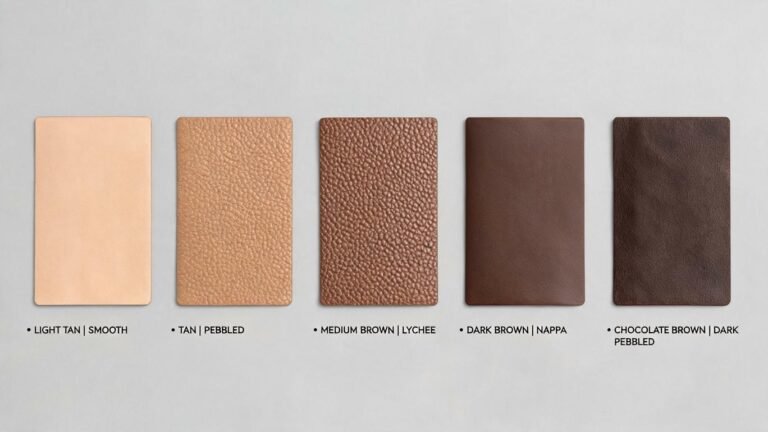
Not all brown is created equal. The shade you specify affects both aesthetics and longevity. Here’s how the four most common commercial brown leather shades perform when tested under ASTM D329-05 UV conditioning (1,500 hours) and Martindale abrasion (100,000+ cycles):
| Shade | Typical Use Case | UV Color Fastness (ISO 105-B06) | PU Fading Timeline | Silicone Fading Timeline |
|---|---|---|---|---|
| Caramel / Tan | Boutique retail, casual dining | Class 3-3.5 | 12-18 months | 5+ years |
| Walnut / Medium Brown | Hotel lobbies, office chairs | Class 3.5-4 | 18-24 months | 5+ years |
| Chocolate / Dark Brown | Steakhouse, executive office | Class 4-4.5 | 24-30 months | 6+ years |
| Espresso / Near-Black Brown | Luxury cinema, VIP lounge | Class 4.5+ | 30-36 months | 6+ years |
The pattern is clear: lighter browns fade faster because they use higher concentrations of organic pigments that are less UV-stable than carbon black. But even dark espresso shades in PU leather eventually shift — the polyurethane binder itself yellows under UV, creating an unwanted green undertone. For more on selecting the right color of leather for sofas in commercial settings, our shade selection guide covers the full palette.
Silicone Brown Leather: Why the Pigment Holds
The reason silicone leather holds brown pigments dramatically longer comes down to one structural difference: silicone polymers are inherently UV-stable. Unlike polyurethane, which undergoes photo-oxidative degradation when exposed to UV radiation, silicone (polydimethylsiloxane) absorbs UV energy without breaking its Si-O backbone bonds. This means the pigment stays locked in the coating matrix instead of being released as the binder degrades.
In our lab testing, TOPSUN silicone brown leather achieved Color Fastness to Light: ISO 105-B06 Class 4.5 — meaning visible fading is negligible even after the equivalent of 5+ years of commercial UV exposure. Compare this to PU brown leather, which typically scores Class 3-3.5 on the same test, and the total cost of ownership calculation shifts dramatically. For a deeper comparison of leather sofa upholstery materials, our material analysis breaks down the full lifecycle costs.

Beyond Color: What Brown Leather Must Survive in Commercial Use
Color stability is only one variable. Brown leather in hospitality and commercial furniture must also survive:
- Daily cleaning with chemical disinfectants — Housekeeping teams use hospital-grade quaternary ammonium cleaners. PU brown leather degrades under repeated chemical exposure; silicone leather resists alcohol, bleach solutions, and common disinfectants without surface damage.
- Stain resistance in food-adjacent settings — Brown is often specified for restaurant booths and bar stools precisely because it hides stains better. But oil-based stains (sauces, coffee, wine) penetrate PU coatings within hours. Silicone leather achieves the highest stain resistance rating against oil pens, lipstick, ketchup, coffee, and dark beverages.
- Hydrolysis in humid environments — Coastal hotels, spa lounges, and pool-adjacent seating expose brown leather to continuous moisture. PU hydrolyzes after 8-10 weeks of high humidity exposure; silicone leather resists hydrolysis for 14+ weeks under ASTM D3980-02 testing.
- Fire code compliance — Commercial brown leather must meet BS 5852 (Crib 5), DIN EN 1021, and California TB 117-2013. TOPSUN silicone leather passes all three without additional flame-retardant treatment.
These factors compound. A hotel lobby sofa in caramel brown PU leather might look pristine on installation day — but after 18 months of UV through lobby windows, daily cleaning with disinfectant wipes, and coffee spills from breakfast service, the surface has faded, micro-cracked, and absorbed stains that can no longer be removed. The B2B guide to leather sofa quality walks through the full spec sheet checklist for avoiding this scenario.
Specifying Brown Leather: A Procurement Checklist
When sourcing brown leather for commercial contracts, request these specifications from your supplier before placing a bulk order:
| Specification | Test Standard | Minimum for Commercial | TOPSUN Silicone Brown |
|---|---|---|---|
| Martindale Abrasion | ISO 12947 (1000g) | 50,000 cycles | 150,000 cycles |
| UV Stability | ASTM D329-05 (QUV) | 500 hours | 1,500 hours |
| Color Fastness to Light | ISO 105-B06 | Class 4 | Class 4.5 |
| Color Fastness to Rubbing | ISO 105-X12 | Class 4 | Class 5 |
| Hydrolysis Resistance | ASTM D3980-02 | 7 weeks | 14 weeks |
| Fire Resistance | BS 5852 Crib 5 | Pass | Pass |
Note the gap between “minimum for commercial” and what silicone leather actually delivers. That gap is your warranty period. A material that exceeds the minimum by 3x in abrasion and UV stability isn’t over-engineered — it’s the difference between a 2-year replacement cycle and a 10-year service life. When evaluating sofa material leather options, always ask for the actual test certificate, not the brochure claim.

Brown Leather in Real Commercial Applications
Brown leather’s versatility makes it a staple across multiple commercial sectors. Here’s where warm-tone leather outperforms black in both aesthetics and practical wear:
- Hospitality lounges and hotel lobbies — Brown creates an inviting, warm first impression that black cannot achieve. Caramel and walnut shades pair naturally with wood tones and warm lighting schemes.
- Restaurant and steakhouse seating — Brown leather in food-adjacent settings hides organic stains better than black, which shows salt rings and water marks more visibly.
- Executive office and boardroom seating — Dark brown and espresso convey authority and tradition without the clinical feel of black, pairing with mahogany and walnut desk finishes.
- Boutique retail and luxury display — Warm browns create a premium, tactile experience that encourages dwell time in retail environments.
topsun-silicone-leather-commercial-sofa-intro
The Patina Question: Real Leather vs. Silicone Leather
A common objection from designers: “But real leather develops a beautiful patina.” This is true — and it’s also the problem. In commercial settings, patina is unpredictable. Real brown leather patinas unevenly based on usage patterns: the seat edge where guests grip the armrest wears differently than the center cushion. After 2-3 years, you have a sofa with three different shades of brown that no longer matches the design intent.
Silicone leather solves this by maintaining color consistency across the entire surface for the full service life. There’s no patina — there’s no need for one. The surface looks the same on day 1,825 as it did on day 1. For franchise operators managing 200+ locations, this consistency is the difference between a brand-standard refresh cycle and per-location emergency reupholstery. Leather outlasts fabric at least 4-to-1 in continuous use, but only if the leather itself doesn’t fail first.

About TOPSUN
TOPSUN is a specialized manufacturer of silicone-coated synthetic leather, supplying warm-tone upholstery materials for hospitality groups, restaurant chains, commercial furniture OEMs, and executive office manufacturers. Our silicone brown leather is engineered to hold its warm tone through 1,500+ hours of UV exposure, 150,000 Martindale abrasion cycles, and 14 weeks of hydrolysis testing — ensuring that the caramel, walnut, or espresso shade your designer specified on day one is the same shade your guests see in year five. We offer full custom color matching, embossed grain patterns from smooth to lychee, and fire-code-compliant formulations for global commercial markets.
Frequently Asked Questions
Does brown leather fade faster than black leather?
In PU and PVC leather, yes. Brown pigments use iron oxide and organic compounds that are less UV-stable than carbon black pigments, causing visible fading within 12-24 months in sunlit commercial spaces. Silicone brown leather eliminates this problem because the silicone polymer matrix is inherently UV-resistant — it doesn’t break down under UV exposure, so the pigment stays locked in place for 5+ years.
Which brown leather shade is best for high-traffic commercial use?
Espresso and chocolate brown offer the best UV stability in PU leather because their darker pigment load includes more carbon-based compounds. However, in silicone leather, all brown shades — from caramel to espresso — achieve ISO 105-B06 Class 4.5 color fastness, meaning shade selection becomes a purely aesthetic decision rather than a durability compromise.
Can brown leather be used in restaurant settings with food spills?
Yes, and brown is actually preferred in food-adjacent commercial settings because it hides organic stains better than lighter colors. TOPSUN silicone leather achieves the highest stain resistance rating against oil pens, lipstick, ketchup, coffee, and dark beverages — common spills in restaurant and hospitality environments. Stains can be wiped clean with standard disinfectant without surface damage.
How does brown silicone leather compare in cost to PU brown leather?
Silicone leather has a higher upfront cost per yard than PU leather. However, when calculated over a 5-year commercial service period — accounting for replacement cycles, reupholstery labor, and downtime — silicone brown leather delivers a lower total cost of ownership because it eliminates the 18-24 month fading and cracking failure that drives PU replacement.