Caramel Brown is the breakout synthetic leather color for 2026, positioned as the aesthetic bridge between rich premium tones and neutral palettes across furniture, automotive interiors, and upholstery design. But behind the trend data lies a performance reality most B2B buyers overlook: brown is the most UV-sensitive color in the synthetic leather spectrum, and the gap between a brown faux leather that holds its tone for five years and one that fades in six months comes down to a single metric — Delta E color deviation after accelerated weathering. The global faux leather market reached USD 37.59 billion in 2025, growing at 7.66% CAGR through 2034. Brown accounts for an outsized share of new product launches — yet color-fade warranty claims remain the number-one quality complaint in the category.

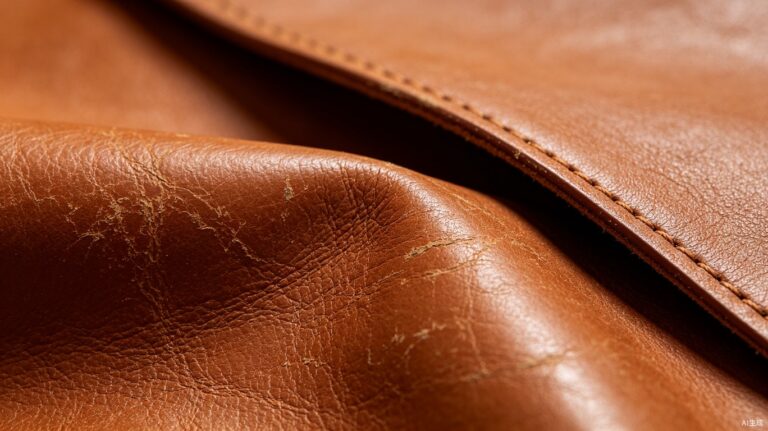
2026 bespoke leather design — brown tones drive the trend, but color stability determines longevity
Why Brown Dominates the 2026 Synthetic Leather Color Palette
Tritera’s 2026 Design Forecast positions brown leather as a strategic material choice tied to narrative-rich interiors and a sense of permanence. In practice, this means furniture brands are shifting away from the gray-and-black minimalism of the late 2010s toward warm, earthy browns — caramel, tobacco, chestnut, and cognac — that communicate comfort, authenticity, and groundedness. For B2B buyers, this trend creates both opportunity and risk. Opportunity: brown-toned products command 8–12% price premiums in upholstery and automotive trim markets. Risk: brown synthetic leather has the highest chroma-shift rate of any color when exposed to UV radiation, because the iron-oxide and organic pigments used to achieve warm brown tones are inherently less lightfast than carbon-black or titanium-white formulations.
The synthetic leather vs genuine comparison matters here. Real leather achieves brown tones through vegetable tanning — a chemical process that produces inherently UV-stable tannin complexes. Synthetic alternatives must replicate that stability through pigment engineering, and not all succeed. This is why two brown faux leather samples can look identical at production but diverge dramatically after 12 months on a sun-exposed showroom floor.

Brown leather waterproof test — color stability and liquid resistance are independent but equally critical specs
Brown Faux Leather Color Stability: The UV Test That Separates Premium From Commodity
The industry-standard test for brown faux leather color stability is ISO 105-B02 accelerated weathering, which simulates prolonged UV exposure. The critical metric is Delta E (ΔE) — the total color difference between the original and post-test samples. The human eye perceives color changes at ΔE > 1.5; anything above ΔE 3.0 is visibly faded to an untrained observer.
Premium brown faux leather sources report ΔE < 1.5 after 500 hours of accelerated weathering, with Blue Wool lightfastness ratings of Grade 6–7. That means the material can withstand approximately 18–24 months of direct sunlight exposure before visible fading occurs — adequate for furniture in typical residential settings, though marginal for automotive interiors or hospitality environments with large glass facades. Commodity-grade brown PU leather typically tests at ΔE 4.0–6.0 after the same 500-hour exposure, meaning visible fading within 3–6 months of real-world UV contact.
| Brown Faux Leather Type | Martindale Abrasion | ΔE After 500h UV | Lightfastness (Blue Wool) | Real-World Fade Onset |
|---|---|---|---|---|
| PU (Standard Grade) | 15,000–40,000 cycles | 4.0–6.0 | Grade 4 | 3–6 months |
| PVC (Plasticized) | 20,000–50,000 cycles | 3.0–5.0 | Grade 4–5 | 6–9 months |
| Microfiber Synthetic | 40,000–60,000 cycles | 2.0–3.0 | Grade 5–6 | 12–18 months |
| Silicone Leather | 200,000+ cycles | <1.0 | Grade 7–8 | 5+ years |
UV stability data per ISO 105-B02 accelerated weathering. Abrasion per ISO 12947-2 Martindale test. Sources: WINIW technical specifications; TOPSUN laboratory testing.
The table exposes a harsh truth: standard PU and PVC brown faux leather will visibly fade within the first year of exposure to sunlight through windows — long before the furniture or automotive interior reaches its expected lifespan. Microfiber synthetic improves the timeline to 12–18 months but still falls short of the 5-year durability expectation that premium brands promise. Only silicone leather achieves ΔE < 1.0, meaning no perceptible color change even after extended UV exposure — a direct result of the silicone polymer matrix’s inherent UV transparency, which allows pigments to remain stable without the degradation that affects polyurethane and PVC binders.

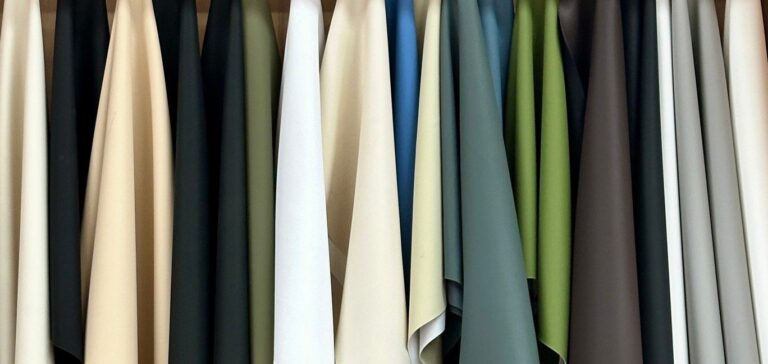
Warm-tone swatch rack — batch-to-batch color consistency is as critical as UV stability
Brown Faux Leather vs Real Leather: Durability and Maintenance Reality Check
The durability comparison between brown faux leather and genuine leather reveals a more nuanced picture than the “real is always better” assumption. Genuine brown leather achieves 30,000+ Martindale abrasion cycles and develops a desirable patina over time — but it requires regular conditioning, absorbs stains, and is vulnerable to moisture damage. A genuine leather vs synthetic analysis shows that maintenance costs over a 5-year period can add $8–15 per square meter to genuine leather’s already premium material cost.
Brown faux leather eliminates the maintenance burden — no conditioning, no moisture absorption, no patina development — but introduces the UV-fade risk documented above. The abrasion performance gap is also significant: standard PU’s 15,000–40,000 Martindale cycles means surface wear becomes visible within 2–3 years of regular use, compared to genuine leather’s 5–8 years before equivalent wear patterns appear. For procurement decisions, this means the lower upfront cost of PU brown faux leather is partially offset by shorter replacement cycles and higher warranty claim rates.
Silicone Brown Leather: Solving the Faux Leather Fading Problem
Silicone leather represents a fundamental shift in how brown synthetic leather handles UV exposure. Unlike PU and PVC, which use organic polymer binders that absorb UV radiation and break down, silicone’s Si-O backbone is inherently transparent to UV wavelengths. This means the brown pigments embedded in the silicone matrix are not subjected to the photochemical degradation that causes color shift in other synthetics. The result: ΔE < 1.0 after 1,000+ hours of accelerated weathering — effectively zero perceptible color change over the material’s 10+ year service life.
Combined with 200,000+ Martindale abrasion cycles, inherent hydrolysis resistance, and a -40°C to 250°C operating range, silicone brown leather delivers genuine-leather aesthetics with synthetic-leather weight advantages and maintenance-free performance. For brands targeting the 2026 brown-color trend without the warranty exposure of PU or PVC fading, this is the material that closes the performance gap.

Flame retardant test — brown silicone leather self-extinguishes, a critical spec for hospitality and automotive markets
5-Point Brown Faux Leather Specification Checklist
When specifying brown faux leather for furniture, automotive, or hospitality applications, these five data points determine whether your product will maintain its premium brown appearance through the warranty period:
- Delta E after 500h UV (ISO 105-B02): Require the test report. ΔE < 1.5 is premium grade; anything above ΔE 3.0 will fade within the first year. Specify the exact pigment system — iron-oxide-based browns outperform organic pigment browns.
- Blue Wool lightfastness grade: Grade 6 minimum for residential, Grade 7+ for automotive and hospitality with high UV exposure through glass.
- Martindale abrasion cycles (ISO 12947-2): 50,000+ for residential furniture, 100,000+ for contract/commercial upholstery, 200,000+ for high-traffic environments.
- Batch-to-batch color consistency: Require Delta E ≤ 1.0 between production lots. Brown is particularly susceptible to warm/cool shifts between batches that create visible mismatch in multi-panel upholstery.
- Hydrolysis resistance (ISO 11507): Brown faux leather in humid climates must pass 4-week accelerated hydrolysis without surface degradation, binder softening, or pigment bleed.
About TOPSUN: TOPSUN manufactures silicone leather in unlimited custom colors including UV-stable brown formulations for furniture, automotive interiors, and hospitality applications. With Grade 7–8 lightfastness, 200,000+ Martindale abrasion cycles, and Delta E ≤ 1.0 batch-to-batch color consistency, TOPSUN’s brown silicone leather holds its tone for 5+ years without fading. Free A4 swatches shipped worldwide via DHL/FedEx — contact info@topsunsiliconeleather.com or WhatsApp +44 744 461 7933.
UV resistance testing — why silicone brown leather outlasts PU and PVC in sun-exposed applications