Selecting leather sofa upholstery isn’t like picking a paint color. The material you choose determines how the sofa performs after 10,000 sits, how it handles a spilled glass of wine, and whether it still looks good when the warranty expires. For residential projects, the stakes are high. For commercial projects — hotels, restaurants, office lobbies, healthcare waiting rooms — they’re higher. A single bad upholstery decision can trigger thousands in replacement costs and damage a brand’s reputation. Here’s how to get it right the first time, whether you’re furnishing a single luxury residence or outfitting a 500-room hotel.
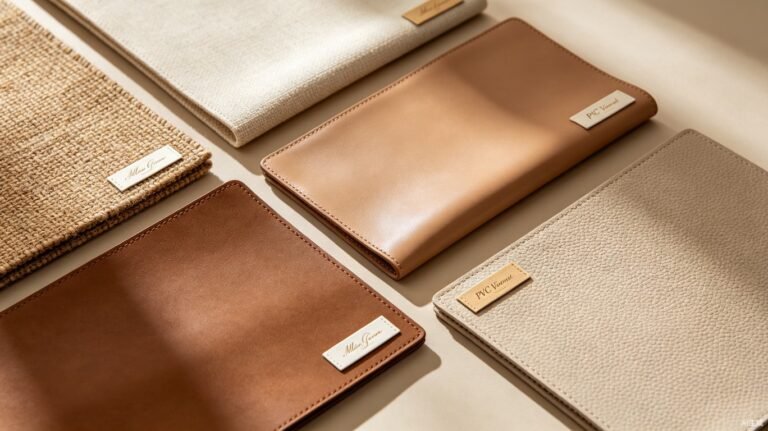
Request Upholstery Material Samples
The Four Material Categories Every Buyer Should Know
Leather sofa upholstery isn’t a single product category — it’s four distinct material families with dramatically different performance profiles. Understanding the differences is the foundation of smart sourcing:
| Material | Best For | Avg. Lifespan | Maintenance | Cost/m² |
|---|---|---|---|---|
| Genuine Leather | Luxury residential, executive offices | 7-15 years (with care) | High; needs conditioning | $30-80 |
| PVC Leather | Budget, short-term use | 3-5 years | Low; wipe clean | $5-15 |
| PU Leather | Mid-range residential, light commercial | 5-7 years | Low; wipe clean | $10-25 |
| Silicone Leather | Commercial, hospitality, healthcare | 10+ years | Minimal; stain-proof | $20-50 |
The price ranges above are rough estimates — actual costs vary by supplier, volume, customization requirements, and market conditions. But the pattern is clear: genuine leather costs the most upfront, silicone leather offers the best lifecycle value, and PVC leather is cheap but short-lived. For a deeper dive into leather fabric sofa materials, see our dedicated guide.

Residential Projects: What Homeowners Actually Care About
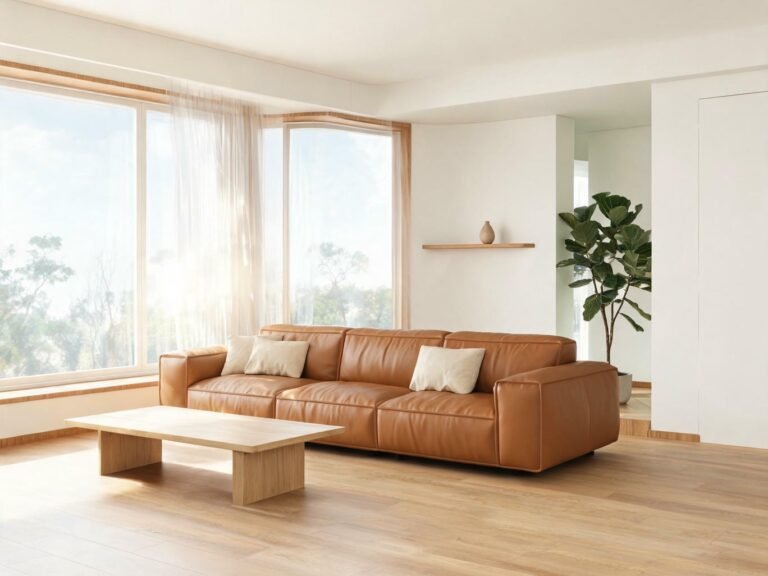
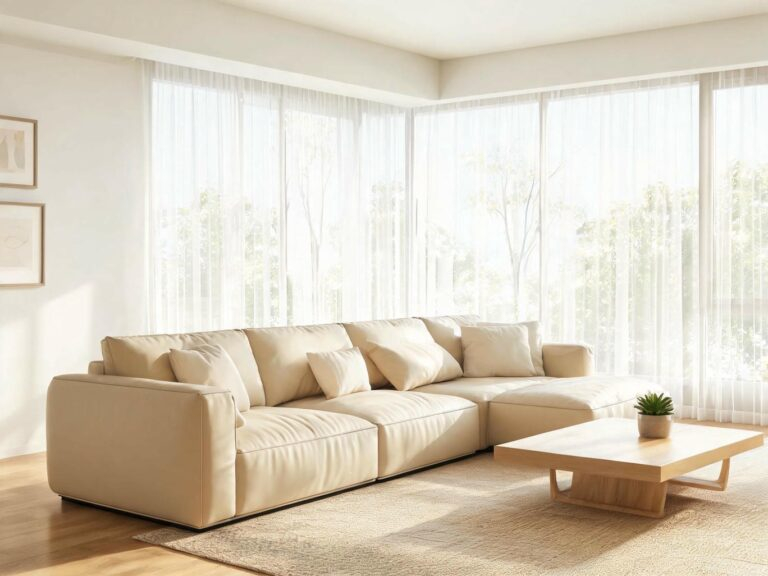
Residential leather sofa upholstery buyers care about three things, in roughly this order: how it looks, how it feels, and how long it lasts. They’re not running Martindale abrasion tests — they’re running their hands across the surface and imagining how it’ll look in their living room. This doesn’t mean performance doesn’t matter; it means the performance story needs to be told through the lens of daily life.
For residential projects, genuine leather still commands the strongest “premium” perception. The natural grain variation, the distinctive smell, the way it develops a patina over time — these are genuine selling points that synthetic materials haven’t fully replicated. But here’s what’s changing: high-end silicone leather is closing the perception gap. Our Designer Collection, for example, achieves a supple hand feel that most homeowners can’t distinguish from top-grain leather. And when you mention that it’s stain-proof, scratch-resistant, and doesn’t need conditioning, the conversation shifts.
Real-world insight: We’ve seen a noticeable trend among residential furniture brands — they’re offering silicone leather as a “performance upgrade” option, priced between PU and genuine leather. Homeowners with kids and pets are the fastest-growing segment, because “stain-proof” and “scratch-resistant” are features they understand immediately.
Commercial Projects: Where Durability Becomes a Financial Metric
Commercial leather sofa upholstery is a different game entirely. In a hotel lobby, a restaurant booth, or a healthcare waiting room, the sofa might see 50-100 sits per day — 18,000 to 36,000 sits per year. At that volume, “looks good” isn’t enough. The material needs to survive, and the procurement team needs to prove it made the right financial decision.
This is where performance data becomes decisive. A Martindale abrasion rating of 200,000+ cycles (silicone leather) vs 50,000-100,000 cycles (genuine leather) translates directly into years of additional service life. Hydrolysis resistance means the material won’t degrade in humid environments like hotel pools or coastal restaurants. Chemical resistance means housekeeping can use hospital-grade disinfectants without damaging the surface.
For commercial projects, the total cost of ownership calculation typically favors silicone leather within 2-3 years. The higher upfront material cost is offset by three factors: reduced replacement frequency, lower maintenance costs, and fewer warranty claims. For more on furniture leather durability, see our testing results guide.

The Performance Metrics That Actually Predict Service Life
When evaluating leather sofa upholstery for any project, these are the numbers that separate marketing claims from engineering reality:
Martindale Abrasion (ISO 12947-2). This is the gold standard for upholstery durability. The test rubs the material with abrasive fabric under controlled pressure and counts cycles until visible wear appears. For furniture and sofa applications in commercial settings, aim for 100,000+ cycles. Silicone leather achieves 200,000+.
Tensile Strength and Tear Resistance. These measure how much force the material can withstand before breaking or tearing. Critical for upholstery that will be stretched over frames and pulled taut. Silicone leather’s Si-O polymer backbone gives it inherently higher tensile strength than carbon-based alternatives.
Colorfastness to Light (ISO 105-B02). Measures how well the material resists fading under UV exposure. Critical for furniture near windows or in outdoor-adjacent spaces. Silicone leather achieves Grade 4+ (on a 1-5 scale), compared to Grade 2-3 for typical PU leather.
Flammability (FMVSS 302, EN 13773, BS 5852). Non-negotiable for commercial projects. Different markets have different standards — the US uses FMVSS 302 and CAL 117, Europe uses EN 13773 and BS 5852. Make sure your upholstery manufacturer provides test reports for the specific standards your market requires.
Specialized Applications: Healthcare, Hospitality, and Beyond
Different commercial environments impose different demands on leather sofa upholstery. Here’s what matters most by sector:
Healthcare and Senior Living. The top priority is infection control. Upholstery must withstand aggressive disinfectants (quaternary ammonium compounds, hydrogen peroxide, bleach solutions) without degrading. It must also resist bacterial colonization — silicone leather achieves 99.9% antibacterial rates against E. coli and S. aureus. ISO 10993-5 biocompatibility testing is increasingly required for medical furniture upholstery.
Hospitality (Hotels, Restaurants). Stain resistance is everything. Red wine, coffee, grease — these are daily hazards. Silicone leather’s non-porous surface prevents liquids from penetrating, making cleanup a matter of wiping, not deep cleaning. The material also resists UV fading, which matters for hotel lobbies with floor-to-ceiling windows. For outdoor hospitality spaces, UV and hydrolysis resistance become even more critical.
Office and Corporate. The sweet spot is durability plus aesthetics. Office furniture sees 8-10 hours of daily use, 5 days a week. The material needs to look professional after years of heavy use. Silicone leather’s consistency means replacement panels match existing ones perfectly — a significant advantage over genuine leather, where color and grain matching between batches is notoriously difficult.

The 2026 Trend: Performance Fabrics Are Eating the Upholstery Market
The broader furniture industry is undergoing what analysts call the “performance fabric revolution.” Furniture Today reports that performance fabrics now account for the fastest-growing segment of the upholstery market, with double-digit annual growth rates. Materials that combine aesthetics with rugged durability are growing faster than any other upholstery category. This isn’t just about leather — it’s about a fundamental shift in how buyers evaluate upholstery. The old model was “beautiful but fragile” (genuine leather, silk, velvet) vs “durable but unattractive” (industrial vinyl, nylon). The new model is “beautiful and bulletproof.”
Silicone leather sits at the intersection of this trend. It delivers the aesthetic of premium leather with the performance of an engineered material. For procurement teams, this means you no longer have to choose between what looks good and what survives. The 14% CAGR of the silicone synthetic leather market reflects this convergence — it’s being pulled by demand from both the luxury and performance segments simultaneously.
When choosing an upholstery manufacturer, look for a partner who can provide third-party test reports for the specific standards your project requires, not just generic marketing claims. The best suppliers will walk you through the data and help you match the right material to your specific application.
Frequently Asked Questions
What is the most durable leather sofa upholstery for high-traffic areas?
Silicone leather is the most durable option for high-traffic commercial and residential applications. It achieves 200,000+ Martindale abrasion cycles, resists stains and chemicals, and maintains its appearance for 10+ years without conditioning or special care. For environments like hotel lobbies, healthcare waiting rooms, and family homes with children and pets, silicone leather offers the best combination of durability and aesthetics.
How do I maintain leather sofa upholstery in commercial settings?
Maintenance requirements vary by material. Genuine leather needs regular conditioning (every 3-6 months) and immediate stain treatment. PU leather requires gentle cleaning with mild soap and water. PVC leather can be wiped with standard cleaners but may crack over time. Silicone leather is the easiest to maintain — it can be cleaned with most commercial disinfectants, including quaternary ammonium compounds and hydrogen peroxide solutions, without degradation. No conditioning is ever required.
Is silicone leather sofa upholstery more expensive than genuine leather?
On a per-meter basis, silicone leather typically costs less than premium genuine leather but more than PU or PVC. However, when you factor in the total cost of ownership — including 3x longer lifespan, near-zero maintenance costs, and reduced replacement frequency — silicone leather is often the most cost-effective choice for commercial projects. The ROI typically becomes positive within 2-3 years of installation.
Your Project Deserves the Right Material
Leather sofa upholstery selection isn’t a one-size-fits-all decision. It’s a function of your specific use case, budget, compliance requirements, and aesthetic goals. The key is to approach it as an engineering decision, not just a design decision — evaluate the performance data, calculate the lifecycle cost, and verify the compliance documentation before committing to a supplier.
For residential projects, the choice often comes down to personal preference and lifestyle. For commercial projects, it’s a financial calculation dressed in design language. Either way, the performance fabric revolution means you no longer have to compromise between beauty and durability. The right leather sofa upholstery delivers both.
Get Upholstery Samples for Your Project
About TOPSUN
TOPSUN is a leading leather sofa upholstery manufacturer specializing in high-performance silicone leather for residential and commercial furniture. With 233 patents, 3 production bases, and 6 million meters of annual capacity, we provide OEM/ODM solutions for furniture brands, hospitality groups, and contract manufacturers worldwide.
Certifications: ISO 10993-5 | REACH (247+7 SVHC) | FDA 21 CFR 175.300 | PAHs | EN 13773 Class 4 | FAR 25.853