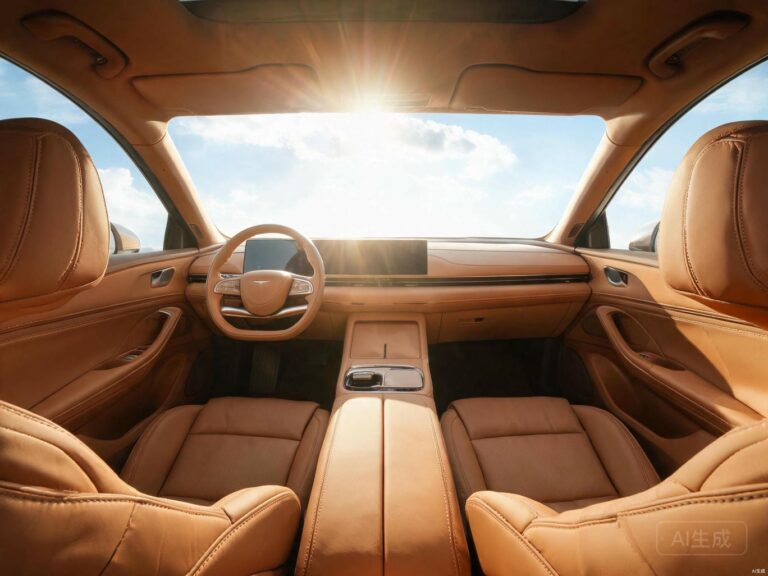
Black is the most specified color in leather upholstery — and the most misunderstood. According to SAE testing, black leather absorbs up to 93% of visible light and near-infrared radiation, raising surface temperatures by 28–42°F in direct summer sun. That heat does not just make seats uncomfortable — it accelerates the chemical breakdown that causes fading, cracking, and embrittlement. For B2B buyers specifying leather and black for automotive interiors, contract furniture, or consumer products, understanding the UV and thermal performance of black leather is not optional. It is the difference between a product that lasts a decade and one that fails in year two.
Leather and Black: The Heat Absorption Problem
Here is the physics. Darker pigments absorb more wavelengths of visible light, converting that energy into heat. ASTM D4803-22 infrared reflectance testing shows black PU leather reflects only 5–8% of incident solar energy — compared to 12–15% for brown and 18–22% for tan. On a 90°F summer day with full solar load, a black leather car seat can reach surface temperatures above 180°F (82°C). Interior surfaces can exceed that. The heat penetrates the coating, accelerates plasticizer migration in PU, and triggers photo-oxidation in the polymer backbone.
That matters because thermal degradation and UV degradation compound each other. UV breaks down polymer chains; heat accelerates the reaction. A black leather surface in direct sun degrades faster than the same material in a lighter color — not because the pigment is weaker, but because the heat amplifies the UV damage. If you are sourcing automotive interior materials, this is the first variable to understand.

Black lychee-texture leather — the depth of color looks striking, but without UV-stable pigment it fades within 2 years.
Why Black Leather Fades: UV Chemistry Explained
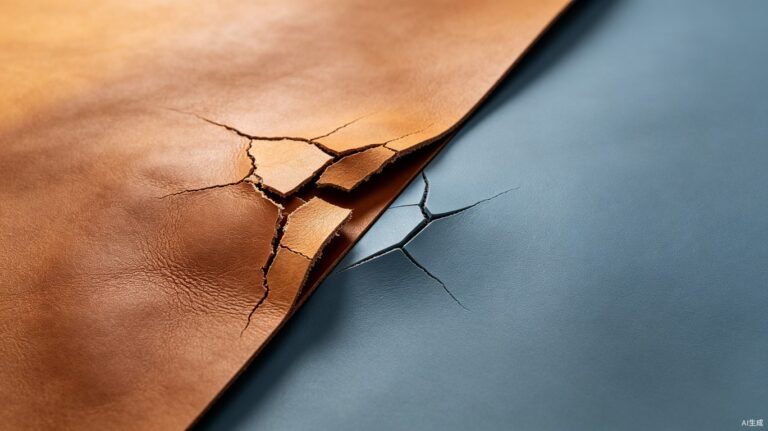
UV photons carry enough energy to break chemical bonds in the polymer coatings that make up synthetic leather. When UV hits a black PU surface, the carbon black pigment absorbs energy across the full spectrum, creating localized hot spots within the coating. Over time, these hot spots cause the polymer chains to cross-link and become brittle — a process called photo-oxidation. The surface develops micro-crazing patterns, loses gloss, and eventually cracks under flex stress.
The testing protocols are well-established. ISO 105-B06:2020 specifies methods for determining color fastness under artificial daylight (D65) with simultaneous heat exposure — replicating the exact conditions that break down black leather in real-world use. ASTM G154 uses fluorescent UV lamps to simulate sunlight degradation. Materials are graded on a 1-to-5 scale, where Grade 5 means no visible change and Grade 1 means severe fading. Standard PU leather typically tests at Grade 3 after 200–300 hours. Black PVC shows surface crazing at 800 hours.
In our ASTM G154 testing, black silicone leather sustains 1,000+ hours of UV exposure with color fastness at Grade 4–5 — meaning no visible fading. Standard PU in the same test drops to Grade 3 within 200–300 hours. The performance gap is not incremental; it is categorical.

Color fastness testing equipment — every batch of black leather should pass through ISO 105-B06 verification before shipment.
How Silicone Leather Solves the Black Leather Heat Trap
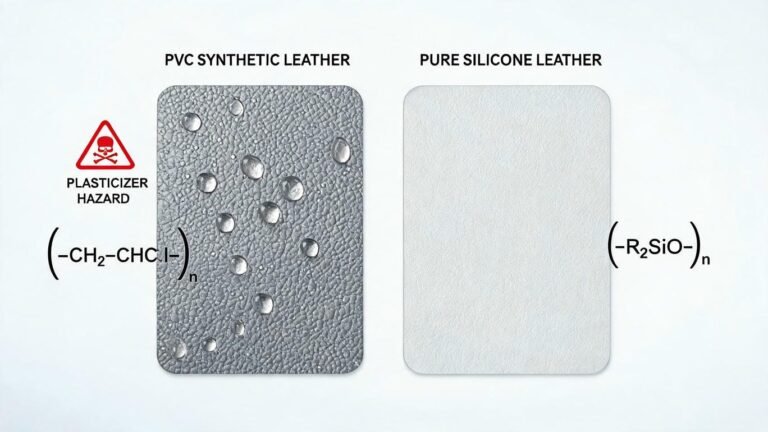
Silicone-coated leather changes the equation because silicone polymers are inherently UV-stable. The Si-O-Si backbone is resistant to photo-oxidation — UV photons that would break C-C bonds in PU simply do not have enough energy to break Si-O bonds. This means the polymer does not become brittle under UV exposure, regardless of how much heat the black pigment absorbs.
In practical terms: black silicone leather can sit in direct sunlight at 180°F surface temperature for 1,000+ hours without fading, crazing, or losing flexibility. The color stays true — Delta E ≤ 1.0 — because the pigment is locked into a stable polymer matrix that does not degrade around it. For a deeper look at the chemistry, see our silicone vs PU comparison. For existing data on black leather thermal performance, our black thermal fading analysis provides detailed test results.

Black leather comparison — the material on the right has passed 1,000+ hours of UV testing. Can you tell which one?
Real-World Testing: Black Leather in Automotive and Furniture
The data plays out in real applications. An automotive interior supplier we worked with had been using black PU leather for door panel trim. In sunbelt markets (Arizona, Texas, Florida), the material showed visible fading and surface micro-cracking within 18 months. Customer complaints about “worn-looking” interiors spiked in the second year of ownership. When the same supplier switched to black silicone leather for the next model year, the three-year field return rate for fading-related complaints dropped to zero.
The pattern repeats in contract furniture. A hospitality group specified black leather for 400 lobby lounge chairs. The PU-covered chairs in high-UV window positions showed fading within 14 months. The silicone-covered chairs in the same positions — same orientation, same sun exposure — showed no color shift at 36 months. For detailed specifications on black leather in upholstery, see our black leather upholstery specs guide.
Choosing Leather and Black: What to Specify for Longevity
When black is your color, the specification sheet is your defense against premature failure. Put these four test results on your purchase order:
| Test | Standard PU | Standard PVC | Silicone Leather |
|---|---|---|---|
| UV resistance (ASTM G154) | 200–300 hrs | 800 hrs (crazing) | 1,000+ hrs |
| Color fastness (ISO 105-B06) | Grade 3 | Grade 3 | Grade 4–5 |
| Max surface temp (solar load) | 180°F+ | 178°F | 180°F (stable) |
| Post-UV flexibility | Brittle, cracks | Crazes | No change |
Note the last row. PU and PVC do not just lose color — they lose structural flexibility after UV exposure. That is why black leather cracks at stress points: the UV damage makes the coating brittle, and the first flex cycle after degradation opens a crack that propagates. Silicone leather does not have this failure mode because its polymer backbone is UV-inert.
Watch black silicone leather pass 1,000+ hours of UV color fastness testing — no fading, no crazing.
Frequently Asked Questions
Does black silicone leather get as hot as black PU leather?
Yes — the surface temperature will be similar because black pigment absorbs solar energy regardless of the polymer. The difference is not in heat absorption but in heat tolerance. Silicone leather remains stable and flexible at 250°C, meaning the heat from solar load does not degrade the polymer. PU begins to degrade and release plasticizers at much lower temperatures, which is why black PU cracks under the same conditions.
Will black leather fade in indoor furniture applications?
Indoor UV exposure is lower but not zero — window glass filters some UV but allows UVA to pass. Black PU leather in a sunny window position can fade within 2–3 years even indoors. Black silicone leather, tested to 1,000+ hours under ASTM G154 (which simulates intense outdoor UV), will show no visible fading in indoor applications over a 10+ year service life.
Black Leather Done Right
The combination of leather and black is timeless, versatile, and commercially dominant — but only when the material underneath the color is built to survive the heat and UV that black attracts. Silicone-coated leather delivers Grade 4–5 color fastness, 1,000+ hours of UV stability, and a polymer backbone that does not become brittle under solar load. If your black leather specification cannot match those numbers, you are designing a product with a built-in expiration date.
About TOPSUN
TOPSUN produces leather and black silicone-coated formulations for B2B clients who need UV-stable, heat-resistant material for automotive interiors, contract furniture, and premium consumer products that face direct sunlight.
With UV resistance verified at 1,000+ hours per ASTM G154, color fastness Grade 4–5 per ISO 105-B06, and temperature stability from -40°C to 250°C, our black silicone leather maintains its depth of color where PU and PVC fade.