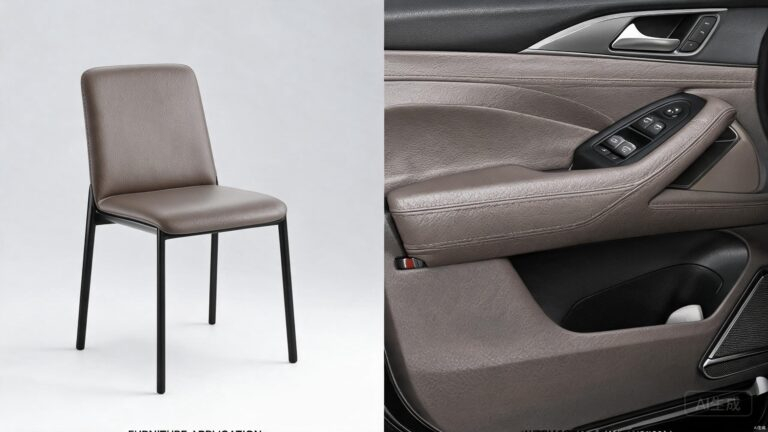
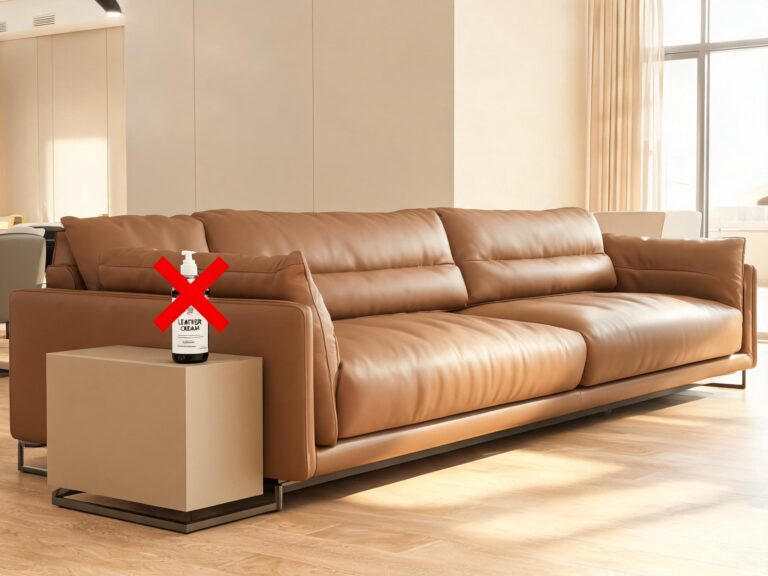
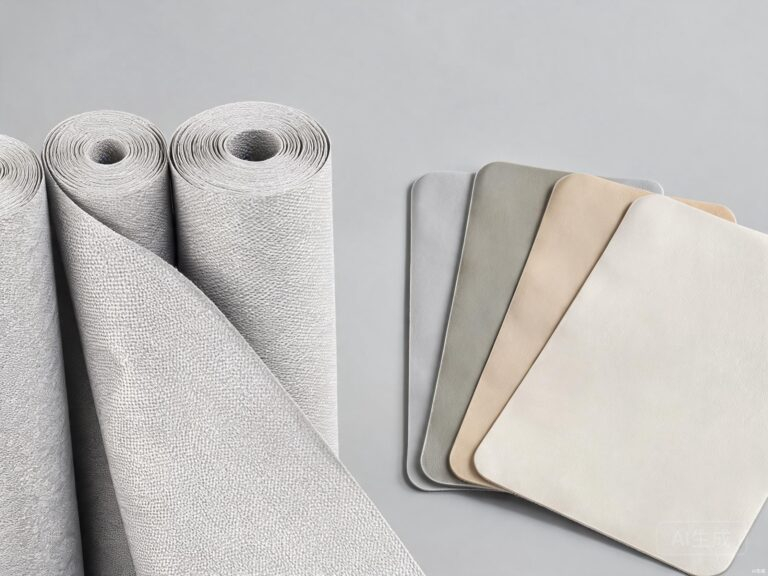
PU leather dominates the synthetic leather market. It is affordable, versatile, and available from hundreds of suppliers across Asia. Walk into any furniture showroom, automotive interior, or hotel lobby, and chances are you will find it. But here is the thing — the unit price only tells half the story.
In our experience working with sourcing teams from Europe and North America, we keep hearing the same frustrations. The PU leather looked perfect in samples. Six months later, the sofa seats are peeling. The car door panels are cracking in humid climates. The replacement cycle is far shorter than anyone projected.
This article breaks down the six problems with PU leather that procurement teams often discover too late — and what to look for instead.
Download Our Technical Data Sheet
1. PU Leather and Hydrolysis: The Silent Failure Mode
This is the single biggest issue with PU leather, and surprisingly few buyers know about it until it is too late.
Polyurethane contains ester linkages (R-COO-R’) in its polymer chain. These ester bonds react with water molecules — a chemical process called hydrolysis. In humid environments or when exposed to sweat, spills, and cleaning agents, these bonds gradually break down. The result? The PU coating loses adhesion, becomes brittle, and eventually peels off the base fabric.

We have seen this play out repeatedly. A hotel chain in Southeast Asia replaced all their lobby seating with PU-upholstered chairs. Within two years, the armrests were flaking. A furniture manufacturer in Southern Europe reported that sofa returns due to peaking jumped 40% during their humid summer season.
Key insight: Under ASTM D3690 accelerated aging conditions (70°C, 95% RH), conventional PU leather typically shows delamination within 3–4 weeks, while silicone-coated leather can endure 14+ weeks without any layer separation [1].
What does this mean for buyers? In tropical or coastal regions, expect a PU leather surface to start showing visible degradation within 2–3 years. In temperate climates, you might get 4–5 years if you are lucky. Either way, it falls well short of the 10+ year lifespan many projects require.
2. Short Lifespan Means Higher Long-Term Costs
PU leather is cheap per meter. That is its main selling point. But when you factor in replacement cycles, labor costs, and business disruption, the math changes quickly.
Consider a restaurant chain outfitting 200 booth seats. PU leather at $8/m² looks attractive. But if those seats need reupholstering every 3–4 years — fabric removal, disposal, new material, and skilled labor — the 12-year total cost often exceeds what a more durable material would have cost upfront. We have run these numbers internally: a material lasting 10–15 years can save 22% or more in total cost of ownership compared to one needing replacement every 3–4 years.
| Factor | PU Leather | Silicone Leather |
|---|---|---|
| Typical Lifespan | 3–5 years | 10–15 years |
| Abrasion (Martindale) | 30,000–80,000 cycles | 200,000+ cycles |
| Heat Resistance | Up to ~80°C | -40°C to 250°C |
| UV Stability | 300–500 hours | 2,000+ hours, no yellowing |
| 12-Year Replacements | 3 times | 0 times |
The point is not that PU leather is “bad.” It serves a purpose for short-cycle products like fashion accessories or event furniture. But for furniture and sofa applications where longevity matters, it can become the most expensive option on the table.
3. DMF Solvents and Tightening Environmental Regulations
Most PU leather is produced using DMF (dimethylformamide) as a solvent in the wet-coating process. DMF is effective — it dissolves polyurethane resin beautifully and evaporates during drying. The problem is what happens during production and after.
DMF is classified as a Substance of Very High Concern (SVHC) under the EU REACH regulation due to its reprotoxic properties [2][3]. The EU SVHC candidate list now exceeds 250 substances, and regulatory pressure on DMF continues to increase. Buyers sourcing PU leather for European markets are increasingly being asked to demonstrate DMF-free supply chains.

Beyond regulatory risk, DMF emissions during production create workplace safety concerns. Workers in PU coating facilities face exposure risks that require extensive ventilation and protective equipment. Water-based PU processes exist and are improving, but they still represent a minority of production capacity — and even water-based PU retains the fundamental ester-bond vulnerability to hydrolysis.
If your compliance team is already fielding questions about eco-friendly material options, PU leather’s reliance on DMF is worth a hard look. Solvent-free silicone coating processes eliminate this concern entirely.
4. VOC Emissions That Affect Indoor Air Quality
Even after the manufacturing process, PU leather can continue releasing volatile organic compounds (VOCs) — including residual DMF, formaldehyde, and other solvents — for weeks or months after installation. This is a particular concern for indoor applications.
Think about it. A hotel installs 500 PU-upholstered chairs in its ballroom. A hospital fits out waiting areas with PU-covered benches. An automotive OEM wraps door panels in PU synthetic leather. In each case, occupants are exposed to off-gassing in enclosed spaces.
For projects targeting green building certifications like LEED or BREEAM, VOC emission levels from upholstery materials directly impact credit eligibility. Sustainability-focused sourcing is no longer optional for many buyers — it is a contractual requirement.
Quick comparison: Solvent-based PU leather typically emits VOCs during and after production. Silicone leather, produced through a solvent-free dry-coating process, achieves zero VOC output — supporting both worker safety and end-user indoor air quality.
5. Poor Resistance to Common Chemicals
In real-world use, upholstery gets cleaned. A lot. Restaurant booths get wiped with alcohol-based sanitizers. Healthcare seating is disinfected with bleach solutions. Car interiors are treated with protectants and cleaning sprays.
PU leather handles none of these well. The same ester and urethane bonds that make PU susceptible to hydrolysis also make it vulnerable to chemical attack. Alcohol-based cleaners can cause surface dulling and cracking. Bleach accelerates degradation. Even mild detergents, when used repeatedly, can strip the surface finish.

We have heard from healthcare procurement teams that chemical resistance is now a non-negotiable requirement. If your material cannot withstand daily disinfection protocols, it simply will not make the spec sheet. This is one area where the gap between PU leather and alternatives like silicone-coated leather becomes painfully obvious — silicone resists alcohol, bleach, and most cleaning agents without surface degradation.
6. PU Leather Temperature Limits That Restrict Applications
PU leather starts to degrade around 80°C. That might sound like a high threshold, but it matters more than you think. A car dashboard in direct summer sun can reach 70–90°C. Heated car seats activate at 35–45°C but can spike higher near the heating elements.
On the cold end, PU leather becomes stiff and prone to cracking below -20°C. For automotive interior applications — where materials must perform from Scandinavian winters to Middle Eastern summers — this is a serious design constraint.
Silicone-based leather, by contrast, maintains flexibility and structural integrity from -40°C to 250°C. That is not a marginal improvement — it is a fundamentally different operating envelope that opens up applications PU leather simply cannot serve reliably.
See how silicone leather compares to PU and PVC across 8 key performance parameters
Frequently Asked Questions
Is PU leather the same as faux leather?
Not exactly. “Faux leather” is a broad umbrella term that includes PU leather, PVC leather, microfiber leather, and other synthetic alternatives. PU leather is one specific type of faux leather made with polyurethane coating. When someone says “faux leather,” they might mean PU — but they might also mean something else entirely. Always ask your supplier to specify the exact material composition.
Can hydrolysis-resistant PU leather solve the peeling problem?
Some manufacturers offer “hydrolysis-resistant” PU formulations, typically using polyester or polycarbonate-based polyols that are less vulnerable to moisture. These do perform better in accelerated aging tests. However, they still contain ester or urethane linkages that will eventually degrade — the question is “when,” not “if.” In our testing, even enhanced PU formulations show earlier failure than silicone-coated materials under equivalent conditions. If your project demands 10+ year durability in humid conditions, hydrolysis-resistant silicone leather remains the more reliable choice.
Is water-based PU leather a better environmental option?
Water-based PU eliminates DMF from the coating process, which is a meaningful improvement for worker safety and regulatory compliance. It also reduces VOC emissions. That said, the base polyurethane polymer still carries the same hydrolysis vulnerability and end-of-life challenges as solvent-based PU. It is a step forward, not a paradigm shift. For buyers pursuing comprehensive sustainability targets, the material’s entire lifecycle — production, use phase, and disposal — should be evaluated, not just the coating process.
What Smart Buyers Do Differently
None of this means PU leather has no place in the market. For disposable fashion, trade show displays, or budget-conscious short-term projects, it remains a practical choice. But for any application where durability, regulatory compliance, and total cost of ownership matter — automotive interiors, hospitality furniture, healthcare seating, marine environments — the hidden problems of PU leather can become very visible, very fast.
The smartest sourcing teams we work with do not just compare price per meter. They ask about accelerated aging test results, chemical resistance specs, VOC emission data, and expected replacement intervals. They look at the 10-year cost, not just the first-order cost.
If you are evaluating PU leather for a project where long-term performance matters, we would be happy to share our test data and let you compare it side by side with silicone-coated alternatives. Sometimes seeing the numbers changes the decision.
Talk to Our Material Engineers
About TOPSUN
TOPSUN is a specialized manufacturer of silicone leather, serving B2B buyers across automotive, furniture, marine, medical, and consumer applications. Our factory operates solvent-free dry-coating production lines with full OEM/ODM capability.
Relevant certifications: FDA 21 CFR 177.2600, ISO 10993-5 biocompatibility, REACH compliant, RoHS compliant, OEKO-TEX Standard 100.