Most materials fail at the extremes. Polyurethane leather hydrolyzes. PVC leather plasticizes and cracks. Genuine leather shrinks and hardens. But heat-resistant silicone leather operates comfortably in a temperature window that spans nearly 300 degrees — from -50°C to 250°C. That’s not a marketing claim; it’s a consequence of silicon-oxygen chemistry. For automotive engineers designing EV battery compartments, for industrial equipment manufacturers specifying control panel covers, and for Tier-1 suppliers chasing next-generation OEM contracts, this thermal stability is the difference between a material that works and one that doesn’t. Here’s a technical deep dive into what makes silicone heat resistant, how it’s tested, and where it delivers the most value.
Talk to Our Engineers About Heat-Resistant Solutions
The Chemistry of Heat Resistance: Why Silicone Doesn’t Break Down
To understand why silicone leather is heat resistant, you need to look at the molecular level. The backbone of silicone polymer is a chain of alternating silicon and oxygen atoms (Si-O-Si), with organic methyl groups (CH₃) attached to the silicon. The Si-O bond has a bond dissociation energy of approximately 452 kJ/mol, compared to roughly 348 kJ/mol for the C-C bonds in organic polymers like polyurethane and PVC.
That 30% difference in bond energy is the entire story. It means the molecular backbone of silicone leather resists thermal degradation at temperatures where carbon-based polymers are already breaking down. When PU leather reaches 80-100°C, its polymer chains start fragmenting — the material becomes sticky, discolored, and structurally compromised. Silicone leather at 200°C? It’s still stable. Still flexible. Still performing.
This also explains silicone’s cold resistance. The Si-O-Si backbone remains flexible at temperatures where organic polymers become rigid and brittle. While PVC leather stiffens at 5°C and cracks at -10°C, silicone leather maintains its flexibility down to -50°C. For automotive interior applications in cold climates, this is a critical safety feature — cracked door panels and shattered seat covers are warranty disasters.

Flame Retardant Standards: A Global Compliance Map
Heat resistance is one thing. Flame retardancy is another — and it’s the one that regulators care about. Different markets impose different flammability standards on interior materials, particularly in transportation applications. Here’s what procurement teams need to know:
| Standard | Region | Application | Key Requirement | Silicone Leather Status |
|---|---|---|---|---|
| FMVSS 302 | USA | Automotive interiors | Burn rate <102 mm/min | Passes (self-extinguishing) |
| EN 13773 Class 4 | EU | Textiles and upholstery | Highest classification | Certified (SGS) |
| FAR 25.853 | USA/International | Aircraft interiors | Burn length <8 inches | Certified (3.8-4.2 in.) |
| GB 8410 | China | Automotive interiors | Equivalent to FMVSS 302 | Compliant |
| IMO FTP Code | International | Marine interiors | Parts 5 & 6 (surface flammability) | SOLAS compliant |
The key advantage of silicone leather in flame retardant applications is that its fire resistance is inherent to the material, not achieved through additive chemicals. The NHTSA continues to enforce FMVSS 302 as the minimum safety standard for all vehicles sold in the United States, and materials that meet this standard without halogenated additives are increasingly preferred by OEMs seeking to simplify their compliance documentation. Traditional flame-retardant treatments for PU and PVC involve halogenated compounds (brominated or chlorinated flame retardants) that are themselves facing regulatory restriction. Silicone’s natural flame resistance — derived from the silicon-oxygen backbone — eliminates the need for these additives entirely. For more on flame retardant leather for public spaces, see our dedicated guide.
Technical note: When silicone leather burns, it produces primarily silicon dioxide (SiO₂, essentially sand) and carbon dioxide — no toxic halogen gases, no dioxins, no furans. This low-smoke, low-toxicity combustion profile is a significant safety advantage in enclosed spaces like aircraft cabins, train carriages, and building interiors.
Automotive Applications: Where Heat Resistance Becomes a Requirement
The automotive industry is the largest consumer of heat-resistant silicone leather, accounting for approximately 42% of the global silicone synthetic leather market. The reasons go beyond surface temperature concerns:
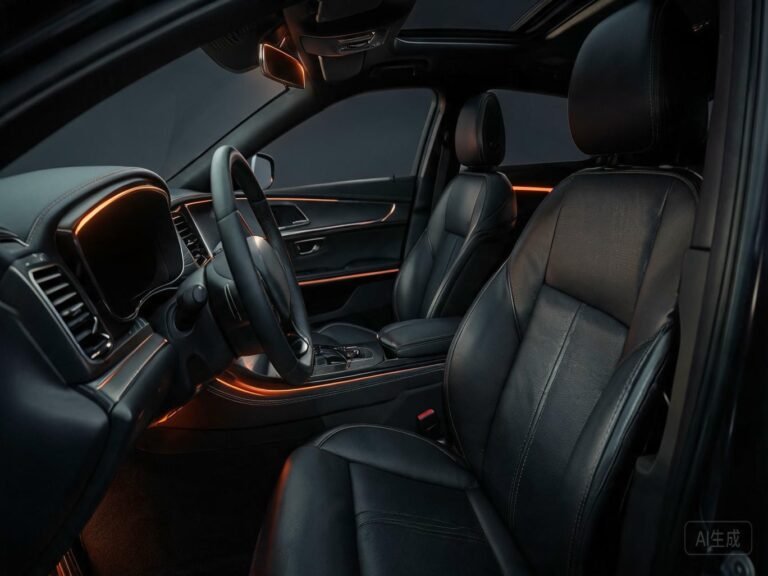
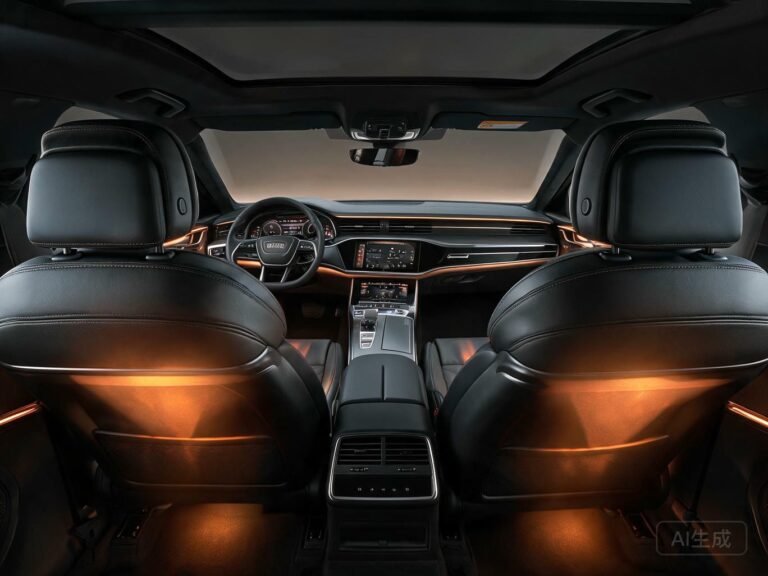
Dashboard and Instrument Panel Covering. A car dashboard parked in direct sunlight can reach 90°C in summer. Traditional PVC and PU leather warp, discolor, and off-gas VOCs at these temperatures. Silicone leather maintains dimensional stability and near-zero VOC emissions across the full temperature range. For EV manufacturers, whose buyers are particularly sensitive to cabin air quality, this is a compelling differentiator.
Seat Upholstery. Automotive seating accounts for 52% of the interior leather market. Silicone leather car seats combine heat resistance with the durability and cleanability that OEMs demand. The material doesn’t get uncomfortably hot in summer or stiff in winter — a practical comfort advantage that’s difficult to quantify but easy to experience.
EV Battery Compartment Insulation. This is a newer application driving significant growth. EV battery packs generate substantial heat during fast charging and high-load operation. Silicone leather’s thermal stability and inherent flame retardancy make it suitable for battery compartment covers and thermal barriers. The global EV interior materials market is projected to reach $10.35 billion by 2031, and silicone leather is positioned to capture a growing share.
The 2026 automotive interior trends point toward sustainable, lightweight, and multi-functional materials — all areas where silicone leather has a natural advantage. As OEMs accelerate their transition to EV platforms, the material requirements for interior components are becoming more demanding, not less.
Industrial Applications: Beyond the Passenger Cabin
While automotive drives the volume, industrial applications showcase the full range of silicone leather’s heat-resistant capabilities:
Railway and Mass Transit. Train and metro interiors must meet stringent fire safety standards (EN 45545 in Europe, NFPA 130 in the US). These standards test not just flammability but smoke density and toxicity — areas where silicone leather’s clean combustion profile provides a decisive advantage over halogenated alternatives. The material also withstands the heavy wear and aggressive cleaning regimens typical of mass transit environments.
Industrial Equipment Covers and Seating. Factory floors, control rooms, and heavy machinery operator stations present a unique combination of challenges: high ambient temperatures, chemical exposure, and continuous use. Silicone leather’s resistance to oils, solvents, and cleaning agents makes it suitable for these environments where standard upholstery would fail within months.
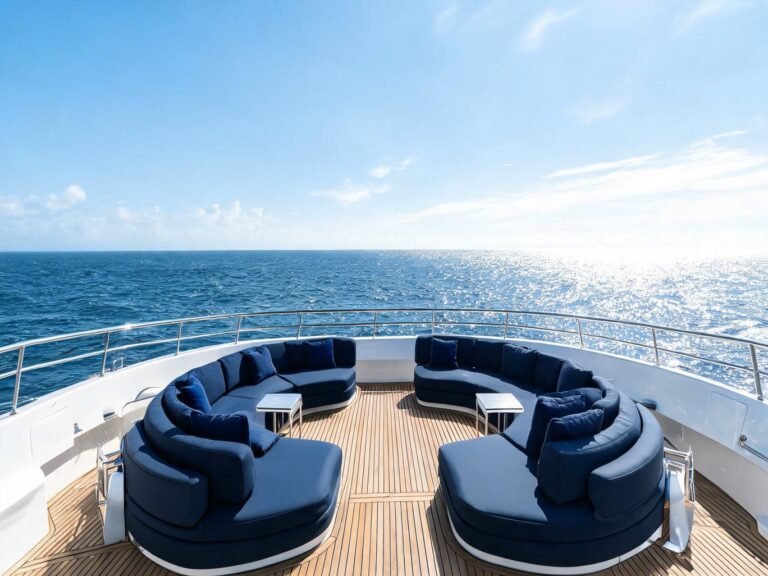
Marine and Offshore. The combination of heat, UV, salt spray, and humidity makes marine environments exceptionally demanding. Silicone leather’s 500+ hour salt spray rating, Grade 4+ UV resistance, and SOLAS compliance position it as the material of choice for yacht interiors, cruise ship furnishings, and offshore platform accommodations.
What to Look for in a Heat-Resistant Silicone Leather Supplier
Not all silicone leather is created equal. The heat-resistant properties depend on the specific formulation, the quality of the raw silicone, and the manufacturing process. When evaluating suppliers, here’s what to demand:
1. Third-party thermal aging test reports. Ask for data on tensile strength retention after thermal aging at the temperatures relevant to your application. A quality silicone leather should retain 85%+ of its tensile strength after 3,000 hours at 150°C.
2. Flammability certifications specific to your market. Don’t accept a generic “flame retardant” claim. Demand the specific test report (FMVSS 302, EN 13773, FAR 25.853, etc.) from an accredited third-party laboratory like SGS, Intertek, or TUV Rheinland.
3. Cold flexibility data. Heat resistance is only half the story. If your application involves cold climates or cold storage, request cold crack resistance data. Silicone leather should remain flexible to at least -30°C, with premium formulations reaching -50°C.
4. Low-fogging certification. For automotive interiors, fogging (the condensation of volatile compounds on the windshield) is a critical quality metric. Request fogging test results per ISO 6452 or DIN 75201. Silicone leather’s near-zero VOC profile naturally results in low fogging values.
Frequently Asked Questions
What temperature can silicone leather withstand?
Silicone leather maintains full performance characteristics from -50°C to 250°C. At the low end, it remains flexible and crack-resistant. At the high end, it maintains dimensional stability and does not melt, deform, or release significant VOCs. Continuous use at 200°C is feasible; intermittent exposure to 250°C is acceptable. Above 300°C, silicone begins to degrade, though it does not support combustion.
Is silicone leather inherently flame retardant, or does it need additives?
Silicone leather is inherently flame retardant due to its silicon-oxygen molecular backbone. It does not require halogenated flame retardants (brominated or chlorinated compounds) that are used in PU and PVC leather. When exposed to flame, silicone leather forms a silica (SiO₂) char layer that acts as a thermal barrier and does not produce toxic halogen gases. This inherent property is a significant advantage for compliance with tightening fire safety regulations.
What is the difference between FMVSS 302 and UL 94 for automotive materials?
FMVSS 302 is the specific US federal standard for automotive interior materials, measuring horizontal burn rate (must be below 102 mm/min). UL 94 is a broader plastics flammability standard used across industries. While they test different aspects, a material that achieves UL 94 V-0 (self-extinguishing within 10 seconds) typically performs well on FMVSS 302. Silicone leather generally passes both standards without additional flame retardant treatment.
Heat Resistance Is the Entry Point, Total Performance Is the Value
Heat-resistant silicone leather isn’t just about surviving high temperatures — it’s about what that thermal stability enables. A material that doesn’t degrade at 200°C also doesn’t off-gas VOCs in a hot car. It doesn’t become brittle in a cold climate. It doesn’t need flame retardant additives that might themselves be regulated tomorrow. The heat resistance is the headline, but the real value is in the total performance package: thermal stability, chemical resistance, UV resistance, and regulatory compliance — all derived from the same silicon-oxygen chemistry.
For automotive OEMs, industrial equipment manufacturers, and transportation specifiers, the question is increasingly not “Is silicone leather heat resistant enough?” but “Can we afford to use a material that isn’t?” As thermal management becomes more critical — in EVs, in high-speed rail, in offshore applications — the materials that can handle the heat will define the next generation of interior design.
Request Technical Data & Test Reports
About TOPSUN
TOPSUN manufactures heat-resistant silicone leather certified to FMVSS 302, EN 13773 Class 4, FAR 25.853, and IMO FTP Code standards. With 233 patents, 3 production bases, and in-house R&D capabilities, we provide customized solutions for automotive, industrial, railway, marine, and aerospace applications. Annual capacity: 6 million meters.
Certifications: ISO 10993-5 | REACH (247+7 SVHC) | FDA 21 CFR 175.300 | PAHs | EN 13773 Class 4 | FAR 25.853