Six months on a yacht deck, and the cushions already look older than the boat. That chalky film on the surface, the hairline cracks along the seams, the color that was “navy blue” and is now “faded denim” — that’s UV damage, and it’s the number one reason outdoor and marine upholstery gets replaced. The frustrating part: most of that damage is preventable if the material was specified correctly from the start. UV resistant leather isn’t a coating you add — it’s a chemistry you choose.
How PU and PVC Leather Try to Resist UV — and Why They Fail
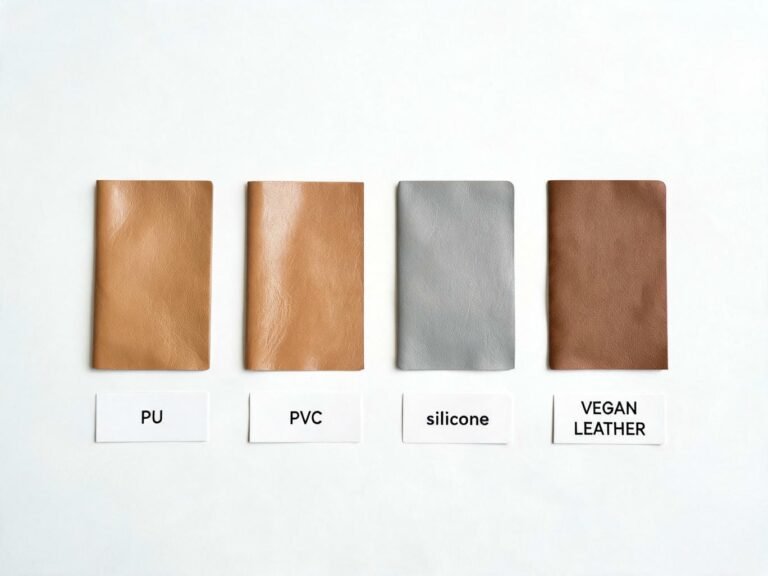
Conventional synthetic leather doesn’t start out UV-resistant. PU and PVC achieve temporary UV protection through chemical additives — most commonly UV-1 (a benzotriazole ultraviolet absorber) mixed into the topcoat. These absorbers work by absorbing UV radiation and dissipating it as harmless heat before it can break down the polymer chains.
The problem: UV absorbers are not permanent. They migrate to the surface, wash off with rain and cleaning, and degrade under continuous UV exposure themselves. Within 12–18 months of outdoor use, the UV-1 concentration in a PU leather topcoat drops below the threshold needed for protection. After that, the polymer is fully exposed — and the degradation cascade begins:
- Months 1–6: UV absorbers actively protecting the surface. Color is stable. No visible change.
- Months 6–12: Absorber concentration declining. Minor color shift begins (ΔE 1.5–3.0). Surface still intact.
- Months 12–18: Absorber depleted below protective threshold. Visible fading, surface chalkiness, first micro-cracks appear along stress points.
- Months 18–24: Polymer chain breakdown accelerates. Cracking, peeling, and color shift exceeding ΔE 5.0 — the point where consumers perceive a clear quality failure.
This is why “UV resistant” PU leather marketed for outdoor and marine use often disappoints within two years. The protection was real — it was just temporary. The material was never inherently UV-stable; it was coated with something that was.

Thermal stability test — silicone leather’s polymer backbone withstands heat and UV without additive depletion.
UV Resistant Leather: Why Silicone Is Different
Silicone leather doesn’t need UV absorbers because its polymer backbone is inherently UV-stable. The difference is molecular. PU and PVC are carbon-based polymers (C–C bonds, bond energy ~347 kJ/mol). UV radiation in the 290–400 nm range carries enough energy to cleave C–C bonds, initiating the degradation cascade described above. Silicone’s backbone is built on silicon-oxygen bonds (Si–O bonds, bond energy ~452 kJ/mol) — significantly higher energy than the UV photons can deliver.
In practical terms: UV radiation hits silicone leather and is absorbed and dissipated without breaking any molecular bonds. No bond cleavage means no chain scission, no oxidation, no chalky surface, no color shift. The UV resistance is permanent because it’s built into the material’s structure — not sprayed on top of it.
In our accelerated weathering tests, TOPSUN’s silicone leather samples maintained Grade 4-5 color fastness after 1,000+ hours of ASTM G154 exposure — with zero cracking, zero chalking, and zero plasticizer migration. The color you approve is the color you get, whether it’s year one or year ten on the deck.

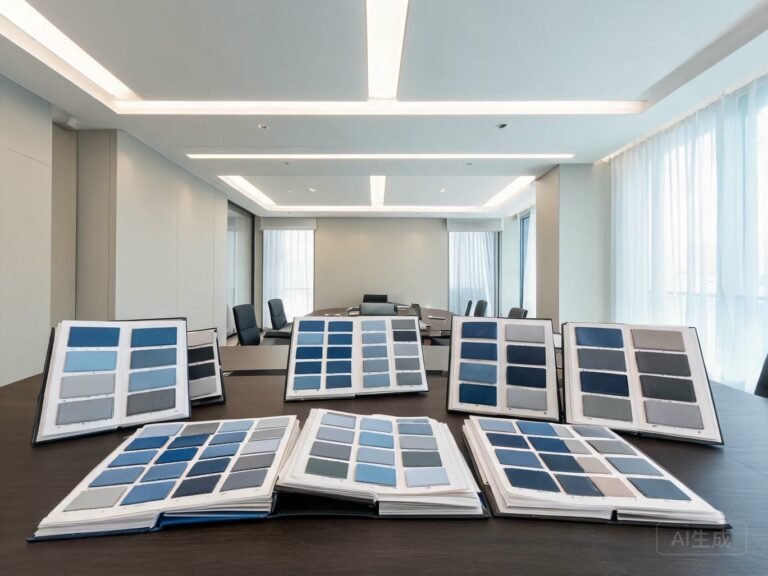
Light blue silicone leather retains its color after UV testing — no fading, no chalking, no surface degradation.
ASTM G154 Testing: What the Numbers Actually Mean
When a supplier claims “UV resistant,” the next question should be: tested to what standard, for how many hours, and with what result? ASTM G154 is the most widely accepted accelerated weathering standard for non-metallic materials. It uses fluorescent UV lamps to simulate sunlight and condensation cycles to simulate moisture — compressing years of outdoor exposure into weeks of lab testing.
Here’s how the three most common synthetic leather types perform under ASTM G154:
| Material | UV Mechanism | Outdoor Lifespan | After 1,000h G154 |
|---|---|---|---|
| PU leather | UV-1 absorber additive | 1–2 years | Faded, cracked |
| PVC leather | UV stabilizer + plasticizer | 2–3 years | Yellowed, brittle |
| Silicone leather | Inherent Si–O bond stability | 10+ years | No visible change |
The evaluation criteria after testing are color fastness (Grey Scale grade, per ISO 105-A02) and visual assessment of cracking, peeling, and chalking. Grade 5 means no change; Grade 1 means severe change. TOPSUN’s silicone leather tests at Grade 4-5 — the highest rating — after 1,000+ hours. PU leather typically drops to Grade 2-3 after the same exposure.
Specification tip: When sourcing UV resistant leather, require ASTM G154 test results with specific exposure hours, Grey Scale grade, and Delta E measurement. “UV resistant” without test data is a marketing claim, not a material specification.

High-temperature curing oven — silicone leather’s thermal stability is established during production, not added later.
UV Resistant Leather for Outdoor and Marine Use
UV damage doesn’t happen in isolation. In outdoor and marine environments, leather faces a combination of UV radiation, salt spray, humidity cycling, and temperature extremes. A material that resists UV but fails on salt spray — or vice versa — still needs replacing within a few seasons.
Silicone leather is one of the few materials that handles all four degradation vectors simultaneously:
- UV radiation: 1,000+ hours, Grade 4-5 color fastness (ASTM G154)
- Salt spray: 1,000+ hours with zero corrosion or surface degradation (ISO 9227)
- Hydrolysis: No water absorption, no hydrolytic degradation — water beads off the non-porous surface
- Temperature: Stable from -40°C to 250°C — no cracking in winter, no softening in direct sun
For applications like yacht deck seating, outdoor patio furniture, and marine interior upholstery, this multi-vector resistance means the material specified today will still look right in five years — not five months. One of our salt spray test records documents a marine client that reported after switching from marine-grade PVC to silicone leather on their flybridge seating, the cushions were still in serviceable condition after 4 years of year-round Mediterranean sun exposure — versus the 18-month replacement cycle they had been budgeting for.

UV curing technology and outdoor silicone leather — the material handles UV exposure from both the production process and real-world conditions.
Outdoor weather resistance testing — how silicone leather performs under combined UV, salt spray, and temperature cycling.
Frequently Asked Questions
How long does UV resistant silicone leather last outdoors?
In real-world outdoor and marine environments, TOPSUN’s silicone leather maintains its appearance for 10+ years. In accelerated ASTM G154 testing, the material shows no visible color shift, cracking, or surface degradation after 1,000+ hours of exposure — which correlates to approximately 5–7 years of continuous outdoor sun in temperate climates, and 3–5 years in high-UV tropical or equatorial zones.
What’s the difference between UV absorbers and inherent UV resistance?
UV absorbers are chemical additives (like UV-1 benzotriazole) mixed into the topcoat of PU and PVC leather. They absorb UV radiation and dissipate it as heat — but they migrate, wash off, and degrade over 12–18 months, leaving the underlying polymer unprotected. Inherent UV resistance means the material’s molecular structure itself resists UV damage. Silicone’s Si–O bonds (452 kJ/mol) are too strong for UV photons to cleave, so the protection is permanent — it doesn’t deplete, migrate, or wear off.
Chemistry Is the Specification
UV resistant leather is either permanent or temporary — and the difference is entirely molecular. PU and PVC leather resist UV until their absorber additives deplete, typically within 18 months of outdoor exposure. Silicone leather resists UV because its Si–O backbone is too strong for UV radiation to damage — and that resistance doesn’t deplete, migrate, or wear off. For outdoor, marine, and high-sun-exposure applications, specifying a material with permanent UV resistance eliminates the replacement cycle that turns a “good price per meter” into a high cost per year of service.
About TOPSUN
TOPSUN manufactures UV resistant silicone leather for outdoor furniture, marine upholstery, and architectural applications where prolonged sun exposure is unavoidable.
1,000+ hour UV resistance per ASTM G154 · Salt-spray resistant 1,000+ hours per ISO 9227 · -40°C to 250°C thermal stability · Grade 4-5 color fastness · Zero plasticizer migration