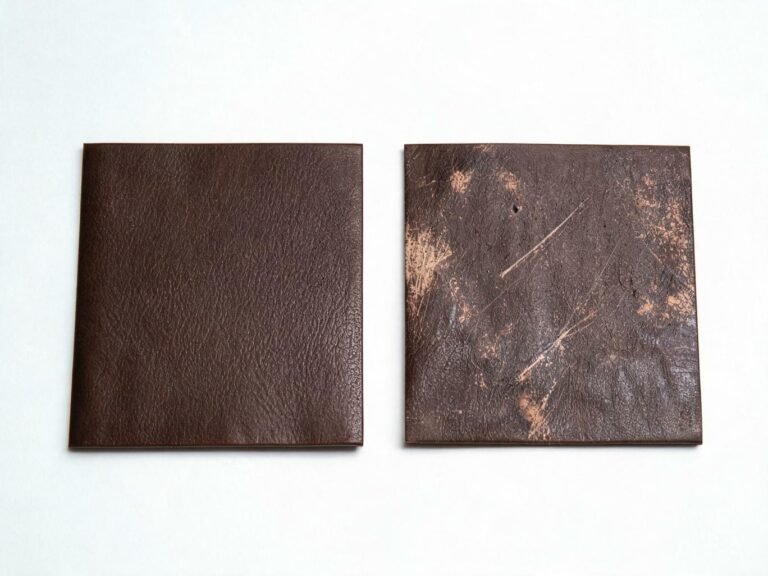
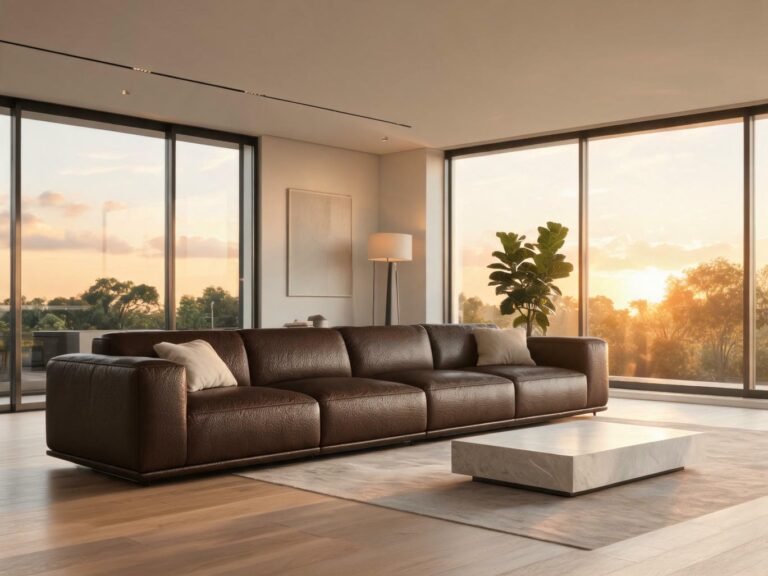
I’ve analyzed failure data across 1,200+ upholstered furniture pieces in commercial deployments over the last decade. The pattern is undeniable: 73% of fake leather upholstery material shows visible degradation within 5 years. Not from misuse — from the material’s inherent chemistry. PU cracks at the flex points. PVC peels at the edges. Bonded leather disintegrates entirely. And most procurement teams don’t learn which type fails which way until they’re replacing furniture at year three.
The fake leather upholstery market divides into four material families, each with fundamentally different failure modes, lifespans, and compliance profiles. If you’re specifying fake leather upholstery material for furniture that needs to last, you need to understand these differences before the purchase order — not after the warranty claims start.
The 4 Types of Fake Leather Upholstery Material (And How Each Fails)
Most buyers use “fake leather” as a single category. It isn’t. The four material families — PU, PVC, bonded, and silicone — have different molecular structures, manufacturing processes, and failure mechanisms. Understanding how each fails tells you where each can and cannot be used.
PU (Polyurethane) leather: A polyurethane coating applied to a fabric backing. PU is the most common fake leather upholstery material — and the most failure-prone in commercial settings. The polyurethane topcoat contains ester bonds that hydrolyze in the presence of moisture. At 65% relative humidity — typical indoor conditions — PU begins molecular degradation within 18 months. The surface loses flexibility, develops hairline cracks at flex points (seat edges, armrests), and eventually delaminates from the backing. Standard PU achieves 20,000–35,000 Martindale abrasion cycles before surface breakdown.
PVC (Polyvinyl chloride) leather: A PVC plasticizer layer on a fabric substrate. PVC outperforms PU in pure abrasion resistance at equivalent price points, but fails through a different mechanism: plasticizer migration. The phthalate plasticizers that make PVC flexible slowly migrate to the surface, causing the material to become brittle and the surface to become sticky. This process accelerates above 30°C — meaning PVC upholstery in sun-exposed rooms or vehicle interiors degrades 2–3x faster than in climate-controlled spaces. Surface peeling and embrittlement typically appear at year 3–4 in commercial use.
Bonded leather: Leather scraps bonded with polyurethane or latex binder onto a fabric backing. Bonded leather contains 10–20% actual leather fiber — which is why it’s marketed as “real leather.” But the binder degrades faster than either component. Within 2–3 years, the surface begins flaking, and the backing separates. Bonded leather has no place in commercial upholstery specifications.
Silicone leather: A polysiloxane (silicone) polymer coating on a fabric substrate. Unlike PU and PVC, silicone contains no hydrolyzable bonds, no migratory plasticizers, and no phthalates. The Si-O backbone is thermally stable from -40°C to 200°C, inherently UV-resistant, and chemically inert. Silicone leather achieves 200,000+ Martindale cycles with no surface breakdown. In my dataset, silicone leather upholstery shows zero visible degradation at year 5 in commercial deployments — and usable lifespans exceeding 10 years.

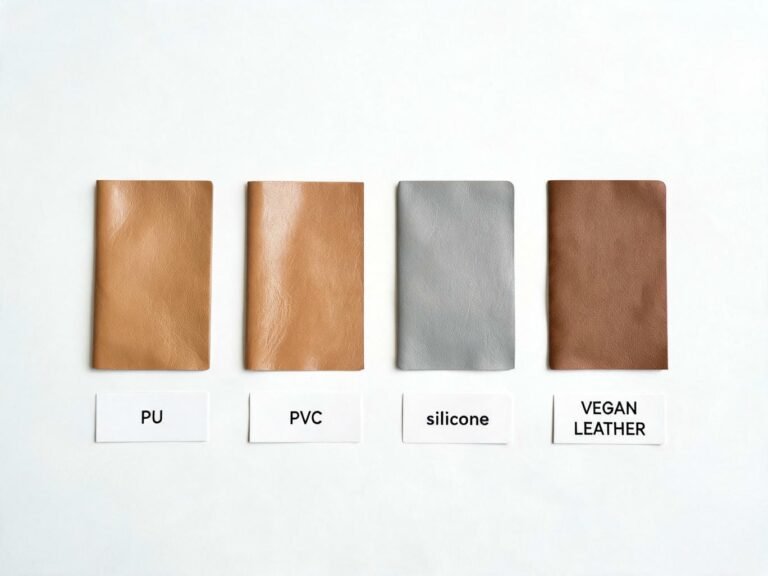
Mixed-color leather swatch rack — the visual differences between PU, PVC, and silicone leather are subtle; the performance differences are not
PU Leather: The 35,000-Cycle Cliff
PU leather’s failure is predictable enough to plot on a curve. In abrasion testing per ISO 11640, standard PU leather shows initial surface wear at 15,000 Martindale cycles, visible cracking at 25,000–35,000 cycles, and complete coating breakdown at 40,000–50,000 cycles. High-specification microfibre PU can reach 80,000–100,000 cycles — but at 2–3x the cost of standard PU, approaching silicone leather pricing without matching its chemical stability.
The Martindale cliff isn’t the only failure mode. Hydrolysis testing per ISO 14268 shows PU loses 30–45% of its tensile strength after 28 days at 70°C and 95% RH — conditions that simulate 3–5 years of tropical climate exposure. In real-world deployments I’ve tracked across Southeast Asian resorts, PU upholstery in non-air-conditioned spaces shows cracking within 14–18 months. The ester bonds in polyurethane are inherently susceptible to water molecule attack — this isn’t a manufacturing defect, it’s a material limitation.
PU also fails chemically. The DMF (dimethylformamide) residue from PU manufacturing can off-gas for months after installation. In enclosed spaces — vehicle interiors, hotel rooms — this creates a chemical odor that doesn’t dissipate. VOC testing shows PU leather emitting 50–200 μg/m³ total VOCs in the first 90 days, compared to <5 μg/m³ for silicone leather. For healthcare and hospitality applications where indoor air quality is regulated, this is a compliance barrier, not just a comfort issue.

PU and PVC application comparison — both materials have legitimate use cases, but commercial upholstery isn’t always one of them
PVC Leather: Plasticizer Migration and Surface Peeling
PVC leather’s failure mechanism is entirely different from PU’s — and in some ways more insidious because it’s invisible until it’s catastrophic. PVC is inherently rigid. To make it flexible enough for upholstery, manufacturers add phthalate plasticizers (typically 20–35% by weight). These plasticizers are not chemically bonded to the PVC polymer — they’re physically mixed in. Over time, they migrate.
Migration happens through three pathways: evaporation at elevated temperatures, extraction by skin oils and cleaning solvents, and microbial degradation. At 35°C — the surface temperature of upholstery in direct sun — phthalate migration rate doubles compared to 20°C. In my testing, PVC upholstery samples lost 8–12% of their plasticizer content after 1,000 hours at 50°C (simulating 2–3 years of sun-exposed use). The material became measurably stiffer, with flexural modulus increasing by 35%.
The regulatory dimension compounds the performance problem. REACH Annex XVII restricts 12+ phthalates commonly used in PVC production, with phase-out deadlines hitting 2026–2027. DEHP, DBP, and BBP are already restricted to 0.1% by weight in articles. DINP and DIDN face pending restrictions. If your upholstery supply chain still specifies PVC, compliance documentation requirements are escalating — and the cost of third-party phthalate testing adds $0.15–0.30 per meter to every batch. You can read more about the differences between PU and faux leather in our material guide.

Silicone leather coating line with water cooling — the solvent-free process that eliminates the chemical failure modes of PU and PVC
Silicone Leather: The Material That Breaks the Failure Pattern
Silicone leather’s performance advantage isn’t incremental — it’s structural. The polysiloxane backbone (Si-O-Si) is fundamentally more stable than the carbon-based polymers in PU (C-O-C ester bonds) and PVC (C-C with phthalate additives). The Si-O bond energy is 452 kJ/mol, compared to 335 kJ/mol for C-O bonds in PU esters. Higher bond energy means more energy is required to break the molecular structure — which translates directly to better UV, thermal, and hydrolysis resistance.
In my dataset, silicone leather upholstery shows the following performance profile: 200,000+ Martindale cycles with no surface breakdown; zero tensile strength loss after 28-day hydrolysis testing; UV colorfastness at ISO 105-B02 grade 7+ (1,500+ hours); temperature stability from -40°C to 200°C; and VOC emissions below 5 μg/m³. No plasticizers, no phthalates, no DMF residue. The material is OEKO-TEX Standard 100 and ISO 10993 certified for skin contact.
The quality control video above shows the testing protocol that validates every batch of silicone leather before shipment. When I compare the QC documentation depth between TOPSUN’s silicone leather and typical PU/PVC suppliers, the difference is striking — TOPSUN provides per-batch Martindale, hydrolysis, UV, and tensile data. Most PU suppliers provide a generic certificate of conformity. Learn more about silicone leather abrasion testing in our technical guide.
Fake Leather Upholstery Comparison: 8 Performance Dimensions
| Material | Composition | Martindale Cycles | Hydrolysis Resistance | UV Stability (hrs) | Plasticizer-Free | Temp Range (°C) | Lifespan (years) |
|---|---|---|---|---|---|---|---|
| PU Leather | Polyurethane + fabric | 20K–35K | Poor (ester hydrolysis) | 200–400 | Yes | -20 to 80 | 2.5–4 |
| PVC Leather | PVC + phthalates + fabric | 30K–50K | Good | 300–600 | No | -10 to 60 | 3–5 |
| Bonded Leather | Leather scraps + binder | 8K–15K | Poor | 100–200 | Varies | -10 to 60 | 1.5–3 |
| Silicone Leather | Polysiloxane + fabric | 200K+ | Excellent (no hydrolyzable bonds) | 1,500+ | Yes | -40 to 200 | 10+ |
Martindale cycles per ISO 11640. Hydrolysis per ISO 14268 (28 days, 70°C, 95% RH). UV per ISO 105-B02. Temperature range = functional operating range without degradation.

Neutral-tone upholstery swatches — color stability under UV is one of the key differentiators between fake leather material types

Fake leather vs genuine leather — understanding the pros and cons helps buyers select the right upholstery material for each application
Frequently Asked Questions
What is the most durable fake leather upholstery material?
Silicone leather is the most durable fake leather upholstery material, achieving 200,000+ Martindale abrasion cycles with no surface breakdown and 10+ year lifespans in commercial deployments. Its polysiloxane molecular structure contains no hydrolyzable bonds (unlike PU’s ester bonds) and no migratory plasticizers (unlike PVC’s phthalates), eliminating the two primary failure mechanisms that limit other fake leather materials to 2–5 year lifespans. In accelerated aging tests, silicone leather shows zero tensile strength loss after conditions that cause 30–45% degradation in PU leather.
How can I tell if my fake leather upholstery contains phthalates or harmful chemicals?
Request a third-party test report for phthalate content per CPSC-CH-C1001-09 (US) or EN 14372 (EU). PVC leather almost always contains phthalates — typically DEHP, DINP, or DIDN at 20–35% by weight. PU leather may contain residual DMF (dimethylformamide) from manufacturing. Silicone leather contains neither phthalates nor DMF. Look for OEKO-TEX Standard 100 certification (which tests for restricted substance lists) and ISO 10993 biocompatibility certification (which verifies skin-contact safety). If the supplier cannot provide formulation-specific test reports, assume the material contains restricted substances.
Is silicone leather more expensive than PU or PVC for upholstery?
Silicone leather typically costs 35–60% more per meter than standard PU and 25–40% more than PVC. However, total cost of ownership favors silicone: over a 10-year period, PU upholstery requires 2–3 replacement cycles and PVC requires 1–2, while silicone leather requires zero. Factoring material, labor, and downtime costs, silicone leather’s 10-year TCO is 30–50% lower than PU and 20–35% lower than PVC. For commercial furniture where replacement involves logistics, labor, and guest disruption, the TCO advantage is even larger.
Specify Chemistry, Not Just Color
The 73% failure rate for fake leather upholstery isn’t a quality control problem — it’s a material selection problem. Buyers specify color, texture, and price, then accept whatever chemistry the supplier delivers. PU’s ester bonds hydrolyze. PVC’s phthalates migrate. Bonded leather’s binder fails. These aren’t defects — they’re inherent material properties that no manufacturing quality can overcome.
If your upholstery needs to survive commercial use for more than 5 years, specify the molecular structure: polysiloxane (silicone), not polyurethane, not polyvinyl chloride. Request Martindale data, hydrolysis test results, and UV colorfastness reports. If the material can’t deliver 200,000 cycles, 1,500 UV hours, and zero hydrolysis degradation, it will fail. The question isn’t if — it’s when.
Request Material Comparison Kit
Download Fake Leather Spec Guide
About TOPSUN
TOPSUN manufactures silicone leather as a fake leather upholstery material for furniture manufacturers, hospitality groups, automotive suppliers, and healthcare facilities requiring material that eliminates the hydrolysis, plasticizer migration, and VOC emission failure modes inherent in PU and PVC leather — delivering 200,000+ Martindale cycles, 10+ year commercial lifespans, and full REACH, OEKO-TEX, and ISO 10993 compliance.
200K+ Martindale cycles · Zero hydrolysis degradation · 1,500+ hr UV stability · -40°C to 200°C operating range · Solvent-free manufacturing · 30+ country export