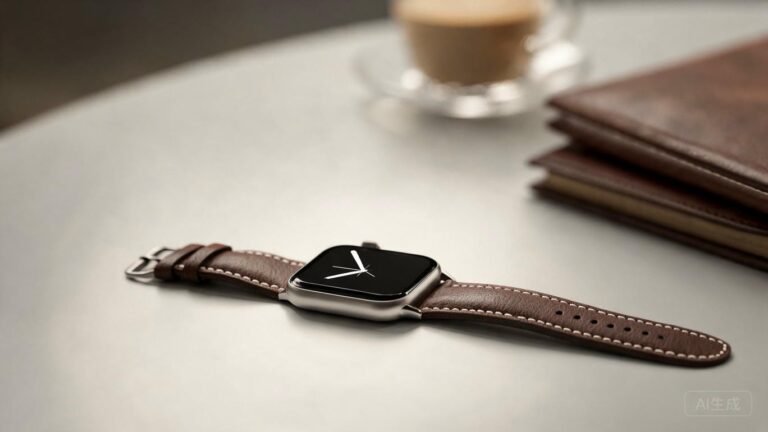
A wearable brand’s R&D team reads a research paper about piezoelectric leather that generates electricity from body movement — enough to power a fitness tracker from walking. They reach out to three leather suppliers asking for samples and pricing, and the responses range from “we don’t make that” to “we can develop it for a $250,000 NRE fee with 18-month lead time.” The technology is real — in a lab. The supply chain, not so much. Piezoelectric leather is one of those materials that appears in tech headlines every few years but hasn’t crossed the chasm from research publication to volume manufacturable product. For B2B buyers specifying materials for production today, it’s important to understand what’s actually available and what’s still in the lab.
See Production-Ready Materials
What Piezoelectric Leather Actually Is (and Isn’t)
Let’s start with a clear definition, because the term gets used loosely. “Piezoelectric leather” isn’t a single material — it’s a category of composite materials that combine a leather-like substrate with piezoelectric elements (typically polymer films or ceramic particles) that generate an electrical charge when mechanically deformed. When you bend, press, or stretch the material, it produces a small voltage. The promise is compelling: shoe soles that charge your phone, jacket sleeves that power sensors, car seats that detect occupant position — all from a material that looks and feels like leather.
But here’s what the headlines don’t say: most “piezoelectric leather” research is actually piezoelectric polymer film laminated to a leather substrate, not leather that itself is piezoelectric. The piezoelectric layer is typically PVDF (polyvinylidene fluoride) or a PZT (lead zirconate titanate) ceramic composite — both established engineering materials, but neither is leather. The “leather” part is the substrate, the cosmetic layer, not the functional one. This distinction matters because it determines the material’s cost, durability, and manufacturability — all of which are quite different from what the term “piezoelectric leather” implies.
- How it works: Piezoelectric materials have a crystal structure that generates an electric charge when mechanically stressed. PVDF film, the most common flexible piezoelectric material, produces roughly 20-30 μW/cm² under typical walking-pressure conditions.
- Current power output: A 100cm² piezoelectric patch in a shoe sole generates roughly 2-5 mW of power during walking — enough to power a small sensor or trickle-charge a battery, but not enough to charge a phone or power a display.
- Commercial status: Available as standalone PVDF film from specialty suppliers (Parker LORD, TE Connectivity, Measurement Specialties). Available as leather-laminated composite only through custom development programs, not as a catalog product.

Advanced material testing lab — where new leather technologies are validated before moving to production; most piezoelectric leather concepts never pass this stage.
5 Reasons It’s Not Ready for Production (Yet)
For B2B buyers evaluating whether to specify piezoelectric leather in a product, the gap between research and production is larger than popular coverage suggests. Five specific barriers keep it in the lab:
| Barrier | Current Status | What Would Fix It |
|---|---|---|
| Cost | $50–200+/sq ft (custom) | High-volume roll-to-roll manufacturing |
| Durability | Delamination after 10k flex cycles | Better adhesive systems, monolithic materials |
| Power output | 2–5 mW (enough for sensors only) | Higher-efficiency piezoelectric materials |
| Integration | Requires PCB, battery management | Flexible, printable electronics |
| Supply chain | 3-5 specialty suppliers, no leather laminators | Tier-1 leather manufacturers adopting the tech |
The durability problem is particularly critical for any leather-goods application. Piezoelectric films are laminated onto the leather substrate with adhesive, creating a bond line that’s the weakest point in the structure. Every bend or stretch creates shear stress at that interface, and eventually the film delaminates. For a shoe sole or watch strap that flexes thousands of times per day, this is a fundamental reliability problem that hasn’t been solved at production scale. Research papers demonstrate prototype performance; they don’t demonstrate the 50,000+ flex cycles that a commercial product needs to survive.
Engineering reality check: If a supplier claims “piezoelectric leather” is available for volume production, ask for: 1) flex cycle test data (50,000+ cycles minimum), 2) MOQ and per-square-foot pricing, 3) photos of the production line, and 4) names of existing volume customers. If they can’t provide all four, it’s still in development.
Smart Leather Applications: What’s Actually Shipping
Piezoelectric leather may be largely experimental, but that doesn’t mean “smart leather” products don’t exist. Several categories of intelligent leather goods are already in production — they just don’t use piezoelectricity. These are the approaches that have actually crossed the chasm from research to market:
NFC/RFID embedded leather. The most mature smart leather technology. Thin NFC tags or RFID chips are embedded between the leather layers during lamination, enabling contactless authentication, product information, or contactless payment. Several premium luggage and apparel brands ship products with embedded NFC tags today. The technology is cheap ($0.10-0.50 per tag), reliable, and compatible with standard leather manufacturing processes.
Conductive thread/ink integration. Conductive silver or copper threads sewn into leather products, or conductive ink printed onto the surface, enable touch-sensitive controls, heating elements, or LED lighting. Several consumer electronics and wearable brands use this approach for touch-sensitive control surfaces on leather accessories. The challenge is durability — conductive threads can break with flexing, and ink can wear off with abrasion.
Phase-change and thermal-regulation leather. Microencapsulated phase-change materials (PCMs) coated onto or integrated into leather provide temperature regulation — absorbing heat when the user is warm, releasing it when cool. This is a growing category in automotive and furniture applications, where thermal comfort matters for user satisfaction. Silicone leather can be formulated with thermal-conductive additives to enhance this effect, and the material’s inherent temperature stability (-40°C to 250°C) makes it an excellent carrier for thermal management technologies.

Smart wearable technology with leather materials — NFC, conductive elements, and thermal regulation are shipping today; piezoelectric is still in the lab.

Precision slitting and rewinding — production-ready materials like silicone leather run on established manufacturing lines, unlike experimental piezoelectric composites.
R&D and innovation overview — how new material technologies are evaluated and scaled for production at TOPSUN.
Silicone Leather: The Performance Upgrade That’s Available Today
While piezoelectric leather makes for exciting tech headlines, the most impactful leather material innovation that’s actually in production right now is silicone leather. It may not generate electricity, but it solves real problems that product designers and procurement teams deal with every day — material failure, maintenance cost, and user comfort — all at production volumes and prices that work for real products.
For product teams considering “smart” leather upgrades, our recommendation is to start with the fundamentals: specify a material that lasts, is comfortable, and is easy to clean. Those are the baseline properties that 99% of customers actually care about, and silicone leather delivers all three at a price point that works for volume production. Once you’ve got the material basics right, adding smart features on top — NFC tags for authentication, conductive elements for controls — is straightforward because the substrate is reliable and consistent. A smart product built on a material that cracks in 18 months is a smart product with a short lifespan.
For teams specifically interested in piezoelectric or energy-harvesting leather, the right approach is a structured pilot program: partner with a research lab or specialty material developer, define clear success criteria (power output, flex cycles, cost target), and plan for 12-24 months of development before production. It’s not impossible — but it’s also not something you can spec into a product launching next quarter. In the meantime, silicone leather is the highest-performance leather alternative you can actually buy in volume today.
Frequently Asked Questions
Can I buy piezoelectric leather off the shelf today?
Not really. Standalone PVDF piezoelectric film is available from specialty electronics suppliers (Parker LORD, TE Connectivity) in sheet or roll form, and you could laminate it to leather yourself. But pre-laminated “piezoelectric leather” as a catalog product doesn’t exist from any major leather manufacturer. If you need it for a product, you’re looking at a custom development program with NRE fees in the $100,000-500,000 range and 12-24 month lead times before volume production. For most applications, the cost-benefit math doesn’t work yet.
When will piezoelectric leather be commercially viable?
Most industry analysts put commercial viability at 5-10 years out for niche applications (medical sensors, industrial monitoring) and 10-15 years for consumer products. The timeline depends on three breakthroughs: higher-efficiency piezoelectric materials that generate more power from less movement, roll-to-roll manufacturing processes that bring costs down from $50+/sq ft to under $10/sq ft, and flexible electronics integration that eliminates the need for rigid PCBs. All three areas are advancing, but none is at production scale yet. For product planning, it’s a technology to watch and pilot — not something to build a 2026 product roadmap around.
Innovate With What Works, Pilot What Doesn’t
Piezoelectric leather is a genuinely exciting technology with the potential to create entirely new product categories. But “potential” is the key word — it’s not ready for production, it’s not available from standard suppliers, and it doesn’t have a proven durability track record. For B2B buyers working on products that ship this year or next, the smart strategy is to build on a foundation of proven, high-performance materials like silicone leather while running focused pilot programs to explore emerging technologies like piezoelectric composites. That way, you’re delivering value today while positioning for tomorrow. The future of smart leather is coming — but the present of better-performing leather is already here.
Discuss Custom Material Development
About TOPSUN
TOPSUN manufactures silicone leather — the highest-performance leather alternative in production today, with 500,000+ meters of monthly capacity and custom development capabilities for specialized applications.
200,000+ Martindale cycles · Zero VOC · Custom colors and textures · R&D partnership programs · 7-15 day standard production