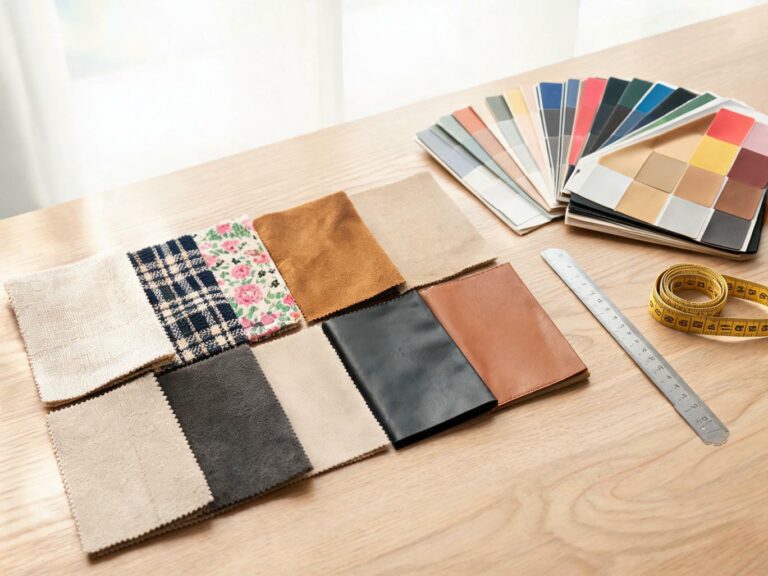
A leather designer doesn’t just pick a color — they specify a material system. The texture depth, grain pattern, gloss level, color tolerance, embossing retention, and surface finish together create the tactile signature that separates a premium brand from a commodity. When any one of those specs drifts in production, the design language collapses. OEM and ODM leather suppliers offer Pantone matching, custom embossing, and finish customization, but the gap between the approved sample and the production lot is where most design intent gets lost. This guide breaks down the six specifications a leather designer must control — and where each one fails in practice.
Request Custom Texture Design Samples
The Leather Designer’s Toolkit: What “Custom” Actually Means in B2B
In B2B leather sourcing, “custom” is not a single parameter — it’s a stack of six interlocking specifications that together define the material’s visual and tactile identity. Each one has a tolerance, a test method, and a failure mode. The leather designer’s job is to specify all six, not just the color. Here’s what the stack looks like:
| Spec Layer | What It Controls | Test Method | Typical Failure |
|---|---|---|---|
| 1. Texture pattern | Visual grain structure (lychee, saffiano, smooth) | Visual + depth gauge | Pattern flattens under heat |
| 2. Color match | Pantone/RAL accuracy | Spectrophotometer (Delta E) | Batch-to-batch color drift |
| 3. Embossing depth | 3D pattern relief | Depth gauge (±0.1mm) | Depth loss in production |
| 4. Gloss level | Surface reflectance (matte to gloss) | Gloss meter (GU at 60°) | Inconsistent sheen across batch |
| 5. Surface finish | Metallic, pearlescent, matte | Visual + abrasion test | Finish wears off in use |
| 6. Hand feel | Softness, drape, flexibility | ISO 5402 flex + subjective | Material stiffens over time |
Each spec layer has an approval sample — and each one can drift between approval and production. For a comprehensive guide to texture options, see our custom leather texture guide.
Texture: 6 Pattern Categories and Their Production Tolerances
Texture is the first thing a customer touches. The six most common pattern categories in B2B leather production each carry different tolerance requirements and failure risks:
| Pattern | Production Method | Depth Tolerance | Best Application |
|---|---|---|---|
| Embossed grain | Heated metal plate press | ±0.1 mm | Automotive, furniture |
| Lychee (pebble) | Embossing roller | ±0.15 mm | Handbags, accessories |
| Saffiano | Cross-hatch plate press | ±0.08 mm | Luxury bags, wallets |
| Crocodile emboss | Multi-stage embossing | ±0.2 mm | Fashion, belts |
| Smooth/Nappa | Calendering + finishing | N/A (flat surface) | Phone cases, 3C |
| Metallic finish | Foil transfer + clear coat | ±0.05 mm | Designer collection, luxury |
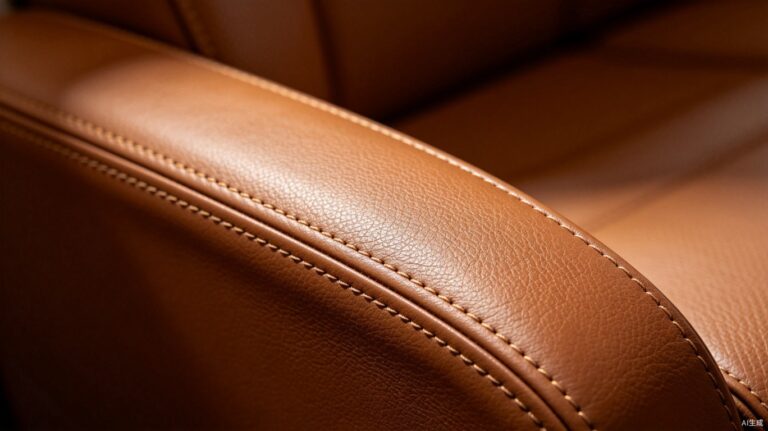
The critical specification for any embossed pattern is pattern depth tolerance — typically ±0.1 mm from the approved standard, measured with a depth gauge. When the tolerance drifts, the pattern looks different at different angles under showroom lighting — and the brand’s design language starts to feel inconsistent. For custom texture engineering, see our embossed leather pattern engineering guide.
Color Matching: Pantone, RAL, and the Delta E Problem
Color matching in leather is harder than in print. Leather surfaces have texture, gloss variation, and substrate color that all affect how a color reads. The industry standard for color accuracy is Delta E — a spectrophotometric measurement of color difference. A Delta E of 1.0 or below is considered commercially acceptable; values above 2.0 are visible to the untrained eye.
The problem: batch-to-batch color drift is the most common failure in B2B leather sourcing. A Pantone-matched sample approved in January may not match the production lot in March — even from the same supplier. This happens because color formulations are sensitive to temperature, humidity, and raw material lot variation during the coating process. TOPSUN specifies Delta E ≤ 1.0 color accuracy with batch-to-batch consistency as a contractual requirement, not a target. For the full color customization process, see our leather color customization guide.
Embossing Depth and Pattern Retention: Why Designs Fade
An embossed pattern that looks perfect at the approval stage can flatten or blur in production — and flatten further in service. The root cause depends on the material type. In PU leather, the thermoplastic coating softens under heat, causing pattern reversion during heat pressing or in warm environments. PVC leather suffers from embossing reversion when plasticizers migrate, causing the surface to smooth out over time. Testing shows that top-grain leather retains embossing clarity best, followed by corrected-grain, while suede and split grades show poor pattern retention.
Silicone leather solves this differently. The embossing is created during the coating process using custom embossing rollers — and because the silicone polymer is thermally stable to 250°C, the pattern does not flatten under heat. There are no plasticizers to migrate and no thermoplastic softening. The pattern depth specified at production is the pattern depth the customer sees at year 5. TOPSUN offers custom embossing roller production in 7–10 days, with 100+ texture options including cowhide, pigskin, sheepskin, custom patterns, metallic finishes, and pearlescent finishes.
Silicone vs Natural Leather: The Designer’s Material Choice
| Design Property | Natural Leather | PU Faux Leather | Silicone Leather |
|---|---|---|---|
| Pattern retention | Good (natural grain) | Poor (heat reversion) | Excellent (thermally stable) |
| Color accuracy | Variable (natural hide) | Good (ΔE ~2.0) | Excellent (ΔE ≤ 1.0) |
| Texture options | Limited to natural grain | Embossed (flattens) | 100+ custom patterns |
| Gloss control | Variable | Adjustable | Adjustable + stable |
| Hand feel consistency | Varies by hide | Consistent (stiffens) | Consistent (stable) |
| Custom roller lead time | N/A | 2–4 weeks | 7–10 days |
For a leather designer, the material choice is not just aesthetic — it determines whether the design intent survives production and service. Natural leather offers authentic character but variable consistency. PU leather offers design flexibility but poor retention. Silicone leather offers both: 100+ texture options, Pantone-matched color accuracy, and thermally stable pattern retention. For the full design process, see our custom texture design page.
About TOPSUN: TOPSUN offers 100+ texture patterns, unlimited color options with Pantone/RAL matching (Delta E ≤ 1.0), and custom embossing roller production in 7–10 days. With 60,000+ m² production capacity and 500,000+ meters monthly output, TOPSUN serves B2B brands requiring design-precise silicone leather for furniture, automotive, fashion, and 3C applications. Free A4 swatch samples ship worldwide via DHL/FedEx.
Design Specification Checklist
| Spec | Requirement | Why It Matters |
|---|---|---|
| Texture pattern ID | Named pattern + reference sample | Prevents visual drift between batches |
| Color match | Pantone/RAL code + Delta E ≤ 1.0 | Guarantees brand color consistency |
| Embossing depth | Target depth + tolerance (±0.1 mm) | Controls 3D pattern definition |
| Gloss level | GU value at 60° angle | Defines matte vs gloss finish |
| Hand feel | Flex data + subjective approval | Ensures tactile consistency |
| Pattern retention | Heat exposure test (250°C, 1 hr) | Verifies pattern won’t flatten in service |
Get a Custom Design Spec Sheet