An embossed leather pattern looks simple on a finished swatch — a three-dimensional texture pressed into the surface. But between “I want a custom crocodile grain” and a production-ready roller, there are four engineering decisions that determine whether the pattern looks premium or plastic. The pattern depth must hold ±0.03mm tolerance across the entire roller width. The edge sharpness needs to reach Ra0.8μm or the grain looks blurred under raking light. And the roller itself must survive 50,000+ linear meters of production without pattern degradation. Most suppliers offer 20–30 standard patterns. TOPSUN engineers 100+ — and builds custom rollers from scratch when a brand needs something nobody else has.
Request Custom Pattern Samples
What Defines a Premium Embossed Leather Pattern
Three variables separate a premium embossed leather pattern from a cheap one — and they are measurable, not subjective. Pattern depth controls the tactile feel and visual shadow. Edge sharpness determines whether the grain reads as “natural” or “stamped.” And pattern consistency across the roll width means a sofa cushion stitched from the left edge and right edge of the same roll match visually. When any of these three drift, the finished product looks like vinyl, not leather.

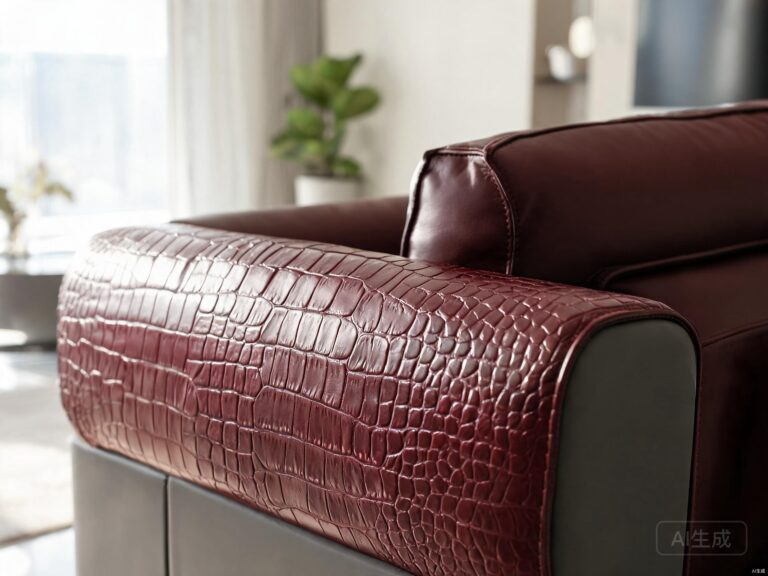
Macro closeup of a lychee grain embossed leather pattern — the depth, edge definition, and uniformity visible here are the hallmarks of precision roller engraving.
Pattern depth for most furniture and automotive applications runs 0.15–0.40mm. Go shallower and the texture disappears under indirect lighting; go deeper and the surface becomes difficult to clean and prone to dirt accumulation in the valleys. The tolerance window is tight: ±0.03mm across the roller’s full 1,400mm working width. A roller that delivers 0.30mm depth at the center but 0.22mm at the edges produces a visible mismatch when panels from different roll positions are stitched together. That is why our custom texture design process begins with roller measurement, not pattern selection.
Edge sharpness — measured as surface roughness (Ra) at the pattern boundary — is the variable most suppliers ignore. A standard chemical-etched roller produces Ra1.6–2.4μm edges, which look acceptable on a flat swatch but blur under angled lighting on a curved furniture surface. CNC-engraved and laser-engraved rollers achieve Ra0.8μm or better, producing the crisp grain definition that distinguishes premium upholstery from commodity vinyl. The difference is visible to the end customer, even if they cannot articulate why one surface feels “better” than the other.
Embossed Leather Pattern Manufacturing: 3 Techniques Compared
The embossing roller is the heart of the texture production line. Before any pattern reaches the leather surface, it must be engraved into a steel roller — and the engraving method determines pattern fidelity, lead time, and cost. Three techniques dominate the industry, each with distinct strengths. Here is how they compare when engineering an embossed leather pattern for production scale:
| Technique | Edge Sharpness (Ra) | Depth Tolerance | Best For | Lead Time |
|---|---|---|---|---|
| CNC Engraving | ≤0.8 μm | ±0.02 mm | Complex, high-fidelity textures (lychee, crocodile) | 15–25 days |
| Laser Engraving | ≤0.6 μm | ±0.01 mm | Deep 3D patterns, custom geometric designs | 10–20 days |
| Chemical Etching | 1.6–2.4 μm | ±0.05 mm | Fine uniform grains (pebble, haircell) | 10–15 days |
Engineering note: Laser engraving achieves the tightest depth tolerance (±0.01mm) and sharpest edges (Ra≤0.6μm), but it is slower for large-area coverage. CNC engraving remains the best balance of fidelity and throughput for organic textures like lychee and crocodile grain. Chemical etching is the most economical choice for simple, repeating micro-textures where edge definition is less critical.

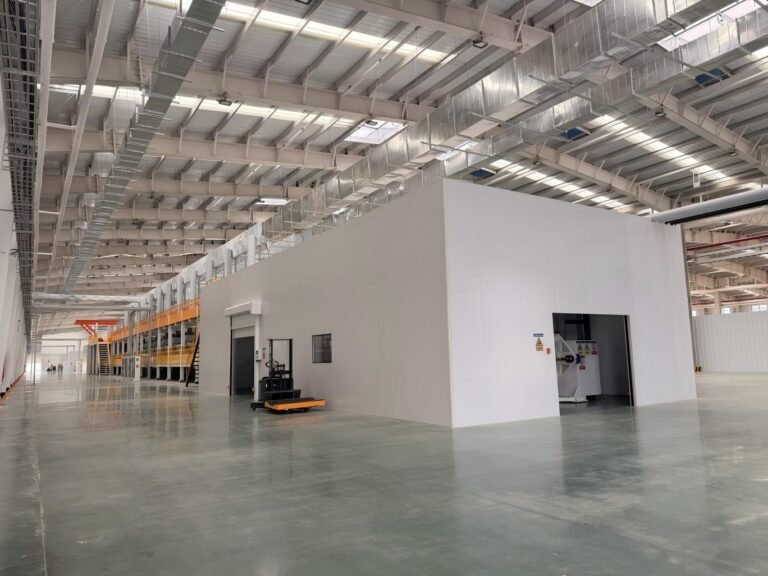
The production flow chart shows where embossing occurs — after coating and before curing — so the pattern is set into the silicone surface permanently.
On the production line, the engraved roller presses the pattern into the coated silicone surface before full curing. The embossing parameters for silicone leather differ from PU: pressure runs 0.3–0.6 MPa (versus 0.2–0.4 MPa for PU), temperature holds at 80–120°C, and dwell time is 10–20 seconds. The silicone compound must be semi-cured — firm enough to hold pattern geometry but soft enough to deform into the die. You can read more about the mold making and roller engraving process for deeper technical context.
Custom Pattern Development: From Concept to Roller
When a brand needs an exclusive texture — not a catalog pattern — the development cycle runs four stages: digital rendering, roller prototyping, sample embossing, and production roller manufacturing. The process takes 25–35 working days from approved artwork to production-ready roller. Here is what happens at each stage and where projects commonly stall.
Stage 1: Digital rendering and pattern mapping. The design concept — whether a brand-exclusive geometric pattern, a modified natural grain, or a completely original texture — is converted into a 3D digital model. The model defines pattern depth at every point, edge geometry, and how the pattern tiles across the roller circumference. At this stage, we simulate how the pattern will look under raking light and on curved surfaces. Pattern repeat alignment is critical: a misaligned repeat creates a visible seam every 1,200mm on the production line.
Stage 2: Roller prototyping. A prototype roller is engraved (typically via CNC or laser) and mounted on a pilot line. We emboss 10–20 linear meters of sample material, then inspect for depth consistency, edge sharpness, and pattern fidelity. This is the stage where most custom projects require iteration — a pattern that looks correct in CAD may not translate to the physical material due to silicone flow characteristics during embossing. Our ultra-thin collection surfaces are particularly sensitive to pattern depth because the coating layer is only 0.23–0.8mm.

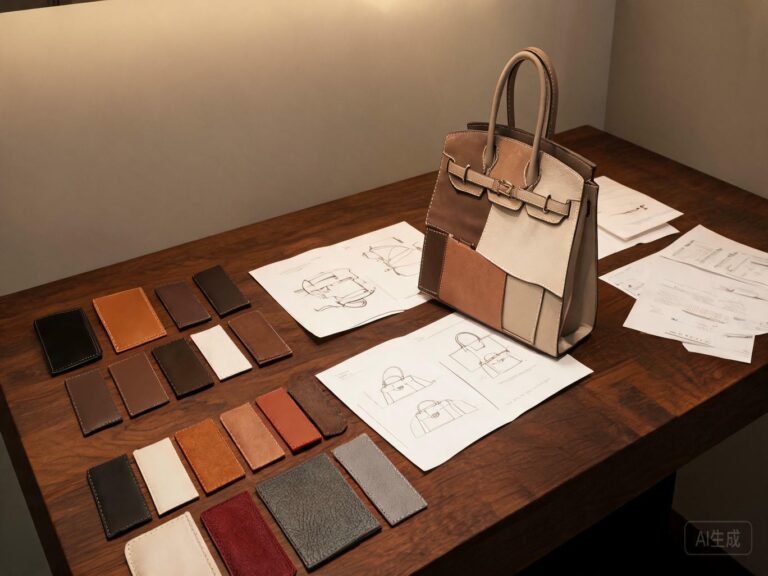
Custom embossed pattern samples — each swatch represents a unique roller engraving, tested for depth, edge sharpness, and production-line consistency.
Stage 3: Sample embossing and client approval. Physical samples are sent to the client for visual and tactile evaluation. This is the approval gate — once the client signs off on the pattern, the production roller is manufactured to the same engraving specifications. Sample turnaround is typically 7–10 days after prototype roller completion.
Stage 4: Production roller manufacturing. The final production roller is hardened to HRC58–62 surface hardness, chrome-plated for wear resistance, and balanced for high-speed line operation. A properly maintained production roller delivers 50,000+ linear meters of consistent embossing before requiring re-engraving. For brands running multi-year programs, we recommend a spare roller manufactured simultaneously to eliminate downtime risk.
Where Pattern Precision Matters Most: Industry Applications
Not every application demands the same pattern precision. A furniture sofa cushion viewed from 2 meters away tolerates more edge blur than a phone case held 30cm from the eye. Understanding the precision requirement by application prevents over-engineering — and prevents under-specifying.

Dark-colored embossed leather patterns demand the highest edge sharpness — any blur is immediately visible against the high-contrast surface.
For 3C electronics — phone cases, earbuds covers, tablet sleeves — pattern depth must stay shallow (0.10–0.20mm) to maintain the ultra-thin profile, while edge sharpness must be at its highest because the product is viewed at arm’s length. A blurred grain on a $80 phone case reads as cheap. For automotive interiors, pattern depth runs 0.20–0.35mm with moderate edge sharpness — the surface is viewed at varying distances but must maintain visual consistency across door panels, seats, and dashboard trim cut from different positions on the same roll.
For contract furniture, depth runs 0.25–0.40mm with Ra1.2μm acceptable — the surface is viewed from across a room, and the priority shifts from edge crispness to cleanability and wear resistance. Deep valleys in the pattern trap dirt in commercial environments, so the pattern geometry must allow wiping without residue accumulation. The ASTM standards for leather surface measurement provide the testing framework we use to validate these precision requirements.
Watch the pattern customization process — from digital rendering to roller engraving to embossed silicone leather production.
For fashion accessories — belts, bags, wallet covers — the pattern is the product. A crocodile grain belt’s perceived value comes entirely from pattern fidelity. These applications require the deepest patterns (0.30–0.50mm), the sharpest edges (Ra≤0.6μm), and the strictest consistency — because the customer picks up the product and examines it directly. This is where laser-engraved rollers earn their cost premium.
Frequently Asked Questions
How deep should an embossed leather pattern be?
It depends on the application. For 3C electronics and phone cases, 0.10–0.20mm maintains a slim profile while remaining tactile. For automotive interiors, 0.20–0.35mm balances visual definition with cleanability. For contract furniture, 0.25–0.40mm provides durability in high-traffic environments. For fashion accessories like belts and bags, 0.30–0.50mm creates the deep, premium feel that drives perceived value. The tolerance at any depth should be ±0.03mm across the full roll width.
Can I customize my own embossed pattern on silicone leather?
Yes. TOPSUN offers full custom pattern development from digital concept to production roller. You provide the design concept or reference sample — we handle 3D rendering, roller prototyping, sample embossing, and production roller manufacturing. The development cycle takes 25–35 working days from approved artwork to production-ready material. Custom rollers are engraved via CNC, laser, or chemical etching depending on the pattern complexity and precision requirements.
What is the lead time for a custom embossing roller?
CNC engraving takes 15–25 working days. Laser engraving takes 10–20 working days. Chemical etching takes 10–15 working days. Add 7–10 days for sample embossing and client approval, plus 5–7 days for production roller hardening and chrome plating. The total custom pattern development cycle runs 25–35 working days from approved artwork. For urgent programs, we can compress the timeline by running prototype and production roller engraving in parallel after initial pattern validation.
Build a Pattern Nobody Else Has
An embossed leather pattern is not just a surface finish — it is a brand differentiator encoded in steel and pressed into every linear meter of production. The precision of that encoding determines whether the finished product reads as premium or commodity. Pattern depth at ±0.03mm tolerance. Edge sharpness at Ra0.8μm or better. Consistency across 50,000+ meters of production. These are the engineering specifications that separate a texture from a pattern — and they are controllable when the roller engraving, embossing parameters, and silicone compound are engineered as a system. Whether you need a catalog grain or a completely original texture, the development path is the same: render, prototype, validate, produce.
Start Your Custom Pattern Project
About TOPSUN
TOPSUN engineers 100+ embossed leather patterns and builds custom texture rollers from digital concept to production — combining CNC, laser, and chemical etching engraving with silicone-specific embossing parameters to deliver pattern depth, edge sharpness, and production consistency that commodity suppliers cannot match.
100+ standard patterns · Custom roller development in 25–35 days · ±0.03mm depth tolerance · Ra≤0.8μm edge sharpness · CNC, laser, and chemical etching capabilities · 50,000+ meter roller service life · 8+ years serving 30+ countries