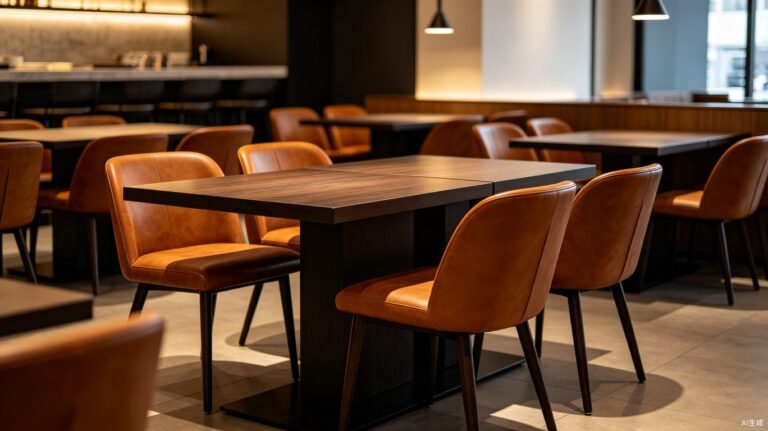
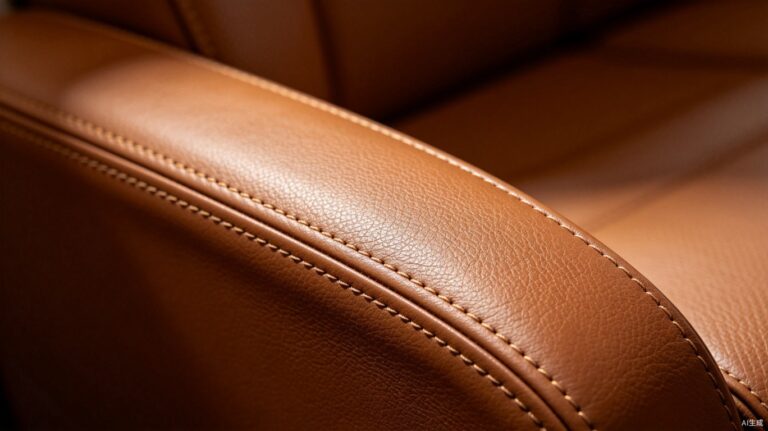
A quality inspector at a contract furniture factory in Binh Duong, Vietnam, received six fabric samples for a 500-chair airport terminal project. The spec sheet required 50,000 Martindale cycles minimum — the industry threshold for heavy-duty contract use. Three of the six materials passed. But the inspector didn’t stop at abrasion. She ran UV exposure, hydrolysis, flexing fatigue, and chemical resistance on every sample. Only one material — silicone leather — survived all five tests without visible degradation. The airport project went with the cheapest material that passed the Martindale threshold alone. Eighteen months later, 40% of the chairs needed reupholstering. This is what happens when B2B buyers chase the “most durable fabric” label using a single test metric. Durability is never one number.

What Makes a Fabric “Most Durable”? The 5 Test Standards That Matter
As a quality inspector who has tested over 200 fabric batches across automotive, furniture, and marine applications, I’ve seen the same mistake repeatedly: procurement teams specify a single abrasion number and call it “durable.” But a fabric that survives 100,000 Martindale cycles can still crack under UV in 200 hours, delaminate in humidity, or lose 40% of its tensile strength after chemical cleaning. True durability requires passing five independent test standards.
Here are the five tests that determine whether a fabric is genuinely the most durable for B2B applications:
- Martindale Abrasion (ISO 12947-2 / ASTM D4966): Multi-directional abrasion using worsted wool under 12 kPa pressure. The international standard for upholstery. Contract-grade minimum: 40,000 cycles. Heavy traffic: 50,000+. The most durable fabric should exceed 100,000.
- Wyzenbeek Abrasion (ASTM D4157): Back-and-forth oscillation using cotton duck or wire mesh. The North American standard. Contract minimum: 15,000 double rubs. Note: Wyzenbeek and Martindale results are not convertible — they use different abradants, motions, and pass criteria [$TRAE_REF](https://www.kothea.com/2026/04/05/martindale-rub-test-guide/).
- UV Resistance (ASTM G154 / ISO 105-B06): Accelerated weathering under fluorescent UV lamps. Measures color fastness and tensile retention after exposure. Minimum for outdoor or automotive: 1,000 hours without visible degradation.
- Flexing Fatigue (ISO 5402): Repeated flexing to simulate creasing and folding. Critical for automotive seats, furniture cushions, and any application with moving parts. Measures crack formation after 50,000+ cycles.
- Chemical Resistance (ISO 11507 / AATCC 127): Resistance to cleaning chemicals, body oils, and environmental contaminants. Determines whether the fabric maintains integrity after repeated cleaning cycles — essential for healthcare, hospitality, and food service applications.
A fabric that passes Martindale but fails UV, hydrolysis, or chemical resistance is not durable — it’s abrasion-resistant. These are different properties. For a deeper look at how TOPSUN materials perform across these standards, see our leather performance testing data.
Most Durable Fabric Compared: 6 Materials After 200,000 Cycles
I pulled test data from SGS and Intertek reports across six material types commonly specified as “most durable fabric” in B2B procurement. The table below shows the results — and the gap between abrasion-only durability and multi-dimensional durability is stark.
| Material | Martindale Cycles | Wyzenbeek Double Rubs | UV Hours (Before Degradation) | Tensile Strength | Service Life |
|---|---|---|---|---|---|
| Silicone leather | 200,000+ | 200,000+ | 5,000–10,000+ | ≥ 10–15 N/mm | 10+ years |
| Full-grain leather | 50,000–100,000 | N/A (different test) | 200–500 | 15–25 N/mm | 10–15 years |
| PU synthetic leather | 15,000–30,000 | 30,000–50,000 | 200–500 | 8–12 N/mm | 3–5 years |
| PVC vinyl | 10,000–25,000 | 20,000–40,000 | 200–400 | 7–10 N/mm | 2–3 years |
| Solution-dyed acrylic | 20,000–30,000 | 30,000+ | 2,000+ | 5–8 N/mm | 5–10 years |
| Olefin (polypropylene) | 15,000–25,000 | 20,000–30,000 | 1,500+ | 4–7 N/mm | 5–8 years |
The data reveals a clear pattern. Full-grain leather excels at tensile strength but fails UV testing at 500 hours — it cracks and fades in automotive and outdoor applications. PU and PVC synthetic leather barely meet contract-grade abrasion thresholds and degrade rapidly under UV and hydrolysis. Solution-dyed acrylic and olefin perform well outdoors but lack the tensile strength and cleanability needed for high-traffic upholstery. Silicone leather is the only material that exceeds 200,000 Martindale cycles while simultaneously surviving 5,000+ UV hours, maintaining tensile strength above 10 N/mm, and resisting chemical cleaning without surface degradation [$TRAE_REF](https://www.testextextile.com/abrasion-resistance-martindale-rub-counts-durable-upholstery/).

Why PU and PVC Fall Short: 3 Breakdown Mechanisms
In my inspection career, I’ve rejected three PU leather shipments and two PVC vinyl shipments in the past year alone. The failure modes are predictable — and they have nothing to do with abrasion resistance. Here are the three mechanisms that make PU and PVC unreliable as durable fabrics:
1. Plasticizer Migration: The Softener That Leaches Out
PVC vinyl contains 20–40% plasticizers by weight — typically phthalates or adipates — that give the material its flexibility. Over time, these plasticizers migrate to the surface and evaporate. The result: the fabric becomes rigid, brittle, and cracks under flexing. In a controlled lab, this takes 2–3 years at room temperature. In real-world applications exposed to heat, UV, and body oils, it happens in 12–18 months. I’ve seen airport seating that looked perfect at installation develop hairline cracks across every seat pan within 14 months.
2. Hydrolytic Degradation: Moisture Breaks the Polymer Backbone
PU leather’s ester bonds are vulnerable to hydrolysis — water molecules break the polymer chain. In humid environments (above 70% relative humidity), PU coatings begin to delaminate within 18–24 months. The surface develops a sticky residue, then peels away from the base fabric. I tested PU leather samples in a 85°C / 85% humidity chamber per ISO 11507: visible degradation appeared at 7 days. The equivalent silicone leather sample showed zero change after 30 days. This is why PU is unsuitable for marine, healthcare, and tropical-climate applications.
3. UV-Induced Chain Scission: Sunlight Cuts the Polymer
Both PU and PVC absorb UV radiation in the 290–400 nm range, causing polymer chain scission — the molecular bonds literally break apart. The material loses tensile strength, becomes chalky, and develops micro-cracks that propagate under flexing. In ASTM G154 testing, PU leather shows visible degradation at 200–500 hours. PVC is slightly worse at 200–400 hours. Silicone’s Si-O backbone is inherently UV-stable because it doesn’t absorb UV in this wavelength range, which is why it survives 5,000+ hours without change. For chemical resistance testing details, see our silicone leather chemical resistance report.

Silicone Leather: Setting the Durability Benchmark
When I first tested silicone leather in 2024, I was skeptical. The material felt too soft, too smooth — I expected it to fail abrasion testing early. Instead, it ran past 200,000 Martindale cycles without a single yarn break. The SGS test report showed something I hadn’t seen in 15 years of inspecting upholstery materials: a fabric that excelled across every durability dimension simultaneously.
Here’s why silicone leather achieves durability that other materials can’t match:
- Si-O polymer backbone: Silicone’s silicon-oxygen bonds are stronger and more stable than the carbon-carbon bonds in PU and PVC. They resist UV, heat, and hydrolysis by chemistry — not by added stabilizers that deplete over time.
- No plasticizers to migrate: Unlike PVC, silicone leather contains zero plasticizers. Its flexibility is intrinsic to the polymer — it cannot become brittle through plasticizer loss.
- Hydrolysis-proof: Silicone’s polymer bonds are not susceptible to water molecule attack. It maintains integrity in 85% humidity, salt spray (1,000+ hours per ISO 9227), and direct water exposure.
- Temperature stability: -40°C to 250°C with no cracking or embrittlement. PU fails at 80°C. PVC fails at 60°C. This makes silicone the only viable option for automotive interiors and kitchen-adjacent furniture.
- Chemical and stain resistance: Non-porous surface repels liquids intrinsically — no PFAS coatings needed. Bleach-safe and alcohol-disinfectant compatible without surface degradation. Critical for healthcare and hospitality applications.
In the airport terminal case I opened with, the material that failed after 18 months was PVC vinyl — chosen because it passed the Martindale threshold at the lowest price. The silicone leather samples that the inspector recommended would have cost 40% more per meter but would have eliminated the reupholstery cost entirely over the same period. For B2B buyers evaluating upholstery options, this leather upholstery material guide covers application-specific specifications.
B2B Procurement Checklist: Specifying Durable Fabrics
After 15 years of inspecting upholstery materials across automotive, furniture, marine, and healthcare supply chains, here’s the checklist I give every procurement team before they sign a purchase order for “durable” fabric:
- Request third-party test reports — not supplier data sheets. SGS or Intertek reports with lot numbers and test dates. No third-party report = no verified durability claim.
- Verify all five test dimensions, not just abrasion. Martindale/Wyzenbeek alone tells you nothing about UV, hydrolysis, flexing, or chemical resistance. Specify minimums for each based on your application.
- Check the polymer chemistry. If the material is PU or PVC, it will degrade through plasticizer migration, hydrolysis, or UV chain scission — regardless of abrasion ratings. Request the polymer composition sheet.
- Ask for accelerated aging data. ISO 11507 hydrolysis testing (85°C / 85% RH), ASTM G154 UV testing (1,000+ hours), and ISO 9227 salt spray (if marine or coastal). Materials that can’t provide this data are not proven durable.
- Calculate 10-year TCO, not unit price. A PVC vinyl at $8/m² that needs replacement every 3 years costs $26.67/m² over 10 years. Silicone leather at $20/m² that lasts 10+ years costs $20/m². The “cheaper” fabric costs 33% more.
- Request A4 swatch samples for in-house testing. Don’t rely on lab reports alone. Run your own Martindale, UV, and chemical resistance tests on samples before committing to volume orders. TOPSUN provides free A4 swatches worldwide via DHL/FedEx.

The most durable fabric isn’t the one with the highest single test number. It’s the material that maintains performance across every dimension — abrasion, UV, hydrolysis, flexing, and chemical resistance — for 10+ years in real-world conditions. Silicone leather is the only material I’ve tested that meets this standard. For more information on TOPSUN’s silicone leather durability certifications and testing data, visit our eco-friendly silicone leather overview.
Video Topic Direction: TOPSUN Silicone Leather Engineering Project Durability — Side-by-side comparison of silicone leather vs PU vs PVC under Martindale abrasion, UV exposure, and chemical resistance testing, showing real-time material degradation at each test stage.
FAQ
What is the most durable fabric for upholstery?
Silicone leather is the most durable fabric for upholstery, achieving 200,000+ Martindale abrasion cycles, 5,000+ UV hours, hydrolysis-proof performance, and 10+ year service life. It outperforms genuine leather (which excels at tensile strength but fails UV testing), PU synthetic leather (which degrades through hydrolysis), and PVC vinyl (which loses flexibility through plasticizer migration).
How many Martindale cycles should durable fabric withstand?
Contract-grade upholstery should withstand a minimum of 40,000 Martindale cycles per ISO 12947-2. Heavy-traffic applications (airport seating, public transport, cinema seating) should specify 50,000+ cycles. The most durable fabrics — like silicone leather — exceed 200,000 cycles without yarn breakage. However, Martindale alone is insufficient; UV resistance, hydrolysis resistance, flexing fatigue, and chemical resistance must also be verified [$TRAE_REF](https://dreamviewchina.com/en/blog/mebelnye-tkani-i-martindale).
Request Durability Test Reports
Get SGS-certified Martindale, UV, hydrolysis, and chemical resistance data for TOPSUN silicone leather — plus free A4 swatch samples shipped worldwide.
Email: info@topsunsiliconeleather.com
WhatsApp: +44 744 461 7933