Texture is what customers touch before they buy. In B2B manufacturing, surface finish separates commodity suppliers from brand partners. Two seat covers can share the same Pantone code. The one with a refined grain wins the showroom. That is why leather texture customization is now a standard part of our OEM offering. We help buyers move beyond catalog options and build tactile signatures their competitors cannot copy.
Types of Leather Textures and Finishes
Before deciding on a custom pattern, buyers should know the vocabulary. Here are the six finish categories we produce most often:
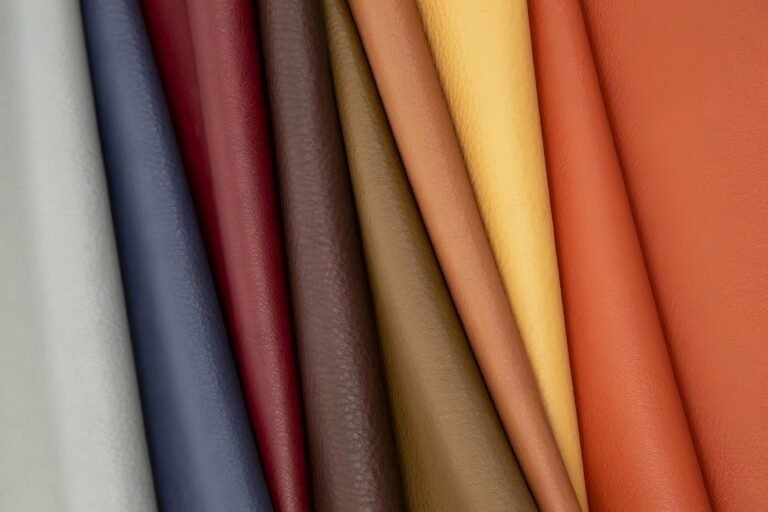
- Embossed grain. A heated metal plate presses a pattern into the surface. Depth and gloss level are adjustable. Common for automotive and furniture.
- Lychee (pebble). Small, rounded cells imitate natural cowhide grain. Soft to touch and forgiving on seams. Popular in handbags and wallets.
- Plain / smooth. Minimal surface structure. Clean, modern look for electronics accessories and medical devices.
- Matte. Low-gloss finish diffuses light. Hides fingerprints and micro-scratches. Preferred for minimalist interiors.
- Gloss / patent. High-shine surface creates visual impact. Used in fashion and luxury packaging.
- Special effects. Includes carbon-fiber weave, brushed metal, nubuck feel, and two-tone aging. Developed per client brief.
Each finish changes how light hits the surface. Matte absorbs. Gloss reflects. Embossing creates shadow valleys. The right combination of texture and color can make a $20 material look like $200 leather.

Leather Texture Customization: From Design to Production
Custom texture is part engineering, part craft. Our process follows four gates. Each gate requires sign-off before the next begins.
Gate 1: Design Input
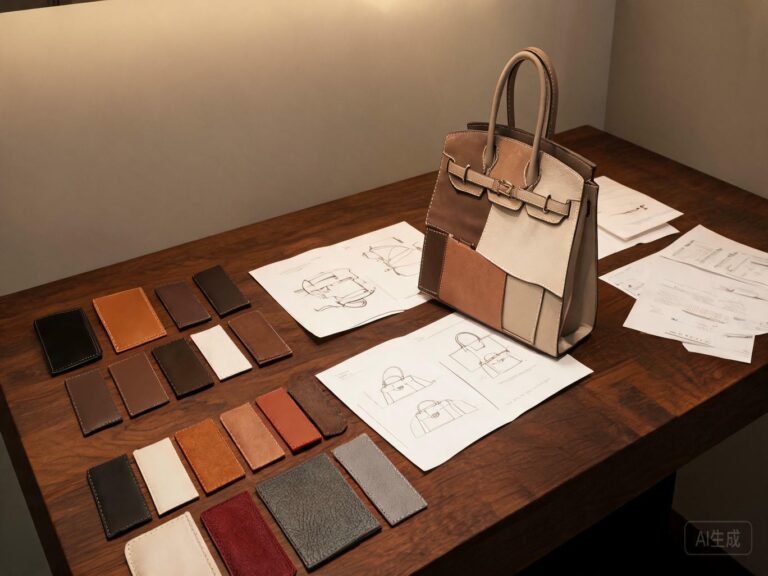
The client sends a design drawing, a physical sample, or a reference photo. We scan or photograph the surface at 600 DPI to capture micro-detail. If the client wants a global texture trend showcase look, we research current runway and automotive releases to align the direction.
Gate 2: Mold Development
Our toolroom machines a nickel or copper embossing roll from the scanned data. Roll diameter depends on repeat length. A typical furniture grain needs a 400-600 mm circumference to avoid visible repetition. Lead time for mold production is 7-10 days.
Gate 3: Sample Confirmation
We run 5-10 meters on the pilot line. The client evaluates hand feel, gloss, depth, and seam behavior. If adjustments are needed, we modify the roll or change pressure and temperature settings. Most projects need 1-2 revision rounds.
Gate 4: Production Setup
After approval, the mold is serialized and stored. Production parameters are locked into the MES system. Every future order calls up the same pressure, temperature, and speed recipe. This guarantees that batch 10 feels identical to batch 1.
Standard vs. Exclusive Textures
Not every buyer needs a unique mold. We offer two tiers to match different business models.
| Feature | Standard Textures | Exclusive Textures |
|---|---|---|
| Catalog size | 100+ options across 3 series | Developed per client brief |
| Mold cost | Included in unit price | One-time tooling fee |
| Lead time | 3-5 days | 5-7 days after mold ready |
| Exclusivity | Open to all buyers | Contract-locked for one client |
| Best for | Speed to market, tight budgets | Premium brands, long programs |
A Scandinavian furniture brand recently asked us to develop an exclusive matte lychee with a 0.15 mm cell depth. Standard lychee runs 0.25 mm. The shallower cells gave a softer hand without losing grip. We tooled the roll, ran 2,000 meters for their spring collection, and now store the mold under their SKU. No other client can access it.

Texture Applications by Industry
Surface finish is never random. It serves a functional or emotional purpose. Here is how different industries use texture strategically:
- Automotive. Dashboards need low-reflection matte to prevent glare. Seats use medium grain to hide wear from denim dye transfer.
- Furniture. Furniture upholstery textures range from smooth aniline-style for modern sofas to deep embossing for traditional recliners.
- 3C Electronics. Phone cases and laptop sleeves favor micro-textures. They improve grip and resist fingerprint oils.
- Fashion. Runway brands rotate textures seasonally. One season it is large crocodile cells. The next it is subtle saffiano cross-hatch.
Our lab keeps a trend board updated quarterly. Buyers who visit our Dongguan facility can touch physical samples from each industry and compare gloss levels under simulated showroom lighting.

Silicone Leather Texture Advantages
PVC and PU can emboss. But their texture performance degrades over time. Silicone leather behaves differently because of its molecular structure.
- Definition retention. Silicone does not plasticize or migrate. An embossed grain stays sharp after 200,000 Martindale cycles. PVC softens and loses peak definition within 50,000 cycles.
- Abrasion resistance. Surface wear does not blur the pattern. The grain simply wears down evenly. This keeps designer collection textures looking intentional, not aged.
- Fine pattern replication. Silicone flows into mold cavities with low viscosity. We can replicate patterns as fine as 0.05 mm resolution. This opens the door to logos, micro-text, and geometric repeats that PU cannot hold.
A consumer electronics client needed a carbon-fiber weave on a 0.6 mm base. PU attempts showed broken filaments at the weave intersections. Our silicone version held every crossing point through 100,000 flex cycles. The product is now in its third production year.

Frequently Asked Questions
Can you replicate a texture from an existing product?
Yes. Send us the physical sample. We 3D-scan the surface and machine a matching roll. Most replication projects achieve 95%+ visual match. We ship a sample strip for your approval before cutting production steel.
What is the smallest texture repeat you can produce?
Our minimum practical repeat is 50 mm for seamless appearance. For very fine grains like lychee or nappa, we use randomizing algorithms on the roll surface to prevent visible pattern loops.
Do you offer combined texture and color customization?
Absolutely. Most B2B orders specify both. A typical project might pair a new exclusive emboss with a custom Pantone match. We run both tracks in parallel so the final sample arrives as one coordinated piece. See our custom texture design guide for combined workflow details.
Build a Texture That Carries Your Brand
Texture is not decoration. It is a competitive barrier. A unique grain or finish cannot be copied overnight. It requires tooling investment, process knowledge, and material science. At TOPSUN, we combine all three.
Whether you choose from our 100+ standard library or develop an exclusive leather texture customization, we deliver surfaces that perform under real-world use. Send us your reference. We will scan it, tool it, and ship a sample within two weeks.
About TOPSUN
TOPSUN is a leading silicone leather manufacturer specializing in eco-friendly, durable synthetic leather for automotive, furniture, medical, and marine applications. With 3 production bases and 6M meters annual capacity, we deliver OEM/ODM solutions with full certification support.
Certifications: ISO 10993-5 | REACH | FDA | EN 13773 | FAR 25.853