The term leather textiles once meant one thing: animal hides processed into flexible sheets. Today, it covers a spectrum from PU-coated polyester to silicone-coated fiberglass — and the performance gap between those endpoints is measured in years of service life, not percentage points of cost. For B2B manufacturers specifying materials for products that need to last five, ten, or fifteen years, understanding where leather textiles fail and why has become a core engineering competency, not a procurement afterthought.
What Are Leather Textiles? Beyond the Basic Definition
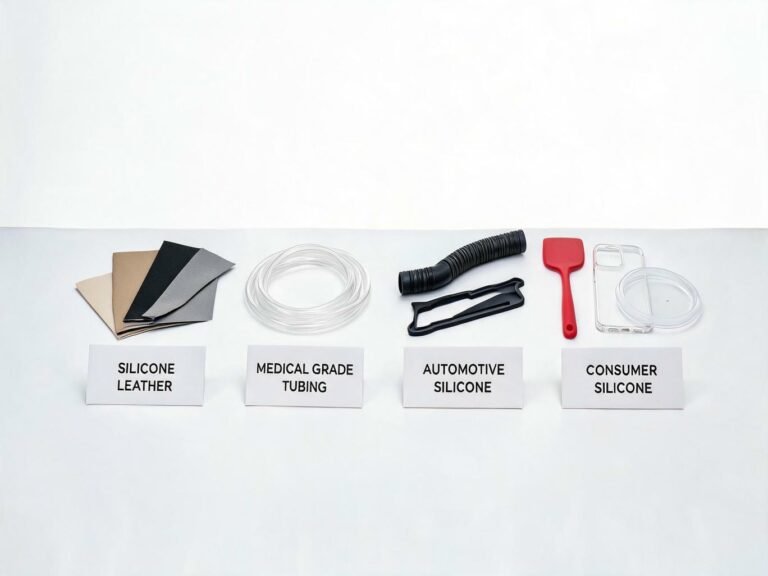
Leather textiles are engineered fabrics that combine a textile substrate — polyester, fiberglass, or blended fibers — with a polymer coating that gives the surface leather-like properties: flexibility, durability, and tactile appeal. The substrate provides mechanical strength. The coating determines everything else: chemical resistance, thermal stability, UV behavior, and end-of-life recyclability.
The three dominant coating chemistries define the entire leather textile fabric types comparison: polyurethane (PU), polyvinyl chloride (PVC), and silicone. Each chemistry bonds to the substrate differently, ages differently, and fails differently. Understanding what silicone leather actually is requires separating the marketing language from the molecular structure — because the difference between a PU-coated textile and a silicone-coated textile is not a matter of degree. It is a matter of fundamental material chemistry.

The coating process determines bond strength, thickness consistency, and VOC profile — roller calibration to ±0.01mm separates production-grade from commodity material.
The Sustainability Shift: Why 66% of Buyers Are Rewriting Specs
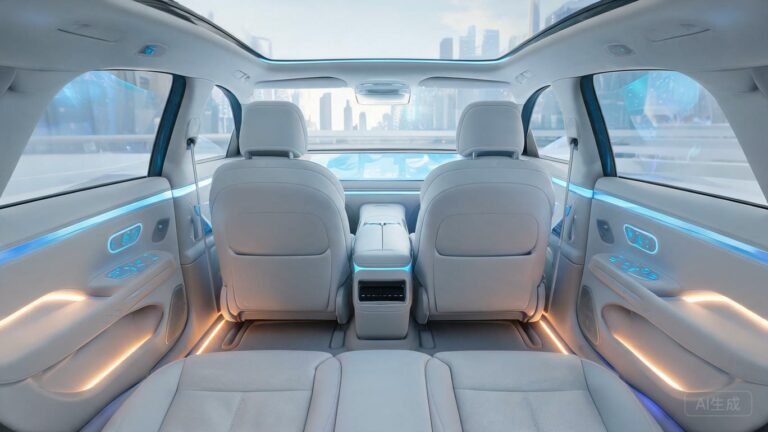
McKinsey data shows 66% of global consumers now prefer sustainable goods, and this preference is cascading up the supply chain. B2B specifiers — not end consumers — are the ones rewriting material specifications to eliminate solvents, plasticizers, and non-recyclable composites. The shift is most visible in automotive interior applications, where OEMs face tightening VOC regulations and end-of-life recyclability mandates.
Traditional PU leather textiles rely on solvent-based coating processes that emit VOCs during manufacturing and continue off-gassing in the finished product. PVC textiles contain plasticizers that leach over time. Both materials are composites — polymer bonded to textile — that cannot be separated for recycling. When the product reaches end-of-life, the material goes to landfill. That linear lifecycle is increasingly incompatible with corporate sustainability targets and emerging regulations in the EU and California.
Regulatory signal: EU ELV Directive (2000/53/EC) mandates 95% vehicle recyclability by weight. PU and PVC leather textiles — bonded composites that cannot be separated — count against that target. Silicone-coated textiles peel cleanly from their substrates, enabling material recovery.

A silicone-coated textile under magnification — the non-porous surface resists liquids while maintaining textile flexibility and breathability.
PU vs Silicone Leather Textiles: 10-Year Durability Comparison
The debate between PU and silicone leather textiles is not a debate about aesthetics — both can replicate grain patterns, metallic finishes, and custom textures. It is a debate about molecular stability under thermal stress, UV exposure, and hydrolytic degradation. Here is the data from our testing lab and field performance tracking:
| Property | PU Textiles | PVC Textiles | Silicone Textiles |
|---|---|---|---|
| Temperature range | -20°C to 80°C | -10°C to 60°C | -40°C to 250°C |
| VOC emission | Contains solvents | Contains plasticizers | Zero / near-zero |
| UV resistance | Cracks in 1–2 years | Cracks in 1–2 years | 1,000+ hours, no change |
| Hydrolysis resistance | Poor — coating degrades | Moderate | Excellent — hydrolysis-proof |
| Service life | 3–5 years | 2–3 years | 10+ years |
| End-of-life recyclability | Limited (bonded composite) | No (non-separable) | Yes (coating peels cleanly) |
In our tensile strength testing, silicone-coated textiles maintain ≥ 10–15 N/mm after 1,000 hours of accelerated UV exposure per ASTM G154. PU-coated textiles in the same test show a 40–60% reduction in tensile strength after 300 hours — the polymer chain breaks down under UV energy, and the coating becomes brittle. This is not a gradual decline. It is a cliff edge that typically occurs in years 2–3 of real-world use, particularly in automotive interiors where cabin temperatures cycle between -20°C winter nights and 80°C summer parking.

Tensile testing after UV exposure reveals the failure cliff — PU textiles lose 40-60% strength at 300 hours while silicone textiles hold steady past 1,000 hours.
For automotive interiors specifically, the failure pattern matters as much as the timeline. PU leather textiles don’t fail gracefully — they crack, peel, and delaminate. The coating separates from the substrate in visible flakes that cannot be repaired in the field. Silicone textiles, by contrast, show no structural change after equivalent exposure. Understanding textile leather performance differences helps engineers specify the right material before tooling, not after warranty claims.
Application Specs: Where Leather Textiles Face the Harshest Tests
Different applications stress leather textiles in different ways. Specifying the right material requires understanding the dominant failure mode in each environment:
- Automotive interiors (32% of market): Thermal cycling, UV through windshield glass, abrasion from daily entry/exit. Requires ≥ 50,000 flex cycles and UV stability beyond 1,000 hours. PU fails the UV requirement within 2 years.
- Furniture upholstery: Abrasion from seated use, body oil exposure, cleaning chemical frequency. Requires ≥ 100,000 Martindale cycles and bleach-safe cleaning tolerance. PU tolerates 20,000–40,000 cycles; silicone exceeds 200,000.
- Medical surfaces: Disinfection frequency (alcohol, bleach, quaternary ammonium), biocompatibility, sterilization compatibility. Requires ISO 10993-5 certification and EtO/Gamma sterilizable. PU degrades under repeated disinfection; silicone is inherently resistant.
- Marine and outdoor: Salt spray, UV, moisture, temperature extremes. Requires 1,000+ hours salt spray resistance and UV stability. PU cracks in both UV and salt environments within 12–18 months.

A swatch wall with application-matched textures — each application demands specific test data, not just color matching.
The pattern is clear: every high-stress application — automotive, medical, marine — shares a common requirement set that PU and PVC cannot meet. Silicone leather textiles meet all of them simultaneously. That is not because silicone is universally superior in every dimension — it costs more per meter and requires specialized coating equipment. But when the specification demands 10+ year service life, zero VOC, and end-of-life recyclability, the alternatives simply do not qualify. Reviewing a leather fabric material buyer guide with these application specs in mind prevents costly material substitution later.
Frequently Asked Questions
Can silicone leather textiles replace PU in all applications?
Not universally. Silicone leather textiles excel in high-durability, high-compliance applications — automotive, medical, marine, furniture. For ultra-low-cost, short-lifecycle products like promotional items or seasonal fashion where replacement is expected within 1–2 years, PU remains cost-effective. The decision should be driven by the product’s target service life and regulatory requirements, not by unit price alone. If your product needs to last more than 3 years, PU’s replacement cost typically exceeds silicone’s upfront premium. Learn more about eco-friendly silicone leather to compare full lifecycle costs.
The 10-Year Decision
Leather textiles are not a commodity category. The choice between PU, PVC, and silicone coating chemistry determines whether your product’s surfaces last 3 years or 10, whether they emit VOCs or stay clean, and whether they end up in a landfill or a recycling stream. As the leather textiles market grows toward $89 billion, the engineering decision — not the procurement decision — is what protects your product’s reputation and your company’s sustainability targets.
The specifiers who get this right share one trait: they test before they commit. They request Martindale data, UV exposure results, and VOC emission reports — then they compare those numbers against their product’s real-world service requirements. The material that passes that comparison is the one that lasts.
About TOPSUN
TOPSUN engineers leather textiles using a solvent-free silicone coating process for B2B manufacturers who need automotive, furniture, and medical-grade fabrics with zero VOC emissions and 10+ year service life.
Solvent-free dry coating technology | -40°C to 250°C operating range | ISO 10993-5 biocompatibility certified | 100% recyclable end-of-life material recovery | 200,000+ Martindale abrasion cycles verified