Silicone started as a specialty elastomer for aerospace seals and kitchen molds. Today, the same chemistry lines car interiors, wraps hospital mattresses, and coats the leather on your sofa. The phrase “silicon and more” captures something real in B2B material sourcing — silicone has expanded far beyond its original applications, and the “more” is still accelerating.
For procurement teams, this matters because silicone-based materials are increasingly displacing PU, PVC, and natural rubber in applications where performance, compliance, and longevity are non-negotiable. Understanding where silicone chemistry has already proven itself — and where it’s heading next — helps you make sourcing decisions that won’t need revisiting in 3 years.
The Silicone Material Ecosystem: Beyond the Obvious
Silicone (specifically polysiloxane polymers) is one of the most versatile material families in industrial production. Its core properties — thermal stability from -40°C to 250°C, UV resistance, biocompatibility, chemical inertness, and inherent flame retardancy — make it suitable for applications that no other single chemistry can cover end-to-end.

Here’s where silicone has already established commercial dominance — and where it’s expanding:
| Industry | Silicone Application | Material Displaced | Key Advantage |
|---|---|---|---|
| Automotive | Interior leather, gaskets, seals | PU leather, EPDM rubber | UV/hydrolysis resistance, low VOC |
| Medical | Tubing, wound dressings, upholstery | PVC, latex | ISO 10993 biocompatibility, sterilizable |
| Furniture | Upholstery leather | PU, PVC leather | 200,000+ Martindale, 10+ year life |
| Marine | Cabin upholstery, deck surfaces | Vinyl, PU marine leather | Salt spray 1,000+ hrs, UV stable |
| 3C Electronics | Phone cases, wearable straps | TPU, PVC | Ultra-thin (0.23mm), non-toxic |
| Aviation | Cabin seating, interior panels | Fire-retardant PU, wool blends | FAR 25.853, low smoke, halogen-free |
| Construction | Sealants, waterproof membranes | Polyurethane sealants | 30+ year weathering, movement capability |
Why Silicone Chemistry Outperforms in Extreme Environments
The “and more” in silicon and more isn’t marketing — it’s chemistry. The Si-O (silicon-oxygen) backbone of silicone polymers is fundamentally more stable than the C-C (carbon-carbon) backbone of organic polymers like PU and PVC. This is why silicone doesn’t degrade the way conventional synthetics do:

- Thermal stability: The Si-O bond energy is 452 kJ/mol vs C-C bond energy of 347 kJ/mol — silicone doesn’t break down at temperatures that destroy PU (80°C) and PVC (60°C)
- UV resistance: Silicone’s UV absorption spectrum doesn’t overlap with solar radiation, meaning UV light passes through without causing bond degradation — 1,000+ hours of UV exposure with zero cracking or yellowing
- Hydrolysis-proof: Water cannot cleave the Si-O bond under normal conditions — PU hydrolyzes because water attacks the urethane linkage; silicone has no such vulnerability
- Chemical inertness: Silicone doesn’t react with most acids, bases, or solvents — making it suitable for food contact (FDA 21 CFR 177.2600) and medical device applications (ISO 10993-5)
- Inherent flame retardancy: Silicone forms a silica ash layer when exposed to flame, self-extinguishing without added flame retardant chemicals — achieving EN 13773 Class 4 and FAR 25.853 naturally
Silicone Leather: The Textile Frontier
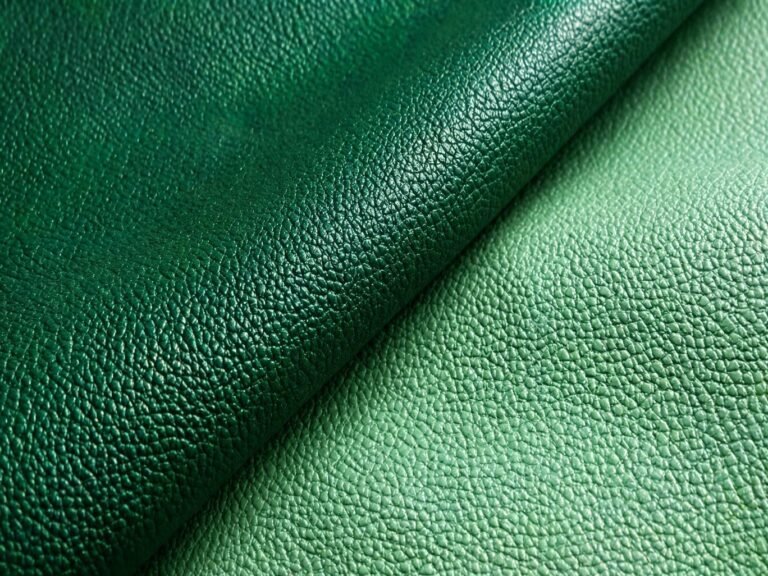
The most recent expansion of silicone chemistry into B2B materials is silicone leather — platinum-cured silicone coated onto textile substrates to create a flexible, durable, and fully compliant alternative to PU and PVC leather. TOPSUN is one of the pioneers in this space, having developed a solvent-free dry coating process that produces zero-VOC leather with a 10+ year service life.

What makes silicone leather a genuine breakthrough — not just a marketing rebrand — is that it inherits the full performance profile of silicone elastomers while achieving the hand-feel, drape, and processability of conventional leather. It can be stitched, die-cut, embossed with custom textures, and color-matched to Pantone or RAL specs with Delta E ≤ 1.0. Learn more about the silicone leather introduction and its eco-friendly credentials.
Smart Silicone: Where “And More” Is Heading Next
The silicone material ecosystem is expanding into functional and smart material territory:
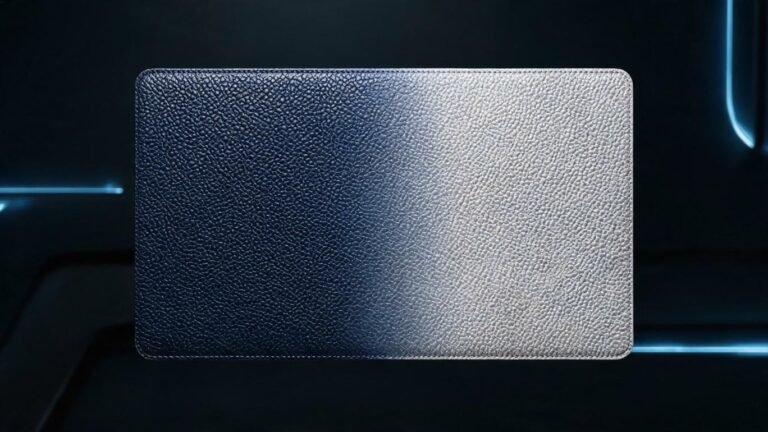
- Conductive silicone: Silicone compounded with carbon or silver particles enables flexible, skin-safe conductive pathways for wearable electronics and smart cabin interfaces. See silicone leather as a smart material.
- Self-healing silicone coatings: Research-stage silicone formulations that can re-bond after micro-cuts, potentially extending upholstery service life by 30-50% in high-wear environments.
- UV-curing silicone: UV-activated silicone coatings cure in seconds rather than minutes, enabling faster production throughput and lower energy consumption. TOPSUN is exploring UV-curing silicone technology for next-generation production lines.
- Silicone overmolding: Combining silicone with rigid substrates (metal, plastic) in a single molding step — already used in automotive trim and electronics. See the silicone overmolding guide.
- Space-grade silicone: Silicone’s vacuum stability and radiation resistance make it suitable for aerospace and space applications. Explore silicone leather in space applications.

For B2B buyers, the strategic implication is clear: sourcing decisions made on silicone-based materials today are future-proofed against the material evolution that’s coming. PU and PVC are at the end of their development curves — incremental improvements only. Silicone is still on a steep innovation trajectory.
About TOPSUN
TOPSUN is a silicone leather manufacturer at the intersection of the “silicon and more” material revolution. Operating three production bases in Dongguan, Yichang, and Xiangyang, China, TOPSUN uses a solvent-free dry coating process to produce platinum-cured silicone leather with zero VOC emissions, 10+ year service life, and a full compliance profile including REACH, FDA 21 CFR 177.2600, ISO 10993-5 biocompatibility, EN 13773 Class 4 flame retardancy, and FAR 25.853 aviation certification. With 500,000+ meters of monthly capacity, 100+ texture options, Pantone/RAL color matching at Delta E ≤ 1.0, and 500-meter MOQ with 7-day sampling, TOPSUN serves B2B clients across automotive, furniture, medical, marine, aviation, 3C electronics, and fashion sectors.
Explore silicone leather’s core properties — thermal stability, chemical resistance, and long-term durability
Silicon and More: FAQ
What is the difference between silicon and silicone?
Silicon is a chemical element (Si, atomic number 14) — a metalloid used primarily in semiconductors and electronics. Silicone refers to synthetic polymers made from a silicon-oxygen backbone (polysiloxanes), which are used in sealants, medical devices, cookware, and increasingly in coated textiles like silicone leather. In B2B material sourcing, when people say “silicon and more,” they typically mean silicone-based materials and their expanding applications. TOPSUN’s products use platinum-cured silicone polymers, not elemental silicon.
What makes silicone leather different from other silicone products?
Silicone leather applies the same platinum-cured silicone chemistry used in medical tubing and baby products onto a textile substrate, creating a flexible, stitchable material that looks and feels like leather but inherits silicone’s full performance profile. Unlike silicone sealants or molded parts, silicone leather is produced through a continuous dry coating process on automated lines, allowing roll-to-roll production at industrial scale — 500,000+ meters per month at TOPSUN. This makes it price-accessible for B2B applications that previously couldn’t justify silicone’s cost premium. See TOPSUN’s silicone rubber leather manufacturing process for production details.
Explore Silicon and More for Your B2B Project
Get silicone leather samples, review technical properties, or discuss your application with our engineering team.
Related: Silicone leather manufacturing process | Performance leather technology